
Zomato for New Restaurants: Mistakes to Avoid Before You Start Selling Online
Good food alone is not enough anymore. Presentation, operations, branding, speed, packaging, and customer experience all work together.

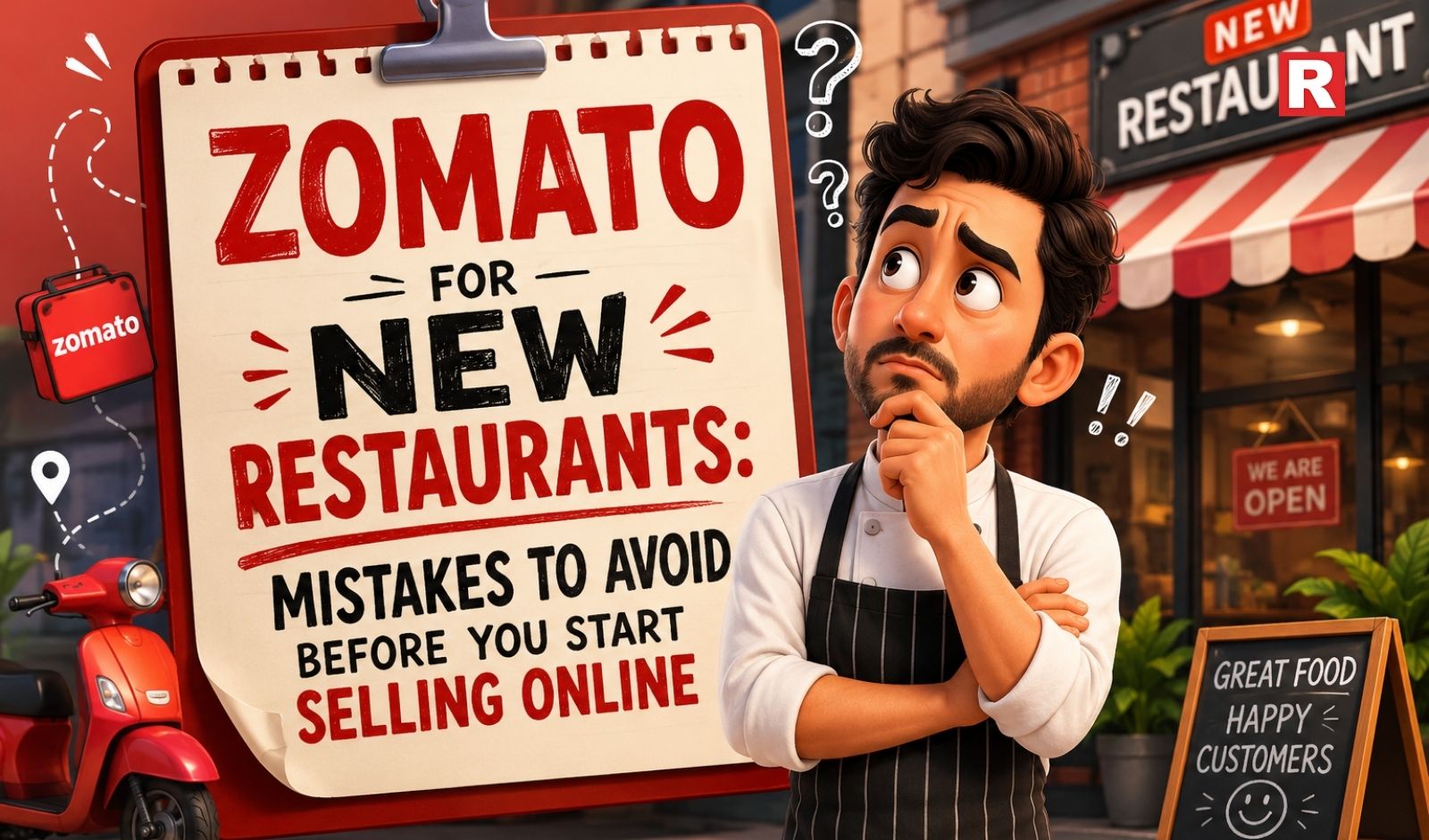
Launching a restaurant on food delivery apps looks simple from the outside. Upload a menu, add photos, and start accepting orders. But the reality is very different. Thousands of restaurants join delivery platforms every month, yet many struggle to get consistent orders after the first few weeks.
The biggest reason is not always the food quality. In many cases, restaurants fail because they ignore digital presentation, customer behavior, packaging, delivery speed, and menu strategy. Online food delivery works very differently from dine-in business. Customers make decisions within seconds. A small mistake can reduce clicks, ratings, and repeat orders. For new restaurants, understanding these mistakes early can save money, improve visibility, and create long-term growth on Zomato.
Poor Food Photos Can Kill First Impressions
Food photos are one of the biggest decision-making factors on delivery platforms. Customers cannot smell or taste food online. They only judge based on visuals. Many new restaurants upload dark, blurry, or poorly plated images. Some even use random internet photos that do not match the actual dishes. This damages trust immediately.
Good food photography does not always require expensive equipment. Natural lighting, clean plating, and proper angles can make a major difference. Images should look fresh and realistic. Hero dishes should appear first because they attract the highest clicks. Restaurants that invest in professional-looking food photos usually receive better engagement and conversions. Customers often associate better visuals with better quality and hygiene. A well-shot biryani, burger, pizza, or dessert can influence orders faster than discounts.
Overcrowded Menus Confuse Customers
One common mistake new restaurants make is adding too many dishes. They believe more options will attract more people. In reality, large menus often create confusion. Online customers scroll quickly. If the menu feels complicated, they leave the page and choose another restaurant. Smart restaurants focus on menu engineering. They highlight bestselling dishes, high-margin items, and popular combos. A focused menu also improves kitchen efficiency and reduces preparation errors.
For example, instead of offering 40 types of rolls, a restaurant can focus on its top 10 fast-selling options. This improves consistency and delivery speed. Shorter menus also help customers make decisions faster. In online food delivery, faster decisions often mean higher conversions.
Weak Menu Descriptions Reduce Cravings
Many restaurant owners ignore dish descriptions. They simply upload names like “Chicken Burger” or “Paneer Pasta” without explaining flavors, ingredients, or textures.
This is a missed opportunity.
Good descriptions create cravings. They also help customers understand portions, spice levels, fillings, and cooking styles.
For example: “Creamy butter chicken cooked with rich tomato gravy and soft tandoori chicken pieces” sounds much more appealing than simply writing “Butter Chicken.” Detailed descriptions also improve search visibility. Customers searching for keywords like “grilled,” “spicy,” “cheesy,” or “family combo” are more likely to discover optimized menus. Small writing improvements can increase clicks without increasing marketing costs.
Depending Too Much on Discounts
Many new restaurants believe discounts are the fastest way to grow. Heavy offers may increase initial orders, but they also create problems later. Customers become dependent on discounts. The moment offers disappear, order volume drops.
Constant discounting also damages profit margins. Restaurants already pay commissions, packaging costs, and delivery-related expenses. Aggressive offers can make operations financially difficult. Instead of relying only on discounts, restaurants should focus on value creation. Combo meals, free add-ons, limited-time specials, and loyalty offers often work better in the long run. Customers remember quality, consistency, and experience more than temporary price cuts.
Bad Packaging Hurts Ratings
Packaging plays a major role in online food delivery because customers judge the restaurant experience the moment the order arrives. Even good food can receive poor ratings if the packaging fails during transit. Leaking curries, soggy fries, melted desserts, or spilled beverages often lead to complaints, refunds, and fewer repeat orders. Restaurants must choose packaging based on the type of food and delivery distance rather than using the same containers for every dish. Strong, delivery-friendly packaging helps maintain temperature, freshness, texture, and hygiene throughout the journey.
Packaging essentials for restaurants:
- Use leak-proof containers for gravies and curries
- Add ventilation holes for fried food to prevent sogginess
- Choose tamper-proof seals to build customer trust
- Use insulated packaging for hot and cold items
- Secure desserts and beverages to avoid movement during delivery
- Test packaging during peak-hour and long-distance deliveries
Ignoring Customer Reviews
Customer reviews influence future orders heavily. Many people check ratings before placing an order, especially when trying a new restaurant. Some restaurant owners ignore reviews completely. Others respond emotionally to negative feedback. Both approaches can damage the brand.
Professional responses create trust. Even a simple apology and corrective action can improve customer perception. Negative reviews often reveal operational problems. Delayed deliveries, wrong orders, cold food, and inconsistent taste usually appear repeatedly in feedback sections. Restaurants that monitor reviews regularly can identify patterns early and fix problems before ratings drop further. In food delivery, even small rating changes can affect visibility and customer confidence.
Wrong Cuisine Tagging Creates Confusion
Some restaurants add unrelated cuisine tags to appear in more searches. For example, a burger outlet may tag itself under North Indian, Chinese, Italian, and Mughlai categories together.
This usually backfires.
Customers expect relevance. Wrong tagging increases bounce rates because users leave after realizing the menu does not match their expectations. Accurate cuisine positioning helps the platform understand the restaurant better. It also improves search quality and customer targeting. Strong branding matters too. Restaurants with clear identity perform better online. Customers should quickly understand what the restaurant specializes in. Whether it is biryani, pizza, healthy bowls, desserts, or rolls, clarity improves conversions.
Slow Delivery Operations Push Customers Away
Fast delivery improves customer trust, increases repeat orders, and directly impacts restaurant ratings, cancellations, refunds, and visibility on delivery platforms.
Optimize kitchen workflow: Restaurants should create a smooth process from order acceptance to packaging to reduce delays during busy lunch and dinner hours.
Train staff for peak hours: Well-trained staff can handle rush-hour pressure better, reduce mistakes, and maintain faster preparation and dispatch timings consistently.
Use prep batching carefully: Preparing commonly used ingredients in advance helps reduce cooking time without affecting food freshness, quality, or overall consistency significantly.
Monitor preparation time regularly: Tracking preparation delays helps restaurants identify operational bottlenecks and improve delivery efficiency during high-order periods and weekends.
Improve cloud kitchen discipline: Cloud kitchens rely completely on delivery performance, making speed, coordination, and accurate order handling essential for customer satisfaction.
Maintain consistency in operations: Customers expect timely deliveries regularly because late orders often create frustration, even when the food quality remains good and fresh.
Treating Zomato as the Only Growth Channel
Relying completely on one platform is risky. Algorithm changes, competition, or rising commissions can affect restaurant growth suddenly. Successful restaurants build multiple customer touchpoints. They use Instagram, WhatsApp, Google listings, and loyalty programs to stay connected with customers directly.
Social media also helps restaurants create brand recall. Viral reels, behind-the-scenes content, chef stories, and customer reactions can increase visibility organically. Many growing restaurants now encourage repeat customers through direct ordering systems and QR-based loyalty programs. Food delivery platforms are important, but long-term brands usually grow beyond aggregators.
Road Ahead
Restaurants that perform well online usually track their numbers carefully. They study bestselling dishes, repeat order patterns, customer complaints, and peak ordering hours. Metrics like average order value, customer retention, refund percentage, and conversion rate help restaurants improve strategically. Consistency matters more than temporary spikes. Customers return when they know they will receive the same quality every time. Online food delivery is now a highly competitive digital business. Good food alone is not enough anymore. Presentation, operations, branding, speed, packaging, and customer experience all work together. Restaurants that understand this early build stronger customer trust and better long-term growth on Zomato.
Saptopriya Ghosal
Feature Writer
I am a dedicated media professional with a bachelor's degree in mass communication from the State University of Calcutta and a postgraduate degree from Amity University. My academic journey has equipped me with a profound understanding of storytelling and communication. Passionate about the dynamic world of media, I continually strive to explore new ways to engage and inform through compelling narratives.



































































