
Why the Next Big Food Trend May Have Nothing to Do With the Food
It is that food is becoming one part of a much larger restaurant product. For operators, that creates a practical question: When a customer leaves your restaurant, what will they remember besides what they ate?

For years, restaurant trends have been easy to spot. A new ingredient becomes popular. A regional cuisine reaches new cities. A dish goes viral. A cooking technique appears on menus everywhere.
But restaurants are now competing on something broader.
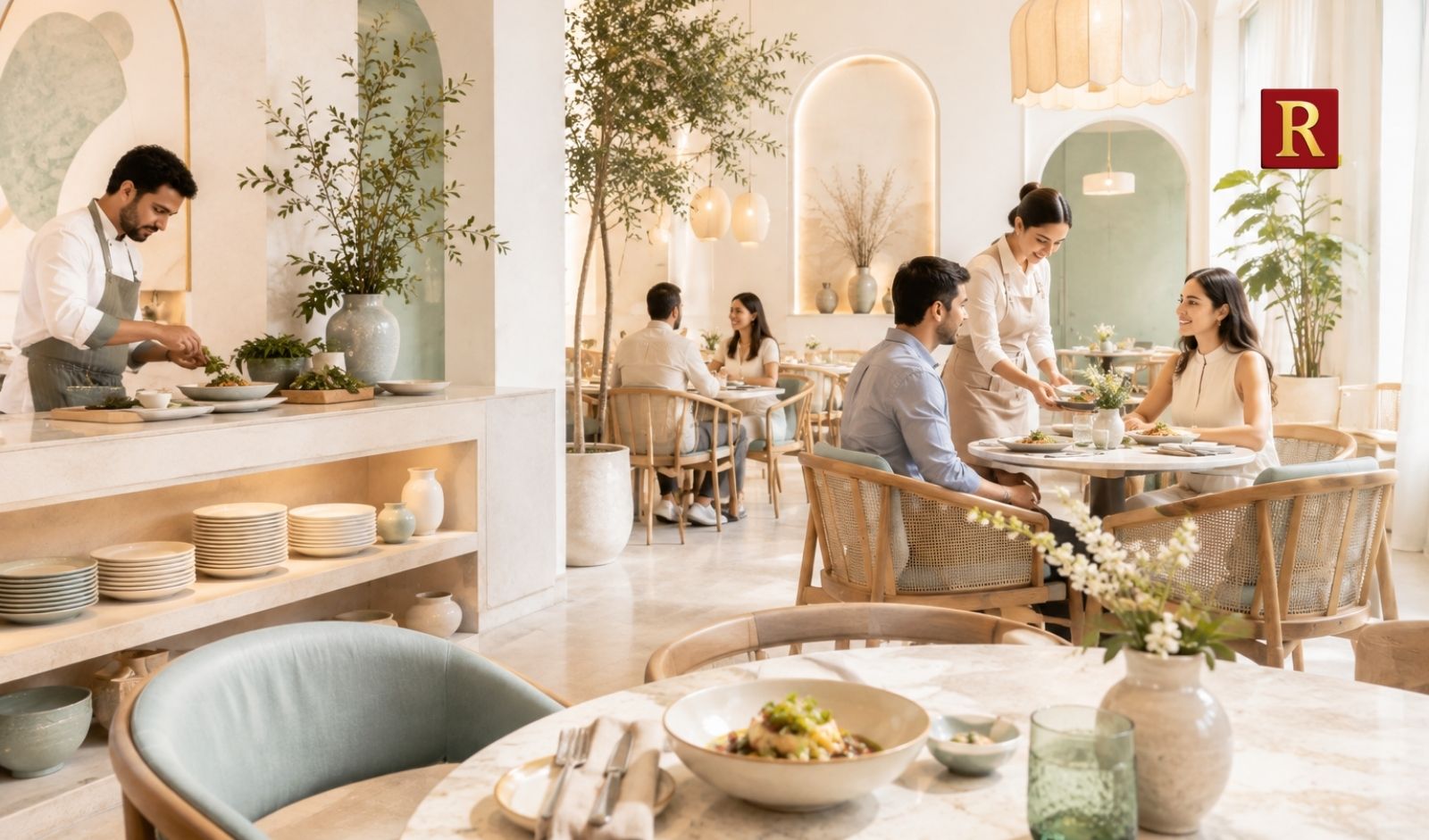
The experience around the food is becoming an important part of the dining decision. This includes the space, lighting, music, service, personalisation, technology and the small moments that make a visit memorable. This does not mean food is becoming less important. It means a good meal is increasingly being judged as part of a larger experience. For Indian restaurants, this shift could influence everything from menu design and interiors to staff training and technology.
The Meal Is Becoming More Than What Is on the Plate
Going out to eat is no longer only about satisfying hunger. Restaurants are increasingly being used for celebrations, socialising, dates, business meetings and leisure. Recent restaurant industry coverage in India points to growing interest in atmosphere, storytelling, service, music and interactive formats. This creates a new equation for restaurant operators: Food gets customers through the door. Experience can influence what happens next. A guest may remember a dish. But they may also remember the chef explaining it, the lighting in the room, the music playing during dinner or the server remembering their usual table. That is where experience becomes a business tool.
Your Restaurant Has a "Servicescape"
"Servicescape" is a technical term for the physical environment in which a service takes place. It includes elements such as layout, lighting, temperature, music, scent, furniture and visual design. Research in Indian urban restaurants has found that these factors can influence customer satisfaction. One 2025 study surveyed 230 participants and used regression analysis to examine the relationship between ambient conditions and satisfaction. Lighting emerged as the strongest predictor, followed by scent and music. Another study involving 250 respondents found significant differences between customer expectations and perceptions across lighting, scent, music and temperature. The lesson for restaurants is simple. Ambience should not be treated as decoration added after the menu is finished. It is part of the product.
Lighting Could Be Doing More Work Than You Think
Walk into two restaurants serving similar food. One has harsh lighting, loud music and uncomfortable seating. The other has balanced lighting, controlled sound and a comfortable layout. The food may be identical. The experience will not be. The Indian servicescape research found lighting to be particularly important in shaping satisfaction. This gives restaurant designers and operators a practical area to examine. Lighting can help establish whether a restaurant feels intimate, energetic, casual or premium. Music can support the same positioning. But there is no universal formula. A café designed for quick morning visits should not necessarily use the same sensory strategy as a destination restaurant designed for a three-hour dinner. The objective is consistency.
Personalisation May Be More Powerful Than Another Loyalty Coupon
Technology can help restaurants understand customer preferences. But personalisation does not always need sophisticated AI. Sometimes it means remembering a name.
- Or a usual order.
- Or a preferred table.
- Or a dietary preference.
Toast's 2026 research found that 48% of surveyed restaurant guests said being remembered by name or usual order made them feel most valued. Yet only 30% said this happened consistently at the restaurants they regularly visit. That gap is important. Restaurants often think loyalty means points, discounts and promotional offers. Those tools have value. But recognition can make the experience feel more personal. For an independent restaurant, this could be as simple as maintaining useful guest notes and training front-of-house staff to use them naturally. The technology should support hospitality. It should not replace it.
Interactive Dining Gives Customers a Role
The next layer is participation. Chef's counters, open kitchens, tableside preparation, tasting sessions and food workshops give diners something to do and observe. This changes the role of the customer. Instead of simply receiving a plate, the diner becomes part of the process. Indian restaurant trends in 2026 are already showing greater interest in chef interaction, storytelling, open kitchens and experience-focused formats. But restaurants should be careful not to turn every meal into a performance. Interaction works when it makes sense for the concept. A chef explaining the origin of a regional ingredient can add value. A forced theatrical presentation that delays service may do the opposite. The best experiences feel natural.
Restaurant Design Is Moving From Decoration to Strategy
Restaurant interiors are also becoming more purposeful. Open kitchens can create transparency. Communal tables can encourage social interaction. Flexible seating can help restaurants handle different occasions. Biophilic design can change the mood of a space. Heritage-inspired details can communicate a restaurant's regional identity. Restaurant design research and industry reporting in India increasingly identify open kitchens, flexible spaces, biophilic elements, local influences and technology integration as important directions. This is why "Instagrammable" is too narrow a way to think about restaurant design. A photograph may bring attention. But comfort, functionality and identity help determine whether people stay and return. A beautiful restaurant with poor acoustics, uncomfortable chairs and inefficient service is still a poorly designed restaurant.
A Social and Cultural Space
One of the more interesting developments is the expansion of what restaurants can be. A restaurant can host a chef collaboration one week and a regional food event the next.
- It can work with local artists, farmers, musicians or makers.
- It can organise tasting sessions, workshops or community dinners.
This gives customers another reason to visit. It also gives the restaurant more opportunities to build an identity beyond its regular menu. The idea is particularly relevant in India's diverse food culture. A restaurant can use regional ingredients, culinary traditions and local stories to create experiences that feel specific to its location. That is harder to copy than a viral dish.
Technology Should Be Felt, Not Always Seen
Technology will still play a role in the experience. But the most useful technology may be the technology customers barely notice.
Restaurants can use digital systems for:
- Reservations
- Table management
- Loyalty programmes
- Guest preferences
- Inventory forecasting
- Personalised recommendations
- Faster payments
- Customer feedback
The objective is to remove friction. If technology makes a reservation easier, helps staff recognise a returning customer or prevents a dish from being unavailable, it improves the experience without demanding attention. This is where restaurants need operational discipline. An impressive digital feature has little value if the kitchen is slow or the staff cannot deliver the promised service.
The Real Opportunity Is the Entire Guest Journey
Restaurants can start by mapping the complete customer journey.
Discovery → Reservation → Arrival → Seating → Ordering → Dining → Payment → Departure → Return
Each stage offers a potential improvement. For example:
- Before Arrival: Make Reservations Simple
The dining experience begins before the customer enters the restaurant. A complicated booking process can create frustration before the visit even starts. Restaurants should make reservations easy to complete through clear booking pages, accurate timings and quick confirmations. If possible, customers should also be able to mention preferences such as seating, dietary needs or special occasions. A simple reservation journey reduces uncertainty and gives the restaurant useful information before service begins.
- At Arrival: Reduce Waiting Uncertainty
Waiting is sometimes unavoidable, especially during busy dining hours. The bigger problem is not always the wait itself, but not knowing how long it will take. Restaurants can improve this stage by giving customers realistic waiting times, regular updates and comfortable waiting areas. Digital waitlists can also help guests track their position. Clear communication shows that the restaurant respects the customer's time and can make an unavoidable delay feel more manageable.
- During Seating: Make the First Interaction Warm and Efficient
The first few minutes inside a restaurant can strongly influence the guest's impression. Staff should acknowledge arriving customers quickly, even when the table is not ready. Seating should be organised so guests are not left searching for assistance. A warm greeting, clear communication and efficient table allocation can make the restaurant feel organised from the start. Small details, such as recognising a returning guest or confirming a special request, can make the interaction feel more personal.
- During the Meal: Use Service and Storytelling Without Interrupting the Guest
Good service should add value without taking over the meal. Staff can explain an interesting ingredient, describe a regional preparation or suggest a dish when the information is genuinely useful. However, guests should not feel pressured into constant interaction. Restaurants can train employees to recognise when customers want conversation and when they prefer privacy. The aim is to make service feel attentive rather than scripted, allowing storytelling to strengthen the meal instead of becoming a performance.
- At Payment: Keep the Process Quick
The final few minutes can influence how customers remember their visit. A long wait for the bill or confusing payment process can weaken an otherwise smooth experience. Restaurants should make bills easy to understand and provide convenient payment options. Digital payments, clear bill splitting and quick access to receipts can reduce unnecessary delays. Staff should also remain attentive during this stage instead of treating payment as the point when service ends. A smooth departure helps complete the experience on a positive note.
- After the Visit: Use Feedback and Loyalty Data Intelligently
The relationship with a customer does not have to end when they leave. Restaurants can use feedback to identify recurring problems and understand what guests value. Loyalty data can also reveal useful patterns, such as preferred dishes, visit frequency or popular dining occasions. The goal should not be to send customers constant promotions. Instead, restaurants can use this information to make future visits more relevant, improve service and recognise returning guests. This turns customer data into better hospitality rather than simply more marketing.
This approach is more useful than simply asking, "What new dish should we launch?"
Food Still Has to Lead
There is an important limit to this trend. Experience cannot permanently compensate for poor food.
- A beautiful interior can create curiosity.
- A theatrical service ritual can create a memorable first visit.
But customers still expect food quality, consistency, hygiene and value. The strongest model is not experience instead of food. It is food plus experience. A good dish creates satisfaction. Good service creates comfort. A strong environment creates an atmosphere. Personalisation creates recognition. Together, these elements can create a restaurant people remember.
So, What Could the Next Big Restaurant Trend Look Like?
It may not be another ingredient. It may not be another viral dish. It may be a more deliberate approach to the entire dining journey. Restaurants could increasingly design the experience with the same care that chefs give a recipe. That means thinking about sound as carefully as taste. Lighting as carefully as plating. Service as carefully as menu pricing. And customer recognition as carefully as loyalty discounts. The important shift is not that food is becoming less important. It is that food is becoming one part of a much larger restaurant product. For operators, that creates a practical question: When a customer leaves your restaurant, what will they remember besides what they ate? The answer could become one of the clearest markers of the next phase of India's restaurant industry.
Saptopriya Ghosal
Feature Writer
I am a dedicated media professional with a bachelor's degree in mass communication from the State University of Calcutta and a postgraduate degree from Amity University. My academic journey has equipped me with a profound understanding of storytelling and communication. Passionate about the dynamic world of media, I continually strive to explore new ways to engage and inform through compelling narratives.



































































