
Why Some Restaurant Tables Are More Profitable Than Others
In today's competitive hospitality industry, understanding the performance of every seat has become just as important as creating a great menu.

Walk into any busy restaurant, and every table may look equally important. But behind the scenes, they rarely generate the same amount of revenue. Some tables are booked more often, encourage bigger orders, and turn over faster. Others stay empty for longer, attract shorter visits, or slow down service.
For restaurant owners, understanding which tables perform best is no longer based on guesswork. Modern restaurants use data from POS systems, reservation platforms, and floor plans to measure how each table contributes to revenue. This information helps them improve seating strategies, increase efficiency, and earn more from the same dining space. As labour costs, rent, and food prices continue to rise, making every table work harder has become an important part of running a profitable restaurant.
Not Every Table Generates the Same Revenue
Many people assume that a full restaurant automatically means maximum profits. In reality, profitability depends on how each table is used throughout the day. Consider two four-seater tables. One hosts three groups during dinner service, while the other is occupied by a single family for nearly three hours. Even if both tables remain occupied for most of the evening, the first table may generate significantly higher revenue because it serves more customers.
Several factors influence table profitability, including:
- Number of guests served
- Average customer spending
- Dining duration
- Table turnover
- Service speed
- Seating location
Restaurants that analyse these metrics can identify which parts of the dining room perform best and where improvements are needed.
Table Turnover Has a Direct Impact on Profits
One of the most important performance indicators in the restaurant industry is table turnover rate. It measures how many different groups use the same table during a service period.
- The basic formula is: Table Turnover Rate = Number of Parties Served ÷ Number of Tables
For example, if a restaurant has 25 tables and serves 100 parties in one day, the turnover rate is 4. Different restaurant formats have different expectations.
- Quick-service restaurants often achieve six to ten table turns daily.
- Cafés generally average four to six turns.
- Casual dining restaurants typically record two to four turns.
- Fine dining restaurants may complete only one to three turns because guests spend more time enjoying the experience.
Higher turnover does not always mean rushing customers. Instead, it reflects smooth service, efficient table management, and reduced waiting times.
Why Location Inside the Restaurant Matters
The position of a table can influence customer behaviour more than many restaurant owners realise. Window tables are often the first choice because they offer natural light and attractive views. Corner tables provide more privacy, making them popular for celebrations and longer meals. Outdoor seating has also become increasingly valuable, especially in pleasant weather. Customers seated in these preferred areas often order additional drinks, desserts, or premium menu items. On the other hand, tables located near kitchen entrances, washrooms, service stations, or busy walkways are usually less desirable. These locations may experience lower customer demand or shorter dining experiences. Many reservation systems now allow restaurants to track spending by table number, helping managers identify which seating locations consistently generate higher revenue.
Smaller Tables Can Deliver Bigger Returns
A common mistake is believing that larger tables always make more money. In practice, two-person tables are often among the most profitable. Couples represent a large share of restaurant guests. Smaller tables can also be combined for larger groups when needed, making them more flexible throughout the day. For example, two occupied two-seater tables may generate more total revenue than one four-seater occupied by only two guests. Flexible seating arrangements help restaurants maximise occupancy without increasing floor space.
The Importance of Table Mix
Successful restaurants carefully plan the combination of table sizes in their dining room.
A balanced layout may include:
- Two-person tables
- Four-person tables
- Six-person tables
- Communal seating
- Modular tables that can be joined together
This approach allows restaurants to adapt quickly to changing customer demand during lunch, dinner, weekends, and special events. Restaurant designers often review reservation history before deciding the ideal table mix. If most bookings are for two guests, filling the restaurant with large tables may reduce overall efficiency.
RevPASH: The Metric That Measures Seat Performance
Many restaurants now use a performance indicator called Revenue Per Available Seat Hour (RevPASH).
- The formula is simple: RevPASH = Total Revenue ÷ Available Seat Hours
Unlike daily sales, RevPASH measures how effectively every seat generates revenue during operating hours. Imagine two restaurants.
- Restaurant A earns ₹90,000 in one evening with 100 seats.
- Restaurant B earns ₹80,000 with only 70 seats.
Restaurant B may actually be using its seating capacity more efficiently because every seat generates more revenue. Hospitality researchers have highlighted RevPASH as one of the most effective tools for evaluating restaurant performance because it combines revenue with seating efficiency rather than looking at sales alone.
Restaurant Layout Affects Staff Efficiency
A profitable table is not only about customer spending. It also depends on how easily staff can serve it. Poor layouts create unnecessary movement between the kitchen and dining room. Servers spend more time walking, food takes longer to arrive, and tables remain occupied while customers wait for bills.
Efficient floor plans improve:
- Food delivery speed
- Order accuracy
- Table clearing
- Billing time
- Customer satisfaction
Even saving two or three minutes during every dining cycle can increase the number of customers served over an entire day.
Technology Is Helping Restaurants
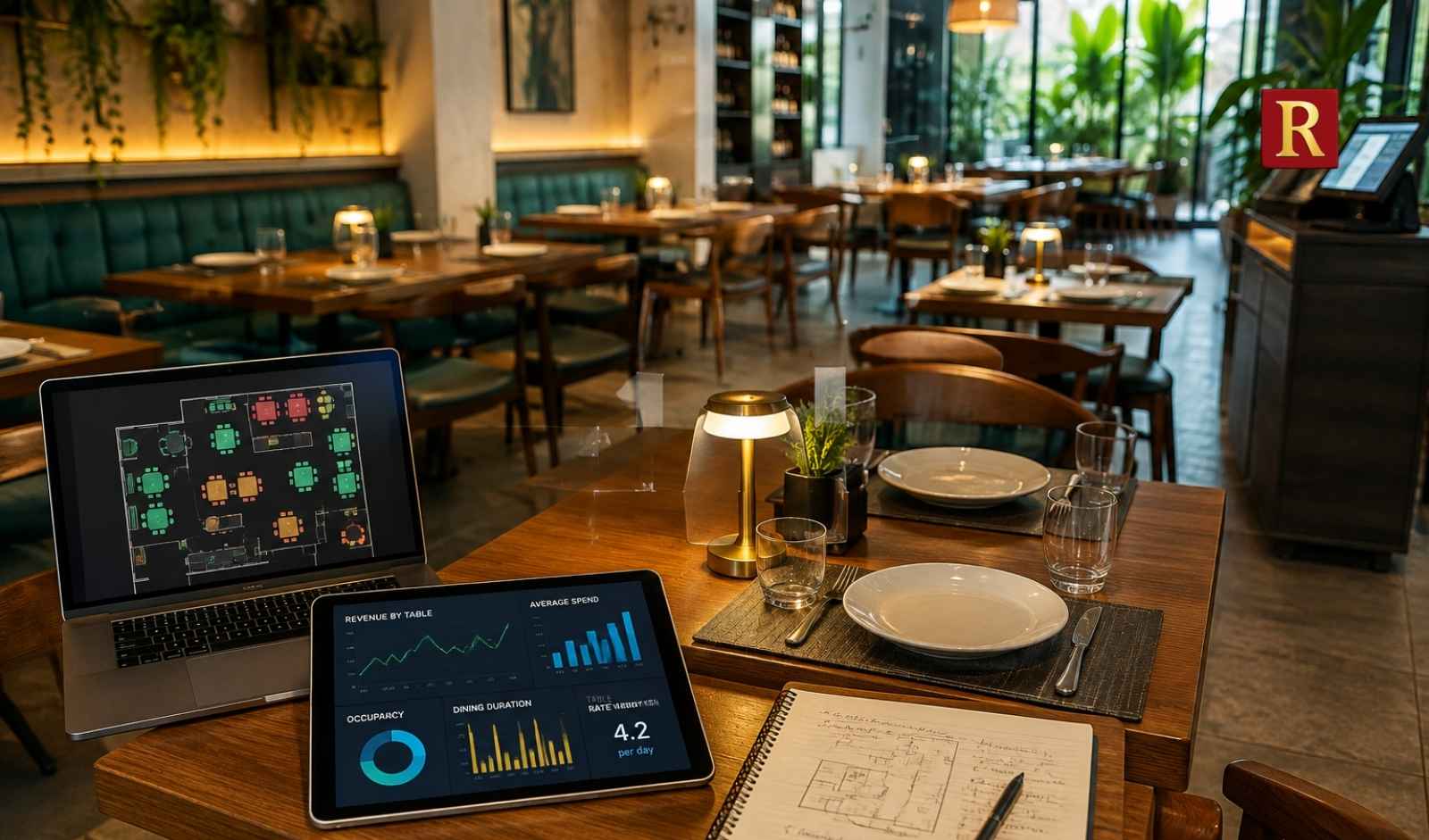
Restaurant technology has made seating management more efficient by helping operators use their dining space wisely. Modern reservation platforms analyse booking history, party size, and previous dining patterns to estimate how long guests are likely to occupy a table. This allows restaurants to assign tables more effectively, reduce wait times, and improve overall table turnover. At the same time, POS systems provide valuable data such as revenue generated by each table, average customer spending, dining duration, peak occupancy hours, and repeat guest visits. By studying these insights, restaurant managers can identify which tables perform best and adjust seating strategies accordingly. Instead of increasing the number of tables or changing the menu, restaurants can improve profitability by making smarter, data-driven decisions about how their existing dining space is used.
Menu Strategy Also Influences Table Profitability
Certain tables naturally attract different types of diners. Business guests may order premium beverages and complete meals during lunch. Families often order sharing platters and children's meals. Couples celebrating special occasions are more likely to add desserts, wine, or premium dishes. Restaurants increasingly combine seating data with menu engineering to understand which areas of the dining room produce the highest average bill value. This information helps managers train staff to recommend suitable add-ons and improve guest experiences without aggressive selling.
Small Operational Changes Can Produce Bigger Results
Improving table profitability does not always require major investments or a complete restaurant redesign. Small operational improvements can make a noticeable difference by reducing delays, increasing table turnover, and enhancing the guest experience.
Digital ordering with QR codes: QR code menus and ordering systems allow guests to browse menus and place orders quickly, reducing waiting time and helping staff focus on service.
Faster payment options: Contactless payments, digital wallets, and tableside billing speed up the checkout process, allowing tables to become available sooner for the next guests.
Better host desk positioning: Placing the host station near the entrance helps staff greet guests promptly, manage queues efficiently, and seat customers without unnecessary delays.
Clearer walking paths for servers: A well-planned floor layout reduces the distance servers need to walk, enabling faster food delivery, quicker table clearing, and smoother service.
Faster table cleaning: Standardised cleaning procedures and dedicated bussing staff help prepare tables quickly after guests leave, reducing idle time between seatings.
Well-planned reservation schedules: Spacing reservations strategically prevents overcrowding, minimises waiting times, and ensures a steady flow of guests throughout service hours.
Together, these operational improvements help restaurants serve more customers using the same dining space, increasing table utilisation and overall revenue without adding extra seats.
What Restaurant Owners Should Measure
Instead of relying only on total daily sales, successful restaurants monitor several operational metrics together.
These include:
- Table Turnover Rate
- Revenue Per Available Seat Hour (RevPASH)
- Average customer spend
- Table occupancy rate
- Average dining time
- Table reset time
- Revenue by table number
- Seat utilisation percentage
Tracking these indicators regularly helps operators identify underperforming areas and make data-driven improvements.
The Bottom Line
Every restaurant table has the potential to contribute differently to overall profitability. Factors such as seating location, table size, customer behaviour, service efficiency, and reservation management all influence how much revenue each table generates. With commercial rents rising and operating costs increasing, expanding dining space is not always possible. Instead, many successful restaurants are focusing on getting more value from the space they already have. By analysing seating performance, improving floor layouts, monitoring RevPASH, and using technology to optimise reservations, restaurants can increase revenue without adding more tables. In today's competitive hospitality industry, understanding the performance of every seat has become just as important as creating a great menu.
Saptopriya Ghosal
Feature Writer
I am a dedicated media professional with a bachelor's degree in mass communication from the State University of Calcutta and a postgraduate degree from Amity University. My academic journey has equipped me with a profound understanding of storytelling and communication. Passionate about the dynamic world of media, I continually strive to explore new ways to engage and inform through compelling narratives.



































































