
Why Some Popular Restaurants Refuse to Expand Despite Long Queues and High Demand
For many popular restaurants, the goal is not to become the biggest brand in the market. It is to remain the best at what they do.

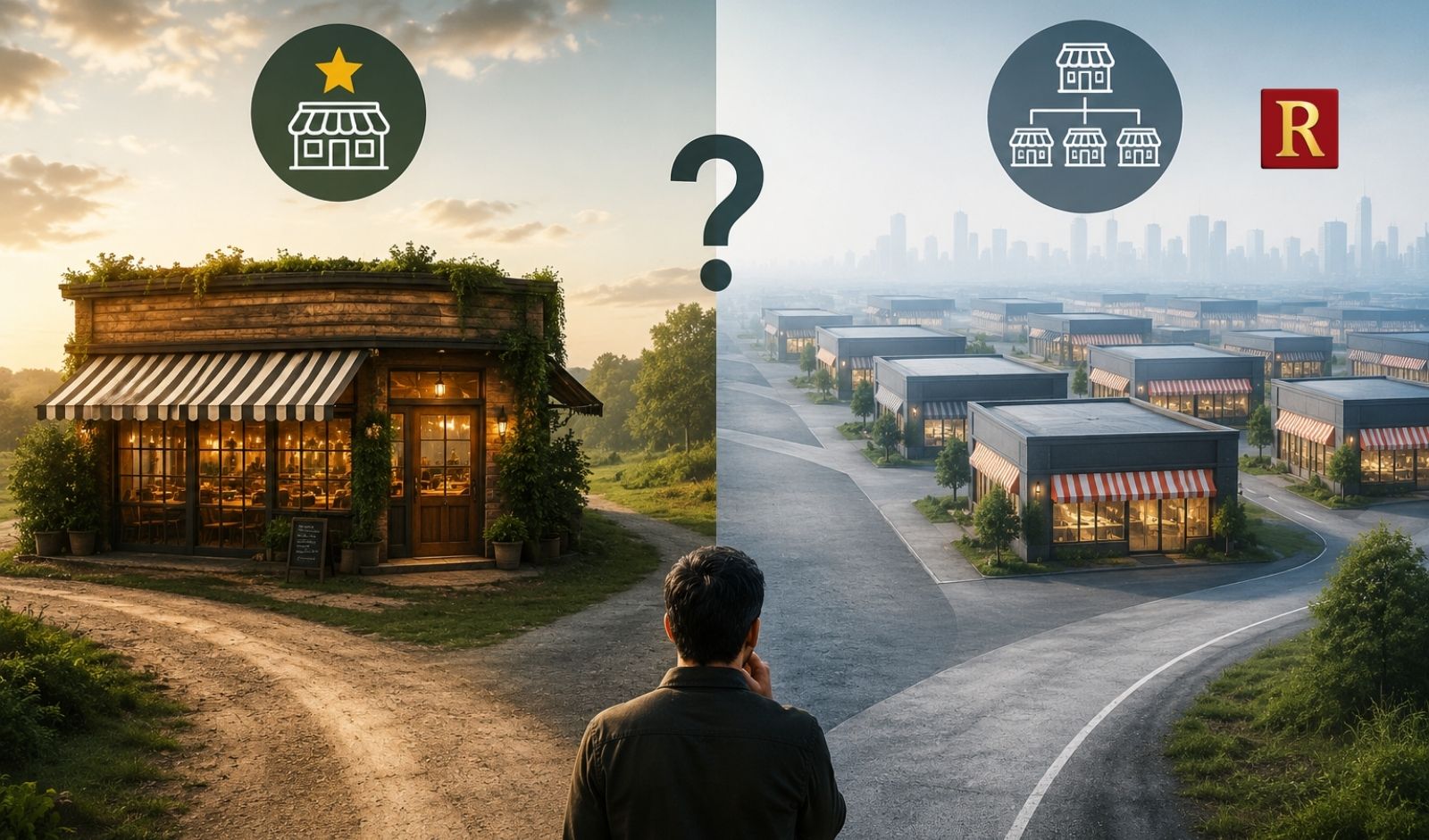
Walk past a busy restaurant on a weekend, and you may find a long waiting list, packed tables, and customers willing to wait for an hour just to get a seat. From the outside, opening more outlets seems like the obvious next step. Yet many successful restaurants never expand beyond one or two locations. Some stay independent for decades despite strong demand and constant customer interest.
This decision is often strategic rather than accidental. In the restaurant business, growth can create new opportunities but also introduce challenges that affect food quality, service standards, profitability, and brand identity. For many operators, staying small is the best way to protect what made them successful in the first place.
The Founder Is Often the Biggest Competitive Advantage
Many successful restaurants owe their popularity to the founder's vision, expertise, and direct involvement in daily operations. From designing the menu and selecting ingredients to training staff, interacting with guests, and conducting quality checks, the founder often plays a central role in shaping the customer experience. Guests frequently return because they trust the consistency and authenticity associated with that individual. However, expansion introduces a major challenge: a founder cannot be present at every location. The personal attention and oversight that make one outlet successful can become difficult to replicate across multiple branches. This is especially true for chef-led restaurants, where recipes and techniques rely heavily on years of experience rather than standardized systems. As a result, many restaurants choose to remain small, recognizing that the founder's influence is often their greatest strength—and the most difficult aspect of the business to scale.
Consistency Becomes More Difficult With Every New Outlet
Consistency is one of the most important factors in restaurant success. Customers expect the same dish, portion size, presentation, and service every time they visit. Meeting those expectations becomes increasingly difficult as a business grows. A single-location restaurant can maintain quality through direct supervision. A multi-unit restaurant requires detailed systems and processes.
These often include:
- Standard Operating Procedures (SOPs)
- Recipe manuals
- Staff training programs
- Quality audits
- Inventory management systems
- Centralized procurement
According to industry estimates, food costs typically account for around 28% to 35% of restaurant revenue, while labor expenses can range from 25% to 35%. Even small inconsistencies can have a major impact on profitability. Many restaurant owners recognize that maintaining standards across several outlets requires a completely different operational structure than running one successful restaurant.
Scarcity Can Increase Demand
Not every business benefits from being available everywhere. Some restaurants become famous precisely because they are difficult to access.
A single location can create:
- Exclusivity
- Higher customer interest
- Stronger word-of-mouth marketing
- Destination dining appeal
Customers often associate limited availability with authenticity and quality. This strategy is common across the hospitality industry. Instead of focusing on rapid expansion, some restaurants choose to strengthen their reputation by making each visit feel special. When people travel across a city—or even across states—to visit a restaurant, the brand gains a level of desirability that can be difficult to achieve through mass expansion.
Expansion Requires More Than Capital
Many people assume expansion is mainly about money. In reality, opening another restaurant requires an entirely different business model. A restaurant owner who successfully manages one location must suddenly deal with:
- Regional managers
- Multiple teams
- Larger supply chains
- Additional vendors
- More complex financial reporting
- Increased operational risks
Industry research shows that a significant percentage of independent restaurants close within the first few years of operation. Opening additional locations without strong systems can increase those risks. Growth often requires a transition from owner-led management to process-driven management. Some restaurant owners simply prefer focusing on hospitality rather than building a larger corporate structure.
More Restaurants Do Not Always Mean More Profit
One of the biggest myths in the industry is that expansion automatically increases profits. While additional outlets may generate more revenue, they also create more expenses.
New locations often require:
- Higher rent commitments
- Recruitment costs
- Training expenses
- Equipment investments
- Marketing budgets
- Technology systems
Consider a simple example. A restaurant generating $1 million annually with a 20% profit margin earns $200,000 in profit. If that business expands to four locations generating $4 million in revenue but operates at a 10% margin, profit rises to $400,000. While the number is larger, the business complexity has increased dramatically. Owners must decide whether the additional risk, workload, and management responsibility justify the return. Many discover that a highly efficient single restaurant can be more rewarding than operating several average-performing outlets.
Protecting the Original Experience Matters
Customers often fall in love with restaurants because of unique experiences.
It could be:
- A signature dish
- A family recipe
- Personalized service
- A distinctive atmosphere
- A carefully curated menu
As businesses expand, they often need to simplify operations.
This can lead to:
- Smaller menus
- Standardized recipes
- Faster production methods
- Reduced customization
While these changes may improve efficiency, they can sometimes reduce the qualities that made the restaurant successful. Restaurant owners who prioritize craftsmanship often avoid expansion because they want to maintain complete control over the guest experience. For them, preserving authenticity is more important than increasing the number of outlets.
Hiring the Right People Becomes a Bigger Challenge
Finding skilled restaurant employees has become increasingly difficult across the hospitality sector. Now imagine doing it across multiple locations.
Every new outlet requires:
Kitchen Staff: Every new outlet needs trained chefs, cooks, and food preparation staff who can consistently follow recipes, portion sizes, and quality standards. Even minor variations in cooking techniques can affect taste and customer satisfaction, making skilled kitchen teams essential for maintaining brand consistency across locations.
Service Teams: Front-of-house employees directly influence the guest experience. Each outlet requires well-trained service teams capable of handling customer requests, managing peak-hour traffic, resolving complaints professionally, and delivering the same level of hospitality that customers associate with the restaurant brand.
Supervisors: Supervisors act as the bridge between staff and management. They monitor daily operations, ensure service standards are followed, address operational issues quickly, and help maintain efficiency during busy periods. Strong supervision is critical to keeping multiple outlets running smoothly and consistently.
Managers: Restaurant managers oversee overall outlet performance, including staffing, inventory, finances, customer satisfaction, and compliance. As the number of locations grows, finding capable managers who can independently lead teams and uphold company standards becomes one of the biggest expansion challenges.
Trainers: Trainers ensure that new employees understand the restaurant's culture, processes, and service expectations. They play a vital role in maintaining consistency across locations by standardizing onboarding, skill development, and operational practices, helping every outlet deliver a similar customer experience.
The challenge is not simply hiring people. It is ensuring that every team delivers the same customer experience. High employee turnover remains one of the industry's biggest operational challenges. Industry reports frequently place restaurant turnover rates among the highest of any sector. When experienced employees leave, training costs rise and consistency becomes harder to maintain. Many operators delay expansion because they know their current team is a key reason for their success.
Technology Helps, But It Cannot Replace Culture
Modern restaurant technology has made scaling easier than ever.
Operators can use:
- Cloud-based POS systems
- Inventory tracking software
- Kitchen Display Systems (KDS)
- Workforce management platforms
- Customer analytics tools
These solutions improve efficiency and provide better visibility across locations. However, technology cannot fully replicate company culture, leadership, or customer relationships. A restaurant's atmosphere is often created by people rather than systems. This is why some highly respected restaurants continue to focus on one exceptional location instead of multiple branches.
Success Is No Longer Defined by the Number of Outlets
The restaurant industry has evolved significantly over the past decade. Previously, expansion was often viewed as the ultimate sign of success.
Today, many operators focus on different metrics:
- Customer loyalty
- Repeat visits
- Profitability
- Brand reputation
- Operational efficiency
- Employee retention
A restaurant that consistently delivers excellent food and service for years can be just as successful as a large chain. The definition of growth has become more nuanced. For some businesses, growth means opening new outlets. For others, it means strengthening their existing operation and maintaining high standards.
Looking Ahead!
A packed dining room does not always mean a restaurant should expand. Behind every successful restaurant is a complex balance of quality, consistency, profitability, staffing, and customer experience. Expanding too quickly can put all of these factors at risk. Many restaurant owners understand that what works in one location does not automatically work in five. Rather than chasing rapid growth, they focus on protecting the qualities that made customers love the restaurant in the first place. In an industry where reputation can take years to build and only months to damage, staying small is often a deliberate business strategy. For many popular restaurants, the goal is not to become the biggest brand in the market. It is to remain the best at what they do.
Saptopriya Ghosal
Feature Writer
I am a dedicated media professional with a bachelor's degree in mass communication from the State University of Calcutta and a postgraduate degree from Amity University. My academic journey has equipped me with a profound understanding of storytelling and communication. Passionate about the dynamic world of media, I continually strive to explore new ways to engage and inform through compelling narratives.



































































