
Why Some of the Most Exciting Restaurant Ideas Are Smaller Than You Think
The strongest small restaurants are not successful because they have fewer chairs. They are successful when every chair, dish, workstation and service minute has a clear purpose.

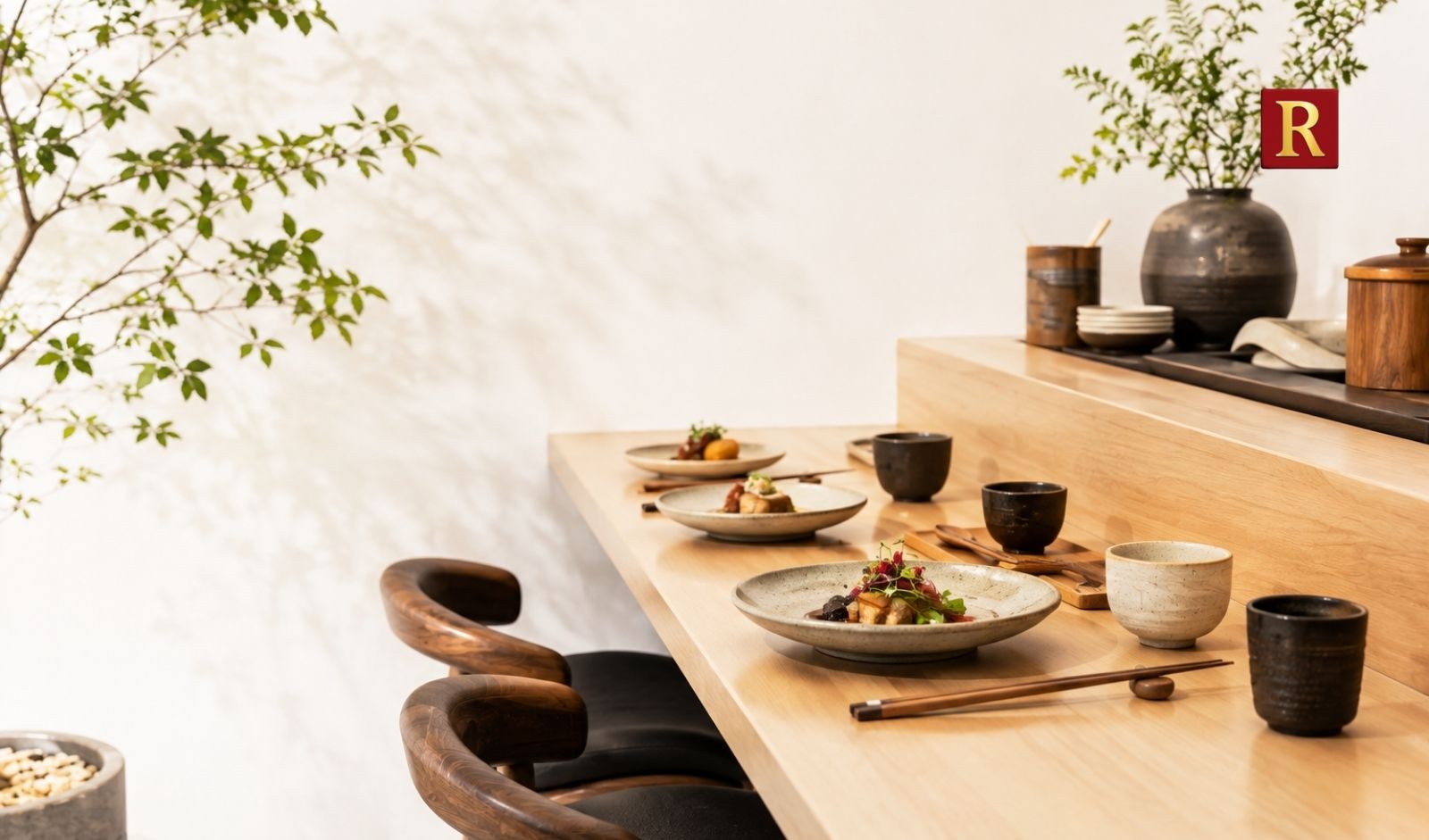
A restaurant does not need 100 seats to build a strong identity. In cities such as Mumbai and Bengaluru, some chef-led concepts are choosing a much smaller format, with dining rooms that seat around 12 to 20 people. The appeal is not simply lower rent or fewer tables. These restaurants are using limited space to create focused menus, closer chef interaction and highly controlled dining experiences. The shift is worth watching because it changes how restaurants think about space, menus, staffing and customer experience.
The Small Restaurant Is Becoming a Serious Format
Micro-restaurants are generally compact dining spaces built around a narrow idea. An Indian restaurant-industry publication describes the format as roughly 200 to 800 sq ft, often with 5 to 20 seats. There is no single industry definition for a micro-restaurant. The format can include a chef's counter, noodle bar, tasting room, tiny café, takeaway counter or other compact operation.
What connects these formats is focus. The restaurant may specialise in one cuisine, one cooking style or even a small group of dishes. That focus can make the business easier to understand for customers and easier to control for operators. This is especially relevant in Indian cities where restaurant concepts are becoming more specialised. Instead of trying to serve breakfast, lunch, dinner, snacks and desserts to everyone, a small restaurant can build its identity around one clear proposition.
Fewer Seats Can Create a Different Experience
One of the clearest examples is Papa's in Mumbai. The restaurant has a 12-seat chef's counter, where Chef Hussain Shahzad leads a highly intimate dining experience. The concept sits within the Veronica's space in Bandra and turns the limited number of seats into part of the experience.
This changes the relationship between the kitchen and the customer. In a large dining room, a guest may barely see the chef. At a chef's counter, cooking becomes part of the meal. Guests can see dishes being assembled. They can observe techniques. They can interact with the team. The food is still the main product, but the process becomes part of the value. That is one reason small restaurants can feel different even when they serve food that customers could find elsewhere.
Naru Shows How a Small Concept Can Grow
Bengaluru's Naru Noodle Bar offers another useful example. Naru describes itself as a 20-seater noodle bar focused on ramen. More importantly, its journey did not begin with a permanent restaurant. It started as a delivery-only kitchen during 2020, followed by pop-ups before becoming a full-time ramen bar.
Its current format is deliberately controlled. Naru uses counter seating and online reservations. It does not accept walk-ins or telephone bookings. Its website lists specific lunch and dinner slots, which helps organise demand around a very limited number of seats. This offers an important lesson for restaurant entrepreneurs. A concept does not always need to begin with a large investment. A chef can first test the food through delivery or pop-ups. Customer response can then help shape the permanent format. In this model, the restaurant is not simply opening small. It is learning small first.
The Economics Are About More Than Rent
It is tempting to assume that a smaller restaurant is automatically cheaper and more profitable. That is not necessarily true. A smaller restaurant has fewer seats and therefore a lower maximum sales capacity. It may also have a higher cost per customer if purchasing, labour or equipment cannot be spread across enough covers. Restaurant economics depend on several connected numbers.
These include:
- Average spend per customer
- Number of seats
- Seat turnover
- Food cost
- Labour cost
- Rent and occupancy cost
- Utilities
- Operating hours
- No-shows and cancellations
A simple way to understand the model is through revenue per seat. For example, imagine a 20-seat restaurant with an average customer spend of ₹2,000. If it serves three complete seat turns during a service, the theoretical gross sales would be: 20 × 3 × ₹2,000 = ₹1.2 lakh That is only an illustration. It does not account for food, labour, rent, taxes, discounts or other costs. The point is that a small restaurant has to think carefully about what every seat contributes.
Labour Makes Efficiency Even More Important
Restaurant staffing is another reason operators need to examine their format closely. A large dining room needs enough people to serve, clear and maintain the space. A smaller restaurant may require fewer front-of-house positions, although its kitchen can still be labour-intensive. Data from the US National Restaurant Association shows how significant this cost can be. In 2024, salaries and wages, including benefits, represented a median 36.5% of sales among full-service restaurant respondents. For limited-service restaurants, the figure was 31.7%. This does not mean smaller restaurants automatically have lower labour costs. It does show why restaurant design and staffing cannot be separated.
- A compact restaurant should ask: How many people are needed to serve this exact menu to this exact number of guests?
That is a more useful question than simply asking how many seats can fit into a space.
Smaller Spaces Can Lead to Sharper Menus
Limited space can also encourage better menu discipline.
A restaurant does not have unlimited room for:
- Refrigeration
- Dry storage
- Prep stations
- Cooking equipment
- Dishwashing
- Ingredients
- Packaging
That makes menu engineering important. A small restaurant can use ingredients across several dishes. One sauce may work with multiple preparations. A pickle can appear across different plates. A stock can support several menu items. This is known as cross-utilisation. It can reduce unnecessary inventory complexity and make preparation easier to manage. But there is another side to the equation. Higher-volume restaurants can benefit from economies of scale. National Restaurant Association data found that full-service restaurants with annual sales of at least $2 million had a median food and non-alcohol beverage cost of 31.0% of sales in 2024, compared with 33.7% for operators below $2 million. So the advantage of a small restaurant is not automatically lower food cost. It is control and focus.
The Kitchen Becomes a Space-Planning Exercise
When a restaurant is small, every workstation matters. The movement from receiving to storage, prep, cooking, plating and washing needs to be considered carefully. Poor planning can create bottlenecks. A chef may have an excellent menu but still struggle if two employees constantly need the same counter space. A beautiful compact kitchen can also become inefficient if refrigeration is too far from the prep area. Equipment selection matters too. A large restaurant may be able to justify specialised equipment for individual dishes. A small operation has to question whether each machine earns its footprint. This is where small-format restaurants require technical discipline. The smaller the kitchen, the less room there is for wasted movement.
Small Does Not Have to Mean Generic
One of the strongest reasons for the format is creative freedom. A large restaurant often needs to appeal to several types of customers. A small restaurant can be more specific.
It could focus on:
- Ramen
- Regional Indian food
- Dosas
- Sandwiches
- Desserts
- A chef's tasting menu
- One regional cuisine
- One hero protein
- A tightly curated beverage programme
This can make the restaurant easier to remember. Naru, for example, clearly places ramen at the centre of its concept rather than building a broad menu designed to cover every possible preference. That is the difference between having a small menu and building a focused concept.
Scarcity Can Help, But It Cannot Replace Quality
Limited seating can create demand. If only 12 or 20 seats are available, getting a reservation can become part of the experience. Recent reporting on India's tiny restaurants points to a combination of chef access, curated food, storytelling and limited availability as reasons for their growing appeal.
But scarcity alone cannot build a lasting restaurant. Customers may be curious about a difficult-to-book table once. They return when the food is good. That distinction matters for operators. A small restaurant should not use limited capacity as a substitute for a strong product. The experience still needs consistency, hospitality and value.
Why This Format Could Matter to India's Restaurant Industry
India's restaurant market is diverse enough to support many formats. For an entrepreneur, a compact concept can provide an alternative to the traditional large restaurant launch.
- The pathway could look like this: Idea → pop-up → delivery or takeaway test → compact outlet → data-led expansion
This approach allows operators to learn before committing to a larger physical space. It can also help chefs test questions that matter commercially.
- Which dish sells?
- What price works?
- How long does preparation take?
- Which ingredients create waste?
- How many people are needed during service?
- Do customers return?
These are more valuable answers than social-media likes alone.
The Future!
The most interesting part of the small-restaurant movement is not that restaurants are becoming tiny. It is that space is becoming part of the business model. A 12-seat chef's counter can make the chef visible. A 20-seat noodle bar can build its entire identity around one cuisine. A pop-up can test a concept before a permanent lease. A compact kitchen can force a team to remove unnecessary complexity. None of this means large restaurants are disappearing. Larger formats still offer advantages in capacity, purchasing power and revenue potential. The lesson is more practical. Restaurant size should follow the concept, not the other way around. The strongest small restaurants are not successful because they have fewer chairs. They are successful when every chair, dish, workstation and service minute has a clear purpose.
Saptopriya Ghosal
Feature Writer
I am a dedicated media professional with a bachelor's degree in mass communication from the State University of Calcutta and a postgraduate degree from Amity University. My academic journey has equipped me with a profound understanding of storytelling and communication. Passionate about the dynamic world of media, I continually strive to explore new ways to engage and inform through compelling narratives.



































































