
Why Restaurants Are Turning Their Kitchens Into Theatre
The restaurant kitchen may be moving closer to the dining room, but its first responsibility remains the same: cook well, work safely and serve consistently.

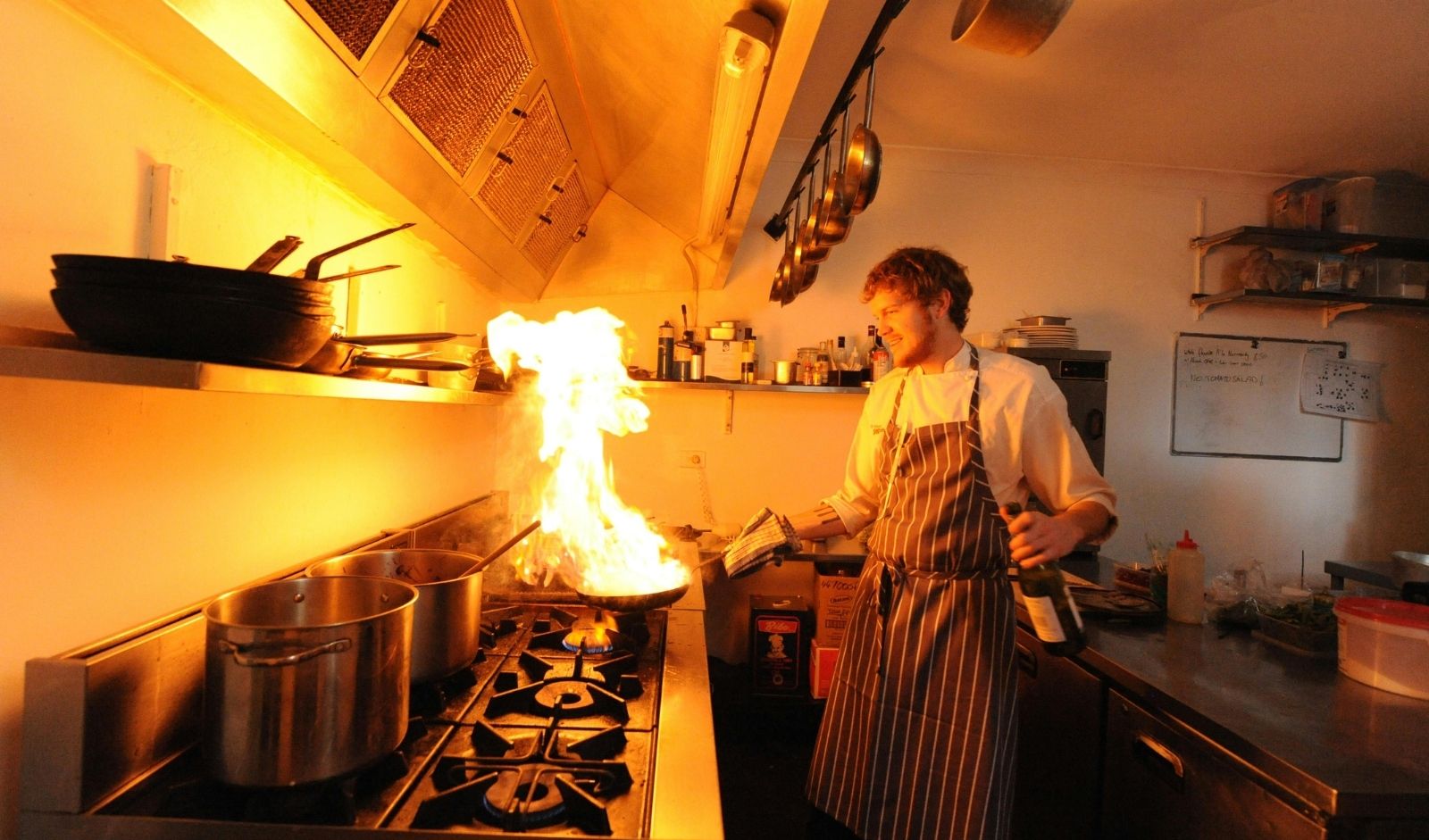
For years, the restaurant kitchen was designed to stay out of sight. Today, more restaurants are putting cooking in front of the customer. Open kitchens, chef’s counters, live-fire stations and visible plating areas are becoming part of the dining experience. The change is not only about interiors. It is about making the process of cooking visible.
In India, this shift is appearing across chef-led restaurants, premium cafés, tasting menus, artisanal bakeries and live-fire concepts. Restaurant India reported in May 2026 that open kitchens are increasingly being used as part of experience-led restaurant formats, particularly where chef interaction, transparency and storytelling are important. But an open kitchen also creates new operational demands. Once the kitchen becomes visible, everything from cleanliness and staff behaviour to noise, ventilation and workflow becomes part of the guest experience.
From Back-of-House to Centre Stage
A conventional restaurant separates the kitchen from the dining room. Guests receive the finished dish but rarely see the work behind it. An open kitchen changes that relationship. A diner can watch a chef roll dough, place naan inside a tandoor, sear a piece of meat, finish a sauce or plate a dessert. The food is no longer the only thing being presented. The preparation becomes part of the experience. This is particularly useful for restaurants where technique is central to the menu. A dosa being spread on a hot tawa, bread being baked in a tandoor or vegetables being cooked over live fire can create a stronger visual connection with the dish.
The idea also has an academic basis. A study published in the Journal of Hospitality and Tourism Management interviewed 28 chefs in different UK cities to understand how open kitchens change professional kitchen work. The researchers found that customer exposure changes chefs' working environments because kitchen staff can now become part of the guest interaction.
The Cooking Process Becomes Part of the Experience
The attraction of an open kitchen is not simply that diners can "see the chef." It gives them additional sensory information. They can hear the sizzle of a pan, see food being plated and sometimes smell ingredients as they cook. In the right restaurant, these details can make the meal feel more connected to its preparation. This is why chef's counters have become particularly relevant to experience-led dining. Instead of placing the kitchen behind a wall, restaurants can position guests directly beside the cooking area.
The format works especially well for tasting menus, omakase-style dining, bakeries and restaurants built around specialised cooking techniques. However, restaurants need to avoid confusing cooking with performance. A kitchen does not need exaggerated tricks to become interesting. The real work of preparing food can be compelling enough when the process, design and seating are planned properly.
The Chef Becomes More Visible
An open kitchen also changes the role of the chef. In a closed kitchen, communication with diners usually happens through the service team. In an open kitchen, chefs may become part of the guest experience. They might explain an ingredient, finish a dish in front of the diner or briefly discuss a cooking technique. That can be valuable for Indian restaurants, where food often has a strong regional and cultural story.
A visible station could showcase tandoor cooking, regional breads, dosa preparation, mithai making or live-fire techniques. Instead of explaining culinary heritage only through a menu description, the restaurant can allow guests to watch part of that tradition. But there is a limit. Chefs still need to cook. Research on open kitchens shows that customer interaction can change chefs' working practices. An open kitchen therefore needs clear boundaries between hospitality and kitchen operations. The chef should not become an additional waiter.
Visibility Does Not Automatically Mean Better Hygiene
One of the strongest assumptions about open kitchens is that visibility creates trust. The logic is simple: if customers can see the kitchen, restaurants have nowhere to hide. But visibility should not be confused with food safety. A 2019 study comparing open and closed kitchen restaurants found that open kitchens were viewed negatively in relation to noise and smell. The research did not find that an open kitchen automatically acted as a positive signal for food hygiene or food quality.
That distinction matters. An open kitchen can make cleaning practices visible, but actual food safety still depends on systems, training and controls. In India, FSSAI requires licensed food businesses to maintain a documented Food Safety Management System based on HACCP principles and prerequisite programmes, along with compliance with the applicable Schedule 4 hygiene requirements. So the real message is simple: An open kitchen can show cleanliness. It cannot replace a food-safety system.
The Hidden Challenge Is Ventilation
The most attractive open kitchen can become uncomfortable if its engineering is poor. Cooking produces heat, steam, grease, odours and particulate matter. When the kitchen and dining room share the same visual and physical space, controlling these by-products becomes more important. A 2021 study published in the International Journal of Hospitality Management examined indoor air quality in an open-kitchen restaurant. During a week-long field test, researchers measured PM10 and PM2.5 levels in the dining area and reported concentrations that exceeded relevant WHO and US EPA reference standards in the studied setting. The study was a case study, so its findings should not be treated as representative of every open kitchen. But it highlights an important design lesson.
What guests can see is only one part of the kitchen environment. What they breathe matters too.
Restaurants therefore need appropriate exhaust, filtration, make-up air and HVAC planning based on their equipment and site.
Noise Can Change the Experience
Cooking sounds can add energy to a restaurant. Too much noise can do the opposite. Exhaust systems, dishwashers, blenders, refrigeration equipment, kitchen communication and utensils can all become audible when the kitchen is exposed. That is why acoustic planning should happen alongside kitchen design. A restaurant may look beautiful with an open cooking line, but if guests have to raise their voices throughout dinner, the experience has not necessarily improved. The 2019 open-kitchen study is useful here because it specifically identified noise and smell as potential negative signals for diners.
The Kitchen Must Work Like a Factory and Look Like a Stage
This is where open-kitchen design becomes technically demanding.
The kitchen still needs an efficient workflow: Storage → Preparation → Cooking → Plating → Service
Guests may see only the cooking section, but every stage has to work behind it. The pass, where finished dishes are checked and sent into service, can become a visual focal point. But storage, waste handling and other less attractive activities do not necessarily need to be placed directly in front of diners. Smart design therefore uses visibility selectively. Restaurants can use counters, partial screens, glass partitions, lighting and seating positions to highlight the most interesting parts of production without exposing every operational detail.
Why India Has a Natural Advantage
Indian cuisine offers many techniques that are visually engaging. Tandoor cooking creates movement, heat and aroma. Dosa preparation is fast and precise. Fresh breads involve visible handwork. Mithai production can involve shaping, cutting and finishing. Live-fire cooking also provides a natural visual element without requiring artificial entertainment.
This gives Indian restaurants an opportunity to make technique itself the attraction. The trend fits into a broader shift in India's restaurant sector toward experience-led formats. Restaurant India’s 2026 reporting notes growing attention to open kitchens, chef interaction, storytelling and experiential dining.
Not Every Restaurant Needs an Open Kitchen
The concept is not suitable for every restaurant. A tasting-menu restaurant may gain significant value from a chef's counter. A bakery can benefit from displaying bread production. A live-fire restaurant can make its cooking method central to the room. A high-volume restaurant, however, may have different priorities.
The right question is not: "Should we open the kitchen?"
It is: "Is there something worth showing, and can we show it without damaging the operation?"
That is the more useful way for restaurant owners to approach the trend.
The Future
Restaurants are not simply removing walls and calling the result an experience. The stronger approach is to decide which parts of the culinary process deserve to be seen. For some restaurants, that may be the tandoor. For others, it could be pastry finishing, live-fire cooking or the final plating of a tasting menu. The best kitchen theatre is therefore not about turning chefs into performers. It is about allowing diners to see the skill, precision and craft that already exist inside a professional kitchen. The restaurant kitchen may be moving closer to the dining room, but its first responsibility remains the same: cook well, work safely and serve consistently.
Saptopriya Ghosal
Feature Writer
I am a dedicated media professional with a bachelor's degree in mass communication from the State University of Calcutta and a postgraduate degree from Amity University. My academic journey has equipped me with a profound understanding of storytelling and communication. Passionate about the dynamic world of media, I continually strive to explore new ways to engage and inform through compelling narratives.



































































