
Why Restaurants Are Bringing Back Food Carts Inside Dining Rooms
It may simply be the one that arrives at the right table, performs the right technique and gives the guest a reason to remember the meal. That is why the restaurant trolley is becoming relevant again: the service itself is becoming part of the dining experience.

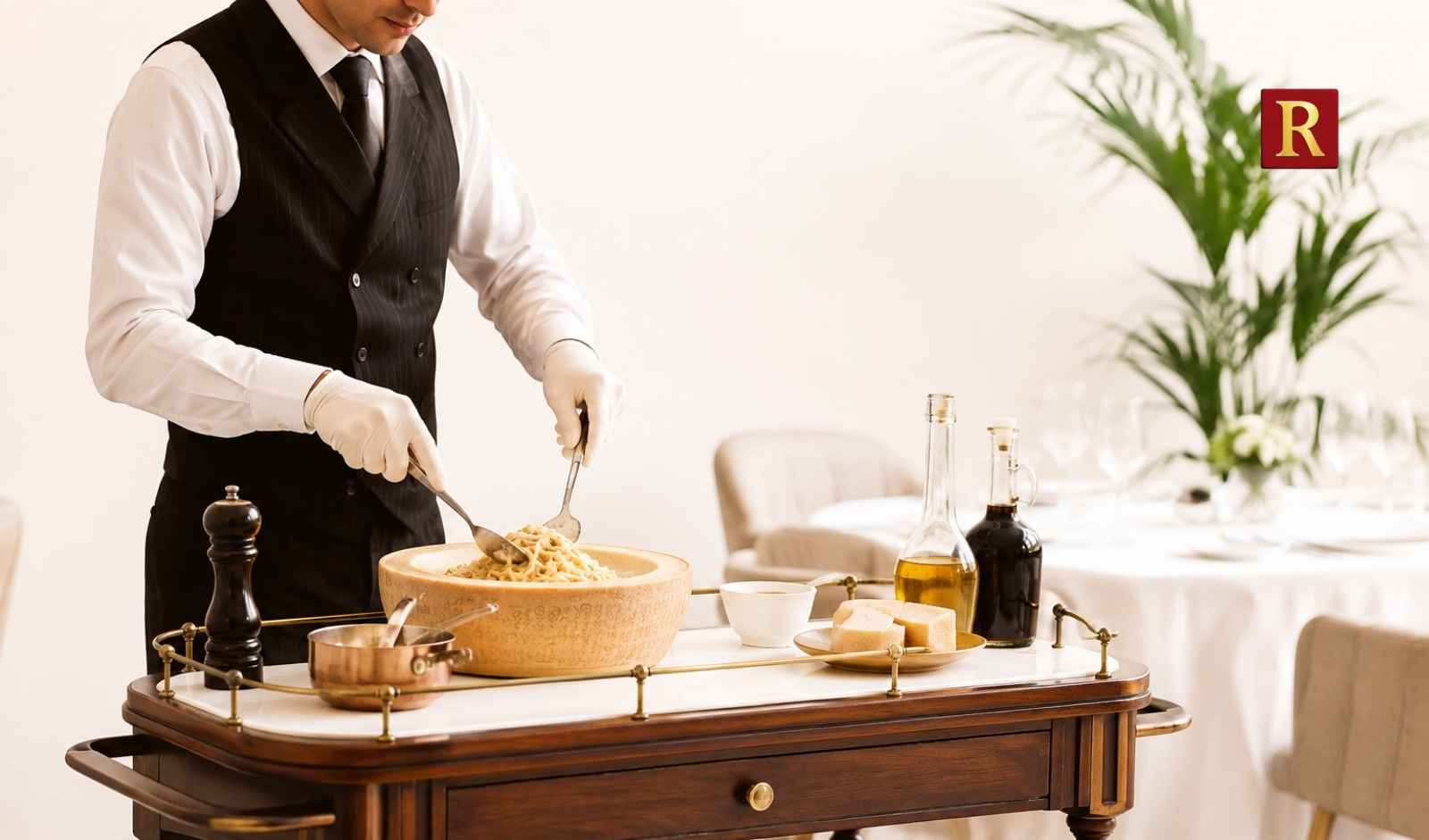
Food carts are rolling back into restaurant dining rooms, but their role has changed. Today, restaurants are using carts to prepare, finish, carve, mix and serve food in front of guests. The idea is rooted in classic guéridon service, yet the modern version is being shaped by personalisation, live preparation and experience-led dining.
The revival is visible across restaurant markets. Eater reported in 2025 that tableside carts were appearing in restaurants from New York and Chicago to San Francisco and Atlanta. ABC News also identified tableside service as a dining trend gaining attention for 2026. For restaurant operators, however, the cart is not simply a nostalgic piece of equipment. It is a way to move selected parts of the kitchen closer to the customer.
From Service Trolley to Mobile Kitchen
The traditional idea behind a food cart is simple: move food from one place to another. The modern restaurant cart does much more.
A trolley can become a small workstation where a server or chef:
- Carves meat
- Fillets fish
- Mixes a salad
- Finishes pasta
- Prepares tartare
- Builds a cocktail
- Slices cheese
- Finishes a dessert
- Adds sauces and garnishes
This style of service is known as guéridon service, a French term for preparing or finishing food beside the guest. India's National Council for Hotel Management and Catering Technology includes guéridon service in professional food-and-beverage training and describes activities such as salad preparation, carving and flambé service. The distinction matters. A regular service trolley carries food. A guéridon trolley acts as a mobile extension of the kitchen.
Why Are Restaurants Bringing It Back?
1. Guests Can See the Skill Behind the Dish
A finished plate hides much of the work involved in making it. A tableside cart changes that. When a server slices a steak, dresses a salad or prepares a cocktail in front of a guest, technique becomes part of the meal. This also gives the restaurant an opportunity to explain ingredients and preparation. For example, a tableside tartare service can involve a conversation about seasoning. A carving trolley can explain the cut of meat. A dessert trolley can introduce the ingredients before the final sauce is added. A 2026 report from Fine Dining Lovers described tableside presentations being used to show techniques such as carving and portioning while also teaching diners about ingredients and culinary traditions. The value is therefore not only visual. It can also be educational.
2. Personalisation Becomes Part of the Service
One of the strongest reasons for bringing preparation to the table is customisation. Take a tartare. Instead of receiving a completely finished dish, a diner can have a say in the final balance of:
- Mustard
- Capers
- Onion
- Pickles
- Salt
- Hot sauce
That approach is already being used in contemporary restaurants. Maison François in London, for example, has used a tartare trolley where diners can customise elements of the preparation. The same principle works with drinks. A martini cart can allow guests to select the spirit, vermouth, bitters, olive juice or garnish. This changes the role of the server. The server is no longer only delivering an order. They are helping build the final product with the guest.
3. The Cart Creates Theatre Without a Large Production
Restaurants have invested heavily in open kitchens, chef's counters and live cooking stations. A cart offers a smaller version of the same idea. It brings the action directly to one table. In Las Vegas, restaurants have been using mobile carts for desserts, steaks, seafood and cocktails. Eater reported that some venues were specifically creating custom trolleys to bring these preparations into the dining room. The advantage is flexibility. A restaurant does not have to redesign its entire kitchen. It can introduce one signature cart.
That could be a:
- Dessert trolley
- Martini cart
- Steak-carving cart
- Cheese trolley
- Chaat cart
- Pasta trolley
This makes the format easier to integrate into an existing restaurant concept.
4. The Cart Can Become a Moving Marketing Tool
There is another advantage: visibility. A dish on a menu may be seen only after a guest opens the menu. A cart moves through the dining room. When one table sees a server preparing a dish, other diners can notice it and ask what is being served. India's hospitality training material has long recognised this promotional value. NCHMCT notes that guéridon performances can attract attention from other tables and can encourage repeat orders. The format also works well in a social-media environment. A cart provides movement, preparation and a clear visual sequence. That makes it naturally suitable for short videos and photographs. Eater's reporting on the trend also points to the social and visual appeal of tableside service. But restaurants should not confuse visibility with guaranteed sales. The cart has to offer something worth ordering.
A ₹42 Butter Chicken Experience
One of the more interesting examples is New York's ADDA. Its butter chicken is presented as an experience rather than simply another menu item. Eater reported that the experience was limited to six tables per night and priced at ₹42 per person. A chef brings a cart to the table, smokes the chicken over selected wood and presents three different butters. Guests then choose the direction of the final sauce. This example is important because it shows how restaurants can turn a familiar dish into a structured service experience. The cart is not the product. The interaction around the dish is the product.
Indian Restaurants Have a Natural Opportunity
India may be particularly suited to this format. Indian food already has a strong culture of visible preparation.
Think of:
- Chaat counters
- Tandoors
- Dosa stations
- Kulcha preparation
- Mithai counters
- Live kebab stations
- Chai preparation
NCHMCT's training material also connects live counters with the same guest-facing principle as guéridon service, ranging from local street food to international formats such as teppanyaki. Restaurants could adapt the idea through more focused carts.
- A chaat trolley could allow guests to select chutneys, spice levels and toppings.
- A tandoori carving cart could bring whole roasted meats directly to the table.
- A mithai trolley could present regional sweets with different toppings and accompaniments.
- A chai trolley could turn brewing and spice selection into part of the service.
The opportunity is not to copy European restaurant traditions. It is to apply the same service principle to Indian food.
But Food Carts Come With Real Operational Costs
A food cart may look simple, but bringing one into the dining room requires careful planning. It takes floor space, staff time and proper preparation. Before service, the team must complete mise-en-place, including ingredients, sauces, utensils, plates and garnishes. Staff also need training in knife handling, portion control, food safety, allergen awareness, presentation and tableside service. The dining room must have enough clearance for the cart to move without disturbing guests or blocking service paths. Safety is especially important when carts involve hot equipment, sharp tools or open flames. The National Council for Hotel Management and Catering Technology notes that guéridon service requires trained staff and careful judgment about which preparations are suitable for tableside execution. Therefore, restaurants should use carts only when they add genuine value to the dining experience.
The Smartest Restaurants Are Using Fewer Carts, Not More
The modern approach appears to be selective. Instead of putting every dish on wheels, restaurants can identify one or two preparations that genuinely benefit from tableside service. This is important because every additional tableside process adds labour and complexity.
A good cart should pass five tests:
- Food: Does the preparation improve the dish?
- Experience: Does the guest gain something from seeing it?
- Personalisation: Can the guest influence the final result?
- Execution: Can staff perform it consistently?
- Economics: Does the additional value justify the labour and space?
If the answer to most of these is no, the cart is probably unnecessary.
Why the Restaurant Cart Fits the Current Dining Market
The return of the food cart reflects a larger shift in restaurant culture. The industry is increasingly looking at how food is served, not just what is served. Resy described the movement in 2026 as a shift toward bringing more of the work of the restaurant into the dining room. That does not mean every restaurant needs flambé, smoke or elaborate performances. In fact, the strongest applications can be quite simple.
- A chef slicing a fish.
- A server mixing a Caesar salad.
- A bartender preparing a martini.
- A staff member carving roast meat.
- A dessert being finished with warm sauce.
These moments make service visible. And that visibility can create a stronger connection between the kitchen, the staff and the diner.
The Cart Is Back, But Its Purpose Has Changed
The return of food carts is not simply about bringing an old restaurant tradition back to life. It is about making selected parts of restaurant service visible. For operators, the opportunity is to use the cart where it adds real value: better personalisation, stronger presentation, useful interaction or a preparation that genuinely benefits from being finished fresh. The most effective cart may not be the biggest or most theatrical one. It may simply be the one that arrives at the right table, performs the right technique and gives the guest a reason to remember the meal. That is why the restaurant trolley is becoming relevant again: the service itself is becoming part of the dining experience.
Saptopriya Ghosal
Feature Writer
I am a dedicated media professional with a bachelor's degree in mass communication from the State University of Calcutta and a postgraduate degree from Amity University. My academic journey has equipped me with a profound understanding of storytelling and communication. Passionate about the dynamic world of media, I continually strive to explore new ways to engage and inform through compelling narratives.



































































