Why Restaurants Are Becoming the New Living Rooms of Urban India
The biggest change may therefore be simple. People are not always going to restaurants because they need somewhere to eat.


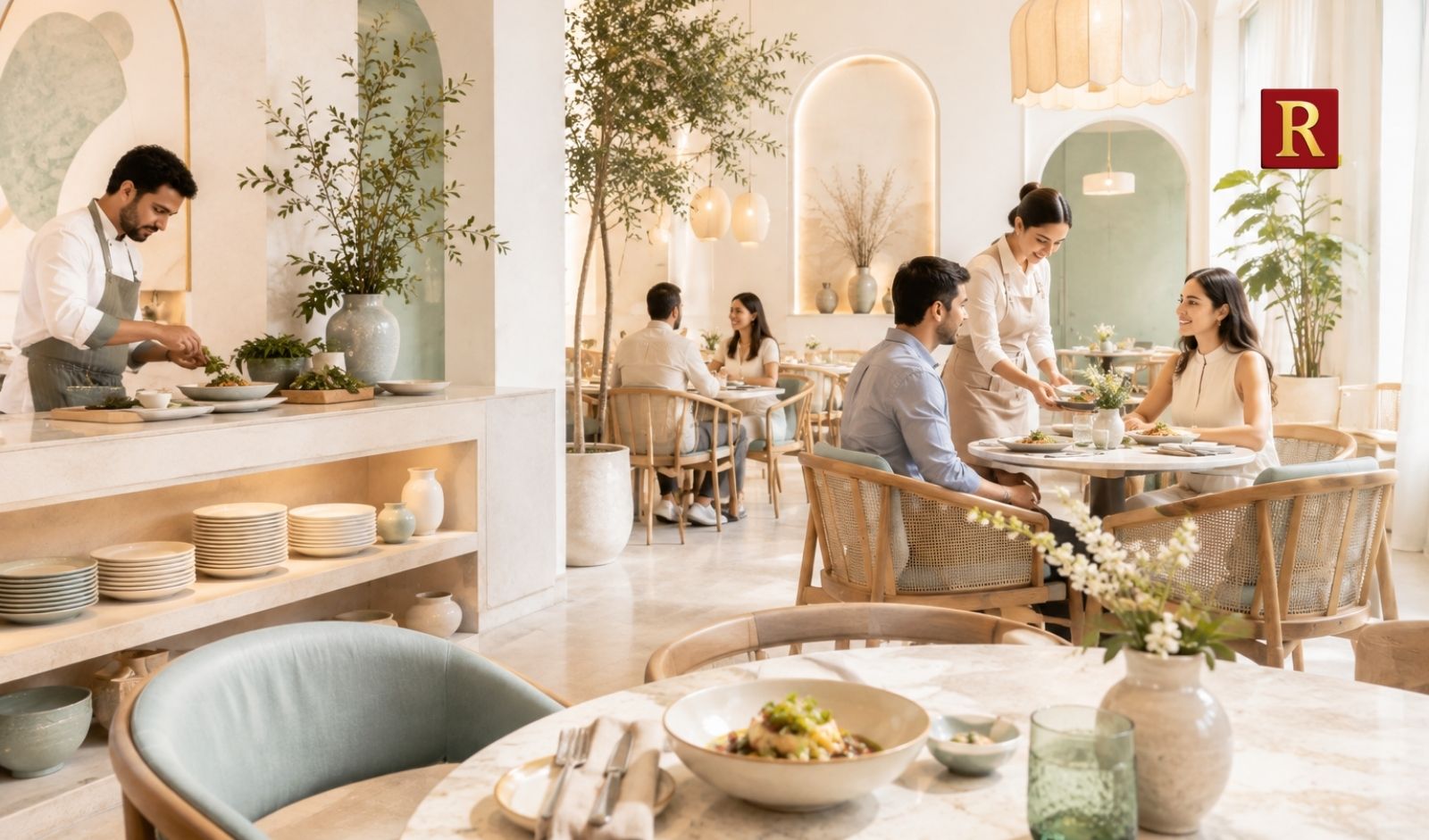
A restaurant can look very different depending on the time of day. At 10 am, a person may be sitting with a laptop and a coffee. At 1 pm, the same table may host a work meeting. By evening, friends may arrive for snacks and conversation. Later at night, another group may use the same space for a birthday, date or live music. The food may change slightly. But the bigger change is in the reason people are walking through the door. Restaurants are no longer only places to have a meal. They are becoming spaces to meet people, work, celebrate, relax, discover new food and spend time.
This shift is important for India's restaurant industry. Dine-in accounted for 59.49% of the country's foodservice market in 2025, according to Mordor Intelligence. The same research estimates that India's foodservice market will grow from USD 85.19 billion in 2025 to USD 153.37 billion by 2031. The opportunity, therefore, is not only about serving more meals. It is about giving consumers more reasons to stay and return.
Why People Are Choosing Restaurants for More Than Food
1. Restaurants have become social meeting points
One of the biggest reasons for dining out is still simple: people want to spend time together. A 2024 consumer behaviour snapshot based on NRAI and Frost & Sullivan analysis found that 75% of Indians dine out for get-togethers or to hang out with family, friends and colleagues. The same data showed that 22% dine out with colleagues, highlighting how restaurants have also entered professional social life. This changes the role of the restaurant. A home can be comfortable, but it may not always work for a large group. An office can be convenient, but it is not designed for relaxed conversations. Restaurants sit somewhere in between. They offer food, seating, service and a neutral environment where people can meet without having to host anyone at home.
2. Work is moving to cafés and casual restaurants
The rise of hybrid and flexible work has created a new customer for cafés and restaurants. A person working remotely may need a place outside the home for a few hours. A founder may want an informal meeting with a potential partner. A freelancer may want to work around other people instead of sitting alone. This is why seating, Wi-Fi, charging points, lighting and noise levels are becoming more relevant to restaurant design. The idea is not that every restaurant should become a co-working space. It is about making the space flexible enough to support different types of customers. A coffee can now come with a workspace. A lunch can become a meeting. A casual table can become a temporary office. That creates another opportunity for operators: increasing the number of useful hours in which their space can attract customers.
3. Small celebrations are becoming regular dining occasions
Celebrations no longer have to mean weddings or large family functions. People now have many smaller reasons to go out. A promotion, farewell, birthday, reunion, anniversary, graduation or team achievement can become an occasion for a restaurant visit. This has changed the psychology of dining out.
- Earlier, the thinking could be: “It is a special occasion, so let's go to a restaurant.”
- Now it can be: “Let's go to a restaurant and make it a special occasion.”
That difference matters. It means restaurants can become part of everyday emotional moments instead of depending only on major celebrations. For operators, group-friendly seating, sharing menus, customised cakes, private areas and celebration packages can help capture this demand without turning every visit into a formal event.
4. Restaurants are becoming entertainment destinations
Food and entertainment are increasingly being combined. Live music, sports screenings, stand-up comedy, quizzes, open mics, DJ nights and themed events can turn an ordinary dinner into a longer evening. The customer is no longer paying only for a plate of food. They are paying for an experience. This is particularly relevant for casual dining restaurants, pubs, bars and cafés that need to compete for discretionary spending.
The rise of experiential dining also shows that consumers continue to value engaging experiences even when price sensitivity is high. Euromonitor's 2026 assessment of India's consumer foodservice market noted that operators invested in experiential dining and loyalty programmes despite rising consumer price sensitivity. For a restaurant, this creates an important distinction. Dinner sells a meal. Entertainment can sell an evening.
5. Restaurants give people a change of environment
Not every restaurant visit has a big purpose. Sometimes people simply want to get out of the house. This is where ambience becomes important. Lighting, music, seating, temperature, interiors and service all influence how long people want to stay. A quiet café can offer an escape from a busy home or office. A lively restaurant can provide energy after a long workday. A rooftop venue can turn a regular meal into a night out. This is why restaurant design is increasingly linked to consumer behaviour. The physical space itself becomes part of the product.
6. Dating and personal connections need neutral spaces
Restaurants also offer an easy setting for personal interactions. A meal gives people something to do while they talk. The environment is public but can still feel private. There is enough structure to avoid awkwardness, without making the meeting feel formal. This works for first dates, casual dates, friendship meet-ups and even professional introductions. The restaurant becomes a neutral social space. It does not require anyone to host. It does not require a fixed activity. People can simply sit, eat and talk.
7. Consumers are increasingly choosing restaurants based on mood
One of the more interesting changes is that people may not always start with cuisine. They may start with a mood. They may want somewhere quiet. Somewhere lively. Somewhere suitable for a group. Somewhere new. Somewhere comfortable enough to work. Somewhere that feels special without being expensive. This is creating a shift from occasion-led dining to mood-led dining. A restaurant can therefore serve several customer needs without changing its basic identity. The same outlet can be a café in the morning, a meeting place at lunch and an entertainment venue at night.
The Restaurant Is Becoming a “Third Place”
There is a useful way to understand this change. Home is traditionally the first place. Work is the second. Restaurants and cafés are increasingly taking the role of a third place. But India's version of this idea is more flexible.
- A restaurant can combine: Food + comfort + people + entertainment + work + discovery
This is particularly visible in urban markets where consumers spend long hours commuting and working. It is also moving beyond metros. A 2025 Grant Thornton Bharat and NRAI study of more than 160 restaurant operators across 50-plus cities found that nearly 94% planned expansion into Tier-II and Tier-III markets. The report also found that branded restaurants in smaller cities are becoming destinations for celebrations, family outings and weekend leisure. That means the social role of restaurants is not limited to metropolitan consumers.
What This Means for Restaurant Businesses
This shift creates a new question for restaurant owners. Instead of asking only, “What should we serve?”, operators need to ask, “Why should someone choose our space today?” A restaurant can build different reasons to visit through its layout, menu, music, events and service. It can also think about its day in terms of different customer needs.
- Morning: coffee and work
- Afternoon: meetings and lunch
- Evening: snacks and socialising
- Night: dinner and entertainment
This can improve the use of seats throughout the day. The economics matter because customers are not only buying food. They are using a restaurant's physical space for a period of time. This makes seat utilisation, average spend and repeat visits important operating metrics. India's foodservice market recorded an estimated 24.82 billion transactions in 2025, according to Ken Research, while consumers averaged 7.9 eating-out occasions per month in 2023-24. For restaurants, the opportunity is therefore not simply to attract a customer once. It is to become useful enough that the customer has several reasons to return.
The Future
The restaurant of the future may not be defined only by its cuisine. Its strength could come from how many roles it can play without losing its identity. It could be the place where someone finishes a presentation, meets an old friend, celebrates a promotion, watches a match, goes on a date or discovers a new dish. Food will remain at the centre. But around that food, restaurants are building something larger: time, connection, comfort and experience. The biggest change may therefore be simple. People are not always going to restaurants because they need somewhere to eat. Increasingly, they are going because they need somewhere to be.
Saptopriya Ghosal
Feature Writer
I am a dedicated media professional with a bachelor's degree in mass communication from the State University of Calcutta and a postgraduate degree from Amity University. My academic journey has equipped me with a profound understanding of storytelling and communication. Passionate about the dynamic world of media, I continually strive to explore new ways to engage and inform through compelling narratives.