
Why Restaurant Bathrooms Are Becoming Part of Brand Identity
But customers may still use what they see in the bathroom as a signal of how carefully the business is managed. For restaurant operators, that makes the bathroom an important part of perceived quality.

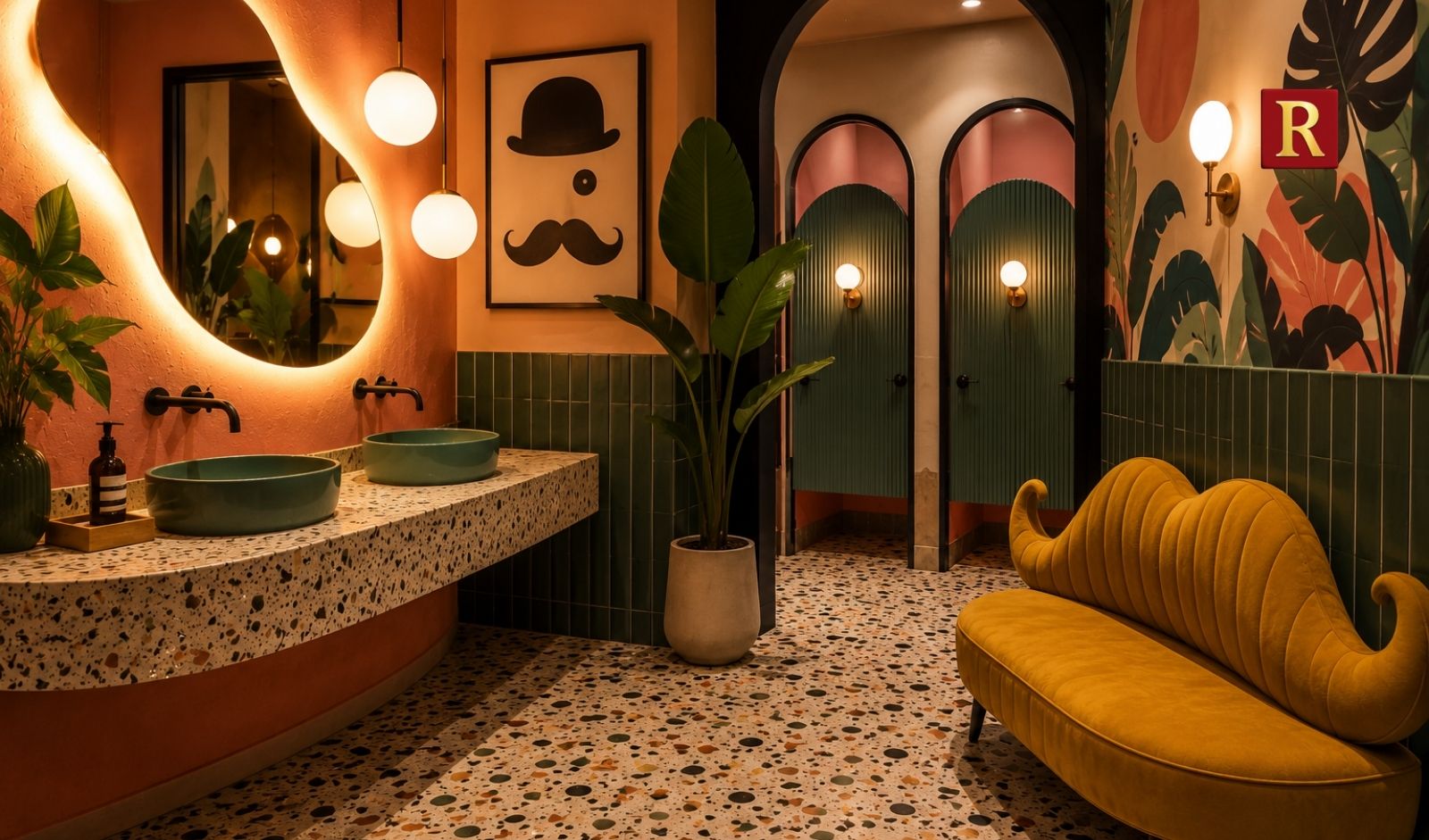
A restaurant bathroom is no longer just a utility space. For many diners, it is another point where they experience the brand. The difference can be simple. A clean, well-maintained bathroom can reinforce a restaurant's attention to detail. A poorly maintained one can weaken that impression. Design also matters, but it works best when it supports hygiene, comfort and the restaurant's overall identity. This is why bathrooms are receiving more attention in restaurant design. The focus is shifting from simply providing a functional washroom to creating a space that feels connected to the dining experience.
The Bathroom Story
Customers do not enter a restaurant bathroom expecting to judge the kitchen. Yet research shows that restroom conditions can influence how they perceive cleanliness and satisfaction. A 2019 tandfonline study published in the Journal of Foodservice Business Research found that restroom cleanliness affected customer satisfaction. It also found that restroom appearance had the strongest influence on perceptions of cleanliness, followed by the availability of personal hygiene items.
Another study by Stockton compared customer perceptions with actual cleanliness measurements across restaurant dining and restroom surfaces. It found that customers use their own criteria when deciding whether a restaurant restroom looks clean. That distinction is important. A dirty bathroom does not automatically mean that a restaurant's kitchen is unhygienic. Research has specifically found no direct relationship between restroom cleanliness and kitchen cleanliness. But customers may still use what they see in the bathroom as a signal of how carefully the business is managed. For restaurant operators, that makes the bathroom an important part of perceived quality.
Cleanliness Comes Before Design
The most attractive bathroom cannot compensate for poor maintenance.
For a restaurant, the basic checklist remains straightforward:
- Clean toilets and sinks
- Working taps and flushes
- Soap that is regularly replenished
- Adequate hand-drying facilities
- Clean mirrors
- Dry and safe floors
- Proper waste disposal
- Good ventilation
- Regular cleaning throughout service hours
This also connects to India's food-safety framework. The Food Safety and Standards Authority of India (FSSAI) requires food businesses to follow hygiene and sanitary practices under its regulations. Its Hygiene Rating Scheme covers food-service establishments such as restaurants, cafeterias and dhabas and is intended to encourage better hygiene and help consumers make informed choices. This gives restaurant bathrooms a wider operational relevance. They may not be a substitute for kitchen hygiene controls, but they are part of the customer's visible experience of the establishment.
When the Bathroom Becomes an Extension of the Brand
Once hygiene and functionality are established, design can turn the bathroom into a brand touchpoint.
A restaurant does not need to copy its dining room exactly. It can carry selected elements into the bathroom.
A modern café might use the same colour palette, graphic language and playful details found across its interiors.
A fine-dining restaurant may use restrained materials, warm lighting, premium fixtures and a quieter design.
A regional Indian restaurant could bring in local craft, patterns, materials or artwork without turning the bathroom into a themed set.
The objective is consistency. The bathroom should feel like it belongs to the same restaurant. That is more valuable than simply making it look expensive.
Why Mirrors, Lighting and Materials Matter
Some bathroom elements have an outsized effect on how a space feels. Mirrors can make a compact room appear larger and can also become a recognisable visual feature. Lighting can influence comfort, visibility and atmosphere. Very dim lighting may create ambience but can make grooming difficult. Very harsh lighting can make a premium space feel clinical. Materials also need to do more than look good. Restaurant bathrooms experience repeated use, moisture and frequent cleaning. Flooring, wall finishes, partitions and fixtures therefore need to withstand regular maintenance. A material that photographs beautifully but stains easily or becomes difficult to clean can create an operational problem.
- For restaurant designers, the better question is not simply, “Does it look good?” It is: “Will it still look good after thousands of guest visits and repeated cleaning?”
The Rise of the “Bathroom Moment”
Social media has added another layer to bathroom design. Restaurants in several markets now use distinctive bathrooms as part of their visual identity. Eater has documented restaurants using murals, mirrors, themed interiors and other design features to make restrooms memorable, while also questioning where the line between visual appeal and function should sit. More recent restaurant coverage has continued to show bathrooms being designed as extensions of a venue's overall aesthetic, with some becoming popular locations for photographs. But restaurants should be careful about chasing the selfie effect. A neon sign may generate a photograph. A clean, comfortable and well-designed space can generate a better overall experience. The strongest bathroom designs can achieve both without making social media the main purpose.
Accessibility Is Part of Brand Experience
A restaurant cannot claim to be customer-focused if its facilities exclude some customers. Accessibility should be considered during the design stage. This includes entrance access, clear movement space, suitable fixtures, grab bars, signage and an appropriate accessible toilet arrangement.
India's accessibility framework specifically covers public-facing buildings. The Harmonised Guidelines and Space Standards for Barrier-Free Built Environment state that public buildings, including restaurants, need to address accessibility requirements. The guidelines also provide for at least one accessible unisex toilet in buildings. The Department of Empowerment of Persons with Disabilities also identifies restaurants and other public-facing commercial spaces within the broader scope of accessible built environments. Its current guidance points to the Harmonised Guidelines and Standards for Universal Accessibility in India, 2021. For restaurant operators, accessibility should therefore be treated as part of responsible design, not as an optional visual upgrade.
The Technical Side of a Better Restaurant Bathroom
Good bathroom design requires more than selecting tiles and mirrors.
Ventilation: Moisture and odour can quickly affect guest comfort. Proper ventilation needs to be considered alongside the room's size, usage and building systems.
Drainage: Water accumulation creates hygiene and safety problems. Drainage needs to work with the flooring design and cleaning process.
Slip resistance: Wet restaurant bathrooms need flooring that supports safe movement. A visually attractive floor is not useful if it becomes hazardous when wet.
Durability: Fixtures and finishes must tolerate heavy use and regular cleaning. Easy replacement is also valuable because restaurant operations cannot afford long maintenance shutdowns.
Water efficiency: Efficient taps, flushing systems and other water-saving fixtures can reduce consumption without compromising hygiene.
Maintenance access: Plumbing and other service components should be accessible for inspection and repair. A design that requires major dismantling for a small repair can become expensive over time.
These decisions may never appear in a customer's Instagram post. They can, however, determine whether the bathroom remains functional after the opening-day excitement disappears.
Different Restaurants Need Different Bathroom Strategies
There is no single formula.
Restaurant format | Main bathroom priority |
Fine dining | Comfort, privacy and premium detailing |
Café | Personality, design and easy maintenance |
QSR | Hygiene, durability and fast cleanin |
Bar or brewery | High-footfall durability and ventilation |
Highway restaurant | Cleanliness, accessibility and reliability |
Regional restaurant | Cultural identity with practical materials |
Luxury hospitality | Premium experience, privacy and sensory details |
This is where restaurant operators should avoid copying trends blindly. A high-volume QSR does not need the same bathroom as a 60-seat fine-dining restaurant. Its priorities are different.
The Real Test Comes After Opening Day
A restaurant bathroom can look perfect when the doors first open. The harder test begins later.
After months of service, operators need to ask:
- Are fixtures still working?
- Are surfaces easy to clean?
- Is ventilation adequate during peak hours?
- Are soap and paper supplies consistently available?
- Are floors safe when wet?
- Can staff inspect the space quickly?
- Are maintenance issues being recorded and resolved?
This makes bathroom design partly an operations issue. The most successful approach is to build bathroom checks into the restaurant's daily maintenance routine rather than treating cleaning as an occasional task.
The Bathroom Does Not Need to Be Spectacular
The growing attention on restaurant bathrooms is not really about making every washroom luxurious or photogenic. It is about recognising that customers experience a restaurant through many small details. The bathroom is one of them. A well-planned restaurant bathroom should first be clean, functional, safe and accessible. Then it can become visually distinctive and reinforce the restaurant's identity. For restaurant owners, the smartest investment is not necessarily a more expensive bathroom. It is a more intentional one. The best restaurant bathrooms do not feel like an unrelated room hidden behind the dining area. They feel like a natural continuation of the restaurant's promise: thoughtful, comfortable and properly maintained. In the end, the bathroom is not replacing food, service or ambience as a reason to visit a restaurant. It is doing something more subtle. It is helping complete the experience.
Saptopriya Ghosal
Feature Writer
I am a dedicated media professional with a bachelor's degree in mass communication from the State University of Calcutta and a postgraduate degree from Amity University. My academic journey has equipped me with a profound understanding of storytelling and communication. Passionate about the dynamic world of media, I continually strive to explore new ways to engage and inform through compelling narratives.



































































