
Why Pop-Up Restaurants Are Becoming India's Newest Dining Trend
The next restaurant idea may not begin with a lease, a signboard and a large kitchen. Sometimes, it may begin with a small menu, a few tables and three nights to see what happens.

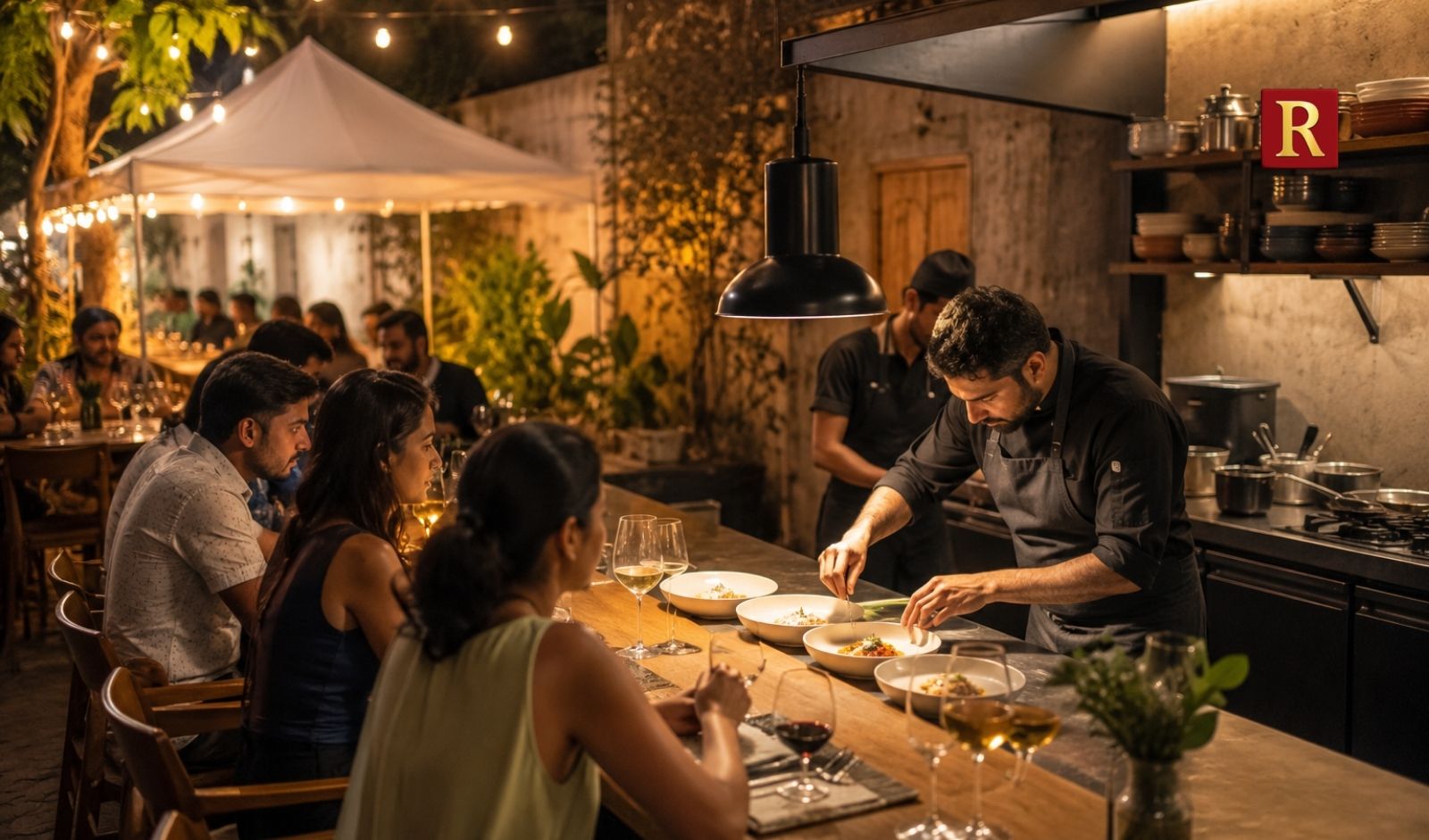
A restaurant does not always need a permanent address to attract diners. Across India's major food cities, chefs, hotels and restaurant brands are increasingly using short-term pop-ups to introduce new cuisines, test menus and create limited dining experiences. The format can last for one evening, a weekend, a few days or a week. Some pop-ups bring a visiting chef into an established restaurant. Others turn a temporary space into a restaurant for a short period.
The growing interest comes at an interesting time for India's food-service industry. The country's food-services market was estimated at around $90 billion in FY26 and is projected to reach $150 billion by FY31, according to Redseer's 2026 market report. The organised segment is expected to grow at 17–18% CAGR, much faster than the unorganised market. Pop-ups are only one part of this larger market. But they are becoming an interesting way for the industry to experiment.
What Makes a Pop-Up Restaurant Different?
A pop-up restaurant is a temporary food-service concept. It usually has a fixed menu, limited seats and a defined operating period. It can take several forms. A chef may take over another restaurant's kitchen for three days. A hotel may invite an international chef for a special dinner. A regional-food specialist may create a menu around a lesser-known cuisine. A restaurant may also collaborate with another chef, bar or brand for a one-night experience.
This flexibility is the biggest difference from a conventional restaurant. A permanent restaurant has to think about its menu, staffing, rent and operations every day. A pop-up can focus on one idea and give it a limited window. That makes it particularly useful for experimentation.
The New Dining Mindset
One reason pop-ups work is simple: they give diners a reason to try something they may not find on a regular menu.
A limited-time event can introduce:
- A visiting chef
- An unfamiliar cuisine
- A fixed tasting menu
- Regional recipes
- Experimental dishes
- Chef collaborations
- Seasonal ingredients
The limited period also changes how people approach the experience. A permanent restaurant can be visited next month. A three-day pop-up cannot. That creates genuine urgency without needing exaggerated marketing.
Recent Pop-Ups Show How Wide the Format Has Become
The trend is not limited to one city or cuisine. In February 2026, Maya at Trident BKC in Mumbai hosted a four-day showcase of Pathare Prabhu cuisine. Led by Chef Bimba Nayak, the menu explored a culinary tradition with more than 700 years of history. Dishes included Bhanvale, Konphal Pattice, Stuffed Pomfret, Chimbori che Khadkhadle and Kalimirch Kombadi.
The example is important because it shows how a pop-up can do more than sell dinner. It can give a lesser-known food tradition a temporary platform in a major urban dining room. Bengaluru offered another example in April. Goa-based Hosa hosted a three-day pop-up at The Persian Terrace. Its nine-course menu explored micro-regional food from South India, including Chettinad Lamb Chops, Madurai Lamb Shank and Shimeji Mushroom Varuval. The reported price was around ₹3,500 for two, excluding alcohol.
In June, The Oberoi Bengaluru hosted an Isaan-focused pop-up at Rim Naam. The five-night event brought together Chef Tam and visiting chef Klae to showcase the food of Thailand's Isaan region. These examples show the range of the format. Pop-ups can be about Indian regional food, international cuisine, chef collaborations or a restaurant's own creative direction.
Regional Food The Biggest Opportunities
This is where India's pop-up culture becomes particularly interesting. India has hundreds of food traditions that rarely receive space on mainstream restaurant menus. Some are strongly tied to communities, homes or specific regions. A permanent restaurant built around one lesser-known cuisine can be a difficult commercial proposition. A four-day pop-up is a different proposition.
The operator can introduce the cuisine to a new audience without immediately committing to a full restaurant. The Pathare Prabhu example illustrates this well. The cuisine has historically remained largely within home kitchens, making the pop-up format a way to bring that food into a contemporary restaurant setting. For chefs, this creates an opportunity to preserve context while experimenting with presentation and service. For diners, it creates a chance to discover food that may not otherwise be available nearby.
Pop-Ups Give Chefs a Low-Commitment Testing Ground
There is also a strong business reason behind the format. Opening a permanent restaurant involves significant investment in property, interiors, kitchen equipment, staff, inventory and marketing. A chef testing a new concept does not always know whether customers will actually pay for it.
A pop-up can work as an F&B version of a Minimum Viable Product, or MVP.
The process can be simple: Idea - Pop-up - Customer response - Data - Refinement - Next step
Operators can measure which dishes sell, how many seats are filled, what customers are willing to pay and which audience responds to the concept. For example, a 60-seat pop-up that sells 54 seats has a 90% seat-fill rate. That number does not prove that a permanent restaurant will succeed. But it gives the operator a useful demand signal. Other useful measurements include average spend per guest, food-cost percentage, no-show rate, waitlist size and dish-level sales.
Hotels Have a Natural Advantage
Hotels are becoming useful hosts for pop-ups because they already have much of the infrastructure required for a food event.
They may have:
- Professional kitchens
- Trained service teams
- Dining rooms
- Existing customers
- Marketing teams
- Reservation systems
This makes a visiting-chef collaboration easier to execute. In June 2026, Australian-born Chef Jack Jarrott of Abu Dhabi's Sand & Koal brought his open-fire and Arabian-inspired cooking to pop-ups at Fenix, The Oberoi Mumbai, followed by threesixtyone° at The Oberoi Gurgaon. The Mumbai dates were June 18–19 and the Gurgaon dates June 26–27. The reported price was ₹6,500 plus taxes for two. For hotels, such events can refresh the dining calendar without permanently changing an existing restaurant concept.
Social Media Makes the Format Easier to Market
Pop-ups also fit naturally into digital discovery.
A single event can generate several pieces of content: Chef announcement - Menu reveal - Behind-the-scenes preparation - Event coverage - Customer posts - Recap
This creates a content cycle around an experience that may only last a few days. The temporary nature itself becomes part of the communication. But social media cannot replace the food. A pop-up may attract customers through photographs and videos, but poor food, weak service or confusing operations can quickly damage the experience. That is why the strongest pop-ups need both good storytelling and good execution.
The Business Model Still Has Limits
Pop-ups are flexible, but they are not automatically cheaper or more profitable. Operators still have to consider venue costs, staffing, ingredients, logistics, marketing, equipment, payment charges and food wastage. They also need to understand that a successful weekend does not automatically mean a permanent restaurant will work. A pop-up tests a concept under controlled conditions. A permanent restaurant has to deal with weekday demand, recurring customers, rent, payroll and consistent operations throughout the year. That difference matters.
Pop-Ups Need Compliance
The operational side also includes compliance. FSSAI states that food businesses in India must be licensed or registered. Its registration framework specifically includes temporary stall holders and temporary food stalls among eligible food businesses. For petty food businesses with annual turnover up to ₹12 lakh, registration is applicable under the stated criteria, while businesses above the relevant threshold require a licence. The exact requirement depends on the nature and scale of the operation. For operators, that means a pop-up should be planned with food safety, hygiene, storage, staffing and applicable local permissions from the beginning. A short event still represents a real food business.
What Comes Next for Pop-Ups?
The most interesting part of the trend is that a pop-up does not have to end with the event. There are several possible outcomes.
Pop-up to restaurant: The concept proves strong enough to become permanent.
Pop-up to residency: The chef returns periodically without opening a full-time outlet.
Pop-up to event brand: The temporary format itself becomes a recurring business.
This flexibility could make pop-ups useful to India's increasingly organised food-service market. The broader industry is already moving towards more organised formats, focused menus and new operating models. Redseer expects organised food services to grow at 17–18% annually through FY31, while online food delivery's share of the overall market is projected to rise from 11% in FY26 to 18% by FY31. Pop-ups fit into this environment because they allow businesses to stay focused while testing something new.
The Real Appeal Is Flexibility
Pop-up restaurants are not replacing traditional restaurants. They are creating another layer of dining.
- For diners, they offer discovery and limited experiences.
- For chefs, they provide a controlled space to experiment.
- For hotels, they create new programming around existing infrastructure.
- For restaurant entrepreneurs, they can provide early evidence about whether an idea has an audience.
And for regional cuisines, they can create a temporary but valuable stage. That may be the real reason pop-ups are becoming more visible in India. The format matches an industry that wants to experiment without always making a permanent commitment. The next restaurant idea may not begin with a lease, a signboard and a large kitchen. Sometimes, it may begin with a small menu, a few tables and three nights to see what happens.
Saptopriya Ghosal
Feature Writer
I am a dedicated media professional with a bachelor's degree in mass communication from the State University of Calcutta and a postgraduate degree from Amity University. My academic journey has equipped me with a profound understanding of storytelling and communication. Passionate about the dynamic world of media, I continually strive to explore new ways to engage and inform through compelling narratives.



































































