
Why Most Cloud Kitchens Fail in India
Despite these challenges, cloud kitchens still offer significant opportunities. The businesses that succeed focus on fundamentals rather than shortcuts. They understand their numbers. They build strong brands.

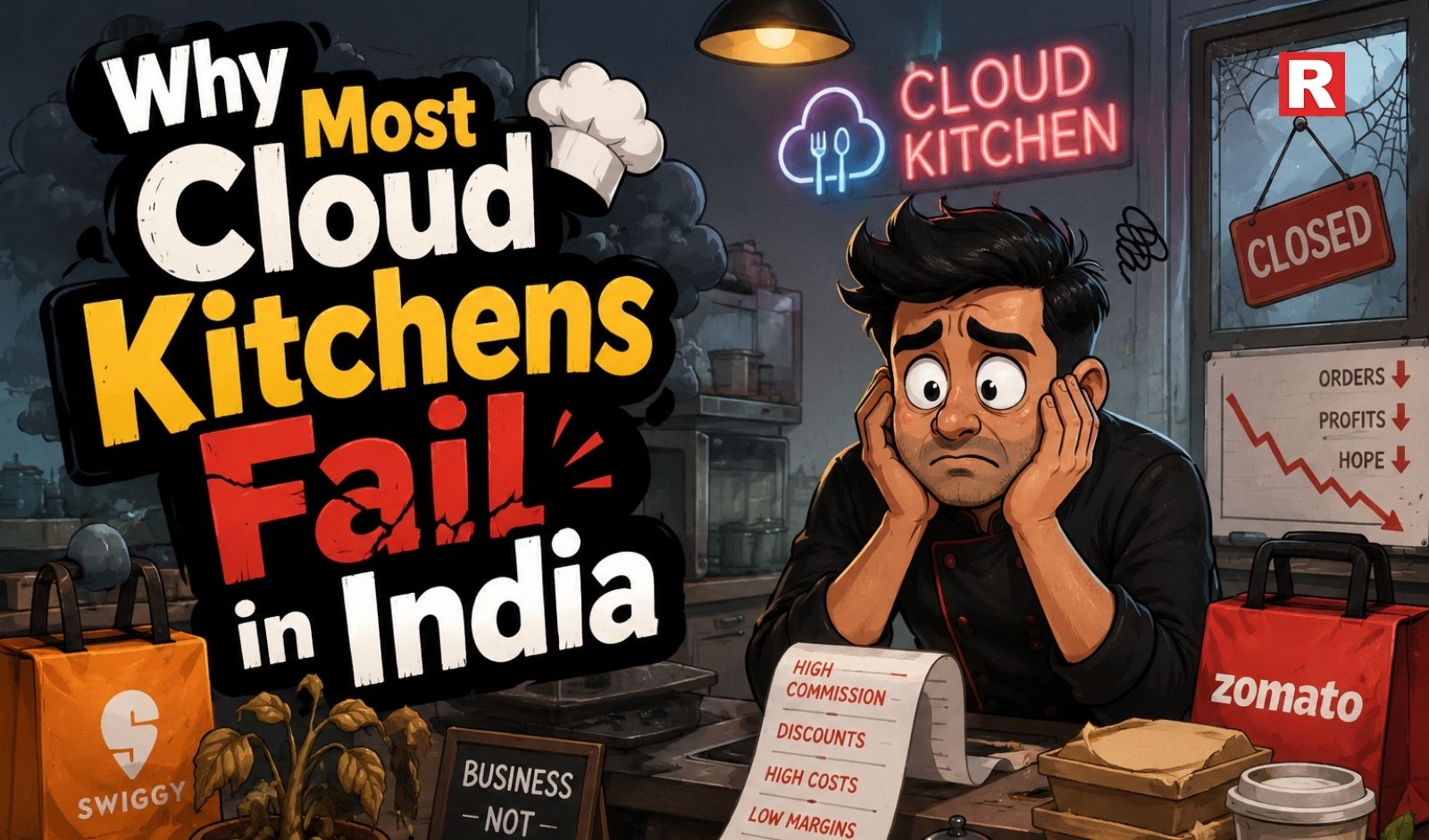
Cloud kitchens changed the food business in India. They promised lower costs, faster expansion, and easier operations compared to traditional restaurants. With no dining space to manage and increasing demand from food delivery platforms, many entrepreneurs believed cloud kitchens were the future of food service.
The model looked simple. Rent a kitchen, create a menu, list the brand on delivery apps, and start receiving orders.
However, the reality has been very different.
While India's online food delivery market continues to grow, many cloud kitchens struggle to survive. Some shut down within months of launch, while others continue operating without making meaningful profits. Behind the attractive business model lies a complex system of costs, competition, customer acquisition, and operational challenges that many founders underestimate. Understanding why cloud kitchens fail can help entrepreneurs avoid expensive mistakes and build a stronger business.
The Rapid Growth of Cloud Kitchens in India
The rise of food delivery platforms transformed the way Indians consume food. Consumers now expect restaurant-quality meals delivered quickly to their homes and workplaces. The COVID-19 pandemic accelerated this trend. Restaurants that relied on dine-in customers were forced to adapt, and many turned to delivery-only models. At the same time, new entrepreneurs entered the market, attracted by the relatively low investment required to start a cloud kitchen.
Cities such as Bengaluru, Mumbai, Delhi NCR, Hyderabad, and Pune witnessed a surge in cloud kitchen launches. Investors also poured money into food-tech businesses, further increasing excitement around the sector. Yet, growth in demand does not automatically translate into profitability.
Poor Unit Economics Remains the Biggest Problem
One of the most common reasons cloud kitchens fail is poor unit economics. Many founders focus heavily on order volume. They celebrate growing sales numbers but fail to understand whether each order is generating profit.
Consider a dish sold for Rs 300.
The ingredient cost may be around Rs 90. Packaging can cost Rs 20. Delivery platform commissions often range between 20 and 30 percent. Add discounts, taxes, salaries, rent, utilities, and marketing expenses, and the profit margin becomes extremely small. In some cases, businesses lose money on every order while believing they are growing. A successful cloud kitchen must understand its contribution margin, food cost percentage, and break-even point from day one. Without these numbers, growth can quickly become a financial burden rather than an advantage.
Dependence on Food Delivery Platforms Creates Risk
Many cloud kitchens receive almost all their orders through platforms such as Swiggy and Zomato. While these platforms provide access to millions of customers, they also create dependency.
Many cloud kitchens receive the majority of their orders through food delivery platforms such as Swiggy and Zomato.
These platforms provide access to a large customer base, making it easier for new brands to gain visibility.
However, heavy reliance on delivery aggregators creates a significant business dependency.
Restaurants often have limited access to customer data, making it difficult to build long-term relationships with diners.
Cloud kitchens cannot fully control platform algorithms, rankings, or visibility on these apps.
A sudden decline in search rankings or app visibility can lead to a sharp drop in daily orders.
Changes in commission structures, delivery charges, or platform policies can directly affect profit margins.
Overdependence on third-party platforms leaves businesses vulnerable to decisions beyond their control.
Successful cloud kitchen brands focus on reducing this dependency over time.
They build direct ordering channels through their own websites and mobile apps.
Many invest in loyalty programs to encourage repeat purchases and improve customer retention.
Social media communities help brands engage directly with customers and strengthen brand recall.
WhatsApp ordering systems are increasingly being used to generate direct orders and reduce commission costs.
A balanced mix of aggregator orders and direct sales creates a more sustainable and profitable business model.
Excessive Discounts Destroy Margins
Discounts attract customers. However, relying on discounts as a growth strategy can be dangerous. Many cloud kitchens offer large discounts to gain visibility and increase order volumes. While this may boost short-term sales, it often damages profitability. Customers who order only during promotions rarely become loyal customers. They simply move to whichever restaurant offers the biggest discount. Over time, businesses become trapped in a cycle where they must continue offering discounts just to maintain sales levels. Instead of competing solely on price, successful brands focus on quality, consistency, convenience, and customer experience.
Weak Branding Leads to Low Customer Retention
A common misconception is that good food alone guarantees success. Food quality is important, but it is only one part of the equation.
Many cloud kitchen owners believe that serving great food alone is enough to build a successful business, but that is rarely the case in today's competitive market.
Food quality remains essential, but customers on delivery apps are exposed to hundreds of brands offering similar cuisines and price points.
If a brand fails to stand out, customers may order once and never remember it again.
Strong branding through attractive packaging, a compelling brand story, clear menu presentation, and an active social media presence helps create recognition and trust.
A memorable brand encourages repeat purchases, increasing customer loyalty and reducing reliance on paid promotions.
Without a distinct identity, cloud kitchens often struggle to retain customers and end up spending heavily on acquiring new ones to sustain sales.
Poor Menu Planning Hurts Profitability
Not every dish works well in a cloud kitchen environment. Some foods lose quality during transportation. Others require expensive ingredients or complex preparation processes.
Successful cloud kitchens carefully engineer their menus.
They focus on dishes that travel well, maintain consistency, and generate healthy margins. Rice bowls, pizzas, wraps, biryanis, and desserts often perform well because they retain quality during delivery. Many struggling kitchens make the mistake of offering large menus with too many ingredients. This increases inventory costs, creates wastage, and complicates kitchen operations. A smaller and optimized menu is often more profitable than a large one.
Customer Acquisition Costs Continue to Rise
Customer acquisition has become one of the biggest challenges for cloud kitchens in India. With thousands of brands competing on food delivery platforms, gaining visibility often requires significant spending on sponsored listings, advertisements, and discounts. Industry estimates suggest that cloud kitchens can spend anywhere between Rs 150 and Rs 500 to acquire a new customer, depending on the city and cuisine category. At the same time, acquiring a new customer can cost up to five times more than retaining an existing one. This puts immense pressure on profit margins, especially for businesses already dealing with platform commissions of 20–30 percent.
Key challenges include:
High competition from thousands of restaurant and cloud kitchen brands.
Customer acquisition costs ranging from Rs 150–Rs 500 per new customer.
Heavy spending on app advertisements, sponsored placements, and discounts.
Lower profitability when businesses focus only on attracting new customers.
Repeat customers typically spend more and require less marketing investment.
Lack of loyalty programs and personalized offers reduces customer retention.
Inconsistent food quality or delivery experiences can discourage repeat orders.
Successful cloud kitchens prioritize customer retention, as even a 5% increase in repeat customers can significantly improve long-term profitability and reduce marketing expenses.
Expanding Too Fast Creates Operational Challenges
Some entrepreneurs launch multiple brands from a single kitchen within a short period. While the strategy appears attractive, it often creates operational complexity. Managing multiple menus, inventories, recipes, suppliers, and marketing campaigns requires strong systems and experienced management. Without proper controls, food quality suffers, wastage increases, and customer satisfaction declines. Many successful cloud kitchen operators begin with one strong concept. Once operations become stable and profitable, they gradually expand into additional categories. Patience often leads to better long-term results.
Operational Inefficiencies Reduce Profits
Even small operational mistakes can significantly affect margins. Food wastage, delayed deliveries, inventory leakages, inaccurate demand forecasting, and inconsistent recipes all reduce profitability.
Technology plays a critical role in solving these challenges. Inventory management software, kitchen display systems, automated procurement tools, and integrated POS systems help improve efficiency and reduce errors. Cloud kitchens that invest in operational excellence are often better positioned to scale successfully.
The Path to Success
The business environment has become more challenging in recent years. Raw material prices have increased. Packaging costs continue to rise. Utility bills, salaries, and commercial gas expenses also place pressure on margins. For businesses already operating on thin profits, even small increases in costs can create financial difficulties. This makes cost control and supplier management more important than ever before. Despite these challenges, cloud kitchens still offer significant opportunities. The businesses that succeed focus on fundamentals rather than shortcuts. They understand their numbers. They build strong brands. They optimize menus. They invest in customer retention. Most importantly, they treat profitability as a priority from the beginning. The cloud kitchen industry is no longer just about delivering food. It is about creating a sustainable business model that balances customer experience, operational efficiency, and financial discipline. As India's food delivery ecosystem continues to expand, the winners will not necessarily be the brands with the most orders. They will be the brands that understand how to turn those orders into long-term profits.
Saptopriya Ghosal
Feature Writer
I am a dedicated media professional with a bachelor's degree in mass communication from the State University of Calcutta and a postgraduate degree from Amity University. My academic journey has equipped me with a profound understanding of storytelling and communication. Passionate about the dynamic world of media, I continually strive to explore new ways to engage and inform through compelling narratives.



































































