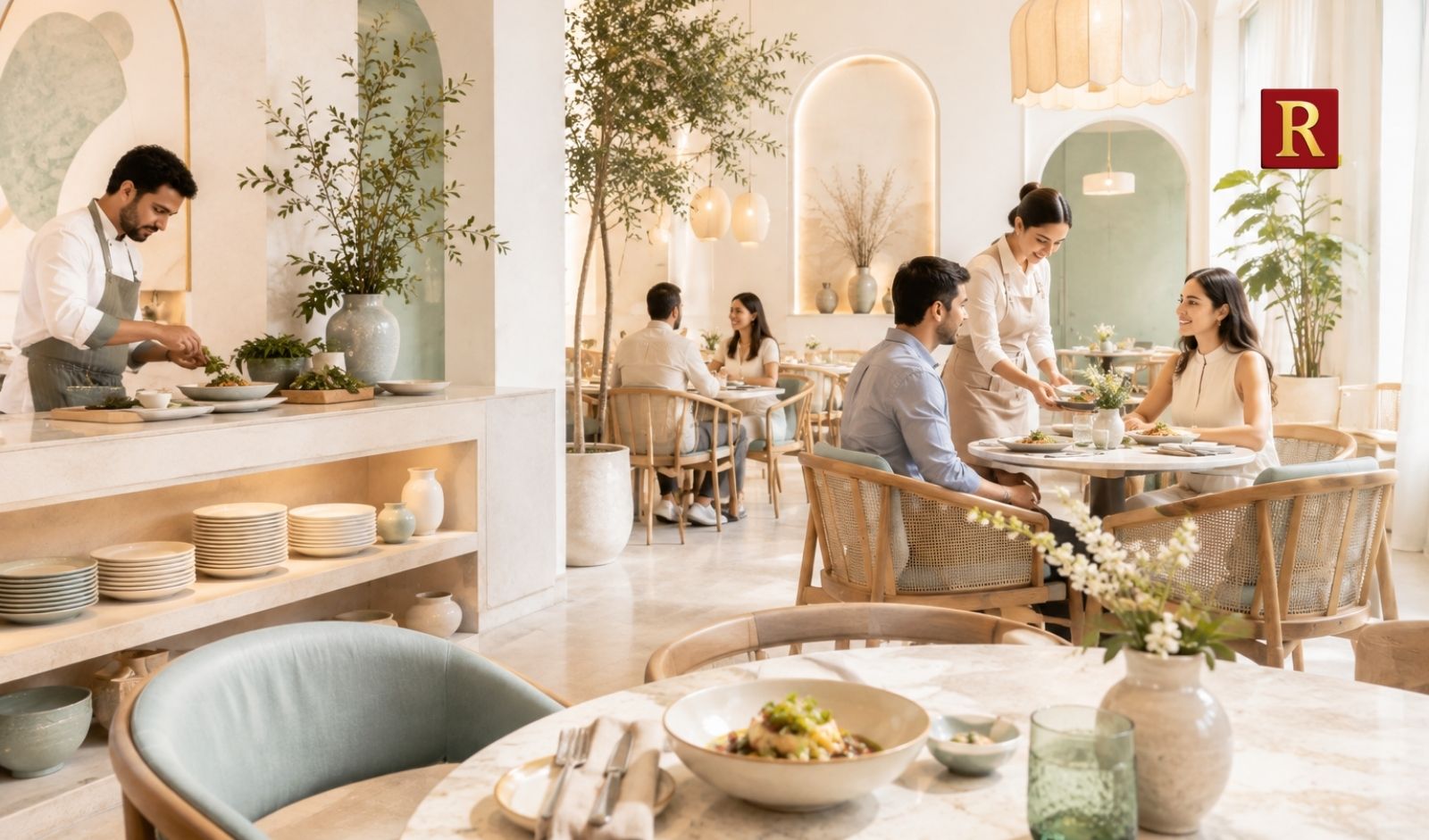
Why Luxury Hotels Are Investing in Independent Restaurant Concepts
The real business opportunity lies in creating dining destinations that customers choose independently of the hotel itself.


Luxury hotels are changing the way they approach food and beverage (F&B) businesses. Restaurants are no longer limited to serving breakfast, lunch and dinner to in-house guests. They are increasingly becoming independent destinations that attract local diners, food enthusiasts, business travellers and customers who may never book a room at the property. This shift is encouraging hotel groups to explore independent restaurant brands, chef-led concepts, speciality dining formats and partnerships with established restaurant operators. Instead of developing every restaurant internally, hotels are looking at concepts that already have a distinct identity, a loyal customer base and a specialised culinary offering.
The strategy also reflects a larger change in India's hospitality market. Customers are choosing restaurants for their food, ambience, chef expertise and overall experience rather than simply visiting an establishment because it is located inside a luxury hotel. This creates an opportunity to generate additional F&B revenue, improve the use of existing spaces and strengthen their connection with local consumers. The restaurant is gradually becoming a business in its own right, rather than just another hotel facility.
Why Are Luxury Hotels Rethinking Their Restaurant Strategies?
Traditionally, hotel restaurants were designed around the needs of guests staying at the property. All-day dining outlets, hotel buffets and speciality restaurants supported the overall accommodation experience. However, this model is evolving. Luxury hotels now recognise that their restaurants can attract customers independently of room bookings. According to The Leela's FY 2025–26 reporting, non-resident customers accounted for 54 percent of its F&B covers. The company also reported 15 percent year-on-year growth in F&B revenue. These figures indicate the commercial importance of customers who visit hotel restaurants without staying overnight.
Several factors are driving this shift:
- Changing dining preferences: Customers are increasingly interested in distinctive food experiences and specialised restaurant concepts.
- Growing competition: Independent restaurants are attracting premium diners through focused menus and differentiated experiences.
- Additional revenue opportunities: Hotel restaurants can generate business beyond room revenue.
- Brand differentiation: Unique restaurant concepts give hotels another way to establish their identity.
- Better space utilisation: Underused hotel areas can be converted into speciality dining outlets, bars and intimate restaurants.
The objective is no longer just to offer food to hotel guests. It is to create a restaurant that customers actively want to visit.
Independent Restaurant Concepts Are Becoming a Strategic Investment
An independent restaurant concept is a dining business with its own identity, positioning, menu, customer experience and operating philosophy. It can function as a standalone brand or operate within a larger hospitality property through a partnership. Luxury hotels are exploring these concepts because developing every restaurant internally requires culinary expertise, operational investment, brand-building efforts and a clear understanding of changing consumer demand.
Partnering with an established restaurant operator can provide access to an existing business model and specialised knowledge. For instance, a hotel may collaborate with a Japanese restaurant brand, a contemporary Indian dining concept, a specialist cocktail bar or a chef-led restaurant. Each concept attracts a different customer segment and gives the hotel a more diverse F&B portfolio. This approach also allows hotels to experiment with restaurant formats without relying entirely on traditional hotel dining models.
Hotel Restaurants Are Moving Beyond the Traditional Dining Model
The distinction between a hotel restaurant and an independent restaurant is becoming less obvious. Customers increasingly judge both on the same factors, including food quality, service, menu innovation, pricing and ambience.
However, their business structures can be very different.
Traditional hotel restaurant | Independent restaurant concept inside a hotel |
Primarily designed around hotel guests | Targets hotel guests and external customers |
Often follows the hotel's overall identity | Develops its own restaurant identity |
Menu may cater to a broad audience | Usually focuses on a specific cuisine or experience |
Managed through hotel F&B operations | May be operated by an independent specialist |
Part of the hotel's overall dining facilities | Can function as a separate destination |
Marketing is often hotel-led | Can build its own customer community |
This difference is important because independent concepts allow hotels to introduce specialised offerings without making every outlet follow the same dining format.
Why Hotels Are Partnering With Independent Restaurant Brands
One of the biggest changes in luxury hospitality is the growing interest in collaborations with established restaurant businesses and specialist F&B operators. Rather than building every concept from scratch, hotels can bring in operators who already understand a particular cuisine, customer segment or dining format.
These partnerships can take several forms:
- Restaurant brand partnerships: An established restaurant brand opens an outlet within a hotel.
- Chef collaborations: Hotels work with recognised chefs to develop signature dining experiences.
- Third-party operations: Specialist restaurant companies manage the outlet.
- Revenue-sharing arrangements: Hotels and restaurant operators share revenue under agreed commercial terms.
- Franchise partnerships: Hotels introduce established restaurant formats through licensing or franchise arrangements.
This gives hotels access to specialised expertise while allowing restaurant operators to enter premium locations without independently developing an entire property. However, the success of such arrangements depends on clearly defined responsibilities, brand ownership, operating costs and revenue-sharing structures.
The Rise of Non-Resident Customers Is Changing Hotel F&B Revenue
For a long time, hotel restaurants depended heavily on room occupancy. When more guests stayed at a property, restaurants generally had a larger captive customer base. Today, local customers are becoming equally important to the restaurant business. People visit luxury hotel restaurants for business meetings, celebrations, weekend dining, speciality cuisines and exclusive experiences. This creates an additional revenue opportunity even when hotel occupancy is not particularly high. The Leela's FY 2025–26 reporting provides an interesting example. Non-resident customers contributed 54 percent of its F&B covers, while its F&B revenue increased 15 percent year-on-year.
This highlights three important opportunities:
- Local customer acquisition: Hotels can attract people living and working in nearby neighbourhoods.
- Higher dining frequency: Restaurants can encourage repeat visits without depending on overnight stays.
- Cross-selling opportunities: Restaurant visitors may eventually explore hotel memberships, events, banqueting and accommodation.
For hotel operators, building a restaurant that attracts external customers can help create a stronger connection with the surrounding market.
Turning Unused Hotel Spaces Into Premium Dining Destinations
Another interesting reason behind the investment in independent restaurant concepts is the opportunity to generate revenue from underutilised spaces. Luxury hotels often have areas that are not being used to their full commercial potential. Instead of undertaking major construction, they can convert these spaces into smaller, specialised dining destinations. Hotelivate's 2026 hospitality research highlights two interesting examples.
The Kyoto-inspired speakeasy was developed from a former storage space. It demonstrates how an unconventional area can be transformed into a distinctive premium bar. A former luggage-lift room was converted into an intimate 20-seater bar, showing how compact spaces can support specialised F&B concepts. These examples highlight a different approach to restaurant investment. Hotels do not always need large dining halls to create commercially attractive concepts.
Smaller formats can offer:
- More focused menus.
- Specialised beverage programmes.
- Intimate customer experiences.
- Distinctive interiors.
- Better utilisation of unusual spaces.
However, their commercial performance still depends on customer demand, operating costs, average spending and seating turnover.
Why Smaller Speciality Restaurants Are Attracting Hotel Investments
The traditional hotel restaurant model often involves large dining areas, extensive menus and significant staffing requirements. Independent speciality concepts work differently. They usually focus on a narrower offering and a clearly defined customer segment. For example, a Japanese izakaya, an intimate cocktail bar or a regional Indian restaurant can build its identity around a specific culinary experience.
Parameter | Large all-day dining restaurant | Small speciality restaurant |
Menu | Broad and diverse | Focused and specialised |
Seating | Usually higher capacity | Usually limited capacity |
Customer experience | Multiple dining occasions | Specific dining experience |
Operational requirements | Extensive kitchen and service teams | Depends on the concept and menu |
Customer positioning | Broad hotel audience | Defined target audience |
Revenue drivers | Covers, buffets and meal periods | Average spend, repeat visits and experience |
A smaller restaurant is not automatically more profitable. Its success depends on how effectively it converts limited seating into revenue. This is where metrics such as Revenue Per Available Seat Hour (RevPASH) become important. RevPASH measures how much revenue a restaurant generates from each available seat over a given period. It helps operators understand whether their seating capacity and operating hours are being used effectively.
Restaurant Brands Can Strengthen a Hotel's Identity
Luxury hospitality is increasingly connected with lifestyle, food culture and experiential dining. A hotel with multiple distinctive restaurant concepts can appeal to different customer groups rather than depending on one signature restaurant.
For example:
- A contemporary Indian restaurant can attract customers interested in regional flavours.
- A Japanese dining concept can appeal to speciality cuisine enthusiasts.
- A premium cocktail bar can attract evening and nightlife customers.
- A chef-led tasting menu can create an exclusive destination-dining experience.
- A modern café can attract younger consumers and business professionals.
This also creates opportunities for hotels to build a larger lifestyle identity. A customer may initially visit for a restaurant experience but later return for a wedding, private event, business meeting or staycation. In this way, restaurant investments can support the hotel's wider customer acquisition and brand-building strategy.
How Independent Restaurant Operators Benefit From Hotel Partnerships
The opportunity is not limited to hotels. Independent restaurant founders can also benefit from entering luxury hospitality properties. Opening a standalone restaurant involves significant investment in property, interiors, kitchen infrastructure, recruitment, licences and marketing. A hotel partnership can provide access to an established hospitality ecosystem, although the exact support depends on the commercial agreement.
Some potential advantages include:
- Premium locations: Access to established hotel properties in prominent business and residential districts.
- Existing infrastructure: Potential access to kitchens, utilities and service facilities.
- Hospitality expertise: Support from experienced hotel operations teams.
- Customer access: Exposure to hotel guests, corporate customers and external diners.
- Brand visibility: Association with an established luxury hospitality name.
- Expansion opportunities: A potential route to enter new cities and customer segments.
For restaurant entrepreneurs, the partnership can offer a different expansion route compared with independently opening another outlet. However, operators must also consider management control, brand positioning, menu autonomy, customer ownership and the commercial terms of the partnership.
The Financial Side: How Hotels Evaluate Restaurant Investments
While brand recognition and customer experience are important, hotels ultimately need to evaluate whether an independent restaurant concept can generate sustainable returns. Several financial and operational indicators help determine the commercial viability of an outlet.
Metric | What it measures | Why it matters |
Average Spend Per Cover | Average spending per diner | Helps assess customer spending behaviour |
Food Cost Percentage | Ingredient costs against food revenue | Helps control menu profitability |
Labour Cost Percentage | Employee expenses against revenue | Measures workforce efficiency |
RevPASH | Revenue per available seat per hour | Measures seating productivity |
Revenue Per Square Foot | Revenue generated from available space | Evaluates property utilisation |
Outlet-Level EBITDA | Operating earnings before interest, taxes, depreciation and amortisation | Helps assess outlet profitability |
Repeat Customer Rate | Frequency of returning customers | Indicates customer loyalty |
These indicators help hotels compare different restaurant formats and understand which concepts fit their commercial objectives. For example, a speciality cocktail bar may generate higher average spending per customer, while an all-day dining restaurant may depend on higher customer volumes and multiple meal periods. Hotels must also account for rent or internal space costs, utilities, marketing, maintenance, staffing and operator fees before evaluating profitability.
The Challenges Behind Independent Restaurant Partnerships
Despite the opportunities, bringing an independent restaurant concept inside a luxury hotel is not without challenges. Hotels and restaurant operators often have different business priorities. While hotels focus on service standards, property reputation and operational consistency, independent restaurant brands may prioritise creative freedom and their existing identity.
Some important challenges include:
- Brand identity and control: The restaurant must retain its distinctive personality while meeting the hotel's service and quality expectations.
- Revenue-sharing disagreements: Hotels and restaurant operators need clarity on revenue allocation, operating expenses and investment responsibilities.
- Customer experience consistency: The restaurant must deliver the same quality to external diners and hotel guests.
- High operating costs: Premium locations, specialised ingredients, trained employees and luxury interiors can increase operating expenses.
- Menu and pricing decisions: The restaurant must maintain its positioning without creating a mismatch with the hotel's customer base.
- Marketing responsibilities: Both parties need to decide how the restaurant will be promoted and who owns customer relationships and databases.
The success of a partnership therefore depends on more than the popularity of the restaurant brand. It requires a sustainable operating and financial structure.
Will Restaurant Partnerships Become a Bigger Part of Luxury Hospitality?
India's premium dining market is creating new opportunities for hotels to rethink their F&B strategies. Consumers are exploring speciality cuisines, chef-led restaurants, experiential bars and distinctive dining formats. At the same time, hotel groups are looking for ways to increase revenue from existing properties and attract customers beyond room bookings. This creates an opportunity for more collaborations between luxury hotels and independent restaurant businesses. In the coming years, hotels could explore more regional Indian dining concepts, international restaurant partnerships, intimate speciality outlets, chef-led experiences and limited-period culinary collaborations. Pop-ups and restaurant takeovers may also help hotels test customer demand before committing to permanent outlets. However, the long-term opportunity will depend on whether these concepts can deliver consistent customer experiences and sustainable outlet-level profitability.
The Restaurant Is Becoming a Business Destination for Luxury Hotels
Luxury hotels are increasingly recognising that their restaurants can play a much larger role in the hospitality business. Independent restaurant concepts provide opportunities to attract external customers, improve space utilisation, build distinctive brand identities and diversify F&B revenue. For restaurant entrepreneurs, these partnerships offer access to premium properties, established infrastructure and new customer segments. For hotels, they provide an opportunity to introduce specialised dining experiences without developing every concept internally. The next phase of luxury hospitality may therefore depend not only on the rooms, facilities and services a hotel offers, but also on the restaurants it brings under its roof. The real business opportunity lies in creating dining destinations that customers choose independently of the hotel itself.
Saptopriya Ghosal
Feature Writer
I am a dedicated media professional with a bachelor's degree in mass communication from the State University of Calcutta and a postgraduate degree from Amity University. My academic journey has equipped me with a profound understanding of storytelling and communication. Passionate about the dynamic world of media, I continually strive to explore new ways to engage and inform through compelling narratives.