
Why Chefs Are Putting More Raw Elements on Cooked Plates
The most effective plates are not necessarily those with the most components, but those where every ingredient has a clear culinary purpose.

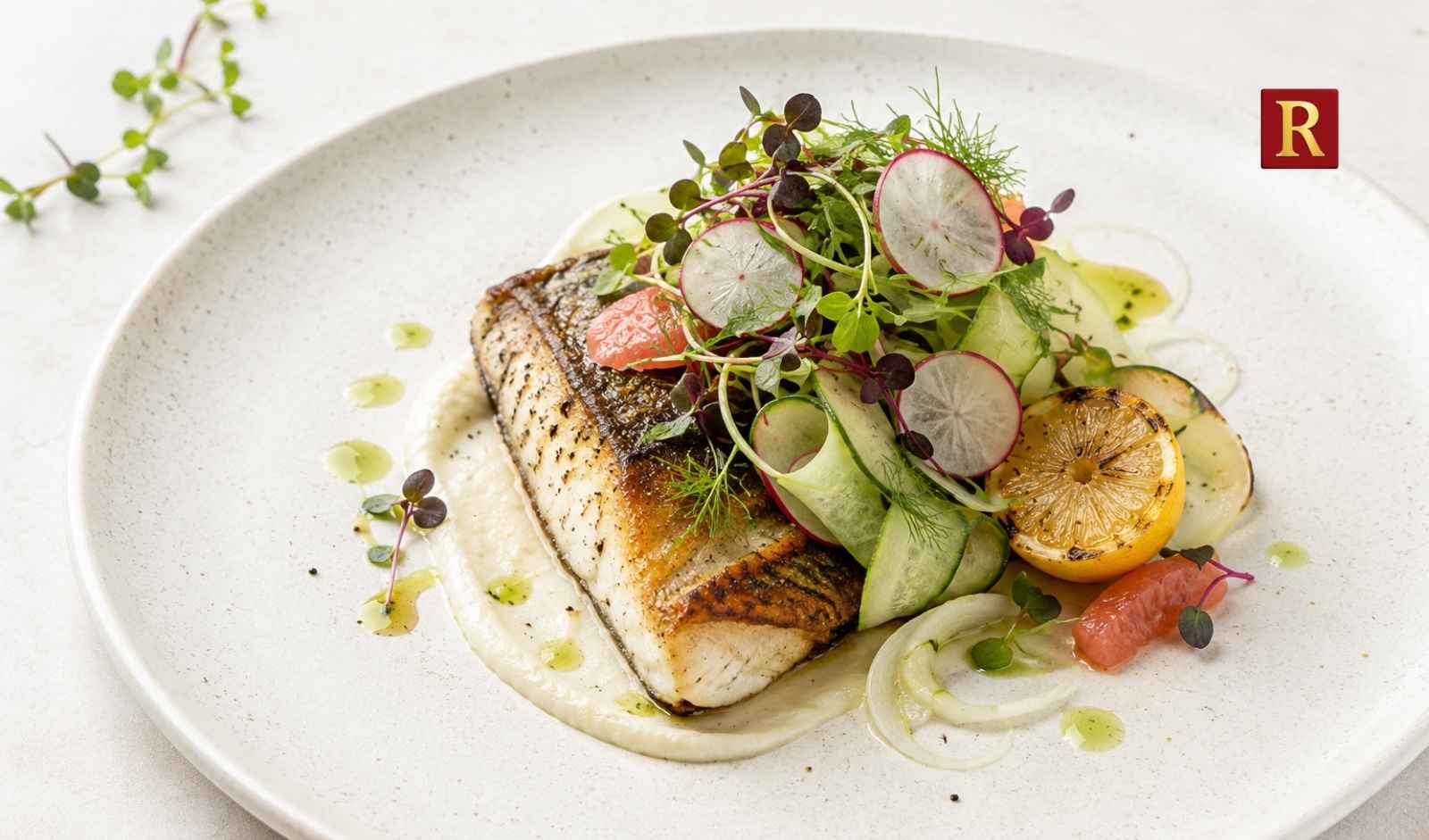
A grilled fish may arrive with shaved cucumber. A rich kebab may be finished with raw onion and herbs. Roasted vegetables may sit beside fresh citrus, fruit or crisp greens. These raw elements are not always there simply to make a plate look better. Increasingly, chefs use them to change the texture, acidity, freshness, aroma and temperature of a cooked dish. The idea is not new. Indian cuisine, for example, has long paired rich cooked foods with raw onion, herbs, lemon, salads and chutneys. What is becoming more deliberate in contemporary restaurants is the way chefs use these elements as part of the dish's structure.
Raw Is Becoming a Functional Part of the Plate
In professional kitchens, every ingredient on a composed plate should have a reason to be there. The Michelin Guide has spoken to chefs who describe plating through flavour, texture, balance and the way a diner moves through a dish. One chef notes that each ingredient should have a purpose, while another describes plating as a way of guiding how the diner experiences flavour combinations. That changes the role of a raw garnish. A few thin slices of radish can add crunch to braised meat. Fresh coriander can lift a rich curry. Citrus can cut through fat. Cucumber can bring coolness to grilled food. The raw component is therefore doing culinary work.
Raw Elements on Cooked Plates
1. Texture Is One of the Biggest Reasons
Consider a plate of slow-cooked meat with a smooth sauce. The meat is tender. The sauce is soft. If the accompanying vegetable is also cooked until tender, the entire bite can have a similar mouthfeel. A raw ingredient immediately changes that. A shaved radish gives a crisp snap. Raw cabbage adds resistance. Cucumber contributes a juicy crunch. Fresh apple can bring both crispness and moisture. This matters because texture is not a minor part of eating. It influences how food is perceived and enjoyed. Research on food texture describes it as a complex sensory property that contributes significantly to food perception. The Culinary Institute of America also highlights vegetables as a source of contrast and freshness, including bright, crunchy textures. This is why a chef may deliberately leave one component raw while cooking everything else. The contrast is the point.
2. A Raw Element Can Bring Acidity Without Another Heavy Sauce
Rich dishes often need something sharp. A chef can add vinegar, a reduction or a sour sauce. But sometimes the cleaner option is a fresh ingredient.
Think of:
- Grilled meat with green mango
- Roasted pumpkin with citrus
- Rich kebab with onion and lemon
- Grilled paneer with tomato and coriander
- Roasted vegetables with fresh herbs
- Fatty fish with cucumber and a sharp dressing
The raw ingredient can make the dish feel lighter without removing its richness. It also creates a different kind of balance. Instead of adding another cooked component, the chef introduces something that has not undergone the same transformation as the main ingredient.
3. Fresh Aromas Can Change the First Impression
Heat is central to cooking, but fresh ingredients have their own aromatic role. Fresh coriander, mint, basil, dill, citrus zest, spring onion and other delicate ingredients can provide aromas that are immediately noticeable when the plate reaches the diner. This is partly why herbs are often added at the end rather than cooked for the entire preparation.
- The contrast can be simple: Cooked food provides depth. Fresh elements provide lift.
The effect is particularly useful with grilled, roasted and slow-cooked dishes. Michelin's coverage of contemporary plating also shows chefs using seasonal herbs and other fresh elements to enhance flavour rather than treating them only as decoration.
4. Temperature Can Become Another Layer of Contrast
Texture is not the only contrast. Temperature can also change the eating experience. A warm piece of grilled fish with chilled cucumber feels different from the same fish served with another warm vegetable. A hot kebab with a cool onion salad creates another sensory change. This is not just subjective guesswork. Research published in Appetite found that product temperature affected several perceived flavour and texture attributes, including flavour intensity and mouthfeel. More recent research continues to show that consumption temperature can influence sensory perception and food preferences. Chefs therefore have another variable to consider. It is not only what goes on the plate. It is also when and at what temperature the diner encounters it.
5. Raw Does Not Mean Untouched
One of the most important distinctions is that raw food does not necessarily mean an ingredient is placed on a plate straight from the refrigerator. A raw vegetable can still go through several techniques.
It can be:
- Shaved
- Sliced
- Grated
- Salted
- Dressed
- Marinated
- Cured
- Pickled
- Chilled
- Fermented
Take a radish. A chef could serve it as a thick raw slice, shave it paper-thin, salt it briefly or pickle it. The ingredient remains largely uncooked, but its texture, acidity and moisture can change significantly. This gives chefs a much wider range between completely raw and fully cooked.
6. Chefs Are Designing the Bite, Not Just the Plate
This may be the most important reason behind the technique. A good dish does not need every component to taste identical or have the same texture.
- A chef may want the diner to experience: soft → crisp → juicy → acidic → rich within a single forkful.
That is sometimes called a form of sensory or texture contrast. Research into dynamic contrast has explored how changing sensory properties during eating can influence palatability. Texture is particularly important because the food changes as it is chewed. This approach also explains why placement matters. If the raw element is placed too far away, the diner may not combine it with the main component. If there is too much of it, it can dominate the dish. If there is too little, its effect may disappear. Michelin's interviews with chefs similarly describe plating as a way of helping diners navigate a dish and experience flavours in an intended sequence.
7. Indian Food Already Uses This Principle
For Indian restaurants, this is hardly a completely foreign idea. Consider a kebab. The cooked meat may be smoky, spiced and rich. The raw onion, coriander and lemon provide freshness and acidity. The same principle appears with chole and onion, biryani and raita, pakoras and chutney, or tandoori dishes with fresh salads. The combination works because the components do different jobs. Contemporary chefs are increasingly applying the same logic to more composed plates. This is an important distinction. Modern plating is not necessarily inventing the raw-and-cooked combination. It is making the contrast more deliberate and technical. Seasonality also plays a role. Michelin's coverage of kaiseki, for example, highlights how fresh seasonal ingredients and their presentation can be central to the dining experience.
8. Vegetables Make This Technique Especially Useful
A single vegetable can deliver very different textures and flavours depending on how a chef prepares it. Carrot, for example, can stay raw for a crisp bite, be roasted to develop sweetness, or be puréed to add a smooth, creamy layer. Cabbage can provide freshness when raw, sharpness when pickled, smoky notes when grilled, or softness when braised. Tomato offers juiciness when served raw, deeper flavour after roasting, and a softer, concentrated texture when made into a confit. Beetroot can be shaved raw for crunch, cured for a firmer texture, or roasted to bring out its natural sweetness. This approach gives chefs greater control over texture and flavour without adding many ingredients. One vegetable can therefore perform several roles on the same plate.
The Technique Has Limits
Putting something raw on a cooked plate is not automatically a good idea. Moisture is one challenge. A wet cucumber can soften a crisp fried component. A dressed salad can release water. Cut fruit can oxidise. Fresh herbs can wilt.
Service timing also matters. A raw component may need to be sliced, dressed and plated seconds before the dish leaves the kitchen. Food safety is another consideration. Raw ingredients require proper sourcing, storage, preparation and hygiene controls. There is also a flavour problem. A raw ingredient should not be added simply because the plate looks empty. It needs to contribute something.
The Bigger Shift
The biggest change is not that restaurants are suddenly serving more uncooked food. It is that chefs are becoming more deliberate about the role each element plays on the plate. A cooked component can bring depth, caramelisation or tenderness, while a sauce can add richness and moisture. A raw vegetable can introduce crunch and freshness, while herbs contribute delicate aromas. Citrus can bring acidity, and a chilled component can create temperature contrast against a warm dish. When these elements work together, they create a more varied and balanced eating experience. A raw ingredient may occupy only a small part of the plate, but its effect can influence the flavour, texture and overall character of the dish. This approach also reflects a broader shift in modern cooking, where garnishes are expected to contribute more than appearance. The most effective plates are not necessarily those with the most components, but those where every ingredient has a clear culinary purpose.
Saptopriya Ghosal
Feature Writer
I am a dedicated media professional with a bachelor's degree in mass communication from the State University of Calcutta and a postgraduate degree from Amity University. My academic journey has equipped me with a profound understanding of storytelling and communication. Passionate about the dynamic world of media, I continually strive to explore new ways to engage and inform through compelling narratives.



































































