
What Does a Michelin Star Mean? Everything You Need to Know About
In the world of international cuisine, the Michelin Star is undoubtedly the most sought-after and admired award that can sometimes be misunderstood. It is a seal of excellence that can change a chef's career, determine a restaurant's future, and spark a culinary journey for some.


In the world of international cuisine, the Michelin Star is undoubtedly the most sought-after and admired award that can sometimes be misunderstood. It is a seal of excellence that can change a chef's career, determine a restaurant's future, and spark a culinary journey for some. It is surely much more than just a restaurant review.
This in-depth article explains the world's most well-known restaurant rating system's startling history, strict inspection procedure, significance of each star, and powerful influence. Understanding the Michelin Guide is the first step to experiencing gourmet cuisine at its finest, regardless of your level of travel experience or passion for food.
The Unexpected History of the Michelin Guide
The origin story of the Michelin Guide is one of the most remarkable and unexpected in history, starting not with food, but as a clever marketing strategy for tires.
In 1900, French brothers Édouard and André Michelin, founders of the tire company, sought to increase demand for automobiles and their products by making driving easier. At a time when France had under 3,000 cars, they published the first free Michelin Guide for motorists. This initial pocket guide was purely practical, filled with essential information like road maps, mechanics' listings, and advice on finding basic food and lodging; the goal was simple: encourage drivers to travel, and they would need more tires.
The Guide's focus shifted permanently in 1926 when it introduced its first quality-based restaurant rating, symbolized by a single star. This event marked its evolution into a judging element of gastronomy. The famous, three-tiered star system, which is the gold standard of restaurant criticism today, was formally established a few years later, around 1931. This step turned the little driver's pamphlet into the most respected guide for fine dining in the world.
The Core Ratings: What Each Michelin Star Really Means
The Michelin Guide’s famous three-star system is a hierarchy that judges one thing above all else: the quality of the cooking. These famous ratings focus entirely on the food on the plate, while other factors like service, décor, and atmosphere are noted separately.
One Michelin Star: "High-Quality Cooking, Worth a Stop"
The Promise: A restaurant awarded one star uses top-quality ingredients and prepares dishes with unique flavors to a high, consistent standard.
The Experience: This is an excellent choice for any diner. It signifies a reliable, high-level meal. Showing the place is worth pausing your journey to enjoy.
Two Michelin Stars: "Excellent Cooking, Worth a Detour"
The Promise: Two stars are given when the chef's talent and personality are evident in the food. The dishes are expertly crafted, inspired, and refined.
The Experience: This rating guarantees a truly exceptional culinary experience that showcases mastery of technique and complex, harmonized flavors. The quality is so high, it's worth making a significant change to your travel plans just to visit.
Three Michelin Stars: "Exceptional Cuisine, Worth a Special Journey"
The Promise: This is the highest standard. Showing distinction of the food over any other, representing the pinnacle of fine dining. The cooking is magnificent, elevated to an art form, and the dishes are often considered world-class classics.
The Experience: Three-star restaurants offer flawless execution and unparalleled flavor. This is a rare, life-defining dining experience that is so magical, travelers are encouraged to plan their entire trip around the opportunity to eat there.
The Inspection Process: How a Star Is Earned

The prestige of the Michelin Star system relies entirely on the strictness and anonymity of its evaluation process. A dedicated team of full-time, qualified inspectors works for Michelin; they are usually former chefs or hospitality specialists with an extensive background of culinary knowledge.
The Five Core Principles of Judgment
When assigning stars, inspectors are strictly required to consider only the food on the plate; they are not allowed to consider the restaurant's décor, table settings, or level of service (all of which are rated separately). Only these five universal criteria are used to determine the star rating:
- Quality of the Ingredients: Evaluating the products' seasonality, quality, and freshness.
- Mastery of Flavor and Technique: Evaluating the technical perfection of the execution and the balance of flavors.
- The Chef's Personality: Determining if the food reflects the chef's unique vision, signature style, and originality.
- Value for Money: Determining if the superb quality of the cooking justifies the meal's price.
- Consistency: Making sure the excellent quality stays the same over time, during multiple trips, as well as across the menu.
Anonymity and the Star Escalation
Inspectors are totally undercover in order to guarantee a fair and authentic experience. The restaurant is unable to provide them with any special treatment because they make reservations, eat, and pay for their meals just like any other customer. The star's ambition increases the scale of the decision-making process:
- For One Star: To ensure consistency, a single inspector will visit the restaurant several times.
- For Two Stars: Several inspectors from the local guide team evaluate the restaurant.
- For Three Stars: Inspectors from various areas, including other continents, evaluate the restaurant. To ensure global unity for the final award, the decision is made by agreement with the Guide's International Director.
The Impact: The Power of a Star
Being awarded a Michelin Star is more than just a recognition by critics; it is a title that can completely change the whole culinary scene:
Impact on the Restaurant
The "Michelin Effect": Getting a star usually results in a huge, instant boost in business. Reservations frequently start to pour in Weeks or months in advance. Because of its stronger reputation, the restaurant can charge more, reinvest in high-quality ingredients, and draw in the best chefs and wait staff in the business.
The Pressure to Perform: The stakes are extremely high. Losing a star can result in a fatal financial and professional setback; this occurrence is sometimes called the "Michelin Curse." As a result, every dish served must be flawless and consistent, putting immense stress on the chef and kitchen crew.
Impact on Diners and Travelers
A Promise of Quality: A star is a very reliable assurance of quality for the customer. The star serves as a trustworthy filter in an era of user-generated reviews on the internet, signifying a meal that has been approved and paid for by reputable, unbiased, and experienced inspectors.
The Food Destination: Three-star restaurants in particular have become international attractions. Foodies frequently embark on a food adventure, organizing whole trips around booking a table at these top-notch restaurants, to prove that the restaurant is indeed worth a special journey.
Beyond the Star: Other Michelin Distinctions
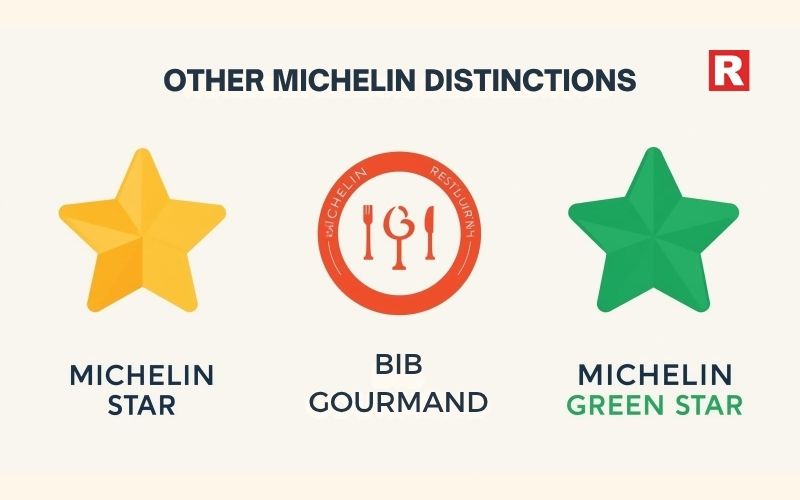
The Michelin Guide is useful for all kinds of foodies, not just those looking for luxurious cuisine, because it acknowledges a wide range of other types of food excellence.
The Bib Gourmand
The Bib Gourmand award was created in 1997 to recognize restaurants that provide remarkably excellent food at reasonable costs, and it is named after Bibendum, the Michelin Man mascot.
- Criteria: The food's quality must be excellent, but the cost must stay below a specific local price point, which differs from city to city.
- Meaning: It's the ideal designation for diners looking for affordable, high-quality, comforting food. Although it lacks the technical creativity and expensive prices typically associated with starred restaurants, it acknowledges craftsmanship and regularity.
The Michelin Green Star
Introduced in 2020, the Green Star is the Guide's most recent important award for the modern dining scene.
- Criteria: Restaurants that are leading the way in sustainable practices are honored with this award. This can involve using sustainable farming techniques, minimizing food waste, lowering the environmental impact, obtaining ethical and locally sourced ingredients, and supporting social and ethical causes.
- Meaning: Restaurants that combine exceptional eco-friendly practices with excellent food are granted the Green Star, which is not a food rating but rather a commitment to moral and environmental responsibility. Any restaurant in the Guide may receive it, regardless of whether it has a star, Bib Gourmand, or neither.
Conclusion
More than just an award, a Michelin Star is the best proof of a restaurant's dedication to excellence, skill, and reliability. It symbolizes an intense, anonymous, and exclusive commitment to food quality. It is the pinnacle of dining and a standard for cooks and diners everywhere. The Michelin Guide is still the most trusted source when it comes to finding the greatest restaurants in the world, whether you're looking for the elegant perfection of a three-star restaurant or the outstanding value of a Bib Gourmand.
Mahak Sharma
Content Writer
Mahak Sharma is a passionate content writer with 2 years of experience crafting compelling content across various niches, tailoring her writing to suit different audiences and platforms. She is dedicated to producing engaging content for readers so that they can understand and enjoy the articles. Her strengths lie in crafting SEO-friendly, well-structured articles that drive visibility and engagement.



































































