
Top 10 Kitchen Must-Haves for New Restaurant Owners
Much equipment is required inside the kitchen for it to function properly. Cooking ideas are realized in the commercial kitchen, where productivity and creativity collide and the groundwork for reliable food quality and financial success is established.

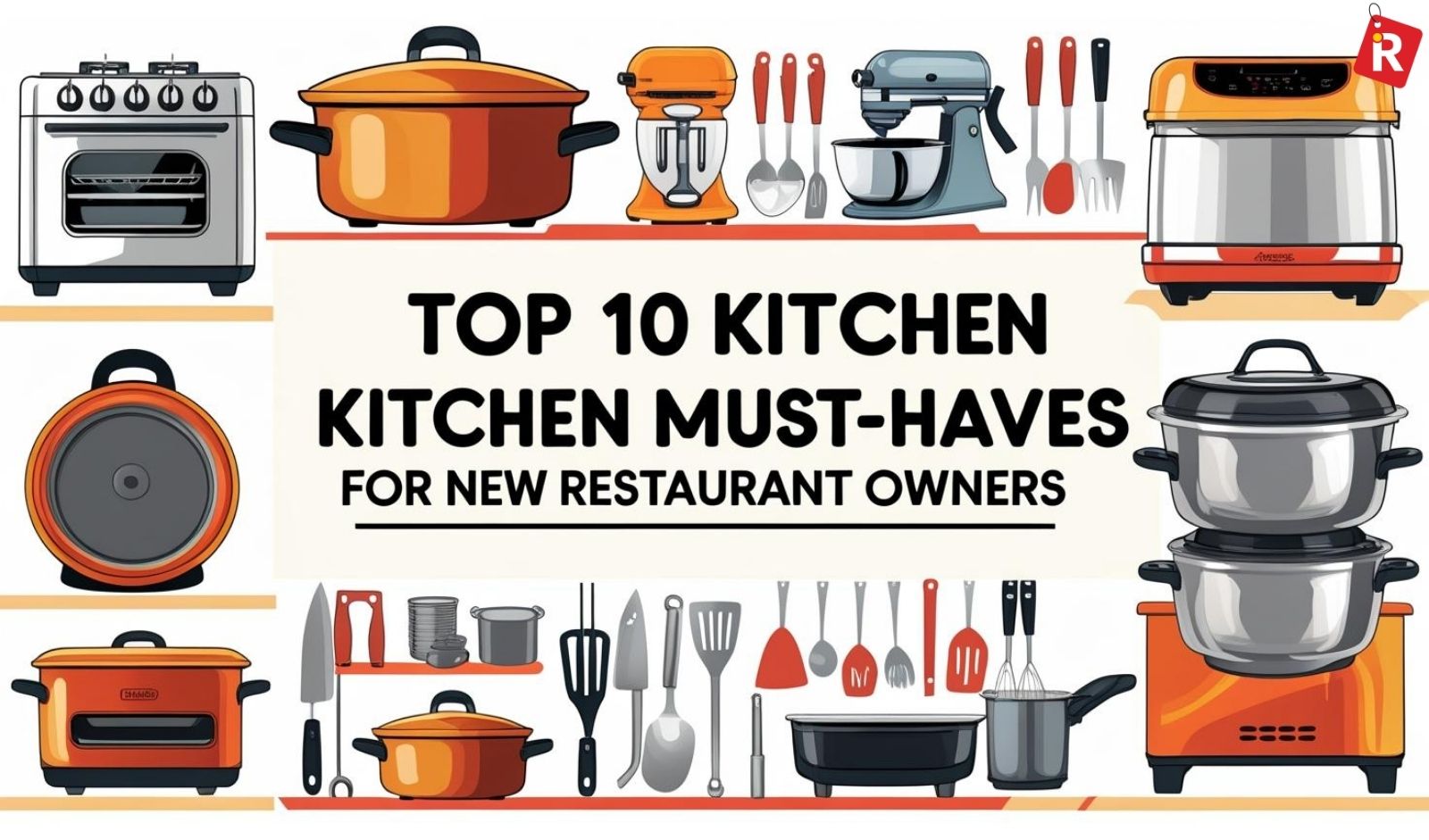
Opening your dream restaurant is not an easy task. It takes a lot of passion, dreams, and careful planning to open a new restaurant. Although a lot of the early excitement is captured by the menu, branding, and front-of-house atmosphere, the real power behind every successful restaurant is found behind the swinging kitchen doors. Much equipment is required inside the kitchen for it to function properly. Cooking ideas are realized in the commercial kitchen, where productivity and creativity collide and the groundwork for reliable food quality and financial success is established.
New restaurant owners must make well-informed judgments regarding kitchen equipment, particularly in markets that are dynamic and competitive. It's a big expenditure that has a direct effect on staff productivity, food safety, operational flow, and, eventually, return on investment. Having the correct "must-haves" in your kitchen from the start means more than just having equipment; it means creating a stable, effective, and future-proof workplace.
Before we take a look at the list, let's take into account these important factors:
- Your Menu: What sort of food do you serve? Which methods of cooking are most popular? More than anything else, this decides the equipment you need.
- Space and Layout: Take careful measurements of your kitchen's area. Take note of the needs for ventilation, safety clearances, and workflow. A well-planned kitchen increases productivity and lowers the risk of mishaps.
- Budget: Take maintenance, energy efficiency, and long-term durability into account. Investing more money up front can occasionally result in lower costs later on.
- Local Regulations: Know the fire, health, and safety rules that apply to commercial kitchens in your community. There is no negotiating in this area.
Read this: Easy Ways to Improve Your Restaurant's Atmosphere Without Spending Much
1. Commercial Range/Oven Combination
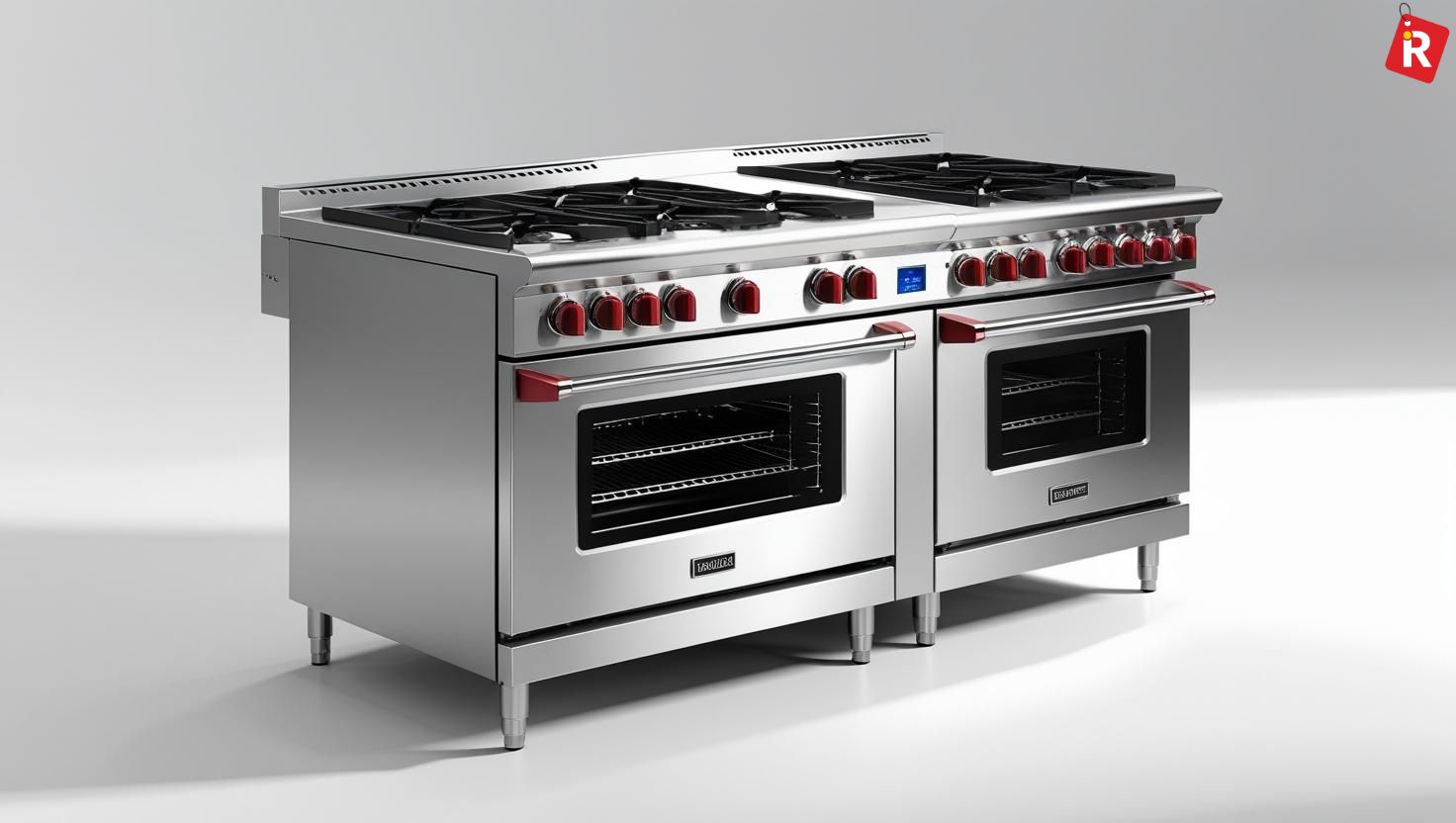
A strong commercial range, frequently paired with an oven, is the foundation of practically every restaurant kitchen. With a wide range of functions, this is your main cooking station.
Why it's Essential: It's incredibly versatile, enabling baking, roasting, or simmering (in the oven) as well as sautéing, simmering, boiling, and frying (on burners). It is essential for a variety of meals due to its multifunctionality.
Important Points to Remember:
- Gas vs. Electric: Chefs frequently favor gas ranges because they provide fast heat and exact temperature control. For some jobs, electric ranges can distribute heat more evenly.
- Burner Count and Oven Capacity: Select the number of burners and oven capacity according to the volume of your menu and the kinds of food you plan to cook. While a casual dining restaurant might require 6–8 burners and a large oven, a busy QSR might require fewer burners but a larger griddle top.
- Durability: Choose a strong structure capable of withstanding continuous business use.
2. Commercial Refrigeration
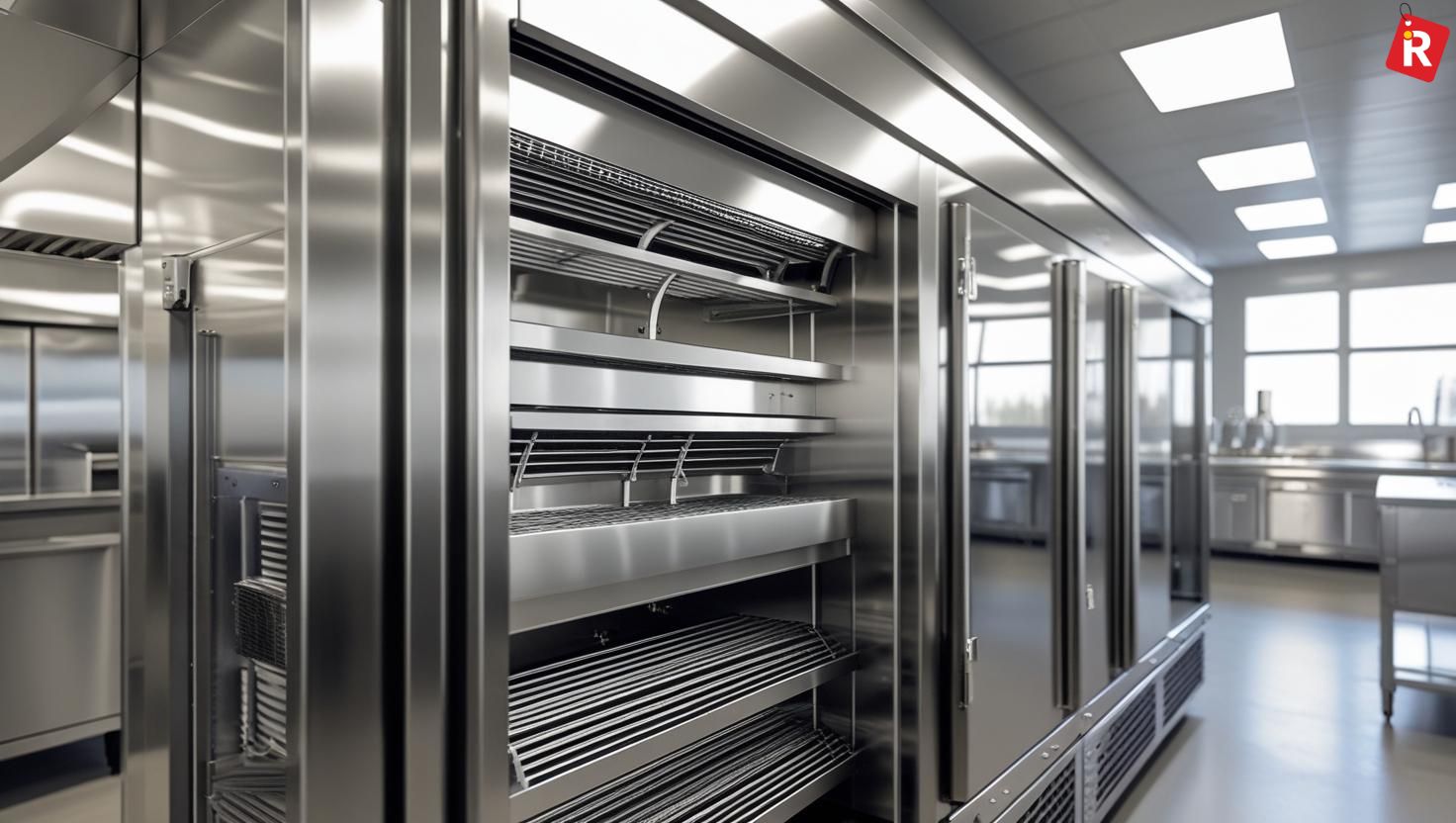
Commercial refrigeration is the foundation of food safety. This includes walk-in units, freezers, and maybe reach-in refrigerators.
Why it's Essential: It's necessary to keep ingredients fresh, stop food from spoiling, and adhere to strict health and safety standards. Strong refrigeration is much more important in hot regions.
Important Points to Remember:
- Size and Type: Reach-in units work well for line storage and daily preparation. In larger enterprises, walk-in freezers and refrigerators are required for bulk storage.
- Temperature Control: To ensure that food safety regulations are met, make sure that units maintain precise, constant temperatures.
- Energy Efficiency: To reduce long-term utility bills, which are a major operating expense for any restaurant, look for models that have earned the ENERGY STAR certification.
Check this: Top Commercial Refrigerator Brands in India: Keep It Cool, Smart & Profitable
3. Commercial Fryer(s)
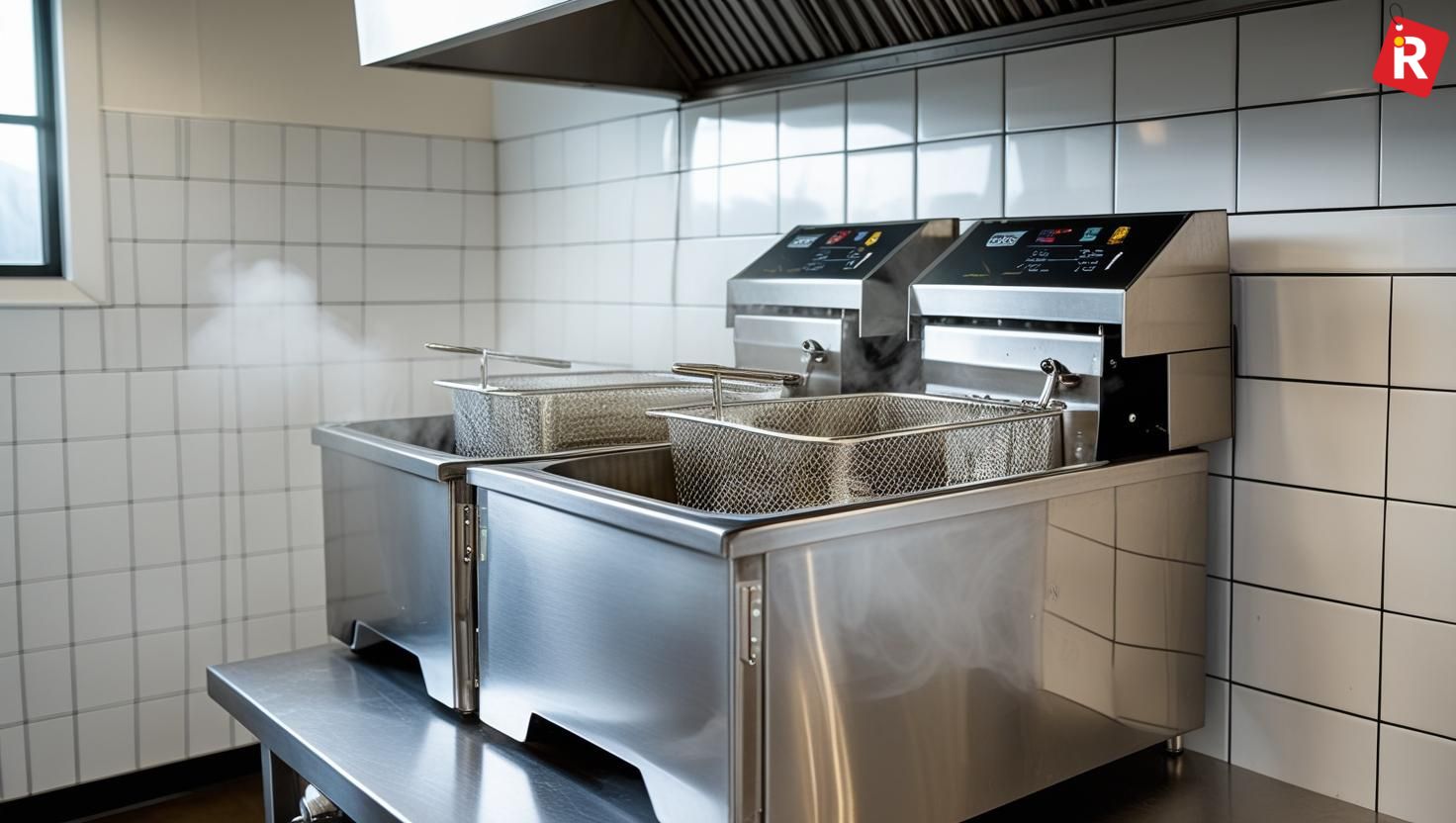
A commercial fryer, which produces well-liked dishes like French fries, pakoras, chicken tenders, and more, is an important piece of equipment for many QSRs and casual dining venues.
Why it's Essential: It provides fast, reliable, and flawlessly crispy fried food that is often high-profit-margin products and client favorites.
Important Points to Remember:
- Single vs. Double Basket: Double-basket fryers have more space and can cook multiple foods at once without transferring flavors.
- Capacity and Recovery Time: To guarantee uniformly cooked food, get a fryer that can manage your highest demand without experiencing sharp temperature decreases.
- Filtration Systems: In order to prolong oil life and lower consumption costs, modern fryers frequently have built-in filtration.
What's new: Facebook & Instagram Ads: How Restaurants Can Attract More Customers
4. Professional Food Preparation Equipment
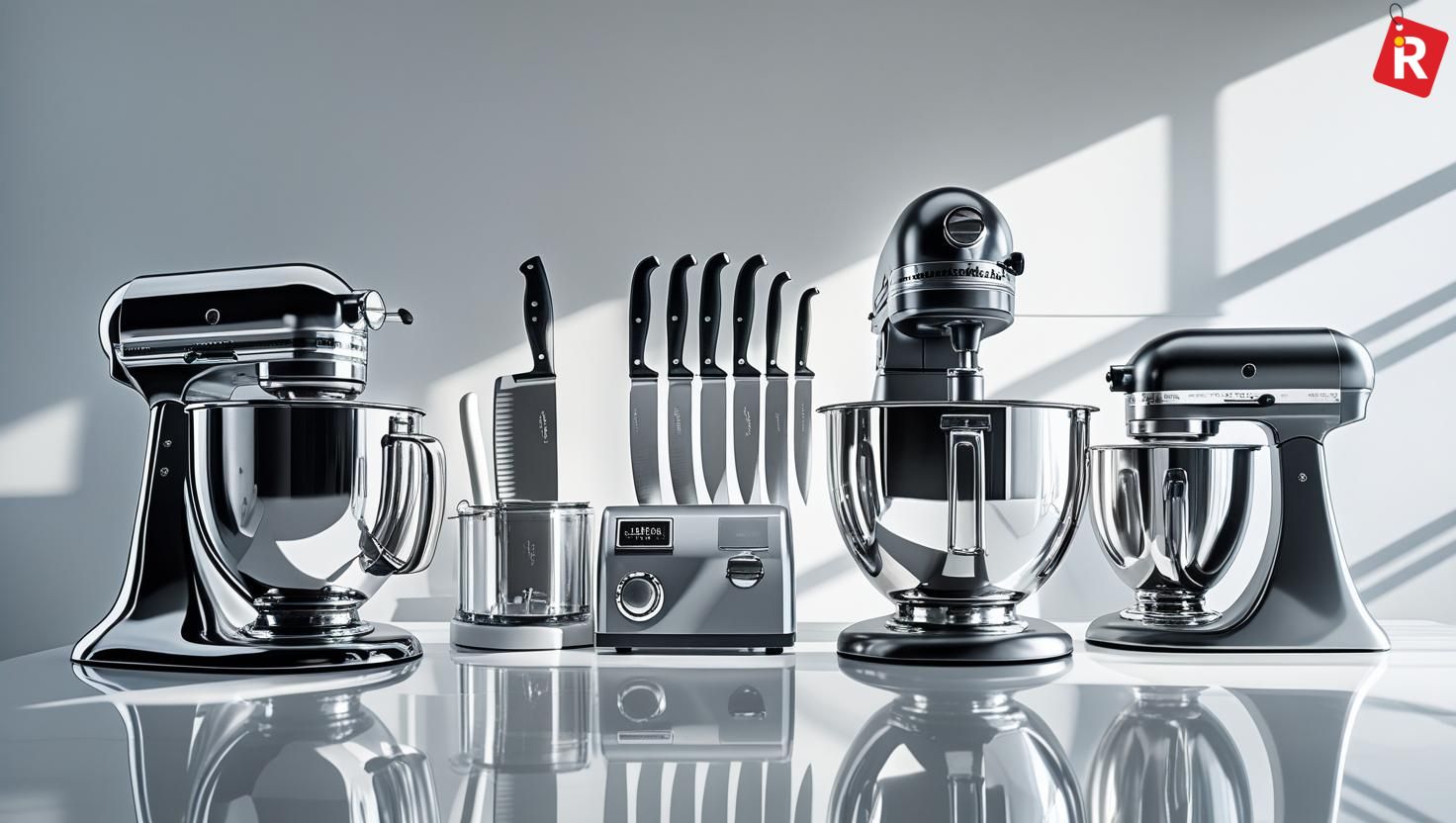
Using specialized technology to automate repetitive prep operations greatly increases productivity, guarantees uniformity, and lowers labor expenses.
Why it's Essential: These devices complete jobs more quickly and consistently than manual labor, such as slicing vegetables and mixing dough, freeing up trained personnel to work on more intricate culinary chores.
Important Points to Remember:
- Commercial Mixers: Commercial mixers are necessary for bakeries, pizzerias, and any kitchen that prepares a lot of dough or batter. Batch volume affects sizes.
- Food processors: Quickly chop, slice, grate, and purée huge amounts of food.
- Meat Slicers: Perfect for delis, sandwich shops, and any other business that needs thin, uniform pieces of meat.
- Versatility and Cleaning Ease: To preserve hygiene, look for multipurpose devices that are also simple to disassemble and clean.
5. Commercial Dishwasher
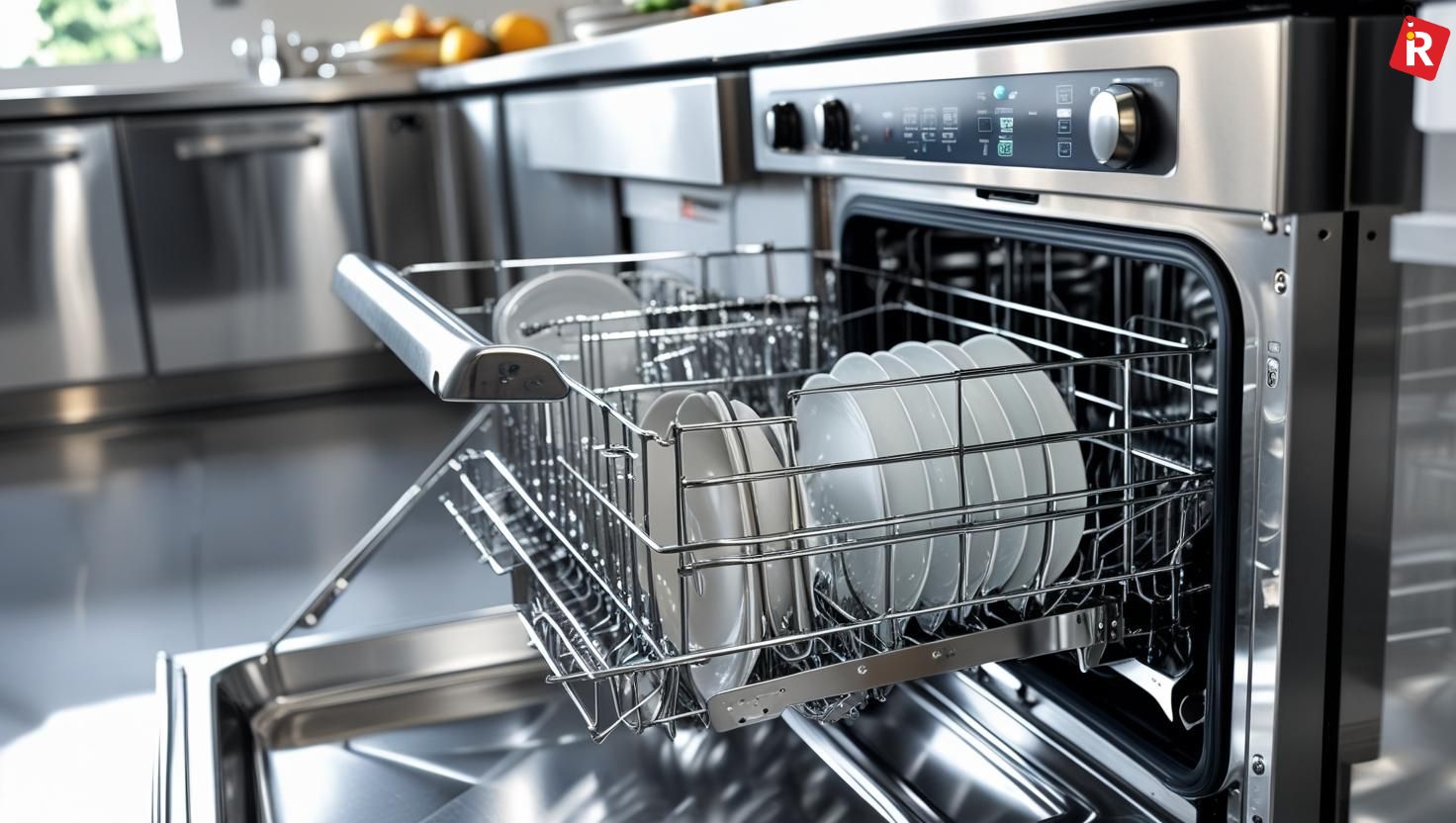
Keeping cookware, glassware, and dishware spotless is essential for presentation, hygiene, and smooth operation.
Why it's essential: It guarantees quick, high-temperature sanitation that manual washing cannot match, follows the health codes, and maintains a consistent supply of sanitized objects that are ready for use.
Important Points to Remember:
- High-Temp vs. Low-Temp: To sanitize, high-temp dishwashers utilize incredibly hot water. Low-temperature dishwashers are frequently more energy-efficient and may use more detergent because they employ chemical sanitizers.
- Capacity and Cycle Time: To guarantee you never run out of clean dishes, pick a machine that can handle your busiest mealtimes.
- Space Requirements: Allow enough room surrounding the dishwasher for the staging of dirty dishes and the drying of clean ones.
Check out: 10 Expert Cash Handling Tips for QSRs
6. Stainless Steel Worktables and Sinks
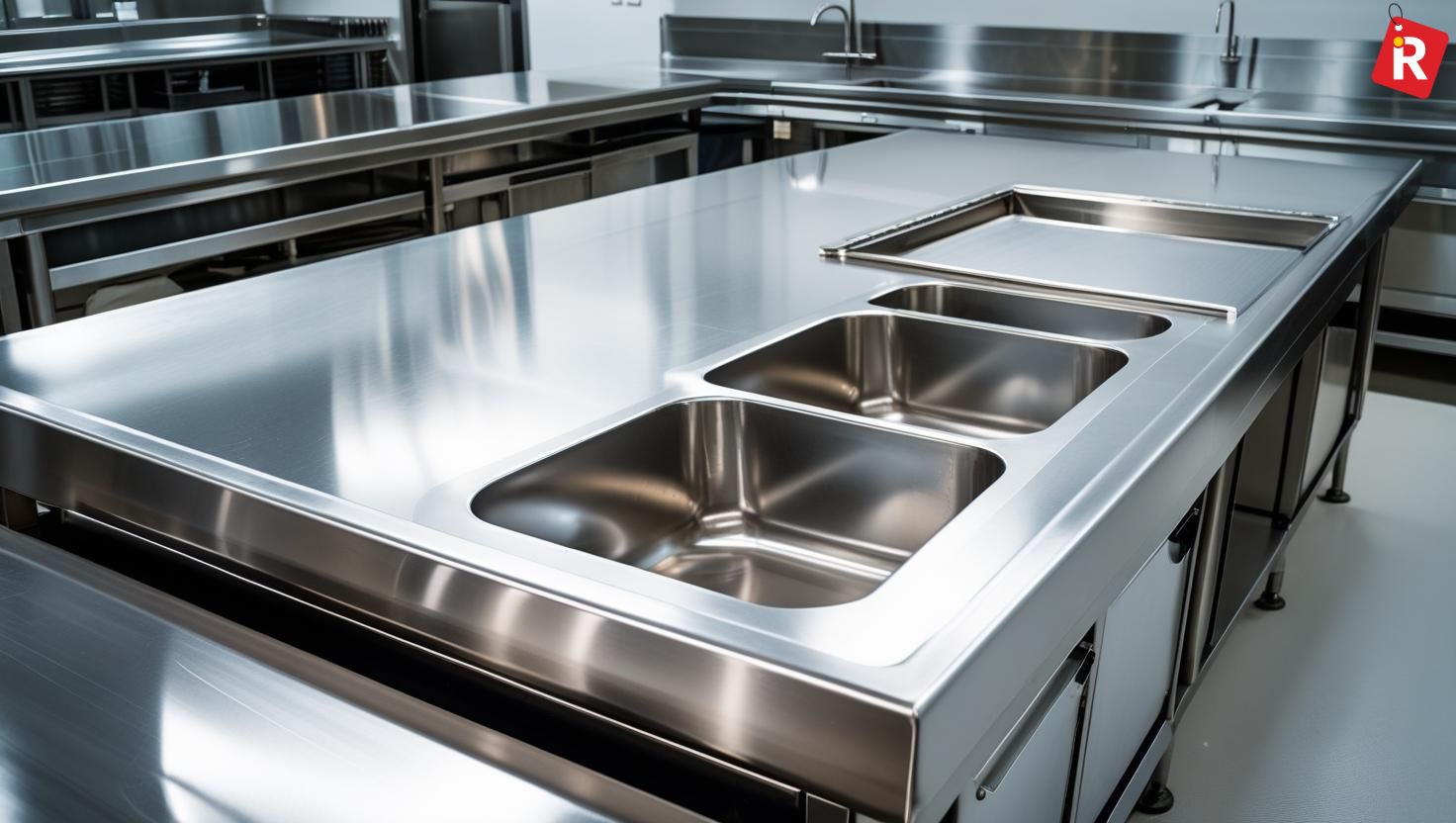
There's a reason why stainless steel is the industry standard. Its characteristics make it perfect for a commercial kitchen setting.
Why it's essential: Extremely easy to clean and sterilize, non-porous, rust-resistant, and long-lasting. Because of this, it is essential to keep hygienic standards and avoid cross-contamination.
Important Points to Remember:
- Thickness and Construction: For stability and durability, choose stainless steel with a heavy thickness.
- Size and Configuration: Select tables that are the right height and size for the different preparation jobs. According to health rules, sinks should have plenty of draining space in addition to several compartments (e.g., wash, rinse, and sanitize).
- Shelving and Storage: To store ingredients and smallwares effectively, think about using tables with under-shelving.
7. A Good Ventilation System
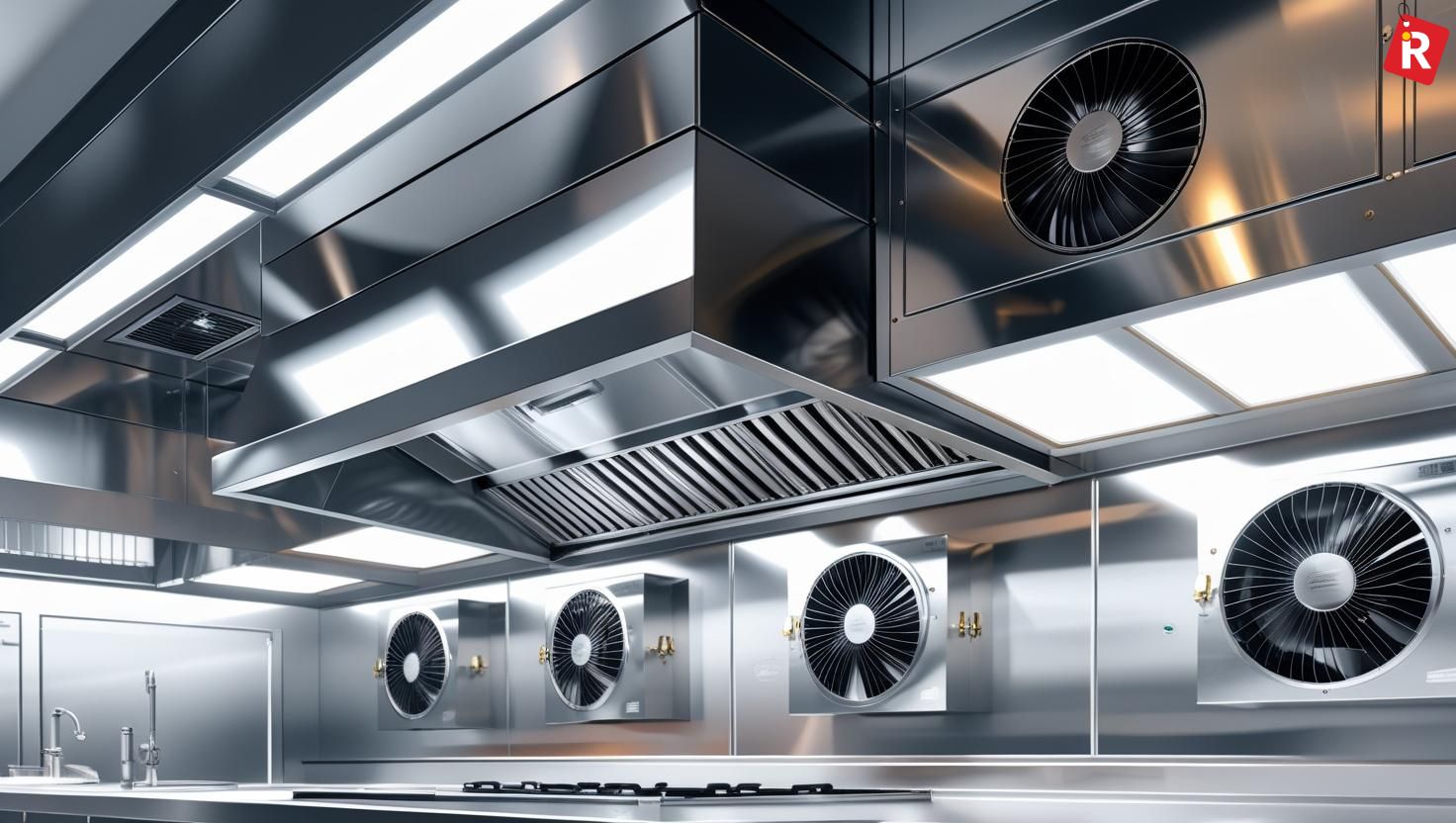
A good ventilation system is essential for both safety and health, not only for comfort.
Why it's Essential: Fans and exhaust hoods eliminate heat, steam, smoke, oil, and other dangerous gases produced during cooking. Employee air quality is enhanced, grease accumulation—a fire hazard—is avoided, and building and fire rules are followed.
Important Points to Remember:
- Sizing: The ventilation system's dimensions must match those of the kitchen appliances it protects. A system that is too small won't work.
- Type of Hood: Depending on how your kitchen is set up, there are several varieties of hoods, including canopy, wall-mounted, and island.
- Maintenance and Installation: Expert installation is essential. For optimum efficiency and fire safety, grease filters and ducts must be cleaned regularly. There would be particular requirements for commercial kitchen ventilation in cities according to local legislation.
8. Quality Cookware, Utensils, and Smallwares
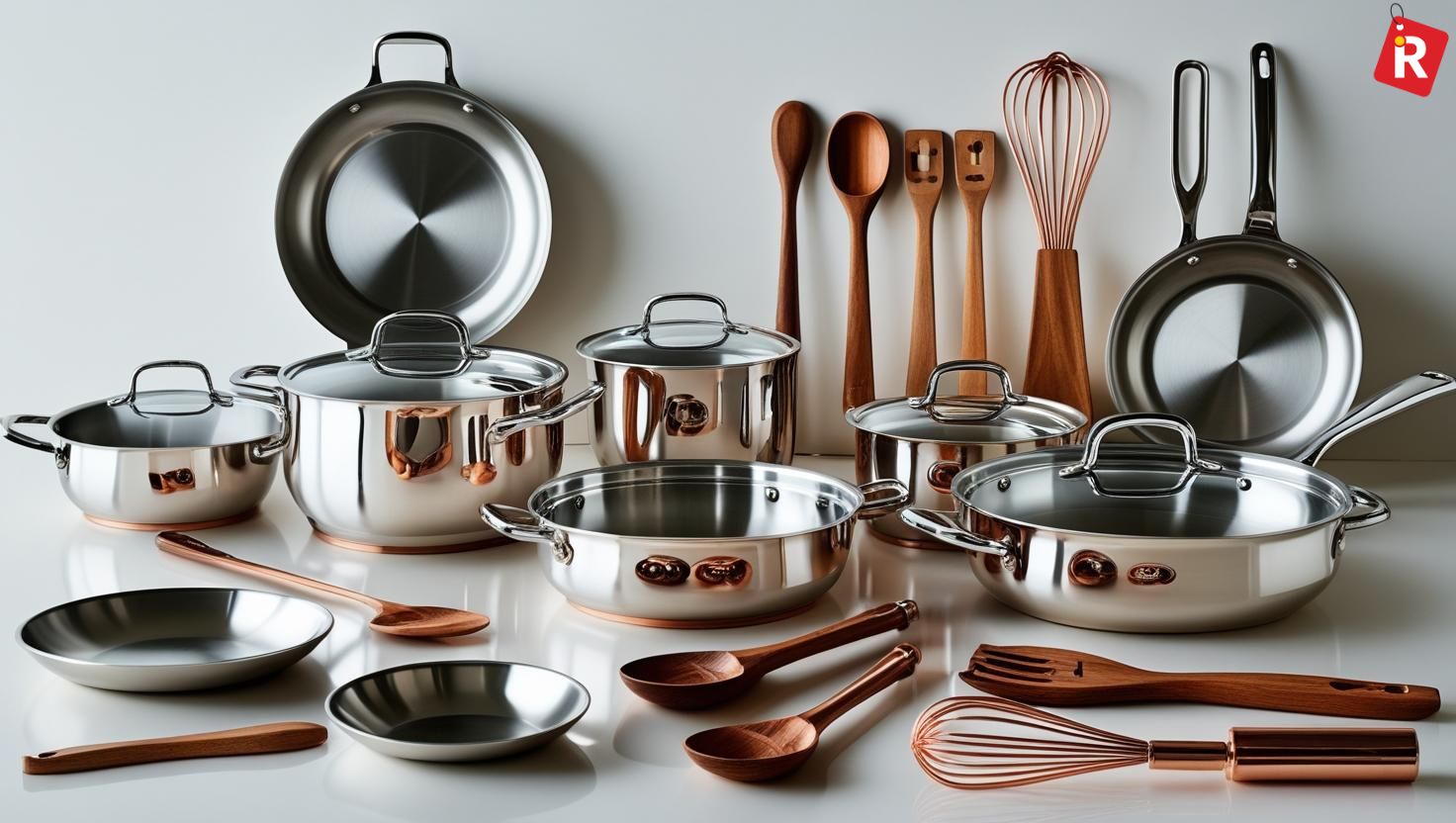
These are the kitchen's overlooked items that enable and accelerate daily tasks. Don't cut corners on this one.
Why it's Essential: All cooking operations rely on sturdy pots, pans, sharp knives, cutting boards, ladles, spatulas, tongs, measuring cups, and a host of other little implements. Food quality can be compromised by subpar products, which can break easily and function poorly.
Important Points to Remember:
- Heavy-Duty Materials: For cookware, choose heavy-gauge aluminum, cast iron, or professional-grade stainless steel.
- Sharp Knives: For effectiveness and security, a set of fine, sharp chef's knives, paring knives, and bread knives is necessary, as is a sharpening steel.
- Color-Coded Cutting Boards: To avoid cross-contamination, use color-coded cutting boards for raw meats, poultry, shellfish, vegetables, and cooked dishes.
Read this: How Technology is Helping Restaurants Expand Their Biz
9. Fire Suppression System and Safety Equipment
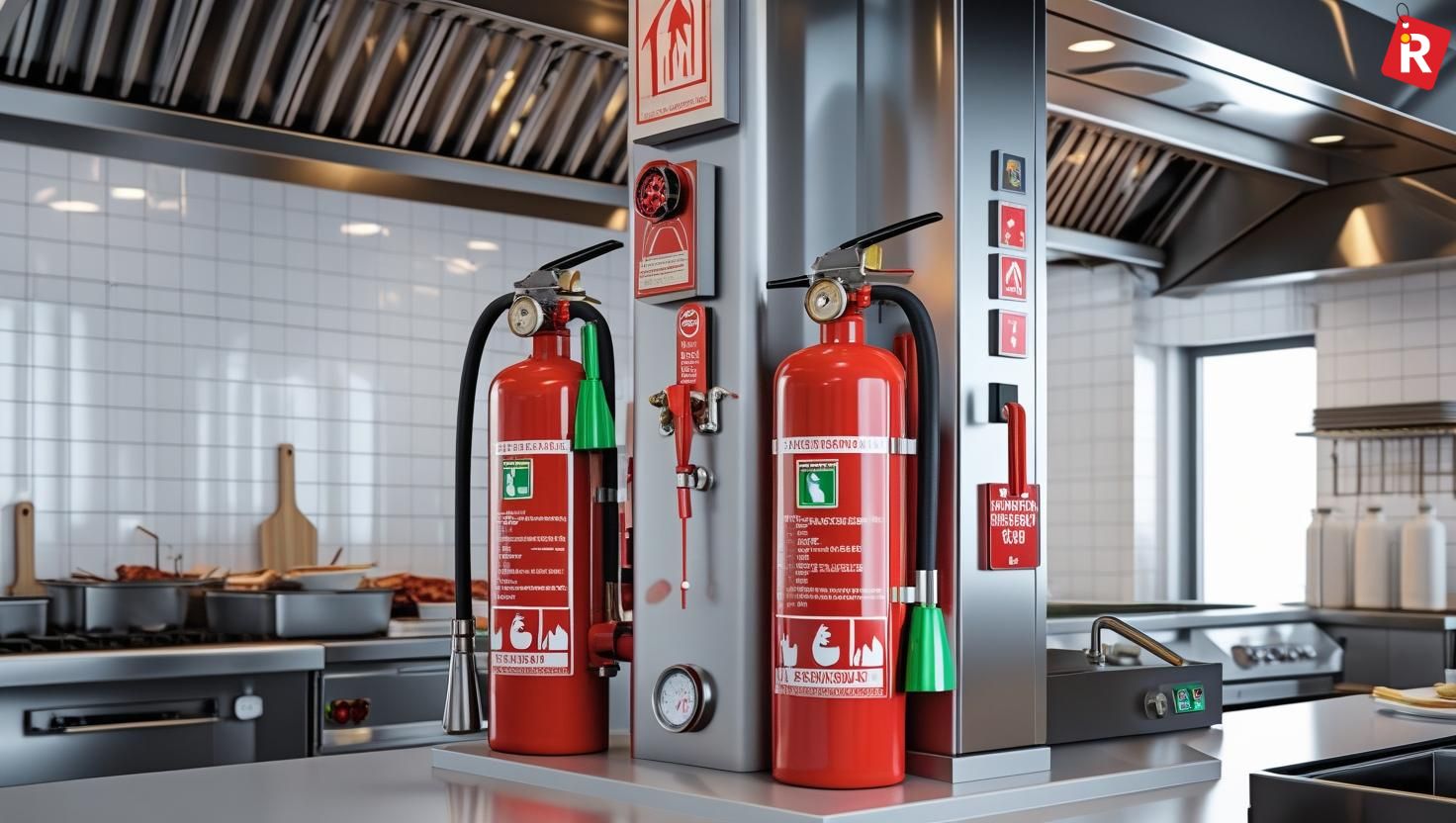
Safety comes first. In addition to being required by law, a complete fire suppression system is an essential investment for safeguarding your employees, assets, and business operations.
Why it's Essential: Because commercial kitchens use a lot of heat and grease for cooking, they are particularly vulnerable to flames. By rapidly putting out fires, an automated fire suppression system can reduce damage and possible casualties.
Important Points to Remember:
- Wet Chemical System: It is the industry standard for putting out grease fires in kitchens.
- Frequent Inspections: To keep the system operating and in regulation, make sure it is professionally set up and receives the required routine maintenance.
- Extra Safety Equipment: Add readily available ABC-rated fire extinguishers, a fully supplied first-aid kit, and emergency exits that are properly marked.
10. Point-of-Sale (POS) System with Kitchen Display System (KDS)
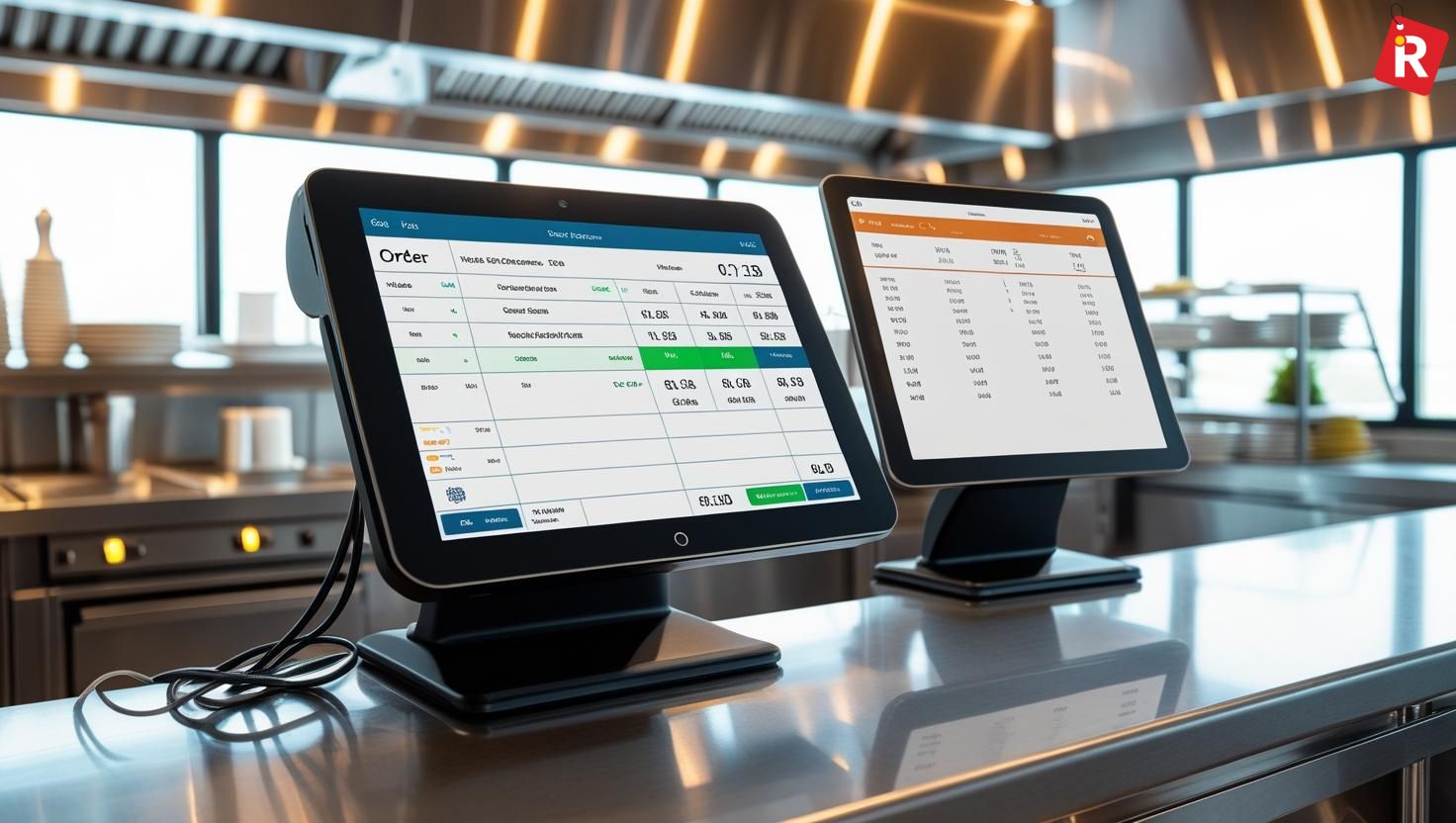
A strong point-of-sale (POS) system coupled with a Kitchen Display System (KDS) is as essential as a stove in contemporary QSRs.
Why it's Essential: The POS simplifies order taking, payment processing, and sales reporting for the front of the house, which is why it's an essential tool. By optimizing cooking times, digitizing order displays, and enhancing front-and-back-of-house communication, the KDS takes the place of paper tickets in the kitchen. This significantly increases efficiency, accuracy, and speed.
Important Points to Remember:
- User-Friendliness: Easy-to-use interfaces that are intuitive for both BOH and FOH employees.
- Scalability: Select a system that will expand along with your restaurant.
- Reporting: Business analysis benefits greatly from having strong inventory and sales reporting capabilities.
Know more: What’s The Difference Between Single Malt, Whiskey, And Scotch?
Conclusion
Setting up a new restaurant's kitchen is a crucial first step that has a direct effect on long-term success. Choosing the correct commercial kitchen equipment with an emphasis on efficiency, safety, and longevity can pay off, even though the initial investment can be high. New restaurant owners can ensure a solid start and long-term growth in the fast-paced restaurant industry by giving priority to these ten "must-haves," which will enable their culinary team to consistently produce high-quality food while also operating profitably, safely, and efficiently.
Mahak Sharma
Content Writer
Mahak Sharma is a passionate content writer with 2 years of experience crafting compelling content across various niches, tailoring her writing to suit different audiences and platforms. She is dedicated to producing engaging content for readers so that they can understand and enjoy the articles. Her strengths lie in crafting SEO-friendly, well-structured articles that drive visibility and engagement.



































































