
The Rise of Restaurant-Style Products on Grocery Shelves
A restaurant can now be experienced at an outlet, ordered through delivery, discovered on quick commerce and used in a home kitchen.

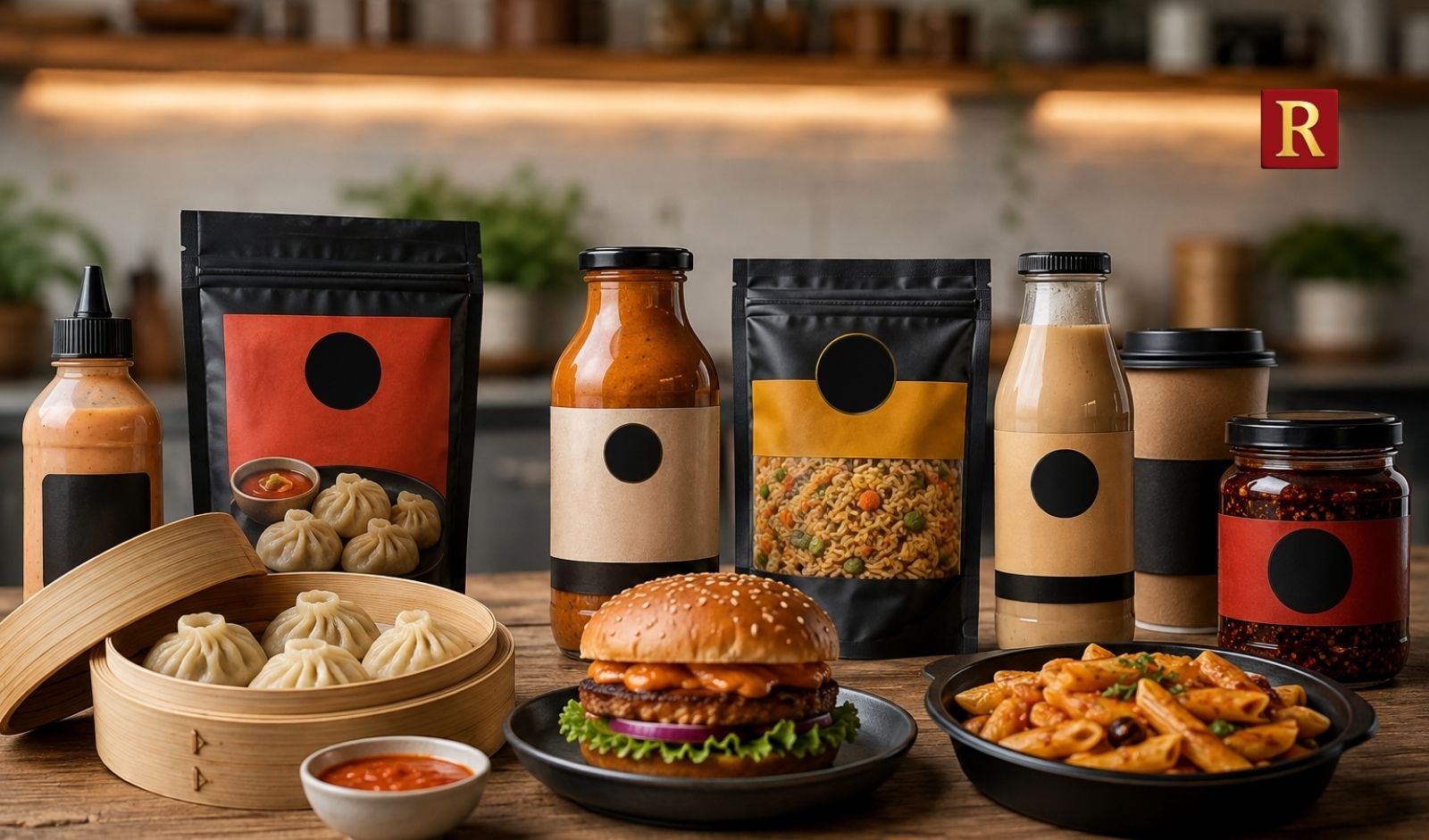
Restaurants are increasingly taking their signature flavours beyond the dining room. Sauces, frozen momos, coffee, ready-to-drink beverages and other restaurant-linked products are now reaching grocery stores and quick-commerce platforms. This shift is creating a new space between restaurants and FMCG. A dish that once depended on a chef, kitchen and physical outlet can now become a packaged product used at home. For restaurant brands, the opportunity is significant. But moving from a restaurant menu to a grocery shelf requires much more than putting a familiar logo on a packet.
From Menu Favourite to Grocery Product
The simplest way to understand the trend is to look at what restaurants already do well. A restaurant may have a popular sauce, a recognisable momo, a signature coffee roast or a particular spice blend. If customers repeatedly ask for it outside the restaurant, that product has the potential to become a retail SKU. Burgrill offers a clear example. In August 2025, the burger chain launched its OG Sauce as a bottled product for online and select retail channels. The sauce had already been part of its restaurant menu, giving the packaged product an existing connection with customers.
- The logic is straightforward: Popular restaurant item → recognisable flavour → packaged format → retail distribution → consumption at home
But not every menu item can make this journey. A freshly assembled burger, for example, depends on texture, temperature and presentation. A sauce is easier to bottle. A momo can be frozen. Coffee can be roasted, packed and sold. The best retail products are therefore often the ones that can retain their identity after processing.
Frozen Food Is Building the Restaurant-to-Home Bridge
Frozen food is another important part of this movement. Wow! Momo entered FMCG with frozen momos and later expanded into other packaged categories. In 2024, the company said its FMCG business was already generating about Rs 45 crore and was targeting roughly ₹100 crore in revenue over the following three years. Its packaged portfolio included frozen momos, cup noodles, thukpa, coconut water and other frozen foods.
Its frozen momo products are also available through online grocery retailers. A current BigBasket listing, for example, shows Wow! Momo Masala Chicken Momos in a 20-piece pack priced at ₹285, demonstrating how a restaurant-linked product can exist as a regular grocery SKU.
The appeal is convenience. Consumers do not need to visit an outlet every time they want the product. They can store it at home and prepare it when required. For restaurant brands, however, frozen food introduces technical challenges. Freezing can affect moisture, texture and flavour. The product needs to remain consistent after storage and cooking. That means food technology becomes as important as the original recipe.
Quick Commerce Is Changing the Retail Entry Point
Quick commerce is making this shift easier to test. A traditional retail launch can require distribution networks, shelf negotiations, inventory planning and significant marketing investment. Quick-commerce platforms provide another route. A 2025 YourStory report noted that QSR brands were using quick commerce to test products, assess demand and refine pricing before expanding into modern and general trade. It cited Boba Bhai's ready-to-drink canned bubble tea, Wow! Momo's frozen momos and Blue Tokai's coffee as examples of restaurant-linked products reaching quick-commerce shelves. This matters because quick commerce can reduce the distance between product discovery and purchase. A customer can discover a restaurant product while shopping for groceries and have it delivered within minutes. The shelf is no longer only a supermarket shelf. It can also be a digital category on a phone.
Sauces May Have a Particular Advantage
Sauces are especially suited to this model. They are versatile. They can be used with fries, sandwiches, wraps, snacks and home-cooked meals. A customer does not need to recreate the entire restaurant dish to use them. The current assortment on Swiggy Instamart illustrates how crowded this category has become. Its Delhi sauces-and-spreads section currently lists hundreds of products, including ketchup, mayonnaise, dips, cooking sauces, Asian sauces, hummus and chilli oils. That competition also creates an important lesson.
- Calling a product "restaurant-style" is not enough.
A restaurant brand needs a reason for consumers to choose its product over an established packaged-food brand. Its advantage may come from a distinctive flavour, a strong restaurant association, a particular recipe or an existing customer base.
The Restaurant Brand Becomes the Product's Starting Advantage
A conventional FMCG product often has to build recognition from the shelf upward. A restaurant already has a relationship with its customers. Someone who has tried a signature sauce at a restaurant knows what the product represents. That familiarity can make the first retail purchase easier.
- The relationship can then move in both directions. Restaurant visit → product discovery → home purchase → repeat use → stronger brand familiarity
This does not guarantee repeat sales. The packaged product still has to deliver on taste, price and convenience. But the restaurant provides something many new FMCG brands spend years building: consumer memory.
The Grocery Shelf Has Different Rules
This is where the restaurant-to-retail transition becomes more complicated. Restaurant food is usually made for immediate consumption. Packaged food has to survive storage, transportation and repeated handling. A restaurant chef can adjust seasoning during preparation. A packaged-food manufacturer cannot rely on that flexibility. The formulation needs controls around ingredients, processing and batch consistency. Depending on the product, brands may also need to consider factors such as pH, water activity, thermal processing, packaging compatibility and shelf-life validation. Packaging also becomes part of product performance.
For frozen food, the cold chain matters. For sauces, container integrity and storage conditions matter. For ready-to-drink beverages, formulation stability and packaging material become important. In other words, a restaurant recipe is not automatically a retail-ready formulation. It needs to be engineered for a different environment.
Compliance Moves Up the Priority List
Once a product enters packaged retail, food safety and labelling become central to the business. FSSAI's framework covers product standards, packaging and labelling, among other areas. Its guidance states that pre-packaged food labels must carry information such as the food name, ingredients, nutritional information, vegetarian/non-vegetarian declaration, manufacturer details, net quantity, batch information and date-related declarations.
FSSAI also lists the Labelling and Display Regulations, 2020 and Packaging Regulations, 2018 within its current regulatory framework. For restaurant operators, this means retail expansion requires capabilities beyond kitchen operations. Food technologists, quality teams, regulatory specialists and packaging professionals can become important parts of the process.
The Real Opportunity Is More Than Extra Revenue
Retail can give restaurant brands another way to reach consumers. Instead of depending entirely on tables, delivery orders and outlet traffic, a restaurant can create products that enter homes directly. It can also reach consumers in cities where it does not yet have a physical outlet. But the economics need careful planning. A packaged product carries costs for manufacturing, packaging, storage, distribution, retailer margins, promotions and potential wastage. A restaurant brand should therefore evaluate contribution margin and repeat purchase, rather than assuming retail automatically means higher profitability.
The strongest products are likely to be those that meet five conditions:
- Signature: The product represents something distinctive about the restaurant.
- Scalable: It can be produced consistently.
- Stable: Quality can be maintained throughout its intended shelf life.
- Simple: Consumers can understand and use it easily.
- Sellable: The unit economics work across the chosen channel.
Maybe Not The Final Destination
The restaurant-to-grocery movement is not simply about selling more food. It is about changing where a restaurant brand can exist. A restaurant can now be experienced at an outlet, ordered through delivery, discovered on quick commerce and used in a home kitchen. For consumers, this can mean easier access to familiar flavours. For restaurant businesses, it creates another route to build frequency and reach. But the brands that succeed will need to do more than transfer a popular menu item into a packet. They will need to preserve what made that product memorable while adapting it to the technical, regulatory and economic demands of packaged food.
The most interesting shift is therefore simple: the restaurant is becoming a starting point for products that can live beyond the restaurant.
Saptopriya Ghosal
Feature Writer
I am a dedicated media professional with a bachelor's degree in mass communication from the State University of Calcutta and a postgraduate degree from Amity University. My academic journey has equipped me with a profound understanding of storytelling and communication. Passionate about the dynamic world of media, I continually strive to explore new ways to engage and inform through compelling narratives.



































































