
The Rise of Multi-Concept Restaurants Under One Roof
Restaurants that combine complementary concepts, invest in technology, maintain consistent quality, and keep operations efficient are more likely to build a sustainable business.

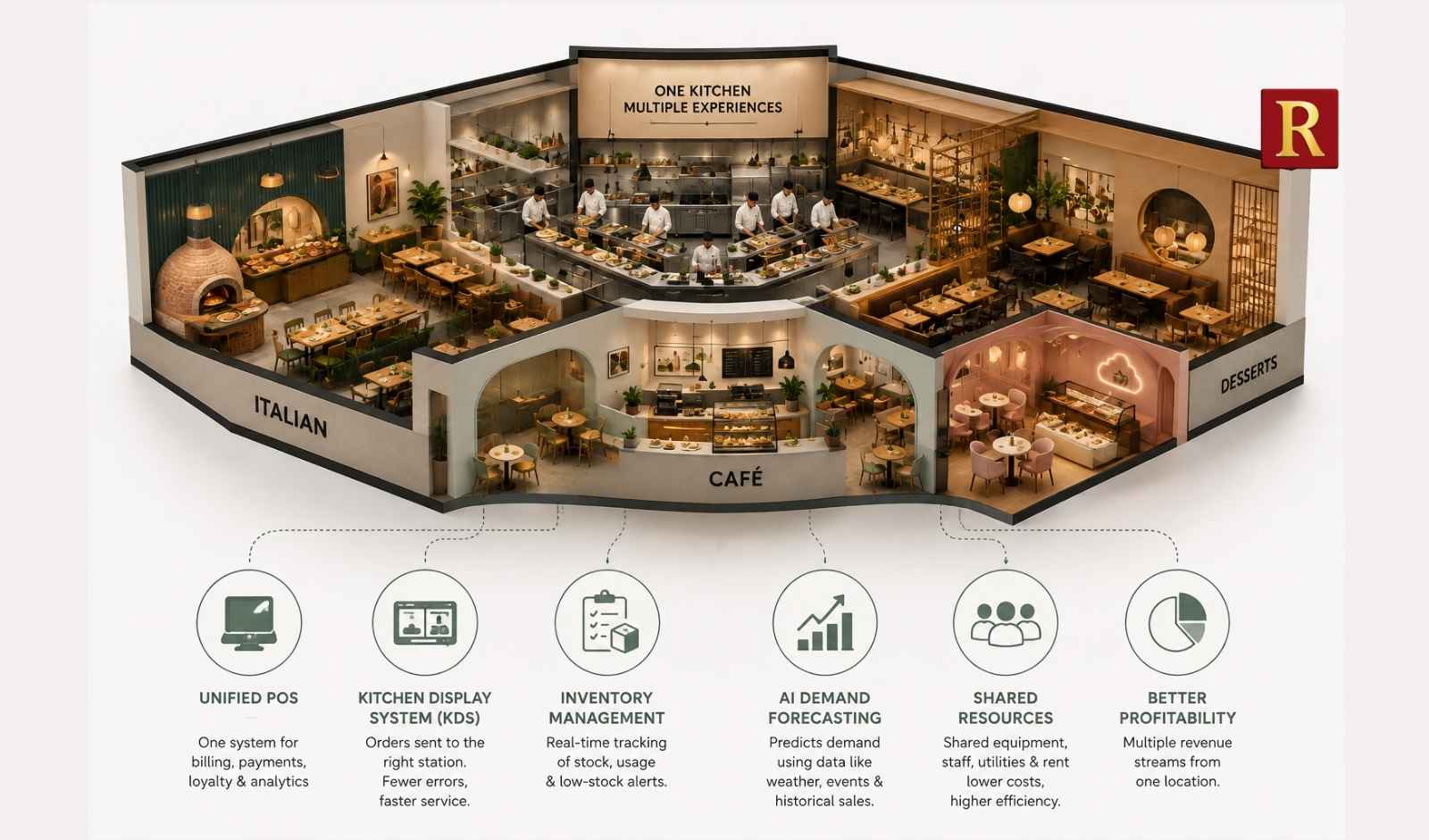
When a group of friends goes out to eat, everyone often wants something different. One person craves pizza, another prefers sushi, someone wants North Indian food, while another looks for healthy bowls or desserts. Instead of losing customers because of limited choices, many restaurants are solving this problem by offering multiple dining concepts under one roof.
This business model is becoming more common across India's restaurant industry. It allows operators to serve different cuisines or dining experiences from the same location while sharing kitchens, staff, technology, and operational costs. For customers, it means more variety. For restaurant owners, it can mean better use of space and stronger revenue potential when managed efficiently. With commercial rents rising, labour costs increasing, and diners expecting more choice than ever before, multi-concept restaurants are emerging as a practical business strategy rather than just a dining trend.
What Is a Multi-Concept Restaurant?
A multi-concept restaurant operates more than one food or beverage concept from a single location. These concepts may have separate menus, unique branding, or different dining experiences, but they often share the same kitchen, storage, staff, and technology systems.
Some common examples include:
- A cafe with an artisan bakery and dessert counter
- A restaurant serving both Asian and Italian cuisines
- A fine-dining restaurant with a rooftop cocktail lounge
- A family restaurant with a quick-service takeaway section
- A dine-in restaurant operating multiple delivery-only brands
Unlike food courts, where different vendors run separate outlets, a multi-concept restaurant is usually managed by a single operator using shared resources.
Why More Restaurants Are Choosing This Model
Restaurants today are serving customers with changing dining habits. Families, office groups, and friends often struggle to agree on one cuisine. Offering several options under one roof helps restaurants attract larger groups without sending customers elsewhere.
The business advantages are equally important. Instead of relying on a single menu, restaurants can earn revenue from multiple dining occasions throughout the day. A café can attract breakfast customers, a casual restaurant can serve lunch, and a bar or dessert concept can increase evening sales—all from the same property. This approach also allows restaurants to respond quickly to changing customer preferences without opening a completely new outlet.
Better Use of Restaurant Space
Rent is one of the biggest expenses for restaurants, especially in prime commercial areas. According to industry estimates, occupancy costs can account for 8% to 15% of restaurant revenue, depending on the location and format. Every square foot needs to generate value. A multi-concept restaurant improves asset utilisation by making the same kitchen and dining area work harder throughout the day.
For example, the kitchen can handle:
- Dine-in orders
- Online delivery
- Takeaway
- Corporate catering
- Special event menus
- Seasonal food promotions
Instead of remaining underused during non-peak hours, the kitchen becomes a continuous production centre.
One Kitchen, Multiple Revenue Streams
One of the biggest strengths of this model is its ability to generate different income sources without creating entirely new infrastructure.
A shared kitchen can prepare:
- Fresh pizzas
- Pasta
- Rice bowls
- Salads
- Desserts
- Bakery items
Many ingredients overlap across these menus. Tomatoes, onions, cheese, herbs, sauces, flour, and vegetables can be used in several cuisines, helping reduce food waste while improving purchasing efficiency. Buying ingredients in larger quantities can also improve supplier negotiations and reduce per-unit costs.
Technology Makes It Possible
Modern multi-concept restaurants rely on advanced technology to manage multiple brands and menus efficiently from a single location. A Unified Point of Sale (POS) system acts as a central platform for billing, payments, loyalty programmes, customer data, and sales reporting, allowing staff to manage different concepts without switching between systems. Kitchen Display Systems (KDS) replace handwritten order slips by sending orders directly to the relevant kitchen stations, improving communication, reducing errors, and speeding up food preparation. Inventory management software tracks ingredient usage in real time, monitors stock levels, sends low-stock alerts, and helps managers replenish supplies on time. Since several concepts often share ingredients, it also reduces food waste and controls food costs. Many restaurants also use AI-based demand forecasting to analyse historical sales, weather patterns, weekends, festivals, and local events to predict customer demand accurately. This enables better inventory planning, smarter staff scheduling, fewer stock shortages, and improved service during peak hours. Together, these technologies increase operational efficiency, enhance customer experience, and improve overall restaurant profitability.
Customers Benefit Too
The biggest winner is often the customer. A larger menu means different age groups and food preferences can dine together comfortably. Families do not need to compromise. Office teams have more options. Children can choose familiar dishes while adults explore something new. Customers also enjoy ordering different cuisines in one meal, increasing the overall dining experience. Restaurants benefit because customers often order more items when menus offer greater variety. Desserts, beverages, appetisers, and specialty dishes become easier to cross-sell.
Popular Multi-Concept Formats
Restaurants are adopting this model in different ways depending on their business goals.
Café and Bakery: Morning coffee transitions into fresh pastries, sandwiches, and evening desserts.
Restaurant and Cocktail Bar: The dining experience changes after sunset with specialised beverages and late-evening menus.
Dine-In Plus Delivery Brands: Customers dining inside may only see one restaurant, while the kitchen simultaneously prepares orders for multiple online brands. This helps maximise kitchen capacity without adding extra rent.
Restaurant With Retail Products: Some restaurants now sell bottled sauces, spice blends, bakery products, coffee beans, or packaged snacks alongside meals.
These products create additional income while extending the restaurant's brand beyond the dining table.
Business Benefits Beyond Higher Sales
The value of multi-concept restaurants goes beyond serving more dishes. Some key operational advantages include:
Lower Fixed Costs: Multi-concept restaurants reduce operating expenses by sharing kitchen equipment, cold storage, dishwashing stations, utilities, staff, and rent across multiple brands. This allows fixed costs to be distributed over several revenue streams, improving profitability and making better use of existing infrastructure.
Higher Average Spending: Customers often order dishes from different menus during the same visit, combining appetisers, main courses, desserts, and specialty beverages. This variety encourages cross-selling, increases the average order value, and boosts the overall revenue generated from each table.
Reduced Business Risk: Relying on multiple dining concepts helps restaurants reduce financial risk. If one cuisine experiences lower demand due to seasonal trends or changing customer preferences, other concepts can continue attracting customers and generating steady revenue throughout the year.
Faster Menu Innovation: Multi-concept restaurants can introduce seasonal menus, limited-time offers, or new cuisines without changing their core business. This flexibility allows operators to test customer response, identify popular dishes, and quickly adapt menus to evolving food trends.
If customers respond positively, successful dishes can become permanent offerings.
Looking Ahead!
India's organised food service market continues to expand as urbanisation, digital ordering, and changing lifestyles reshape dining habits. Consumers increasingly expect convenience, flexibility, and personalised experiences. Restaurants are responding by creating spaces that can serve different customer needs without significantly increasing operational costs. Technology will continue to strengthen this model. Smarter inventory systems, AI-powered forecasting, digital ordering, QR-code menus, and customer analytics will help operators manage multiple concepts more efficiently.
Sustainability is also expected to play a larger role. Shared kitchens reduce duplicate equipment and improve ingredient utilisation, supporting efforts to minimise food waste. Multi-concept restaurants are changing how modern hospitality businesses operate. Instead of expanding through multiple standalone outlets, many operators are finding greater value in offering different dining experiences from a single location. For customers, this means more choice and greater convenience. For restaurant owners, it creates opportunities to improve space utilisation, diversify revenue, and make better use of existing resources. Success, however, depends on thoughtful execution. Restaurants that combine complementary concepts, invest in technology, maintain consistent quality, and keep operations efficient are more likely to build a sustainable business. As customer expectations continue to evolve, multi-concept restaurants are well positioned to become an increasingly important part of India's dining landscape.
Saptopriya Ghosal
Feature Writer
I am a dedicated media professional with a bachelor's degree in mass communication from the State University of Calcutta and a postgraduate degree from Amity University. My academic journey has equipped me with a profound understanding of storytelling and communication. Passionate about the dynamic world of media, I continually strive to explore new ways to engage and inform through compelling narratives.



































































