
The Pros and Cons: Comparing Franchise vs. Independent Specialty Restaurants
Aspiring restaurateurs in India's vibrant and expanding food and beverage industry must make the crucial choice of whether to join an established franchise or launch a specialty restaurant on their own. The decision is not just a question of taste; rather, it is a strategic business option that might impact long-term performance.

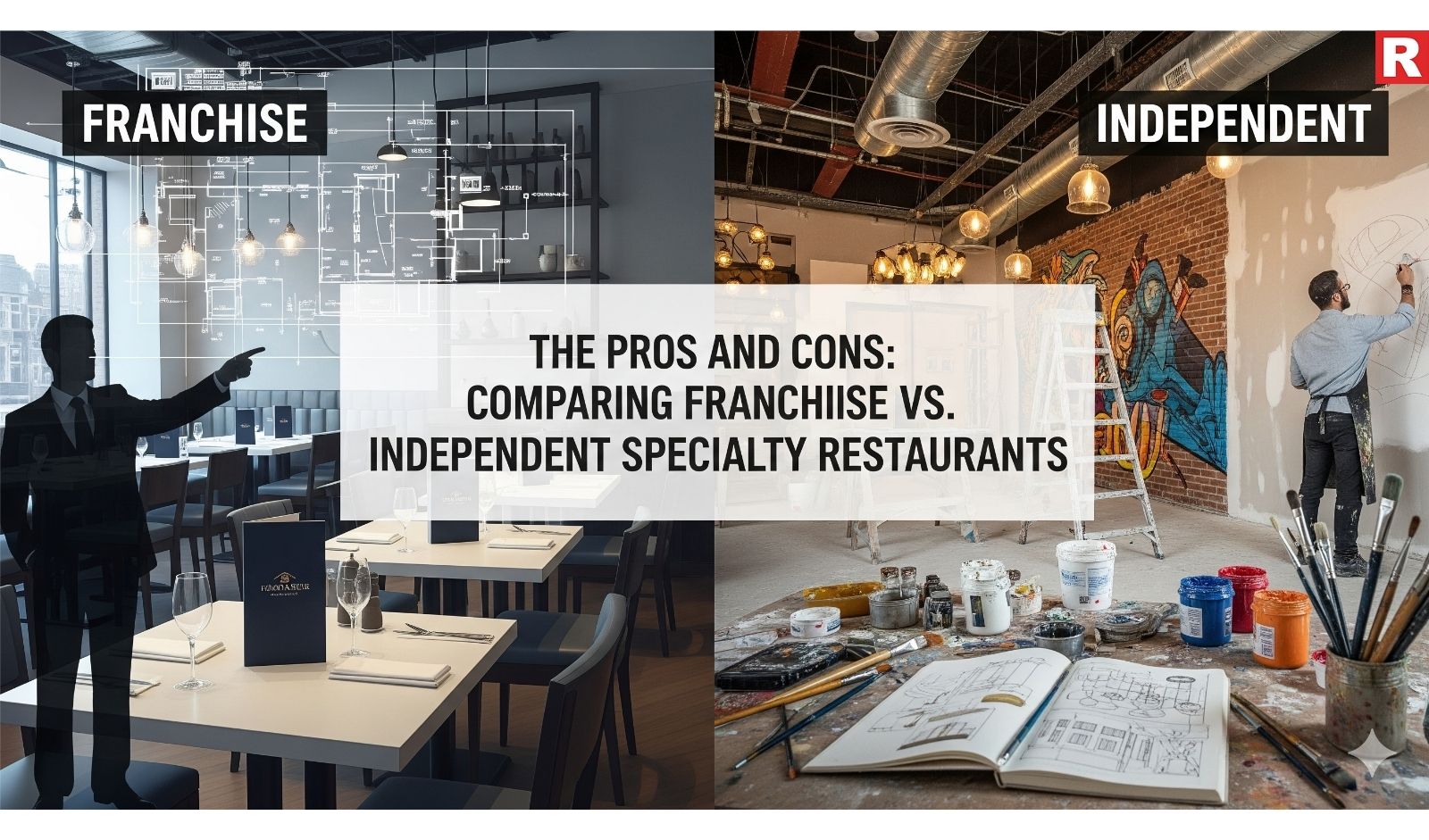
Aspiring restaurateurs in India's vibrant and expanding food and beverage industry must make the crucial choice of whether to join an established franchise or launch a specialty restaurant on their own. The decision is not just a question of taste; rather, it is a strategic business option that might impact long-term performance. Both routes have clear benefits and considerable disadvantages. The specialized restaurant model has become more appealing as a result of the rise of the smart Indian diner, who now prioritizes authenticity and unique dining experiences over generic multi-cuisine menus. The dilemma still stands, though: is it preferable to use a franchise's established system and brand power or to create an original brand from the ground up?
This detailed article will compare franchises and independent specialized restaurants in India. We will examine the benefits and drawbacks of each model, examine the important variables that affect this choice, and offer a clear framework to assist prospective restaurateurs in making this important decision. By the end, you will know exactly which path best suits your entrepreneurial spirit, risk tolerance, and business objectives.
Read more: How to Choose the Healthiest Cooking Oil for Your Kitchen
The Franchise Model: The Power of a Proven Blueprint
The franchise restaurants are known for their role in the restaurant industry as a gateway to smooth success. With a restaurant franchise, you can run your own business using an already established brand's name, operating procedures, and intellectual property. This could be anything from a well-known chain like Domino's, Pizza Hut, etc., with an international customer base, to a prosperous domestic brand like Cafe Coffee Day, Haldiram’s in the Indian market.
Pros of a Restaurant Franchise
- Brand Recognition and Customer Trust: Perhaps the greatest benefit is customer trust and brand recognition. You have a well-known brand that people are familiar with and trust when you first open for business. Because of the brand's preexisting reputation for quality and reliability, you save a great deal of time and money compared to starting from scratch while building a customer base. This brand recognition is crucial in a crowded market.
- Proven Operations and Business Model: Franchises offer a comprehensive business plan. Everything from staff training and marketing to menu preparation and supplier management is covered in detail in the guides you receive. This removes uncertainty and lowers the possibility of costly operational errors, which are a major hazard for newly independent business owners.
- Established Supply Chain: A network of authorized suppliers and tightly regulated purchasing is are common feature of franchises. This guarantees a continuous supply chain, cheaper pricing because of purchasing power in bulk, and the same quality of ingredients—all of which are crucial in India, where supply can be irregular.
- Ongoing Support and Training: The franchisor provides you with ongoing support as a franchisee. This covers marketing support, operating guidance, troubleshooting help, and basic training for you and your employees. First-time business owners really benefit from this safety net.
- Less Marketing Guesswork: The majority of brand-level marketing and advertising, including digital promotions and national campaigns, is frequently managed by the franchisor. Even if you might donate to a marketing fund, you still gain access to expert, extensive campaigns that would be impossible for you to fund on your own.
Know more: 10 Restaurant Marketing Ideas That Are Wasting Your Money
Cons of a Restaurant Franchise
- High Initial Investment and Continuous Fees: Purchasing a franchise might come with a hefty franchise fee, royalties (a portion of sales), and a payment to the brand's marketing fund. Your profitability may be greatly impacted by these recurring expenses.
- Lack of Creative Freedom: The franchise agreement limits your options, regulating everything from the supplier and décor to the menu and prices. Very little space exists for creativity or personalization. For instance, you need corporate clearance before you can launch a new dish to satisfy local tastes. Your creative energy might feel limited by this.
- Operational Limitations: Although a tried-and-true system has advantages, it can also have disadvantages. It may be challenging to adjust the system to local market conditions or a rapid shift in customer preferences due to its lack of flexibility. For a given location, the "one-size-fits-all" strategy might not necessarily be the best one.
- Dependency on the Franchisor's Reputation: Your restaurant's reputation may be damaged without your fault if the franchisor experiences a crisis that damages their brand in another region of the nation. You can lose or gain something as your restaurant is tied to the franchise’s fate.
- Limited Profitability per Unit: Although a franchise model offers stability, it cannot be as profitable as a very successful independent restaurant on a percentage basis because of the continual outflow of royalties and marketing fees.
What's new: Five Ways To Boost Your Restaurant's Lunch Rush
The Independent Restaurant Model: The Path of True Entrepreneurship
An independent specialty restaurant is a business that you start and run completely on your own. You make all of the decisions, including those regarding the menu, marketing, and brand idea.
Pros of an Independent Specialty Restaurant
- Full Creative Freedom: This is the biggest advantage. Every element of your business is entirely within your control. You can build a distinctive menu, modify recipes to suit regional preferences (for example, giving a traditional Italian dish a spicy touch for Indian palates), and create a special atmosphere that reflects your personal style. You may create a genuinely unique brand with this freedom.
- Increased Profit Potential: Your profits are completely your own without having to pay royalties, franchise fees, or donations to marketing funds. The potential for larger margins is even bigger than with a franchise if you manage a successful, lean business.
- Flexibility & Adaptability: You can react quickly to customer feedback and changes in the market. You can be the first to add a new cuisine trend to your menu if it appears in your city. In a market that moves quickly, this flexibility is a crucial competitive advantage.
- Personalized Brand Story: The owner's vision and passion are reflected in the brand of an independent restaurant. Customers can develop a strong emotional bond with you through this personal touch, becoming devoted brand ambassadors who take pride in what you've achieved.
- Complete Asset Ownership: You are the owner of all your company's assets, including any value added to the brand. This creates equity that can be transferred, sold, or expanded without the franchisor's consent.
Check out: The Global Diner: Redefining Restaurants Through Quality, Quantity, and Presentation
Simple Steps To Boost Your Restaurant's Foot Traffic
Cons of an Independent Specialty Restaurant
- Significant Risk and Uncertainty: There is a great deal of risk and uncertainty because you are beginning from nothing. There is no recognized brand identity, no safety net, and no tested blueprint. The business's success depends solely on your capacity to develop an engaging idea, carry it out successfully, and attract customers. There is a far greater chance of failure.
- High learning curve and hard work: You are in charge of all business operations, from marketing and finance management to locating suppliers and negotiating contracts. There is a high learning curve, a significant time commitment, and a wide range of skills needed.
- No Centralized Support: You are on your own without centralized support. No marketing crew to assist with promotions, no training manuals to support you, and no one to call for operational problems. You have to start from scratch when building your systems, which is a huge task.
- Building Brand Recognition: You are solely responsible for marketing. Building a brand that stands out and gains the trust of consumers in an increasingly competitive sector may be very difficult and costly. To generate a buzz, you need to make significant time and financial investments.
- Higher Costs: You might have to pay more for ingredients and supplies because you don't have the franchise's bulk buying power. Additionally, you are responsible for paying for any marketing and other support services that a franchise would handle.
Read this: Top Mood-Boosting Foods That Make You Happy
Key Factors to Consider Before Deciding
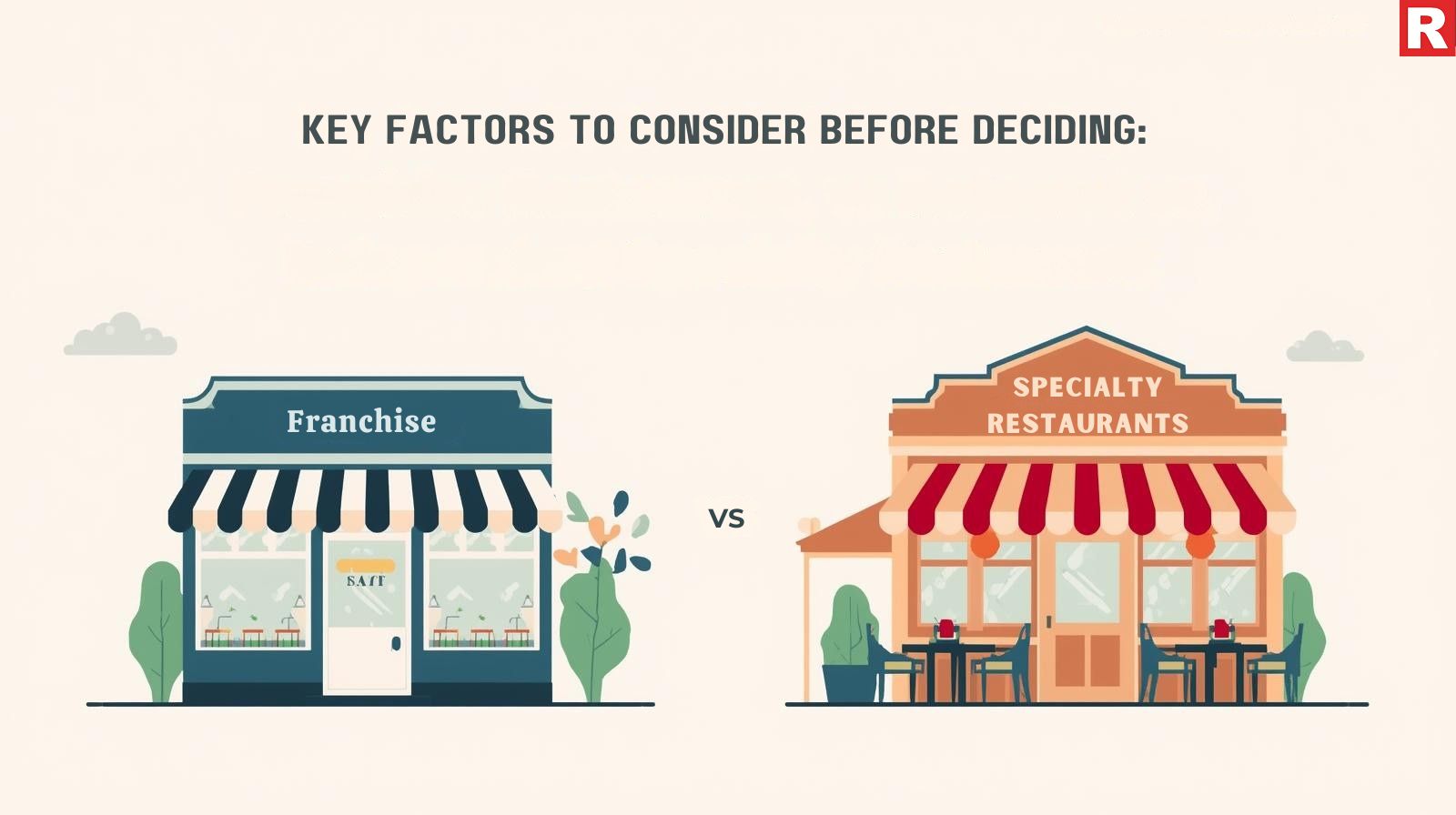
You must consider both the pros and cons in light of your unique financial and personal situation in order to make a wise decision.
- Your Entrepreneurial Personality: Do you enjoy taking chances, being innovative, and the challenge of creating something from the ground up? Or would you rather work in an organized setting with precise rules and a tried-and-true route to success? Which model will make you happier and more productive depends largely on your personality.
- Financial Resources: Do you have enough money to pay a high franchise fee, or would you be better off with a smaller, independent business where you can keep expenses under control? Remember to include an emergency fund and working capital.
- Market Analysis: How does your city's local market appear? Is the industry presently crowded, making a franchise's brand power a required advantage, or is there a niche that an independent specialist restaurant could fill?
- Experience Level: Are you a first-time restaurateur, or do you have experience managing and operating restaurants? While an independent enterprise needs prior experience or a willingness to pick things up quickly, a franchise might offer a helpful crash course in the field.
- Long-Term Goals: Do you want to run a single, successful company that symbolizes your passion, or do you want to own several locations or grow into a major corporation with a well-defined exit strategy? Franchises frequently offer a more stable route to growth.
Conclusion
The decision between an independent specialty restaurant and a franchise is basically highly individual. A franchise provides a more secure, dependable, and organized route to company ownership. For people who wish to be an owner-operator but would rather reduce risk and stick to a tried-and-true method, this is the best option. Stability and support come at the expense of your creative independence.
The independent route, on the other hand, is reserved for the real entrepreneur—the dreamer who wants to create a distinctive brand from the ground up. It is a high-risk, high-reward business that needs a great deal of determination, hard work, and attention to detail. The joy of producing a genuinely one-of-a-kind and customized dining experience is just as rewarding as the money.
Mahak Sharma
Content Writer
Mahak Sharma is a passionate content writer with 2 years of experience crafting compelling content across various niches, tailoring her writing to suit different audiences and platforms. She is dedicated to producing engaging content for readers so that they can understand and enjoy the articles. Her strengths lie in crafting SEO-friendly, well-structured articles that drive visibility and engagement.



































































