
The Economic Impact of Women-Led Food Businesses: How They Are Powering Growth and Redefining the Industry
The economic impact of women-led food businesses is both immediate and long-term. In the short term, they create jobs, increase household incomes, and stimulate local markets.

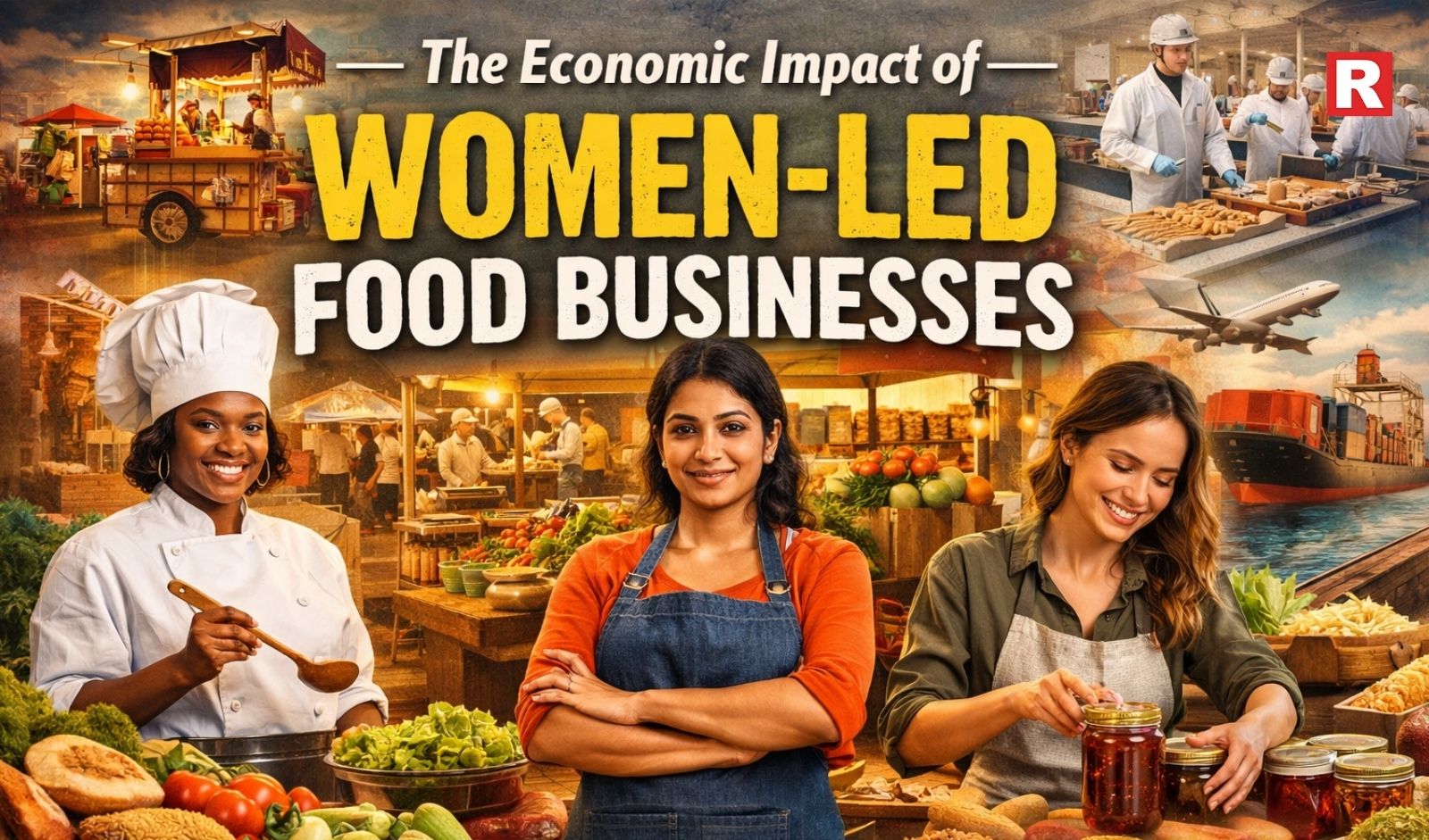
Food is one of the largest industries in the world. It feeds people. It creates jobs. It moves supply chains. Today, women-led food businesses are becoming a powerful economic force within this ecosystem. They are not just running restaurants or home kitchens. They are building scalable brands, food processing units, agribusiness ventures, cloud kitchens, and food-tech platforms that contribute directly to GDP growth, employment generation, and community development.
Across global markets, women entrepreneurs are increasing their presence in the food sector. According to data from the World Bank and International Finance Corporation (IFC), women-owned businesses form a significant share of micro, small, and medium enterprises worldwide. A large portion of these businesses operate in food production, catering, agriculture, food retail, and hospitality. The Food and Agriculture Organization (FAO) also highlights that women make up a substantial part of the agricultural workforce, especially in developing economies. When women move from informal participation to formal business ownership, the economic multiplier effect becomes stronger.
The Size of the Opportunity
The global food industry is valued in trillions of dollars. From farm to fork, the value chain includes farming, processing, logistics, retail, hospitality, and technology. Women-led businesses operate at every stage of this chain. In many emerging economies, food entrepreneurship is one of the most accessible entry points for women because it leverages traditional skills while allowing modern business expansion.
However, the impact goes beyond accessibility. Studies from McKinsey suggest that advancing women’s economic participation can significantly boost global GDP. When applied specifically to the food sector, the effect becomes visible in employment rates, income stability, and local economic development. Women-led food businesses often employ more women. This improves household incomes and increases community spending power. The result is a stronger local economy.
Job Creation and Economic Multiplier Effect
One of the most measurable impacts of women-led food businesses is job creation. Small catering units, bakery brands, packaged snack startups, and restaurant chains hire chefs, delivery staff, marketing teams, logistics managers, and suppliers. Many women founders consciously build inclusive teams. This expands workforce participation, especially in semi-urban and rural areas.
When employment rises, consumption increases. Families spend more on education, health, and goods. This triggers a multiplier effect. Economists often measure this through increased local demand and improved small business activity in surrounding areas. Women entrepreneurs in food often source ingredients locally. This strengthens farmer incomes and reduces supply chain leakage.
Read more: How Women Are Influencing Premium Alcohol Buying Trends
Top Summer Menu Trends Restaurants Are Introducing This Year
Innovation in Product and Process
Organic Foods: Many women founders launch certified organic grains, pulses, and vegetables. These foods are free from synthetic pesticides. They contain natural vitamins, minerals, and antioxidants. They support immunity and overall health. People with weak immunity should wash raw produce properly before use.
Plant-Based Alternatives: Products like almond milk, soy curd, and vegan spreads are gaining demand. They are rich in plant protein and healthy fats. They are suitable for lactose-intolerant consumers. People with soy or nut allergies should avoid specific variants.
Healthy Snacks and Millet Products: Roasted millet chips and seed mixes provide fibre, iron, and slow-release energy. They support digestion and weight control. Individuals with thyroid issues should limit excess millet intake.
Artisanal Packaged Goods: Handmade granola and cold-pressed oils offer good fats and micronutrients. Overconsumption should be avoided by those managing calorie intake.
Efficient Business Models: Cloud kitchens lower rent costs. Direct sales improve margins. Certifications and inventory control ensure quality and profit stability.
Strengthening the Supply Chain
Food businesses depend heavily on supply chains. Women-led enterprises often integrate backward linkages with local farmers, self-help groups, and micro-producers. This reduces dependency on large distributors and creates decentralized value chains. In agriculture-heavy economies, this model improves resilience.
For example, women entrepreneurs who run food processing units frequently partner with farmer collectives for raw material sourcing. This ensures better quality control and price stability. It also keeps income within the local economy. The technical strength lies in supply chain coordination, quality checks, cold storage management, and timely distribution. Such integrated models increase efficiency and reduce wastage. In a sector where post-harvest losses are a serious issue, these operational improvements directly add economic value.
Financial Inclusion and Capital Flow
Despite their impact, women-led food businesses often face funding challenges. Limited access to collateral, smaller loan sizes, and lower investor exposure remain barriers. However, the situation is improving. Impact investment funds and gender-focused venture capital are increasing support for women entrepreneurs.
When capital flows into women-led food businesses, the returns are not only financial but social. Research from development finance institutions shows that women tend to reinvest a higher portion of income into their families and communities. This increases human capital development over time. Investors are recognising that women founders often demonstrate disciplined financial management and strong customer loyalty. These attributes improve long-term sustainability.
Cultural Preservation and Brand Identity
Traditional Millet Mixes: Women entrepreneurs turn old family recipes into packaged millet blends. These products are rich in fibre, iron, and slow-digesting carbs. They support gut health and steady energy. People with thyroid conditions should limit excess millet intake.
Regional Pickles and Chutneys: Many brands sell handcrafted pickles made with local spices and oils. They contain antioxidants and aid digestion in small portions. People with high blood pressure should avoid large servings due to salt content.
Artisanal Ghee and Cold-Pressed Oils: These heritage fats are high in healthy fatty acids and fat-soluble vitamins like A and E. They support immunity and nutrient absorption. Individuals with high cholesterol should consume carefully.
Traditional Sweets: Made with jaggery, nuts, and seeds. They provide iron, protein, and good fats. Diabetics should avoid or eat in moderation.
Know more: Top Regional Indian Ingredients in Modern Mixology
Technology Adoption and Scalability
Digital tools are playing a major role in accelerating women-led food businesses. Online ordering platforms, POS systems, supply chain software, and digital payment systems have reduced entry barriers. Social media has enabled direct consumer engagement at low cost.
Scalability depends on process standardization. Successful women founders invest in training manuals, quality audits, and centralized procurement systems. They build replicable models that can expand through franchises or multi-location formats. This technical approach moves the business from lifestyle entrepreneurship to structured enterprise growth.
Policy and Institutional Support
Governments and development agencies now treat women-led food businesses as serious economic drivers. Skill training programs improve food safety, packaging, and financial management. Concessional loans reduce capital pressure. Incubation centres provide market access and compliance guidance. Policies that support food processing and agribusiness help women formalise operations and scale. Public-private partnerships strengthen supply chains. Large companies are increasing procurement from women-owned suppliers, which improves steady revenue flow. Mentorship networks build leadership and operational skills. Structured support lowers closure rates and improves long-term profitability, which adds to national income and employment.
Supported Food Segments
- Millet snacks – High in fibre and iron. Good for digestion. Avoid in excess for people with thyroid concerns.
- Cold-pressed juices – Rich in vitamins and antioxidants. Diabetics should monitor sugar content.
- Protein laddoos – Provide protein and healthy fats. Avoid for nut allergies.
- Fermented foods – Support gut health. Avoid if severely immunocompromised.
Also check: Menu Engineering: How Restaurants Decide Pricing (And Why It Matters More
How to Start a Cloud Kitchen on Swiggy for Your Restaurant (2025 Guide)
How to Choose the Best Location for Your Cloud Kitchen in India
The Road Ahead
The economic impact of women-led food businesses is both immediate and long-term. In the short term, they create jobs, increase household incomes, and stimulate local markets. In the long term, they improve food security, encourage innovation, and strengthen supply chain resilience. The opportunity remains large. With improved access to finance, stronger market linkages, and continued digital adoption, women-led food businesses can scale beyond local markets into national and global arenas. For entrepreneurs, this sector offers strong demand and emotional brand connection. For investors, it presents a mix of stable cash flow and growth potential. For policymakers, it represents an effective pathway to inclusive economic development. Women in the food industry are no longer confined to informal roles. They are founders, manufacturers, exporters, and technology innovators. Their businesses are not side ventures. They are structured economic engines. As the global food economy continues to evolve, women-led enterprises will remain central to its growth story. Supporting them is not just a matter of inclusion. It is a strategic economic decision with measurable returns.
Saptopriya Ghosal
Feature Writer
I am a dedicated media professional with a bachelor's degree in mass communication from the State University of Calcutta and a postgraduate degree from Amity University. My academic journey has equipped me with a profound understanding of storytelling and communication. Passionate about the dynamic world of media, I continually strive to explore new ways to engage and inform through compelling narratives.



































































