
Restaurant Location: How to Choose the Right Area
Successful brands are focusing on locations where customer demand, operational efficiency, delivery convenience, demographics, and future commercial growth align together to create sustainable long-term profitability.

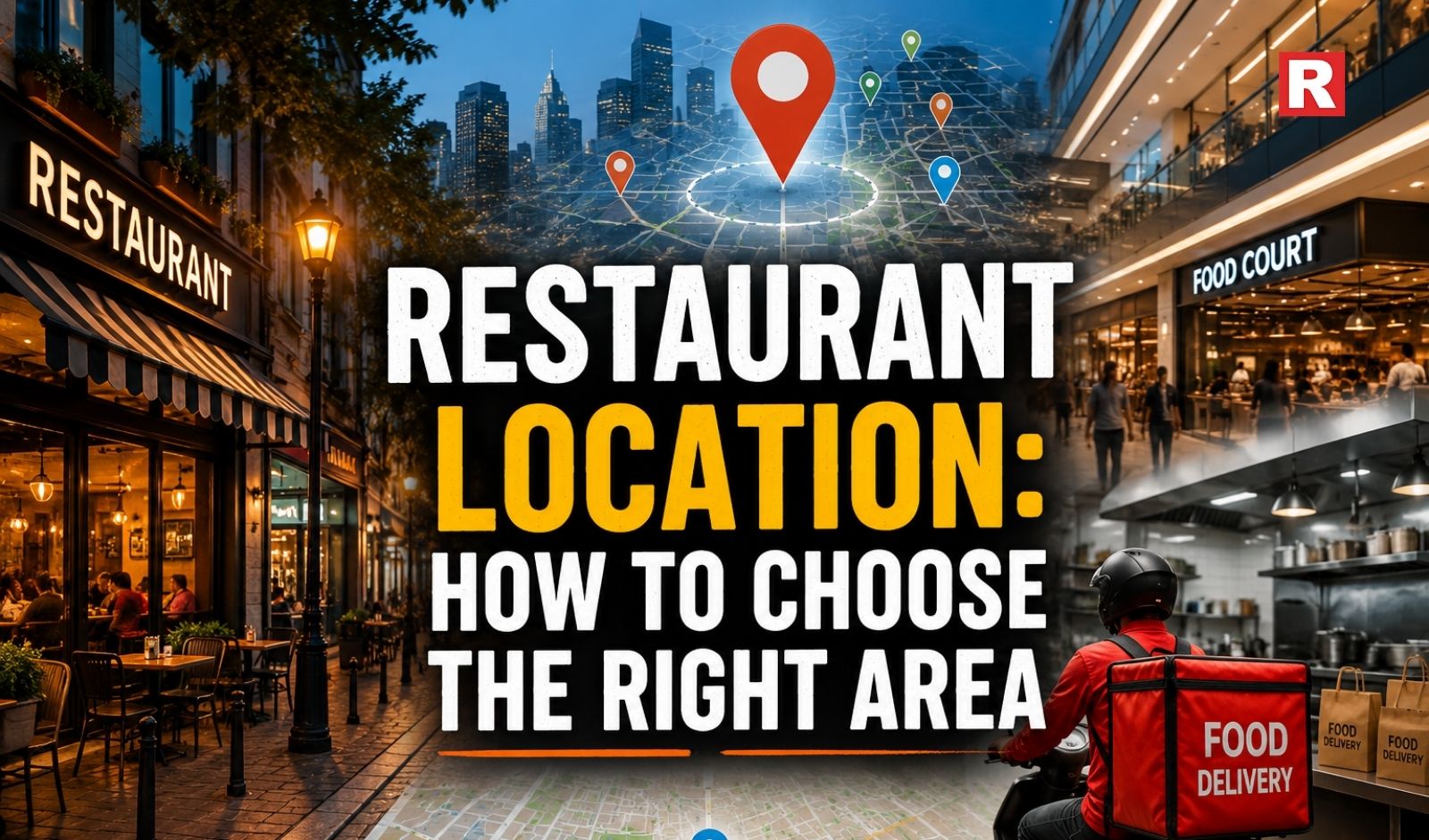
A restaurant can have excellent food, stylish interiors, and a talented chef, but a weak location can still damage the business. In the food industry, location is not just about rent or visibility anymore. It now affects delivery speed, customer convenience, repeat visits, staffing, and even online ratings.
In India’s fast-changing restaurant market, operators are using data, customer behavior, and delivery demand patterns before opening a new outlet. According to industry reports, food delivery, changing work culture, and hyperlocal dining trends are reshaping restaurant location strategies across metro and non-metro cities.
Why Location Matters More Than Ever
Restaurant location directly impacts revenue from the first day. A strong location naturally brings visibility and customer movement, while a weak one increases marketing costs. Many restaurant owners make the mistake of selecting spaces only because the rent looks affordable. But low rent in a poor area often leads to low footfall, weak delivery demand, and limited brand visibility. Industry experts now say that site selection is one of the biggest long-term business decisions in the restaurant sector.
Today, restaurants must think beyond “busy roads.” They must understand:
- who lives nearby
- what people spend
- how they travel
- when they eat
- how often they order online
Start with the Restaurant Concept
Every restaurant format needs a different environment. A café for college students will not perform the same way inside a premium corporate tower. Similarly, a luxury dining restaurant cannot survive in an area built around budget spending.
Quick-service restaurants usually perform well near:
- metro stations
- office clusters
- malls
- highways
- college hubs
Fine-dining restaurants work better in:
- premium residential areas
- luxury retail districts
- business centers
- hospitality zones
Cloud kitchens focus more on:
- dense residential areas
- delivery radius efficiency
- rider accessibility
The biggest mistake is copying another restaurant’s location without studying whether the same audience matches the new concept.
The Importance of Trade Area Analysis
Modern restaurant brands now study trade areas before opening stores. A trade area refers to the zone from which customers are likely to visit or order food.
Most restaurants divide their trade area into:
- primary catchment area
- secondary catchment area
- delivery radius
Restaurants today use:
- Google Maps traffic data
- heat mapping tools
- mobility analytics
- Swiggy and Zomato demand trends
- demographic software
- POS forecasting systems
This approach helps brands estimate potential footfall before investing in interiors or leasing property. Many QSR brands now depend on short drive-time convenience rather than destination dining. Delivery-first restaurants also prioritize kitchen efficiency and rider movement instead of only high-street visibility.
Busy Areas Do Not Always Mean High Sales
Many restaurant owners believe that opening on a crowded road guarantees high sales, but footfall alone does not ensure profitability. What matters more is whether the people passing by match the restaurant’s target audience and dining behavior.
- Office districts usually generate strong weekday lunch demand because working professionals prefer quick and convenient meals during breaks.
- Nightlife zones perform better after evening hours when customers look for cafés, bars, and late-night dining experiences.
- Residential neighborhoods often see higher family dining traffic during weekends and holidays.
- Tourist-heavy areas may experience seasonal demand spikes depending on travel trends and local events.
Restaurants now analyze “daypart traffic,” which studies customer movement at different times of the day such as breakfast, lunch, evening snacks, and dinner hours. Industry trends also show that changing work culture and food delivery growth are increasing afternoon online orders while dine-in traffic becomes less predictable.
Demographics Decide Restaurant Success
Demographics play a major role in restaurant profitability.
Operators study:
- income levels
- age groups
- lifestyle habits
- family size
- food preferences
- spending behavior
Young professionals usually support:
- cafés
- premium coffee chains
- quick lunch formats
- after-work dining
Families often prefer:
- spacious seating
- parking availability
- value meals
- weekend dining comfort
Students usually choose:
- affordable pricing
- fast service
- social media-friendly spaces
Premium neighborhoods may support experiential dining, while budget-focused areas demand affordability and speed. Modern restaurants are becoming highly targeted instead of trying to attract everyone.
Visibility and Accessibility Drive Walk-Ins
A restaurant located in a hidden lane or difficult-to-access area may struggle to attract customers, even if the food and service are excellent. In the restaurant business, visibility works like continuous free marketing because people are more likely to visit places they notice regularly.
- Restaurants with strong road visibility often benefit from spontaneous walk-ins, stronger brand recall, and better local awareness.
- Easily visible outlets also perform better on Google Maps and food delivery platforms because customers can identify the location faster.
- Accessibility has become equally important for both dine-in customers and delivery operations.
- Customers now prefer locations with easy parking, metro connectivity, smooth entry-exit points, and nearby public transport access.
- Delivery riders also favor restaurants with less traffic congestion and faster pickup movement.
- Corner properties, mall outlets, airport dining spaces, and high-street frontages usually generate stronger revenues because they offer controlled footfall and greater convenience.
Delivery Apps Have Changed Restaurant Real Estate
Food delivery platforms have completely changed how restaurants choose locations in India. Earlier, most restaurants focused mainly on dine-in footfall and high-street visibility, but today delivery demand plays an equally important role in site selection. Restaurants now study factors such as 3–5 km delivery coverage, apartment density, traffic congestion, rider travel time, and order frequency before finalizing a property. Operators also consider packaging travel safety to ensure food quality remains consistent during transit. This shift has especially boosted the growth of cloud kitchens, which prioritize operational efficiency and lower rentals instead of expensive storefront locations. Many restaurant brands are also building direct ordering systems and mobile apps to reduce dependency on aggregators and improve profit margins. As a result, hyperlocal kitchens, shared kitchen spaces, delivery hubs, and compact restaurant formats are becoming increasingly popular across metro and Tier-2 cities in India.
Competition Can Sometimes Help
Many successful restaurants open near competitors intentionally. Food clusters often attract more customers because people enjoy having multiple dining choices in one area. Popular dining hubs like DLF CyberHub and Connaught Place continue to attract crowds because they have become food destinations. Some restaurant owners fail because they underestimate operating costs in premium locations. Discussions around restaurant churn in major dining districts also highlight how high rentals and changing customer spending behavior affect sustainability.
However, operators must still study:
- cuisine overlap
- pricing competition
- rental pressure
- market saturation
Rent Economics Cannot Be Ignored
High restaurant revenue does not always guarantee strong profits if occupancy costs become too high. Before finalizing a location, restaurant owners must carefully evaluate expenses such as rent-to-sales ratio, common area maintenance charges, lease escalation clauses, security deposits, interior fit-out costs, and overall operating margins. Industry experts often recommend keeping occupancy costs within a manageable percentage of projected monthly sales to maintain long-term profitability. A premium location may attract strong footfall, but excessive rentals can put pressure on staffing, raw material costs, and marketing budgets. Operators also study hidden expenses such as electricity load requirements, parking fees, property taxes, and mall revenue-sharing models before signing leases. Many successful restaurant brands prioritize sustainable profitability over expensive high-visibility spaces because balanced occupancy costs help businesses survive seasonal slowdowns and changing customer demand patterns.
The Future of Restaurant Locations
India’s restaurant industry is expanding rapidly beyond metro cities, with Tier-2 and Tier-3 markets emerging as major growth destinations due to lower rentals, improving infrastructure, rising disposable incomes, and changing consumer lifestyles. Cities such as Jaipur, Lucknow, Indore, Surat, and Coimbatore are witnessing strong demand for cafés, QSRs, cloud kitchens, and casual dining formats. At the same time, restaurant brands are increasingly using AI-powered site analysis, GPS mobility tracking, heat maps, consumer spending data, and predictive demand forecasting before selecting locations. These technologies help operators understand customer movement, peak dining hours, delivery demand, and neighborhood spending behavior more accurately. Restaurant location strategy is now far more data-driven than traditional real estate decisions. Successful brands are focusing on locations where customer demand, operational efficiency, delivery convenience, demographics, and future commercial growth align together to create sustainable long-term profitability.
Saptopriya Ghosal
Feature Writer
I am a dedicated media professional with a bachelor's degree in mass communication from the State University of Calcutta and a postgraduate degree from Amity University. My academic journey has equipped me with a profound understanding of storytelling and communication. Passionate about the dynamic world of media, I continually strive to explore new ways to engage and inform through compelling narratives.



































































