
Restaurant Kitchen Equipment List: The Complete Commercial Kitchen Checklist
A properly equipped kitchen not only improves customer experience through faster and more consistent service but also creates a stronger foundation for business scalability, safety compliance, and long-term restaurant success.

A restaurant kitchen is more than just a place where food gets cooked. It is the engine that keeps the entire business running. The speed of service, food quality, hygiene, and even profit margins depend heavily on the equipment inside the kitchen.
Many first-time restaurant owners focus too much on interiors and branding. But experienced chefs and operators know that kitchen equipment decides how smoothly daily operations will run. A poorly planned kitchen can slow down orders, increase food waste, and raise maintenance costs within months. Whether you are opening a cafe, cloud kitchen, bakery, QSR, or fine dining restaurant, choosing the right commercial kitchen equipment is one of the biggest investments you will make.
Why Choosing the Right Kitchen Equipment Matters
Commercial kitchens work under pressure every day. During peak hours, equipment must handle continuous cooking, refrigeration, cleaning, and food preparation without breakdowns.
Good equipment offers:
- Faster cooking speed
- Better food consistency
- Lower electricity consumption
- Improved hygiene standards
- Reduced labor dependency
- Better kitchen workflow
Commercial-grade equipment is also designed differently from domestic appliances. Restaurant kitchens usually use stainless steel equipment because it is durable, rust-resistant, and easy to clean. Most professional kitchens prefer 304-grade stainless steel because it handles heat and moisture better over long periods. Energy efficiency is becoming another major factor. Many restaurants now choose equipment with lower power consumption to reduce monthly operating costs.
1. Cooking Equipment Checklist
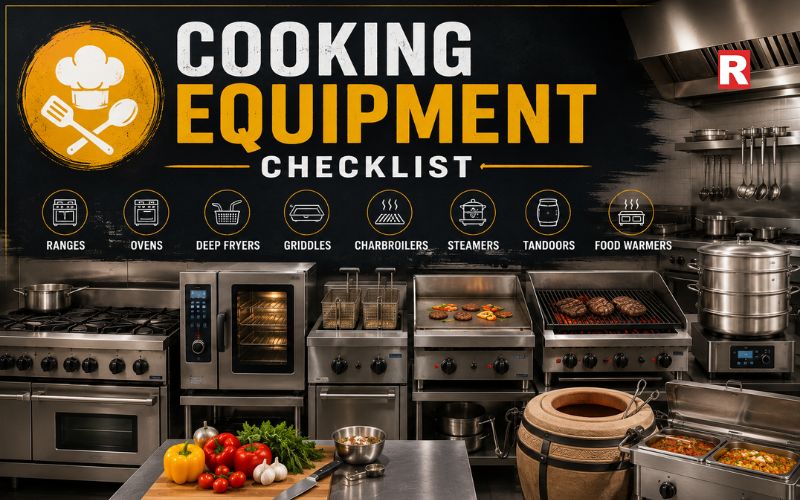
Cooking equipment forms the core of every restaurant kitchen. The type of equipment depends heavily on the cuisine and menu.
Commercial Ranges: Commercial ranges are used for daily cooking tasks. Most restaurants choose four-burner or six-burner ranges depending on customer volume. High BTU burners help chefs cook faster during rush hours.
Ovens: Restaurants commonly use convection, deck, and combi ovens, while combi ovens save space by handling steaming, roasting, and baking together.
Deep Fryers: Deep fryers are essential for fast food restaurants and cafes. Modern fryers now include temperature control systems that help maintain oil quality and reduce wastage.
Griddles and Charbroilers: These are commonly used in burger restaurants, cafes, and grill kitchens. They provide even heat distribution and improve cooking consistency.
Tandoors: For Indian restaurants, tandoors remain one of the most important investments. Gas tandoors are becoming more popular because they heat faster and are easier to manage compared to traditional charcoal models.
2. Refrigeration and Cold Storage Equipment
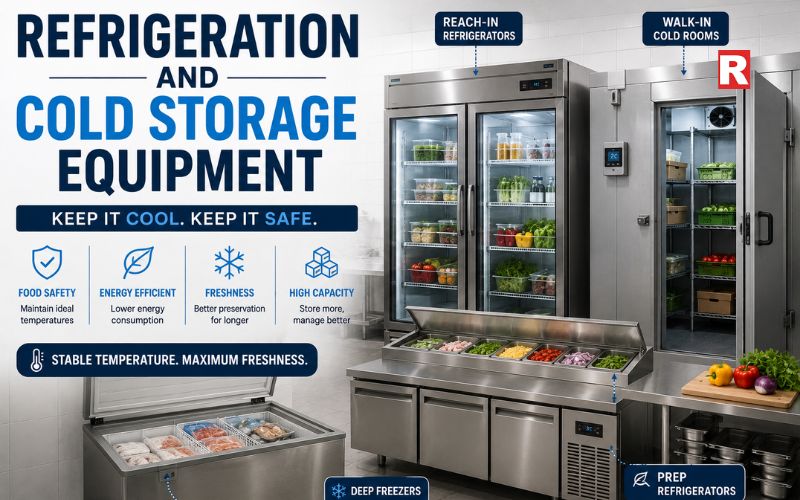
Refrigeration is one of the most critical areas in any commercial kitchen. Poor refrigeration can lead to food spoilage, hygiene issues, and inventory losses.
Reach-In Refrigerators: These are used for daily ingredient storage and quick access during service hours.
Walk-In Cold Rooms: Large restaurants and cloud kitchens usually install walk-in coolers because they offer higher storage capacity for bulk ingredients.
Deep Freezers: Deep freezers help store frozen food items, meat, seafood, and desserts for longer durations.
Prep Refrigerators: These units are commonly used in pizza kitchens, sandwich counters, and salad stations because ingredients remain accessible during preparation.
Modern refrigeration systems are designed to maintain stable temperatures while reducing energy consumption. Proper airflow inside refrigerators is extremely important for food safety and ingredient freshness.
3. Food Preparation Equipment
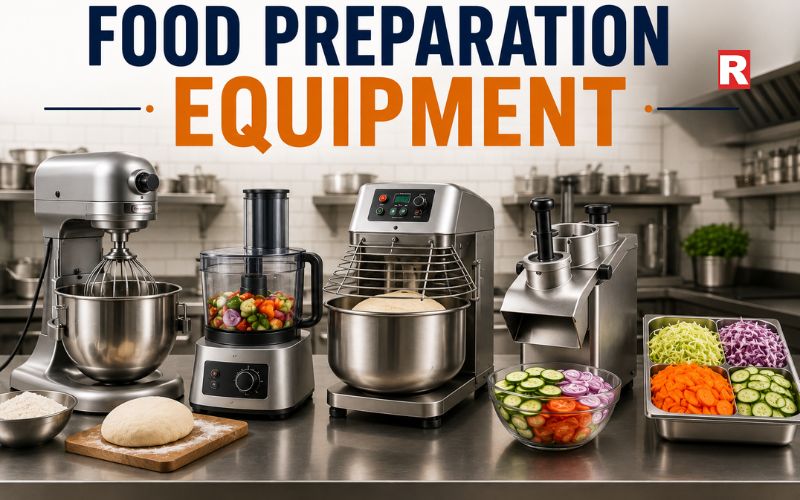
Food prep equipment helps reduce manual labor and improve kitchen speed.
Commercial Mixers: Bakery kitchens and cafes rely heavily on commercial mixers for dough, batter, cream, and sauces.
Food Processors: Food processors save a huge amount of preparation time. They are widely used for chopping vegetables, making sauces, and preparing purees.
Dough Kneaders: Restaurants serving pizza, naan, or bakery products often use dough kneaders to maintain consistency in large batches.
Vegetable Cutters and Slicers: These machines improve speed and reduce staff workload during busy operations.
Automation in food preparation has become a major trend in modern kitchens. It helps maintain consistent taste and portion sizes while lowering dependency on skilled labor.
4. Storage and Shelving Equipment
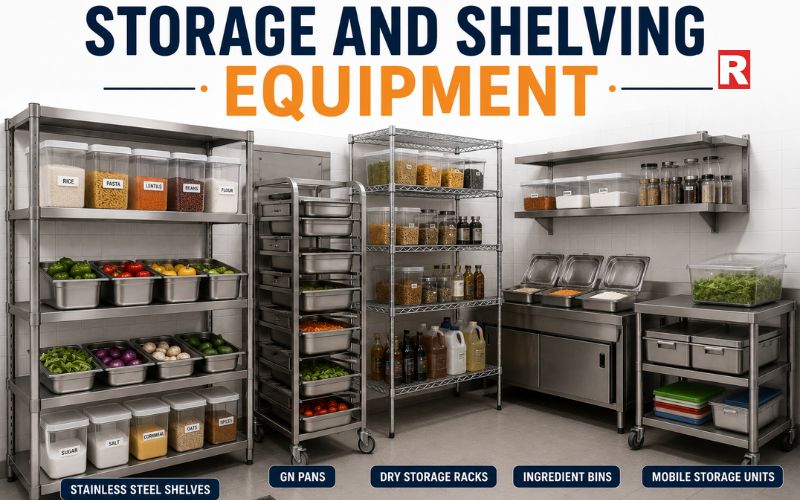
Storage planning is often ignored during restaurant setup, but it directly affects workflow and inventory management.
Important storage equipment includes:
- Stainless steel shelves
- Ingredient bins
- Dry storage racks
- GN pans
- Mobile storage units
Proper storage systems help reduce food wastage and improve organization inside the kitchen. Many restaurants now follow FIFO systems, which means “First In, First Out,” to avoid ingredient expiration.
5. Washing and Sanitation Equipment
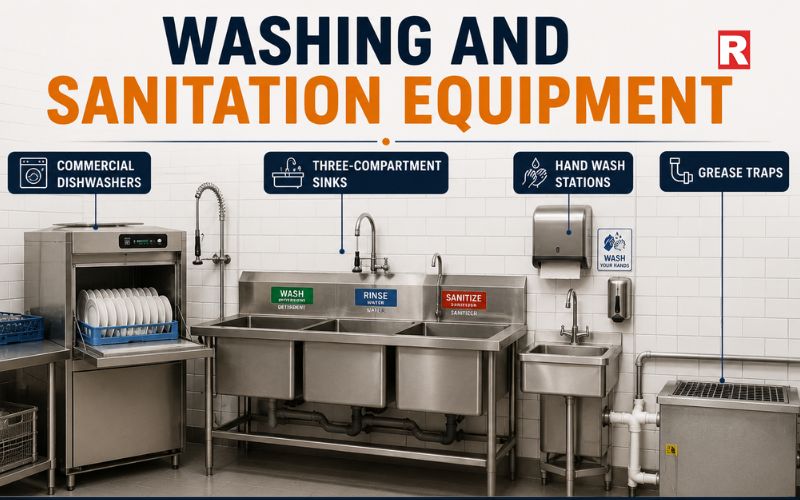
Cleanliness is one of the biggest factors behind restaurant success. Poor sanitation can damage both reputation and customer trust.
Commercial Dishwashers: Commercial dishwashers clean utensils faster than manual washing and help save labor time.
Three-Compartment Sinks: These sinks are commonly used for washing, rinsing, and sanitizing kitchen utensils.
Hand Wash Stations: Separate hand wash stations are extremely important for maintaining hygiene standards.
Grease Traps: Grease traps help prevent oil and food waste from blocking drainage systems.
Restaurants in India must also follow FSSAI hygiene standards, making sanitation equipment an essential part of kitchen planning.
6. Ventilation and Safety Equipment
Restaurant kitchens generate large amounts of smoke, heat, and oil fumes every day. Without proper ventilation, the kitchen environment becomes unsafe and uncomfortable for staff.
Exhaust Hoods: Exhaust systems remove smoke, grease particles, and excess heat from the kitchen.
Fresh Air Systems: These systems improve air circulation and help maintain proper airflow balance.
Fire Suppression Systems: Commercial kitchens handling open flames and fryers require fire safety systems for emergency situations.
Gas Leak Detectors: Gas leak detectors add another layer of kitchen safety and help prevent accidents.
A well-ventilated kitchen not only improves staff comfort but also increases equipment life by reducing heat buildup.
7. Smallwares and Kitchen Tools
Smallwares may look minor, but they play a huge role in kitchen efficiency.
Essential smallwares include:
- Chef knives
- Tongs
- Ladles
- Cutting boards
- Pots and pans
- Mixing bowls
- Measuring tools
Many professional chefs believe that sharp knives and durable cookware improve speed more than expensive machines.
Equipment Requirements Based on Restaurant Type
Every restaurant does not need the same equipment setup. A cafe may focus more on coffee machines, ovens, and display refrigeration. A cloud kitchen may prioritize fast cooking equipment and efficient storage systems. Fine dining restaurants usually invest more in premium cooking systems and advanced refrigeration. Menu engineering always decides equipment requirements. Buying unnecessary equipment increases setup costs and wastes kitchen space.
Estimated Kitchen Setup Cost in India
Restaurant kitchen setup costs vary based on concept size and equipment quality. Average equipment investment:
- Small cafe: ₹3–8 lakh
- Cloud kitchen: ₹5–15 lakh
- Casual dining restaurant: ₹10–30 lakh
- Fine dining restaurant: ₹25 lakh and above
Apart from equipment, restaurants must also consider installation charges, exhaust systems, gas pipeline setup, and annual maintenance costs.
The Bottom Line!
Restaurant kitchen equipment is far more than a collection of machines. It forms the operational backbone of the entire food business. Every piece of equipment directly affects cooking speed, food consistency, hygiene standards, staff productivity, and long-term profitability. Experienced restaurant owners focus on building an efficient kitchen system where preparation, cooking, storage, and cleaning work smoothly together. Instead of buying trendy appliances that may rarely be used, smart operators invest in durable commercial-grade equipment designed for heavy daily workloads. Energy-efficient refrigeration systems, proper ventilation, high-performance burners, and organized storage solutions help reduce electricity costs, food wastage, and maintenance expenses over time. A well-planned kitchen layout also minimizes unnecessary staff movement during rush hours, improving service speed and reducing pressure on employees. In modern restaurants, operational efficiency matters as much as food quality. A properly equipped kitchen not only improves customer experience through faster and more consistent service but also creates a stronger foundation for business scalability, safety compliance, and long-term restaurant success.
Saptopriya Ghosal
Feature Writer
I am a dedicated media professional with a bachelor's degree in mass communication from the State University of Calcutta and a postgraduate degree from Amity University. My academic journey has equipped me with a profound understanding of storytelling and communication. Passionate about the dynamic world of media, I continually strive to explore new ways to engage and inform through compelling narratives.



































































