
Quick Commerce vs Traditional Restaurants: How Consumer Behaviour Is Changing in India
This shift shows that restaurants are not losing relevance; instead, their role is becoming more specialized as consumer expectations continue to change with technology and convenience-driven lifestyles.

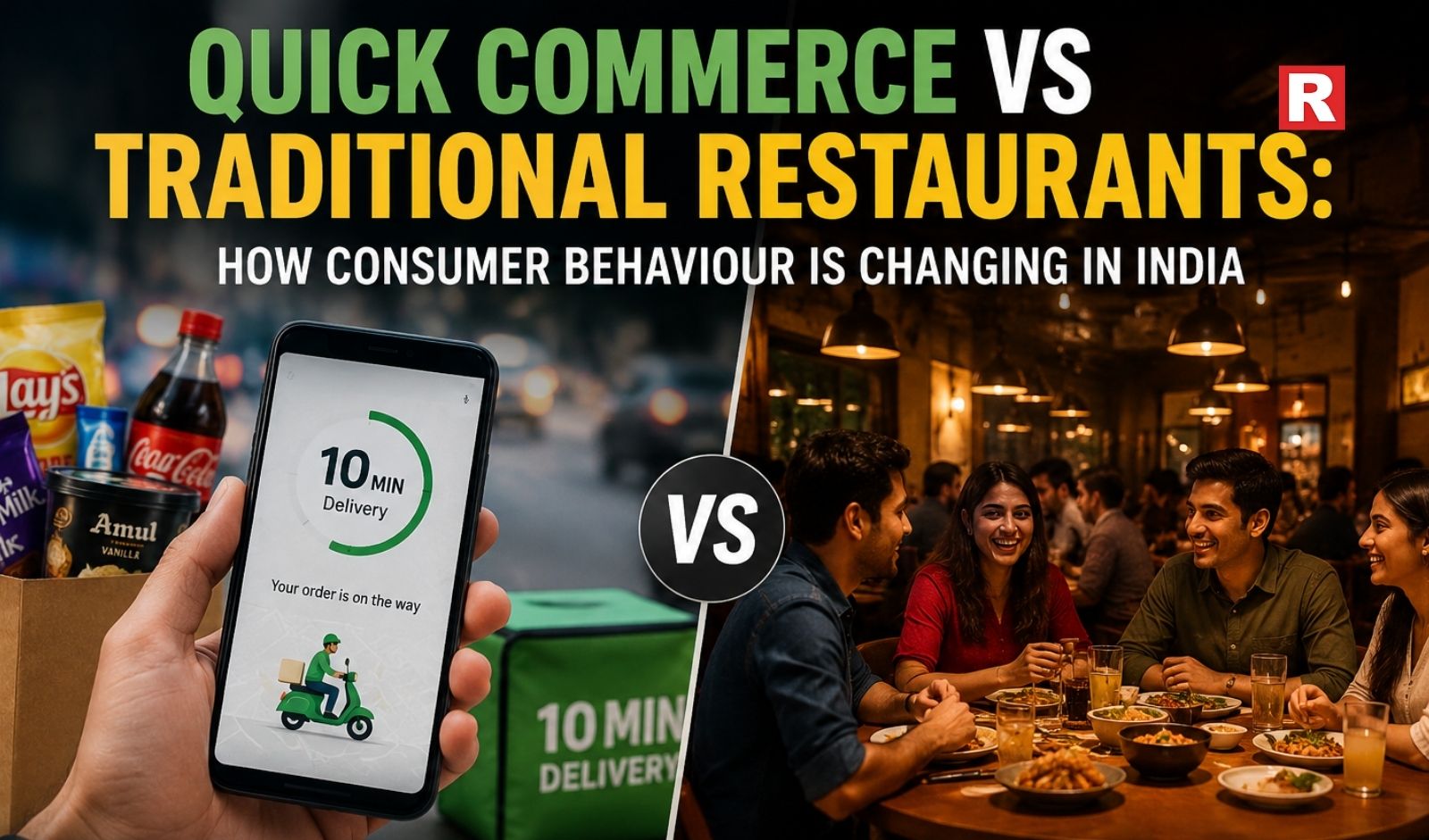
India’s food culture is changing faster than ever. A few years ago, people planned dinners around restaurants, cafés, and weekend outings. Today, many consumers open an app and order food, snacks, beverages, or desserts within minutes. The rise of quick commerce has completely changed how Indians think about eating. Consumers are no longer waiting for long restaurant deliveries or planning dine-outs frequently. Instead, they want speed, convenience, and instant satisfaction. This shift is slowly changing the restaurant business, especially in urban India.
Quick commerce platforms are now moving beyond groceries and entering the food space aggressively. Ready-to-eat meals, instant snacks, frozen foods, beverages, and café-style menus are becoming a major part of these apps. Companies are investing heavily in dark stores, hyperlocal delivery systems, and AI-based inventory management to make faster delivery possible. The battle today is not just about food quality. It is about convenience versus experience.
Quick Commerce vs Traditional Restaurants: Quick Guide
Quick Commerce | Traditional Restaurants |
|---|---|
Focuses on speed and convenience | Focuses on dining experience |
Popular for snacks and instant meals | Popular for celebrations and outings |
Best suited for solo consumption | Best suited for group dining |
Driven by impulse purchases | Driven by planned visits |
Delivery-based model | Experience-led model |
The Rise of the 10-Minute Food Economy
Quick commerce started with groceries and emergency household needs. But consumer behaviour quickly pushed these platforms into food consumption. Platforms like Blinkit, Zepto, and Swiggy Instamart noticed that customers were increasingly ordering like
- Cold coffee
- Instant noodles
- Ice cream
- Ready meals
- Frozen snacks
- Packaged desserts
- Protein drinks
Urban consumers now expect products to arrive within 10 to 20 minutes. What once felt like luxury has become normal behaviour. India’s quick commerce market is witnessing massive growth. Reports suggest demand remains extremely strong even after festive seasons, showing that this is not a temporary trend anymore. Order volumes and basket sizes continue to rise across major cities. The biggest reason behind this growth is simple: people value time more than ever.
Convenience Has Become More Important
Traditional restaurants were built around experience. People visited restaurants for ambience, celebrations, conversations, and social gatherings. Quick commerce serves a different purpose.
It focuses on:
- Instant cravings
- Daily convenience
- Small hunger moments
- Late-night consumption
- Solo eating habits
Modern consumers are increasingly choosing ease over planning. A person working from home may order a cold beverage during a meeting. A student may order noodles at midnight. Office workers often prefer quick snacks instead of full restaurant meals. This behaviour reflects a larger shift in urban lifestyles. According to consumer trend reports, convenience is now more important than discounts for many Indian consumers. More than 70 percent of users continue using quick commerce platforms even after discounts are reduced. This shows that quick commerce is becoming a habit rather than a temporary preference.
Why Younger Consumers Prefer Quick Commerce
Gen Z and millennials are playing a major role in changing how people order and consume food today. These consumers have grown up with smartphones, digital wallets, and app-based services, making convenience a top priority in their daily lives. Unlike older generations that followed fixed breakfast, lunch, and dinner routines, younger consumers prefer flexible eating habits and often order smaller meals, snacks, beverages, or desserts throughout the day. Their fast-paced lifestyles, long working hours, and preference for instant gratification have increased the demand for quick commerce and rapid food delivery services. Industry trends also show that a large number of food and grocery orders are now placed late at night or during non-traditional meal hours, highlighting the growing shift toward on-demand consumption. Quick commerce platforms fit naturally into this behavior by offering faster delivery, easy payment options, and real-time tracking. As a result, the traditional concept of planned dining is gradually being replaced by instant consumption, where speed, accessibility, and convenience influence purchasing decisions as much as food quality and pricing.
Traditional Restaurants Are Facing New Pressure
Restaurants are not disappearing, but the industry is changing rapidly.
Today’s consumers expect:
- Faster preparation
- Smaller meal options
- Affordable pricing
- Better packaging
- Quick delivery
This creates pressure on restaurant businesses, especially casual dining brands.
Restaurants now compete not only with other restaurants but also with:
- Instant grocery apps
- Ready-to-eat brands
- Frozen food companies
- Beverage startups
Many customers now order snacks or ready meals through quick commerce apps instead of placing full restaurant orders. This overlap between food delivery and quick commerce is becoming stronger every year. As a result, restaurants are adapting quickly.
Restaurants Are Reinventing Themselves
Smart restaurant brands understand that consumer behaviour has changed permanently.
Many restaurants are now:
- Launching cloud kitchens
- Creating takeaway-focused menus
- Offering smaller meal portions
- Designing food for faster delivery
- Using AI for demand prediction
- Partnering with quick commerce platforms
Cloud kitchens are becoming especially important because they reduce operational costs and focus entirely on delivery efficiency. Some brands are even redesigning menus specifically for shorter delivery windows. Foods that travel well and remain fresh for longer periods are getting more attention. Technology is also playing a major role. Restaurants are using data analytics to understand customer preferences, peak ordering times, and repeat buying patterns. The food business is becoming more data-driven than ever before.
The Psychology Behind This Consumer Shift
The growth of quick commerce is deeply connected to psychology.
Consumers today are surrounded by instant digital experiences:
- One-click shopping
- Short-form videos
- Instant payments
- Same-day delivery
This has reduced patience levels across industries. Food consumption is now influenced by the “instant gratification economy.” People want immediate solutions with minimum effort. Quick commerce apps are designed around this behaviour. Fast notifications, personalized suggestions, discounts, and urgency-driven offers encourage impulse ordering. Research studies have also highlighted concerns around dark patterns and psychological triggers used in quick commerce apps to increase spending. This means the industry is not only changing food delivery but also influencing purchasing behaviour itself.
The Challenges Behind the Quick Commerce Boom
Despite its popularity, quick commerce still faces major challenges.
The industry struggles with:
- Thin profit margins
- High delivery costs
- Intense competition
- Heavy operational spending
- Inventory wastage
Companies are spending aggressively to gain market share, and profitability remains a major concern for many platforms.
There are also concerns about:
- Gig worker pressure
- Packaging waste
- Sustainability
- Impact on local businesses
Many small retailers and independent stores are finding it difficult to compete with ultra-fast delivery models. Online discussions across India increasingly reflect concerns about how quick commerce affects traditional businesses and neighbourhood stores.
Still, consumer demand continues to grow rapidly.
The Future
The future of India’s food industry is likely to create two very different consumption ecosystems. Quick commerce platforms will increasingly dominate everyday eating habits driven by speed, convenience, and impulse purchases. Consumers are already using these apps for daily cravings, midnight snacks, instant beverages, ready-to-eat meals, and emergency food needs because deliveries happen within minutes. This model fits perfectly into modern urban lifestyles where people have busy schedules, work-from-home routines, and less patience for long waiting times. At the same time, traditional restaurants are expected to evolve into experience-led spaces focused on social interaction, premium dining, celebrations, family gatherings, and community engagement. Consumers may continue to rely on both formats depending on the occasion. For instance, a working professional may order coffee, sandwiches, or snacks through a quick commerce app during office hours but still prefer visiting a restaurant for birthdays, weekend dinners, or festive celebrations. This shift shows that restaurants are not losing relevance; instead, their role is becoming more specialized as consumer expectations continue to change with technology and convenience-driven lifestyles.
Saptopriya Ghosal
Feature Writer
I am a dedicated media professional with a bachelor's degree in mass communication from the State University of Calcutta and a postgraduate degree from Amity University. My academic journey has equipped me with a profound understanding of storytelling and communication. Passionate about the dynamic world of media, I continually strive to explore new ways to engage and inform through compelling narratives.



































































