
QSR Restaurant Model Explained: How McDonald's Built a System for Speed and Scale
It is about building systems that can deliver the same experience repeatedly, efficiently, and at scale. For restaurant operators looking to expand, that may be the most valuable lesson of all.

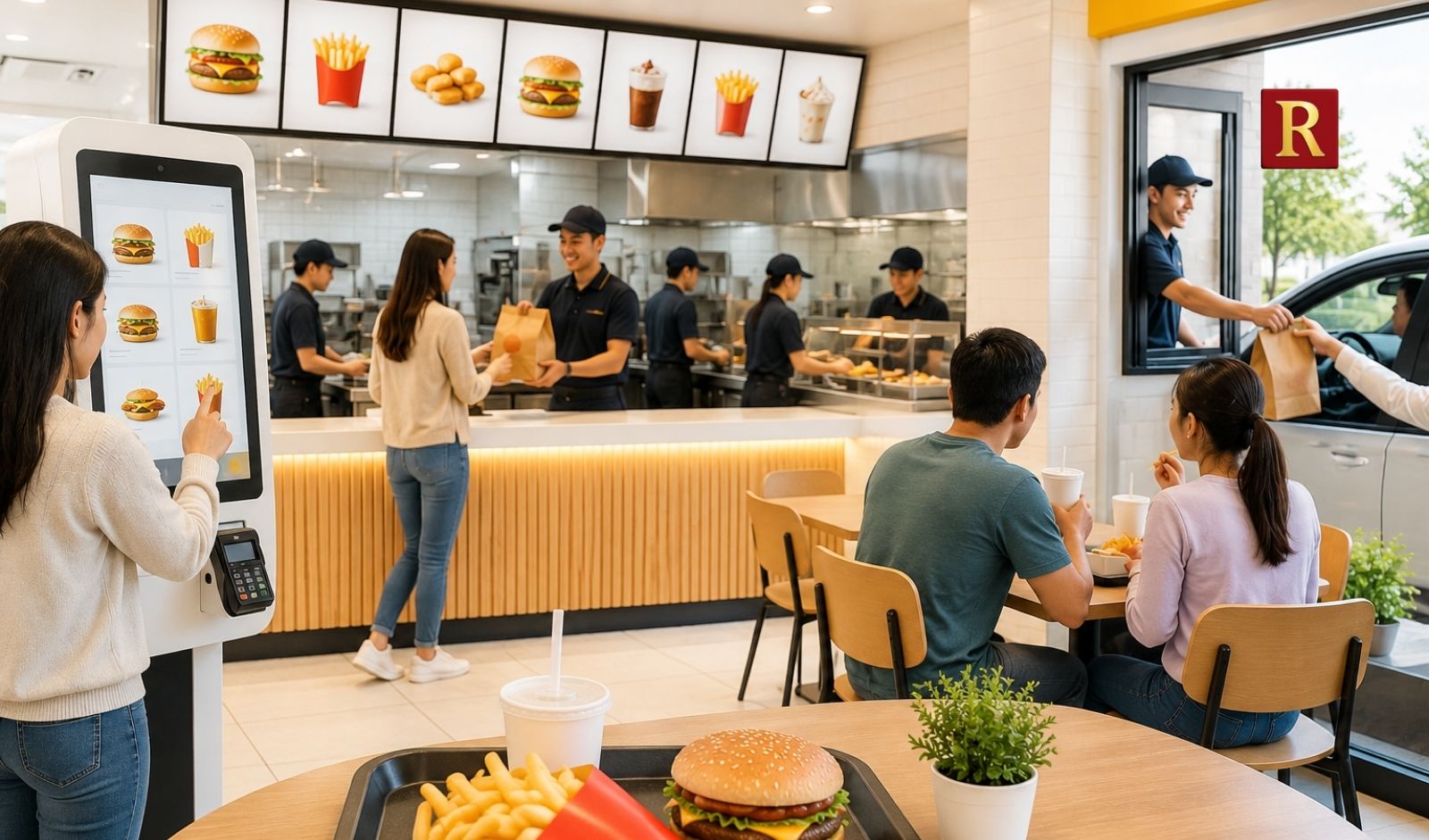
Walk into a McDonald's restaurant almost anywhere in the world and the experience feels familiar. The menu may have local variations, but the ordering process, food preparation, and service speed are remarkably consistent.
That consistency is not accidental.
It comes from the Quick Service Restaurant (QSR) model, a business system designed to serve large numbers of customers quickly while maintaining quality and efficiency. Today, McDonald's operates more than 45,000 restaurants globally, making it one of the largest restaurant brands in the world. Most of these locations are run by franchise owners who follow strict operational standards. For restaurant operators, entrepreneurs, and hospitality professionals, the McDonald's model offers valuable lessons about scaling a food business without losing control of quality.
What Is a QSR Restaurant?
A Quick Service Restaurant (QSR) is a type of restaurant built to serve food quickly, efficiently, and consistently. Unlike full-service restaurants, customers usually place orders at a counter, self-service kiosk, drive-thru, or through a mobile app. Well-known QSR brands include McDonald's, KFC, Burger King, Subway, and Domino's. The QSR model is centered on fast service, standardized food preparation, affordable pricing, efficient operations, and a consistent customer experience. Its success depends on serving a large number of customers every day. Rather than encouraging long dining experiences, QSRs focus on quick turnaround times and high order volumes. This allows restaurants to generate strong revenue through frequent transactions, even when profit margins on individual menu items are relatively low.
The Foundation of the McDonald's Model
Many people associate McDonald's with burgers and fries. In reality, its biggest strength is operational consistency.Every process is designed to be repeatable. Whether a customer visits a restaurant in Mumbai, London, or New York, the company aims to deliver a similar experience. This approach helps reduce errors, simplify training, and improve efficiency. For restaurant operators, this highlights an important lesson. Successful scaling often comes from systems rather than individual talent.
Standardization Creates Consistency
One of the most important parts of the QSR model is standardization.
McDonald's uses detailed procedures for:
- Food preparation
- Ingredient portions
- Cooking times
- Packaging
- Cleaning routines
- Customer service
These standards help ensure that products meet the same quality expectations across thousands of locations. For example, a burger should look and taste similar regardless of where it is purchased. This consistency builds customer trust. People know what to expect before they place an order. For businesses, standardization also reduces operational complexity and makes staff training easier.
Why Speed Matters So Much
Speed is one of the biggest competitive advantages in the QSR industry. Customers often choose quick-service restaurants because they want convenience. To support this, QSR kitchens are designed like production systems. Instead of one person preparing an entire meal, different employees handle specific tasks.
A typical workflow may look like this:
- Customer places an order.
- The order appears on a kitchen display screen.
- Staff prepare ingredients.
- Food is assembled.
- The order is packed and served.
This process allows restaurants to handle large volumes of orders efficiently. Many QSR operators track service times closely because even small improvements can have a significant impact on daily sales. A few seconds saved on each transaction can translate into hundreds of additional orders over time.
The Franchise System Behind the Growth
One reason McDonald's expanded so quickly is its franchise model. Around 95% of McDonald's restaurants worldwide are operated by franchisees rather than the company itself. Under this system, independent business owners invest in and operate restaurants while following brand guidelines.
The franchise owner benefits from:
- Brand recognition
- Established operating systems
- Marketing support
- Training programs
- Supply chain access
The company benefits through:
- Franchise fees
- Ongoing royalties
- Rental income in many locations
This model allows rapid expansion without requiring the company to fund every new restaurant directly. For entrepreneurs, franchising reduces some of the risks associated with building a restaurant brand from scratch.
Training Is a Major Competitive Advantage
Restaurant turnover can be high, making training essential. The QSR model depends on employees being able to learn tasks quickly and perform them consistently. McDonald's is known for investing heavily in training and operational education.
Employees learn:
- Food preparation procedures
- Food safety standards
- Customer service practices
- Equipment operation
- Cleaning and sanitation protocols
This structured approach allows restaurants to maintain quality even when staff changes occur. Many independent restaurants struggle because knowledge remains with a few experienced employees. QSR systems aim to make knowledge transferable and repeatable.
Supply Chain Management Keeps Everything Running
- Ingredient Sourcing: QSR brands work with approved suppliers who can consistently deliver ingredients that meet strict quality, safety, and taste standards. This helps ensure that menu items remain uniform across all locations.
- Inventory Forecasting: Restaurants use sales data and demand trends to predict how much stock they need. Accurate forecasting helps prevent shortages, over-ordering, and unnecessary waste.
- Quality Control: Regular inspections and standardized checks help maintain product consistency. From raw ingredients to finished meals, every stage is monitored to meet brand requirements.
- Distribution Management: Efficient logistics systems ensure ingredients reach restaurants on time and in the right condition. Reliable distribution keeps operations running smoothly.
- Food Safety Monitoring: QSR operators follow strict food safety protocols, including temperature checks, storage guidelines, and hygiene standards to protect customers and maintain compliance.
Strong supply chain management helps QSR brands reduce costs, improve efficiency, minimize waste, and deliver a consistent customer experience at scale.
Technology Has Become Central to QSR Operations
Modern QSRs rely heavily on technology. The restaurant industry has moved far beyond traditional cash registers. Today, technology supports nearly every stage of the customer journey.
1. Point-of-Sale (POS) Systems
POS systems act as the operational hub of a QSR. They process customer orders, track sales in real time, monitor inventory levels, and generate performance reports. This data helps restaurant managers make faster and more informed business decisions.
2. Self-Service Kiosks
Many QSR brands use digital kiosks to improve the ordering experience. Customers can browse menus, customize meals, and place orders independently, helping reduce queues, improve order accuracy, and speed up service.
3. Mobile Apps
Mobile apps have become a key sales channel for QSRs. They allow customers to order ahead, make cashless payments, access loyalty programs, and receive personalized offers, creating greater convenience and encouraging repeat visits.
4. Artificial Intelligence (AI)
AI is transforming restaurant operations through demand forecasting, inventory planning, personalized menu recommendations, and drive-thru optimization. These technologies help improve efficiency, reduce waste, and enhance the overall customer experience.
These tools help improve efficiency while reducing operational costs.
Why the QSR Model Can Be Profitable
The QSR model is built around operational efficiency. Several factors contribute to profitability.
- High Transaction Volume: Serving more customers increases revenue potential.
- Streamlined Labor Costs: Standardized workflows help employees work efficiently.
- Purchasing Power: Large-scale procurement can lower ingredient costs.
- Franchise Revenue: Franchise fees and royalties create recurring income streams.
- Strong Brand Recognition: Established brands often spend less effort convincing customers to make a purchase.
When combined, these advantages create a business model that can scale effectively across multiple locations.
Challenges Facing Modern QSRs
Despite its strengths, the QSR model faces several challenges. Food costs continue to fluctuate. Labor shortages remain a concern in many markets. Customers increasingly want healthier options and greater customization. Delivery platforms have also changed how restaurants operate, adding both opportunities and costs. At the same time, technology investments require ongoing spending. Brands must continuously adapt while maintaining the consistency that customers expect.
What Independent Restaurants Can Learn
Not every restaurant wants to become a global chain. However, independent operators can still apply many QSR principles.
These include:
- Creating standard operating procedures
- Simplifying menu design
- Training staff consistently
- Tracking key performance metrics
- Improving inventory management
- Using technology to streamline operations
Even a single-location restaurant can benefit from systems that improve consistency and efficiency.
The Future
The next phase of QSR growth will be driven by technology, automation, and data. Mobile ordering continues to grow. AI-powered tools are becoming more sophisticated. Digital loyalty programs are helping brands build stronger customer relationships. At the same time, customers continue to value convenience, speed, and consistency. The restaurants that succeed will be those that combine operational excellence with changing consumer expectations. The McDonald's model demonstrates that growth in the restaurant industry is not simply about selling food. It is about building systems that can deliver the same experience repeatedly, efficiently, and at scale. For restaurant operators looking to expand, that may be the most valuable lesson of all.
Saptopriya Ghosal
Feature Writer
I am a dedicated media professional with a bachelor's degree in mass communication from the State University of Calcutta and a postgraduate degree from Amity University. My academic journey has equipped me with a profound understanding of storytelling and communication. Passionate about the dynamic world of media, I continually strive to explore new ways to engage and inform through compelling narratives.



































































