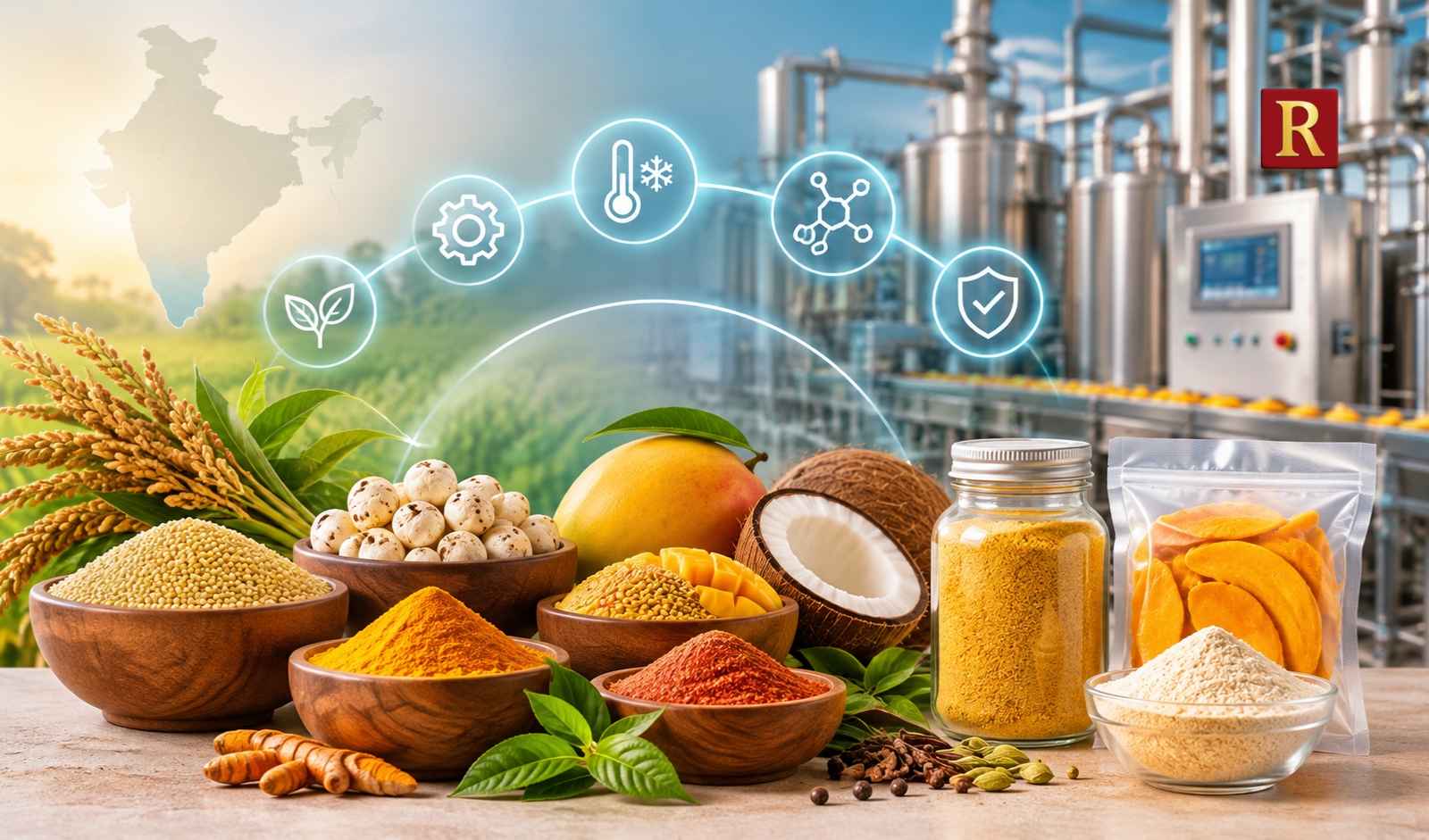
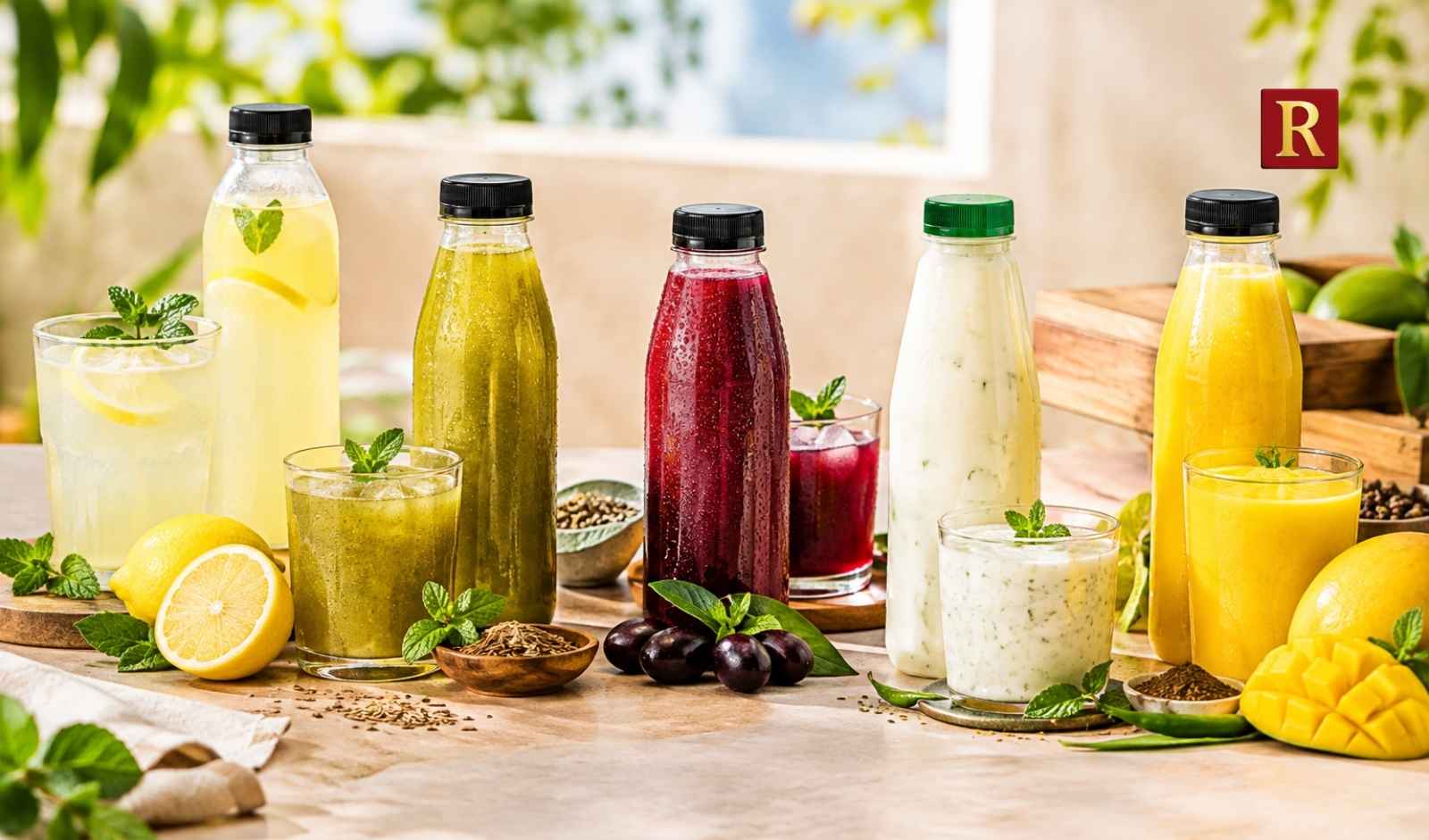
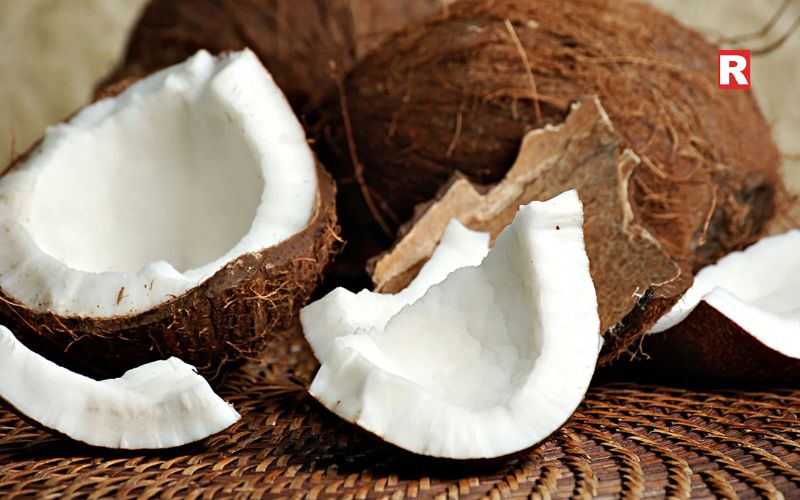
India has never lacked agricultural diversity. From millets, pulses and spices to mangoes, jackfruit, makhana and coconut, the country produces a wide range of ingredients with enormous food and commercial potential. However, many of these ingredients have traditionally been sold in basic forms, limiting their shelf life, market reach and value addition.
That is beginning to change.
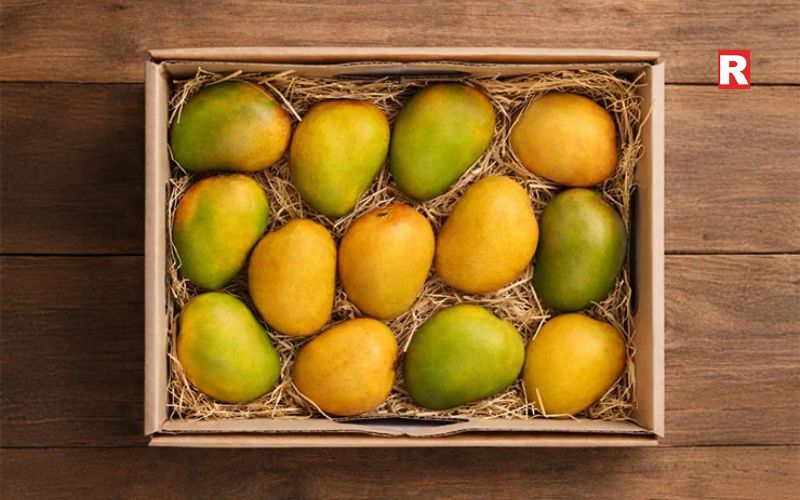
Food processing technology is creating new possibilities for Indian ingredients. Techniques such as freeze-drying, high-pressure processing, extrusion, advanced extraction and controlled fermentation are helping manufacturers develop new ingredient formats, improve product consistency and explore markets beyond conventional food categories. A mango is no longer limited to fresh fruit or pulp. It can become freeze-dried fruit pieces, fruit powder or an ingredient for breakfast cereals and confectionery. Similarly, millets can be converted into pasta, noodles, breakfast cereals and protein-rich snack formulations. This shift is creating opportunities for food manufacturers, restaurant businesses, ingredient suppliers and D2C brands. India's next food industry opportunity may not come from discovering new agricultural ingredients, but from finding better ways to process the ones it already produces.
Why Traditional Indian Ingredients Need Modern Processing
India has a strong agricultural foundation, but the journey from farm produce to commercial food ingredients involves several challenges. Many agricultural products are seasonal and highly perishable. Fruits such as mangoes and jackfruit have limited availability periods, while ingredients such as pulses, grains and spices require proper cleaning, grading, storage and processing to maintain quality. Traditional processing methods remain important, but they may not always meet the requirements of modern food manufacturing.
Some of the major challenges include:
Limited shelf life: Fresh fruits and vegetables can deteriorate quickly without suitable preservation.
Seasonal availability: Manufacturers may struggle to maintain a consistent supply of certain ingredients throughout the year.
Quality inconsistency: Differences in moisture, size, colour and maturity can affect the final product.
Limited value addition: Selling raw agricultural produce often leaves opportunities for specialised processing unexplored.
Storage and transportation: Perishable ingredients require suitable storage and distribution systems.
Changing manufacturer requirements: Food companies increasingly need standardised ingredients that can be used across multiple product categories.
Modern processing technologies are helping address these challenges by changing how ingredients are preserved, converted and supplied.
7 Food Processing Technologies Transforming Indian Ingredients
1. Freeze-Drying Is Giving Seasonal Fruits a Longer Commercial Life
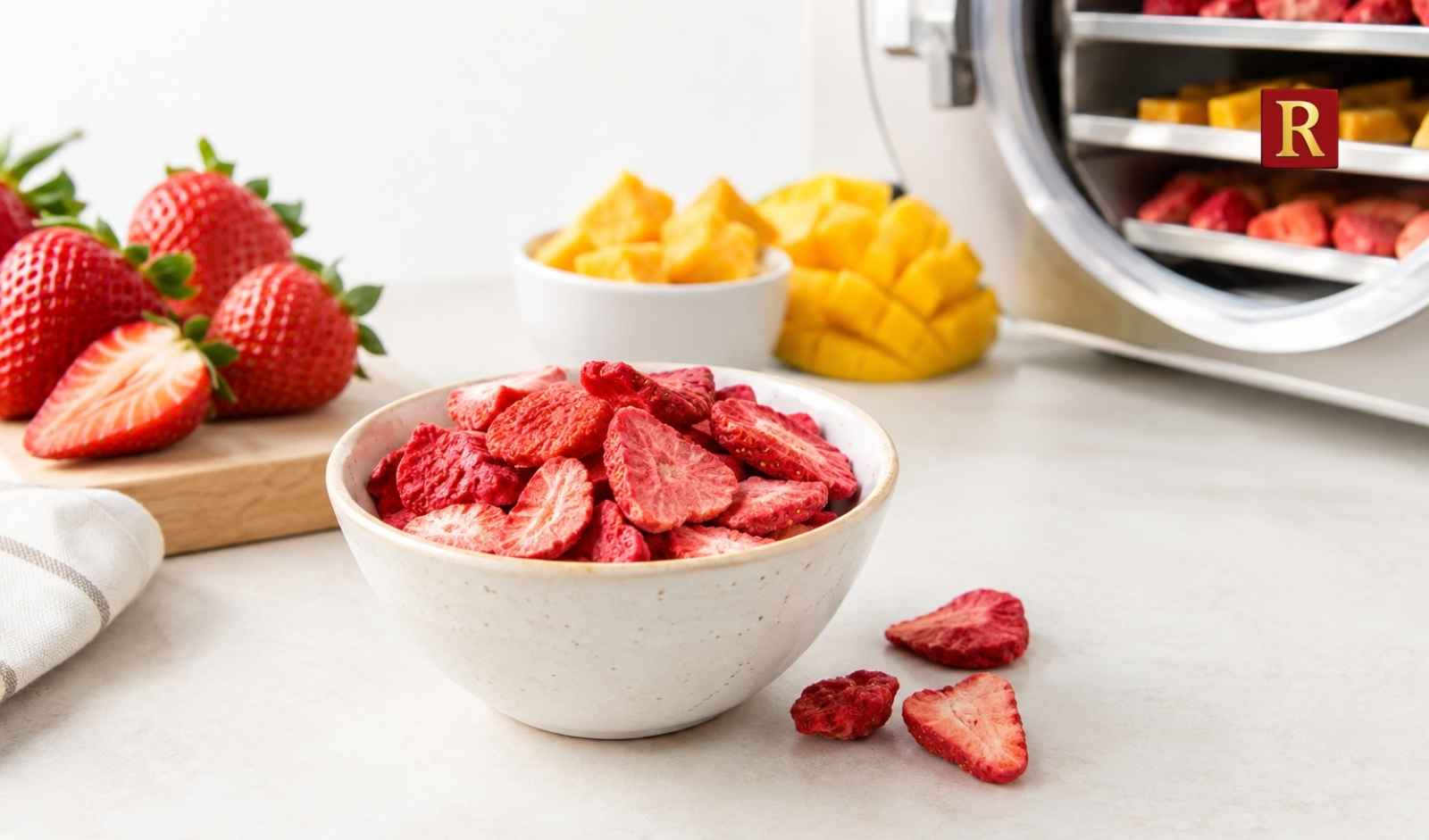
Freeze-drying, also known as lyophilisation, is becoming an interesting processing method for fruits and other moisture-rich ingredients. The technology involves freezing the product and removing its moisture under vacuum through sublimation. Unlike conventional drying, this process can help retain much of the ingredient's original structure, colour and flavour. Indian ingredients such as mango, jackfruit, banana, strawberry and amla offer interesting opportunities for this technology.
For example, freeze-dried mango can be used in:
Jackfruit can also be processed into dried pieces for snack applications and other specialised food formulations. Freeze-drying can help manufacturers work with seasonal ingredients in new formats. It also creates opportunities to supply lightweight, value-added ingredients to food companies and premium food brands. However, the technology involves significant equipment and energy costs, making commercial economics an important consideration.
2. High-Pressure Processing Is Changing Fresh Beverage Preservation
High-Pressure Processing (HPP) uses very high hydrostatic pressure to reduce harmful microorganisms and spoilage organisms in selected food products. Unlike conventional thermal processing, HPP does not depend on high temperatures as its primary preservation mechanism. This makes it particularly interesting for certain fresh-tasting beverages and refrigerated food products.
Indian ingredients and products that can be explored include:
The technology offers an opportunity to explore products that retain fresh sensory characteristics while improving microbial safety and product consistency. However, HPP does not automatically make a product shelf-stable at room temperature. Packaging, formulation, cold-chain management and microbial validation remain essential. Traditional Indian beverages could enter more organised retail and premium foodservice channels if manufacturers can establish commercially viable preservation and distribution systems.
3. Extrusion Technology Is Taking Millets Beyond Traditional Food Formats
Millets have traditionally been consumed in forms such as rotis, porridge and regional preparations. However, modern processing is helping manufacturers explore new applications for these grains. Food extrusion combines heat, pressure, moisture and mechanical force to transform ingredients into different food formats.
The process can be used to develop:
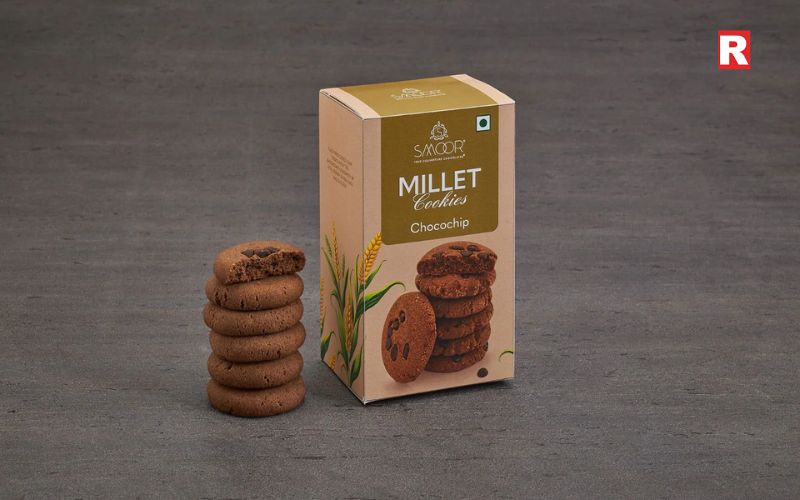
Ragi, jowar, bajra, foxtail millet and other grains can be incorporated into different formulations depending on their functional properties. The Indian Institute of Millets Research has worked on several millet value-addition technologies, including extrusion, puffing, baking and other product development applications. Extrusion can help traditional grains enter modern convenience-food categories, making them more accessible to younger consumers and organised food manufacturers. For restaurants and QSR brands, millet-based pasta, snack components and breakfast products also offer opportunities for menu innovation.
4. Advanced Extraction Is Turning Spices into High-Value Ingredients
India is one of the world's important spice-producing countries. However, the commercial potential of spices extends beyond whole spices and conventional powders. Advanced extraction techniques allow manufacturers to recover selected compounds from agricultural ingredients. Supercritical carbon dioxide extraction, for example, uses carbon dioxide under controlled pressure and temperature conditions to extract certain compounds.
Indian spices that offer opportunities for advanced processing include:
Turmeric.
Black pepper.
Cardamom.
Ginger.
Clove.
Chilli.
Cinnamon.
These ingredients can be processed into oleoresins, essential oils, extracts and other specialised food ingredients. For instance, turmeric can be processed to obtain curcumin-rich extracts, while black pepper can be used to produce pepper oleoresins for food applications.
Such ingredients can find applications in:
Instead of competing only in conventional spice markets, Indian manufacturers can explore specialised ingredient supply for domestic and international food companies. However, extraction yield, purity, safety specifications and standardisation determine the commercial suitability of these products.
5. Controlled Fermentation Is Modernising Traditional Indian Foods
Fermentation is not new to India. Foods such as idli, dosa batter, pickles and kanji demonstrate how traditional communities have used microorganisms to transform ingredients. The emerging opportunity lies in combining this knowledge with controlled industrial fermentation. In modern food manufacturing, selected microorganisms are used under controlled conditions to influence flavour, acidity, texture and other product characteristics.
Indian ingredients that can be explored include:
Ragi.
Rice.
Soybean.
Pulses.
Coconut.
Traditional grains.
Controlled fermentation can support the development of:
Fermented millet beverages.
Standardised idli and dosa batter.
Fermented pulse ingredients.
Plant-based fermented foods.
New flavour components.
For manufacturers, the advantage lies in achieving greater consistency across batches while developing new product formats. India's traditional fermentation knowledge could become a competitive advantage when combined with food science, microbial research and modern manufacturing practices.
6. Spray-Drying and Microencapsulation Are Creating New Ingredient Formats
Many Indian agricultural ingredients contain flavour compounds, colours and other sensitive components that need protection during processing, storage and transportation. Spray-drying converts liquid or slurry-based ingredients into powders through rapid drying using hot air. Microencapsulation involves enclosing selected compounds within protective materials to improve their stability or control their release.
These technologies offer opportunities for:
For example, spray-dried mango powder can be incorporated into instant beverage mixes, bakery products, confectionery and dessert preparations. Microencapsulation can also help protect certain sensitive flavour compounds from moisture, oxygen and other environmental factors. Manufacturers can develop ingredients that are easier to transport, store, measure and incorporate into large-scale food formulations.
7. AI-Based Sorting and Precision Processing Are Improving Ingredient Quality
Food processing is also becoming more automated. Optical sorting, machine vision and sensor-based grading systems are helping manufacturers inspect agricultural products with greater consistency. These technologies can identify differences in colour, size and visible defects, allowing selected materials to be separated automatically.
Indian ingredients that can benefit include:
Rice.
Pulses.
Millets.
Coffee beans.
Makhana.
Nuts.
Spices.
For example, automated sorting can help remove discoloured or defective grains before further processing. This is particularly important for manufacturers supplying organised retail, foodservice companies and export markets, where consistent specifications are essential. Ingredient quality is not determined only by its nutritional composition. Appearance, size, purity and batch consistency also influence its commercial acceptance.
How Traditional Indian Ingredients Are Finding New Commercial Applications
One of the most interesting developments in food processing is the transformation of familiar agricultural products into specialised ingredients.
Indian ingredient | Processing technology | New applications |
Makhana | Precision grading, roasting and coating | Premium snacks and food inclusions |
Jackfruit | Dehydration and powder processing | Bakery ingredients and food formulations |
Ragi | Milling, extrusion and fermentation | Pasta, cereals and snack products |
Turmeric | Advanced extraction | Curcumin-rich extracts and food ingredients |
Mango | Freeze-drying and spray-drying | Fruit powders and confectionery inclusions |
Chickpea | Milling and protein or fibre extraction | Plant-based food formulations |
Coconut | Dehydration and fibre processing | Coconut powders and dietary fibre ingredients |
Amla | Drying and extraction | Beverage mixes and ingredient formulations |
Pearl millet | Milling and oil extraction | Value-added grain products and oil |
Tender jackfruit | Minimal processing and dehydration | Ready-to-cook food products |
This transformation is particularly important for ingredients that have traditionally been sold in basic forms. Instead of depending on one market, manufacturers can develop multiple products from the same agricultural resource.
From Agricultural Commodity to Specialised Food Ingredient
Food processing technology is changing the way manufacturers look at agricultural produce. Traditionally, many ingredients were sold according to their basic physical form. However, food companies increasingly require specific characteristics such as particle size, moisture levels, flavour concentration, colour consistency and functional performance. This is creating demand for specialised ingredients.
Some emerging ingredient categories include:
Functional powders: Fruit, vegetable, grain and spice powders that can be incorporated into different food formulations.
Natural extracts: Concentrated compounds obtained from spices, herbs and agricultural materials.
Plant-based proteins: Ingredients obtained from pulses, legumes and other plant sources for specialised food applications.
Dietary fibres: Fibres recovered from selected agricultural materials and processing by-products.
Natural colours and flavours: Ingredients derived from plants, fruits and spices for food manufacturing.
Ready-to-use ingredients: Pre-processed materials that help restaurants and manufacturers reduce preparation time and improve consistency.
For Indian food businesses, this shift creates opportunities to move from commodity-based selling towards ingredient-led manufacturing.
Can Agricultural By-products Become the Next Big Food Ingredient Opportunity?
Another important development is the increasing interest in using agricultural and food processing by-products. Fruit peels, seed residues, grain bran and coconut waste are often generated during agricultural and industrial processing. With appropriate technology, selected by-products can be converted into useful materials.
For example:
Fruit peels can be investigated as sources of dietary fibre and other compounds.
Chickpea hulls can be processed into fibre-rich ingredients.
Coconut residues can be explored for fibre applications.
Grain bran can be used in selected food formulations.
Fruit processing residues can be investigated for pectin and other valuable compounds.
This approach is connected to circular food manufacturing, where businesses try to extract more value from available raw materials while reducing waste. However, not every by-product is suitable for food use. Safety, contamination, processing conditions and regulatory requirements must be evaluated before commercialisation.
How Food Processing Technology Is Creating Opportunities for Restaurants and QSR Brands
The impact of ingredient innovation extends beyond food manufacturing facilities. Restaurants, QSR chains, cloud kitchens and institutional kitchens can also benefit from improvements in ingredient processing. Modern foodservice businesses require ingredients that offer consistent quality, reliable supply and predictable preparation requirements.
Some potential applications include:
Standardised fruit ingredients: Processed fruit pieces and powders for desserts, beverages and bakery products.
Millet-based formulations: New pasta, snack and breakfast options.
Spice extracts: Consistent flavour profiles for sauces, marinades and seasoning blends.
Pre-processed vegetables: Reduced preparation time and improved operational efficiency.
Plant-based ingredients: New formulations for vegetarian and alternative-protein menus.
Convenience ingredients: Ready-to-use powders and concentrates for high-volume kitchens.
For restaurant operators, the benefit is not necessarily replacing fresh ingredients. It is having access to additional ingredient formats that improve menu flexibility and supply-chain management.
Government Support Is Strengthening India's Food Processing Ecosystem
India's food processing industry is also receiving support through government schemes focused on manufacturing, infrastructure and value addition.
1. Production Linked Incentive Scheme for Food Processing Industry
The Production Linked Incentive Scheme for Food Processing Industry (PLISFPI) has an approved outlay of Rs 10,900 crore. The scheme supports selected food manufacturing segments, product innovation and the development of Indian food brands.
Its covered categories include:
Ready-to-eat and ready-to-cook foods.
Processed fruits and vegetables.
Marine products.
Mozzarella cheese.
Innovative and organic products under eligible categories.
2. PM Formalisation of Micro Food Processing Enterprises Scheme
The PMFME scheme aims to support micro food processing businesses through financial assistance, training, formalisation and infrastructure development. It is particularly relevant for small manufacturers looking to improve their processing capabilities and enter more organised markets.
3. Pradhan Mantri Kisan SAMPADA Yojana
The scheme focuses on strengthening food processing and preservation infrastructure.
Its areas of support include:
Cold-chain infrastructure.
Agro-processing clusters.
Food processing facilities.
Preservation and supply-chain infrastructure.
Together, these initiatives can help businesses address some of the infrastructure and investment challenges associated with food processing.
India's Food Processing Industry Is Becoming a Bigger Economic Opportunity
The growing importance of food processing is also reflected in India's industry figures. According to the Ministry of Food Processing Industries, the sector's Gross Value Added (GVA) reached approximately Rs 2.24 lakh crore in 2023–24.
Other reported indicators include:
Average annual growth of 6.55 percent over the reported nine-year period.
Processed food exports accounted for 20.4 percent of agricultural exports in 2024–25.
The sector attracted approximately USD 7.33 billion in foreign direct investment between 2014–15 and 2024–25.
These figures highlight the increasing economic importance of food processing and value addition. For Indian manufacturers, the opportunity lies in developing products that meet domestic requirements while exploring specialised international markets.
Traditional vs Advanced Food Processing: What Is Changing?
Parameter | Traditional processing | Advanced processing |
Preservation | Sun drying, conventional heating and salting | Freeze-drying, HPP and controlled dehydration |
Sorting | Manual grading | Optical and sensor-based sorting |
Grain processing | Conventional milling | Precision milling and extrusion |
Spice processing | Grinding and basic extraction | Standardised extracts and oleoresins |
Fermentation | Traditional fermentation practices | Controlled industrial fermentation |
Product development | Conventional food formats | Powders, concentrates and specialised ingredients |
Quality control | Manual inspection and basic testing | Automated monitoring and laboratory validation |
Advanced processing does not make traditional techniques obsolete. Both approaches have important applications, depending on the ingredient, product requirements and economics.
What Is Holding Back Advanced Food Processing in India?
Despite its potential, adopting modern food processing technology comes with several challenges.
High Machinery Investment: Advanced processing equipment can require significant capital investment, making adoption difficult for small and medium-sized manufacturers.
Energy Consumption: Technologies such as freeze-drying can involve high energy requirements, affecting the final cost of production.
Cold-Chain Limitations: Certain products still require refrigerated storage and transportation, increasing operational complexity.
Inconsistent Agricultural Supply: Variations in crop quality, maturity and moisture can affect the efficiency of industrial processing.
Technical Expertise: Manufacturers need trained professionals who understand equipment operation, food safety and product formulation.
Consumer Acceptance: New ingredient formats must meet consumer expectations around taste, texture, quality and affordability.
Addressing these challenges will be important if advanced processing is to move beyond specialised manufacturers and become more accessible across India's food industry.
What Does the Future Hold for Indian Ingredients?
The future of Indian food processing will depend on how effectively technology, agricultural resources and food manufacturing come together.
Several developments are worth watching.
Precision processing: Greater use of sensors, automation and digital monitoring to improve consistency.
Ingredient standardisation: More manufacturers developing ingredients with clearly defined quality and functional specifications.
Circular manufacturing: Greater utilisation of agricultural by-products and food processing residues.
Plant-based innovation: More applications for pulses, millets and other plant-based ingredients.
Advanced preservation: Wider exploration of preservation methods that balance food safety, product quality and shelf life.
Specialised ingredient exports: Opportunities for Indian manufacturers to supply extracts, powders, fibres and other processed ingredients to international food companies.
The biggest opportunity may lie in connecting India's agricultural diversity with the technical capabilities of modern food manufacturing.
The future!
Food processing technology is changing the commercial possibilities of Indian ingredients. Traditional crops such as millets, jackfruit, mango, turmeric, coconut and pulses are finding new applications through advanced preservation, extraction, fermentation and precision processing. For manufacturers, this creates opportunities to develop specialised ingredients, improve consistency and explore new markets. For restaurants and food brands, it offers access to more flexible ingredient formats and new product development possibilities. However, the real transformation will depend on affordability, technical expertise, quality standards and reliable agricultural supply chains. India's next food industry revolution may not be about growing more ingredients alone. It may be about extracting greater value from what the country already grows and turning its agricultural diversity into a stronger food manufacturing advantage.