
How Young Chefs Are Documenting India’s Disappearing Regional Flavours
The most valuable part of this movement is not simply putting an unfamiliar dish on a modern plate. It is making sure that the person, place, technique and story behind that dish are not forgotten when the plate is cleared.

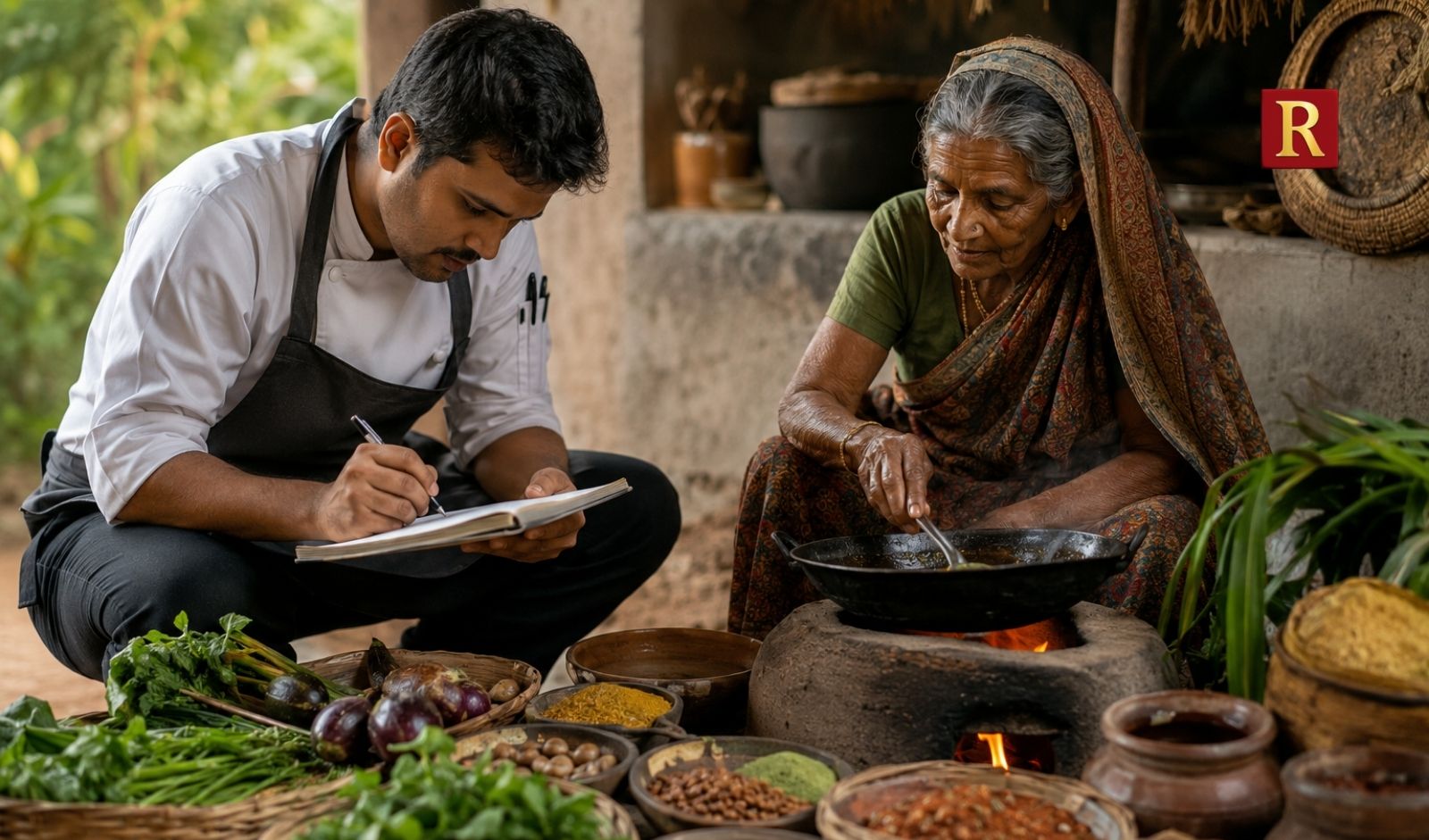
India’s regional food traditions are being documented in new ways by chefs, researchers and food projects. They are travelling to home kitchens, speaking to older cooks, recording recipes, studying local ingredients and bringing lesser-known techniques into restaurants.
The work is important because many Indian food traditions are passed down orally. A recipe may exist in one household, remembered by one person, rather than in a cookbook or formal archive. When that knowledge is not recorded, its ingredients, methods and stories can become difficult to recover. For young chefs, this is creating a different role. They are not only cooking regional food. They are researching the people, places and practices behind it.
Beyond the Recipe
A traditional recipe is rarely just a list of ingredients. The choice of ingredient can be linked to a season. A preservation method can reflect the local climate. A cooking vessel can be designed around a particular fuel source. A dish can also carry memories of migration, farming, festivals or community life. That is why serious culinary documentation needs more than measurements. It can record the local name of a dish, its variations, the person who taught it, the season when it is prepared, the ingredients used, cooking equipment, preservation techniques and the cultural setting around it. Sheetal Bhatt's Silent Cuisines shows what this deeper documentation can look like. Her project involved fieldwork across six northeastern districts of Gujarat and resulted in a 150-page book containing more than 50 heirloom recipes from Adivasi communities. The documentation covers foodways and culinary practices, rather than simply presenting recipes.
This approach changes the question from “What is this dish?” to “Who made it, why was it made this way and what does it tell us about the community?”
Research Outside the Restaurant
Chef Thomas Zacharias' Chef on the Road is an example of this research-led approach. The project began in 2013 as an attempt to learn about Indian food beyond restaurant kitchens and cookbooks. Over more than a decade, the work has involved visiting homes, markets, farms and forests and learning from farmers, foragers, fishers and home cooks.
The significance is not only the number of dishes discovered. The research also looks at land, labour, season, ecology and memory. These factors help explain why a food tradition developed in a particular way. This is a useful model for young chefs because it treats culinary research as fieldwork. The chef becomes an observer and learner before becoming an interpreter.
Bringing New Stories to the Table
One reason regional food can be misunderstood is the way India is divided into broad cuisine categories. Calling something “Gujarati food” or “Karnataka food” can hide enormous internal diversity. Within one state, food can change according to district, community, geography, climate and occupation. Coastal cooking may look very different from food in an inland farming community. Tribal food traditions may have little connection with the dishes most commonly served in urban restaurants.
The Ōle Project in Karnataka is working specifically in this space. Its research and storytelling focus on underrepresented food cultures, oral documentation, geography and community history. Its seasonal dining experiences also introduce diners to hyper-local ingredients and lesser-known recipes. This matters for restaurants because micro-regional food can offer something more distinctive than another generic regional menu. It also gives diners a better understanding of India's culinary diversity.
The Himalayas Show How Research Can Shape a Restaurant
Chef Prateek Sadhu's NAAR provides another strong example. The restaurant in Himachal Pradesh takes a research-driven approach to Himalayan food. Sadhu and his team have travelled across areas including Ladakh and Arunachal Pradesh, while sourcing and studying ingredients from the wider Himalayan region. Some ingredients are seasonal enough that the team may wait months for them to become available. The research also involves repeated culinary testing. Sadhu has said that some ingredients require 20 to 25 trials before the team finds a suitable way to present them. Dandelion, for example, brings intense bitterness and required repeated experimentation to balance it.
This demonstrates an important difference between simply reviving an old dish and researching it. The original knowledge provides the starting point. The chef then studies the ingredient, understands its properties and develops a contemporary expression. In 2026, NAAR reached No. 30 on Asia's 50 Best Restaurants list. Its menu draws from the Himalayan belt and connects dishes with local ingredients, seasons and conversations with older generations. The restaurant also reports that nearly 80% of its produce comes from its two nearby farms.
Technology Is Creating a New Kind of Food Archive
Digital tools are making culinary documentation easier to store and study. A chef can now record an interview with a home cook, photograph ingredients, film a cooking technique and preserve different versions of the same recipe. This has also opened the door to computational food research. A 2026 academic study created a dataset of 120 YouTube biryani cooking videos covering 12 regional styles. Researchers used vision-language models to study cooking procedures and compare regional differences, with human verification built into the process.
The example is significant because a cooking video can contain much more information than a written recipe. It can show the sequence of steps, cooking sounds, ingredients, utensils, texture and technique. But technology has limits. A recording may show when an ingredient is added. It cannot always capture the sensory judgement of a cook who knows from smell, colour or texture that something is ready. That human knowledge remains central.
Preservation Does Not Mean Freezing Food in Time
There is also a difficult question around authenticity. If five households prepare the same dish differently, which version should be recorded as the “real” one? There may not be a single answer. Good documentation should preserve variations rather than erase them. It should identify the person or community that shared the knowledge and explain how the recipe fits into its local context.
This becomes particularly important when traditional food enters fine dining. At NAAR, Sadhu has described the philosophy in practical terms: chefs are cooking in the present, so they cannot simply reproduce how people cooked decades ago. His approach uses traditional ingredients and stories while developing new dishes around them. That is culinary translation, not simple replication. The challenge is to innovate without removing the origin of the idea.
Turn Documentation Into a Living Archive
The restaurant industry can play an important role in keeping regional food traditions active. A documented ingredient has little long-term impact if nobody grows it, cooks it or eats it. Restaurants can create demand for indigenous ingredients, traditional grains, regional spices, fermented foods and lesser-known vegetables. That demand can connect diners with producers and encourage continued cultivation and use.
The process can look like this: Research → Documentation → Menu Development → Consumer Discovery → Demand → Continued Use
This is where culinary preservation becomes an economic activity as well as a cultural one. India's hospitality education system is also beginning to place greater emphasis on this connection. The National Young Chef Competition, launched with the Ministry of Tourism and PHDCCI, carried the theme “Celebrating Indian Culinary Heritage: Blending Tradition with Innovation.” The competition culminated in January 2026, with Symbiosis School of Culinary Arts and Nutritional Sciences, Pune, winning the first edition. The message is clear: culinary heritage is becoming part of the conversation around the next generation of chefs.
India's Next Food Discoveries
The future of Indian regional food may not be about finding another famous dish. It may be about finding the food that exists one village, community or season away from what we already know. A forgotten preparation can carry information about agriculture, climate, migration, preservation and family history. A local ingredient can reveal how people adapted their food to their surroundings. Young chefs are increasingly using restaurants, field research, books, supper clubs and digital platforms to bring that knowledge into public view. The most valuable part of this movement is not simply putting an unfamiliar dish on a modern plate. It is making sure that the person, place, technique and story behind that dish are not forgotten when the plate is cleared.
Saptopriya Ghosal
Feature Writer
I am a dedicated media professional with a bachelor's degree in mass communication from the State University of Calcutta and a postgraduate degree from Amity University. My academic journey has equipped me with a profound understanding of storytelling and communication. Passionate about the dynamic world of media, I continually strive to explore new ways to engage and inform through compelling narratives.



































































