
How to Train Your Staff to Spot Bad Seafood in Five Easy Steps
Serving anything other than clean seafood in a restaurant, seafood market, or catering business can have serious consequences, ranging from unhappy consumers and a damaged reputation to severe health issues. That is why providing your staff with the skills and expertise to detect poor seafood is not just a good idea, but also essential.

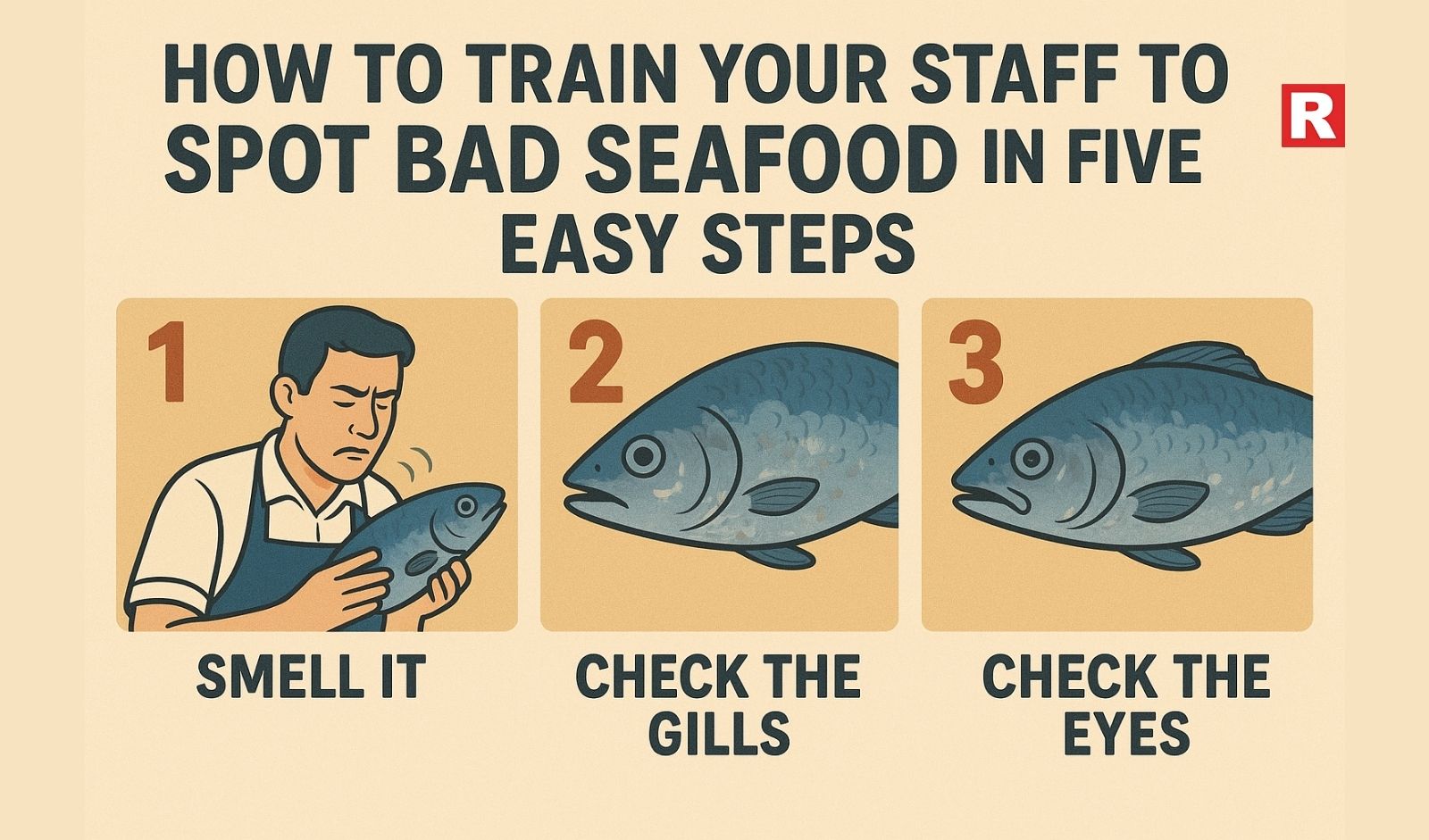
The quality of a restaurant's ingredients determines its reputation, and when it comes to seafood, this cannot be compromised. Knowing how to recognize rotten seafood is essential for any restaurateur in India's thriving food industry, where seafood from inland and coastal fishermen is a delicacy. Serving anything other than clean seafood in a restaurant, seafood market, or catering business can have serious consequences, ranging from unhappy consumers and a damaged reputation to severe health issues. That is why providing your staff with the skills and expertise to detect poor seafood is not just a good idea, but also essential.
This complete article will simplify the crucial elements of seafood quality into five easy steps, offering a strong foundation for staff training. Your staff will have the sensory skills necessary to guarantee that every piece of seafood that enters your restaurant meets the strictest requirements of freshness by the conclusion of this article.
Read more: Pouring Festive Cheer: Beers & Spirits Winning Consumer Carts This Season
Step 1: The Visual Inspection – What Meets the Eye
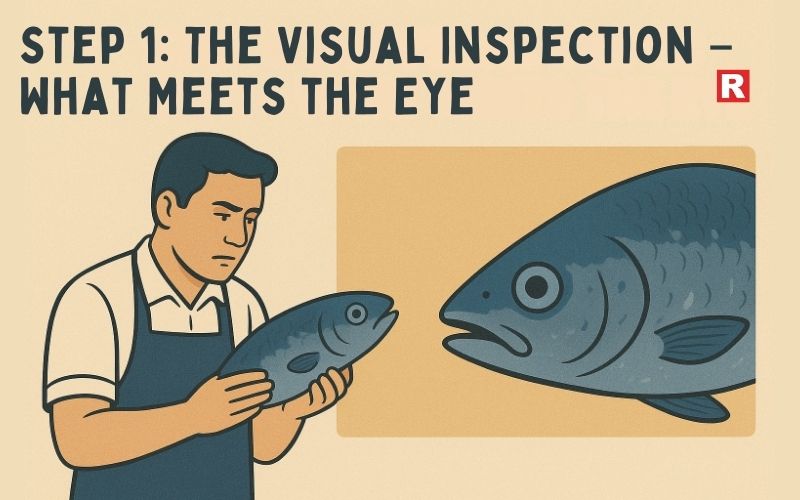
Examining seafood carefully is the first line of defense against contaminated seafood. Similar to evaluating a book by its cover, you can conclude a lot about the freshness and handling of fish, shellfish, and crabs based on their first appearance.
For Whole Fish(e.g., pomfret, rohu, kingfish):
- Eyes: This is usually the most obvious indicator. The eyes of fresh fish should be bright, clear, and bulging with black pupils. Eyes that are dull, sunken, or cloudy are instant warning signs of aging or poor storage.
- Gills: The gill plate should be raised. In addition to being moist and devoid of slime or discoloration, the gills should be a vivid crimson or pink. Strong signs of spoiling include brown, grey, or sticky gills.
- Skin and Scales: The skin should be taut, shiny, and moist, and the scales should be securely attached to the body. Scales that are easy to rub off or dull, dry, flaky skin indicate that the fish is beyond its best. Check for cuts, bruises, or indications of rough treatment.
- Flesh: When inspecting fish fillets, their meat should be juicy, firm, transparent, and naturally shiny. Steer clear of any fish whose flesh is discolored, gaping, dry, or opaque.
For Shellfish (Shrimp, Scallops, Mussels, Clams, Oysters):
- Shrimp: Particularly around the shell's edges, they should be firm, glossy, and free of black spots. An overpowering ammonia odor is an apparent sign of spoiling.
- Scallops: They should have a light, pleasant scent and be firm, juicy, and translucent. Spoiling is indicated by a milky liquid or a strong, fishy smell.
- Clams, oysters, and mussels: Store live shellfish in their shells in breathable (not airtight) containers on ice. Make sure they are securely closed. Tap them gently if they're open, and throw them away if they don't close. The shells of cooked shellfish should be open; throw away those that are still closed. Their liquor ought to be clear rather than cloudy.
For Crustaceans (Lobster, Crab):
Live Crustaceans should be lively and responsive. They should have hard, undamaged shells that aren't cracked or discolored. They are not fresh or alive if they are not moving or have an unpleasant odor.
Training Tip: Use visual assistance as a training tip! Make a poster including "Good vs. Bad" pictures of different kinds of seafood. While receiving and preparing, go over these with your employees regularly.
Know more: 7 Essentials to Keep Staff Trained in Your Restaurant
Step 2: The Odour Test – Trust Your Nose
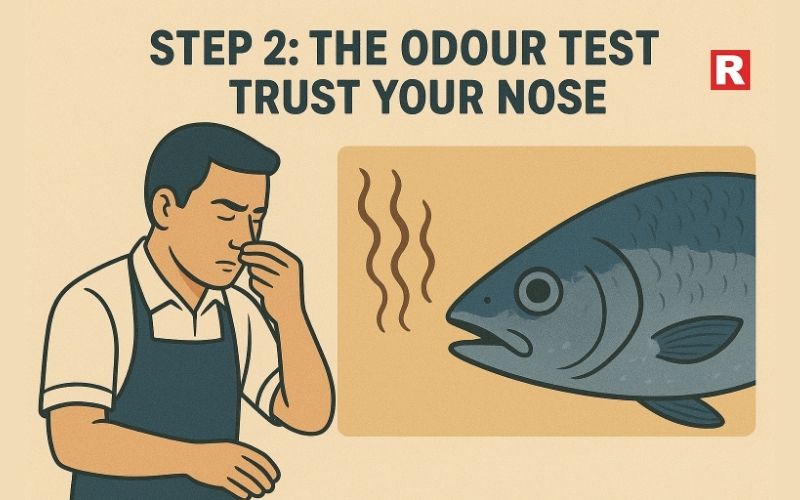
One of the most effective ways we can detect spoiling is by using our sense of smell. The scent of fresh seafood is unique, subtle, and frequently oceanic—think of a crisp sea breeze or a cucumber. Anything different from this is enough for concern.
- Fresh fish: These should have a clean, slightly pleasant smell, or perhaps a hint of the water. It should never have a noticeable "fishy," sour, rancid, or ammoniated scent.
- Shellfish: A fresh, salty scent is characteristic of live shellfish. Shellfish that have been cooked should smell sweet and delicious. If it smells strong, pungent, or sour, throw it out right away.
- Ammonia Smell: An important sign of bacterial breakdown is the smell of ammonia, which is particularly common in shrimp and other crustaceans. Major spoiling is indicated by any trace of ammonia.
Training Tip: Perform a "smell test" as part of your training. Offer samples of seafood that are actually fresh, as well as some that are starting to change (but not so much that it is dangerously spoiled), if at all possible. This enables staff to adjust their noses to pick up on minute differences. Emphasize that it is safer to throw away anything that has any questionable odor.
Step 3: The Touch Test – Feel for Firmness
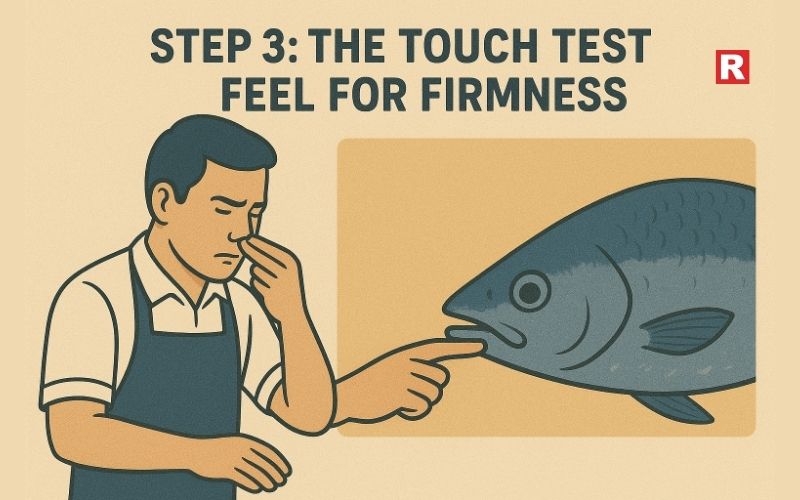
Another important indicator of seafood quality is its texture. While rotten seafood tends to get soft and mushy, fresh seafood typically has a strong, elastic texture.
For Fillets & Whole Fish:
- Firmness: Use your finger to gently massage the flesh. It should bounce back right away and be firm. The fish is probably old if its dent is still there or if the flesh is mushy and soft.
- Slime: A natural, light layer of slime should naturally cover fresh fish, but it shouldn't be overly thick or discolored. Bacterial growth is indicated by an unusually thick, yellowish, or sticky slime coating.
For Shellfish:
- Shrimp & Scallops: When cooked, shrimp and scallops should feel firm and have a little "snap" to them. They should feel firm to the touch when raw.
- Mussels, Clams, Oysters: The shells of mussels, clams, and oysters should feel solid and heavy. The meat should be firm and plump when shucked, not shriveled or watery.
Training Tip: While doing the touch test, remind employees to always use gloves while handling raw seafood. Describe how hardness is related to structural integrity, which quickly deteriorates with spoiling.
Check out: How to Find Good Staff for Your Restaurant
Practical ways to train staff for better customer service
Step 4: Temperature and Storage – The Unseen Contributors

Although sensory, smell, and visual inspections are important, knowing how to properly control temperature and store food is essential to avoiding spoiling in the first place. Improper handling is generally the first step towards bad seafood.
- Receiving Temperature: 41°F (5°C) or lower is the ideal temperature for any seafood. When frozen seafood is delivered, it should be solidly frozen and show no symptoms of thawing and refreezing (such as freezer burn or big ice crystals).
- Storage Temperature: Keep fresh seafood between 32 and 38°F (0 and 3°C) in the coldest section of your refrigerator, preferably wrapped in ice. Because prolonged contact with standing water will hasten spoiling, make sure any melted ice water can drain away.
- Cross-Contamination Prevention: To avoid spills contaminating other foods, place raw seafood beneath cooked or ready-to-eat food. Use different utensils and cutting boards.
Step 5: When in Doubt, Throw It Out! – The Golden Rule

This last step is possibly the most important one to teach your employees: seafood should be thrown out if there is any doubt about its safety or freshness. When weighed against the possible financial, reputational, and health consequences of serving subpar seafood, the expense of throwing away a piece of fish is insignificant.
- No Compromises: Educate employees that seafood is never "almost fresh." If any of the three senses—sight, smell, and touch—raise concerns, the product is damaged.
- Empowerment: Allow your employees to make these choices without worrying about backlash. Establish a culture where the safety of food comes first.
- Documentation: Encourage employees to keep records of any seafood that is thrown out, along with the reasons why. This can assist in locating problems with internal handling procedures or suppliers.
Training Tip: Provide actual cases of how rapidly a food safety violation may harm a business. Remind them that their ability to identify faulty seafood directly affects the operation's overall success and safety. Emphasize that discarding suspicious products is an important investment in maintaining brand integrity and gaining the trust of customers, not a waste.
What's new: 3 Key Strategy to Retain Staff in Restaurant
Addressing Unique Challenges in the Indian Supply Chain
Although each of the five steps is universal, the unique food supply chain in India presents particular difficulties for restaurateurs. By educating your staff about these variables, you may stop many problems before they start.
- Dependency on Regional Vendors: A lot of Indian restaurants get seafood from regional markets or small-scale suppliers who do not have access to advanced cold storage facilities. Teach your employees to be extremely watchful while receiving these deliveries because the seafood may have traveled considerable distances in unrefrigerated circumstances before reaching your kitchen.
- Monsoon Season Variables: Fishing activities are greatly impacted by the monsoon season, which runs from June to September. There may be a shortage of seafood during this time; therefore, some suppliers might try to sell frozen or older stock. Teach your staff to be more watchful during these months and to inquire about the seafood's place of origin.
- Diverse Seafood Types: Due to India's extensive coastline, a wide range of regional seafood is available, ranging from the saltwater Pomfret and Kingfish in coastal areas to the freshwater Rohu in the north. Make sure your employees are taught the unique freshness indicators for each kind of seafood you use, as they can differ somewhat from one another.
- Traditional vs. Modern Logistics: Some providers continue to employ outdated transportation methods, such as ice-filled open trucks, which can be less dependable than modern refrigerated vans. Teach your staff the significance of looking for indications of temperature abuse or thawing, such as a soft texture in a supposedly frozen product or an excessive amount of melted ice water.
- Adulteration and Mislabeling: Older or lower-quality fish can occasionally be marketed as premium varieties. Your best line of protection against this type of scam is a well-trained staff that can recognize different types of fish by their texture, scent, and appearance.
Read this: How Training Helps Build a Healthy Restaurant Culture
Conclusion
Quality and trust are key factors in a restaurant's reputation in a cutthroat food industry like India's. It is not only a job to train staff to be masters at identifying poor seafood; it is an essential investment for your restaurant’s future. Your staff becomes the front-line defense for your business by regularly using the five-step sensory checklist and dealing with particular local challenges. It fosters a culture of continuous food safety by giving them the power to throw out damaged stock. This dedication guarantees that every meal is proof of the honesty and quality of your restaurant and promotes loyalty to your customers.
Mahak Sharma
Content Writer
Mahak Sharma is a passionate content writer with 2 years of experience crafting compelling content across various niches, tailoring her writing to suit different audiences and platforms. She is dedicated to producing engaging content for readers so that they can understand and enjoy the articles. Her strengths lie in crafting SEO-friendly, well-structured articles that drive visibility and engagement.



































































