
How to Start a Buffet Restaurant
There is no denying the appeal of buffet restaurants in India. For a set fee, customers can try several cuisines, choose from a wide variety of meals, and choose their portion sizes in this food playground.

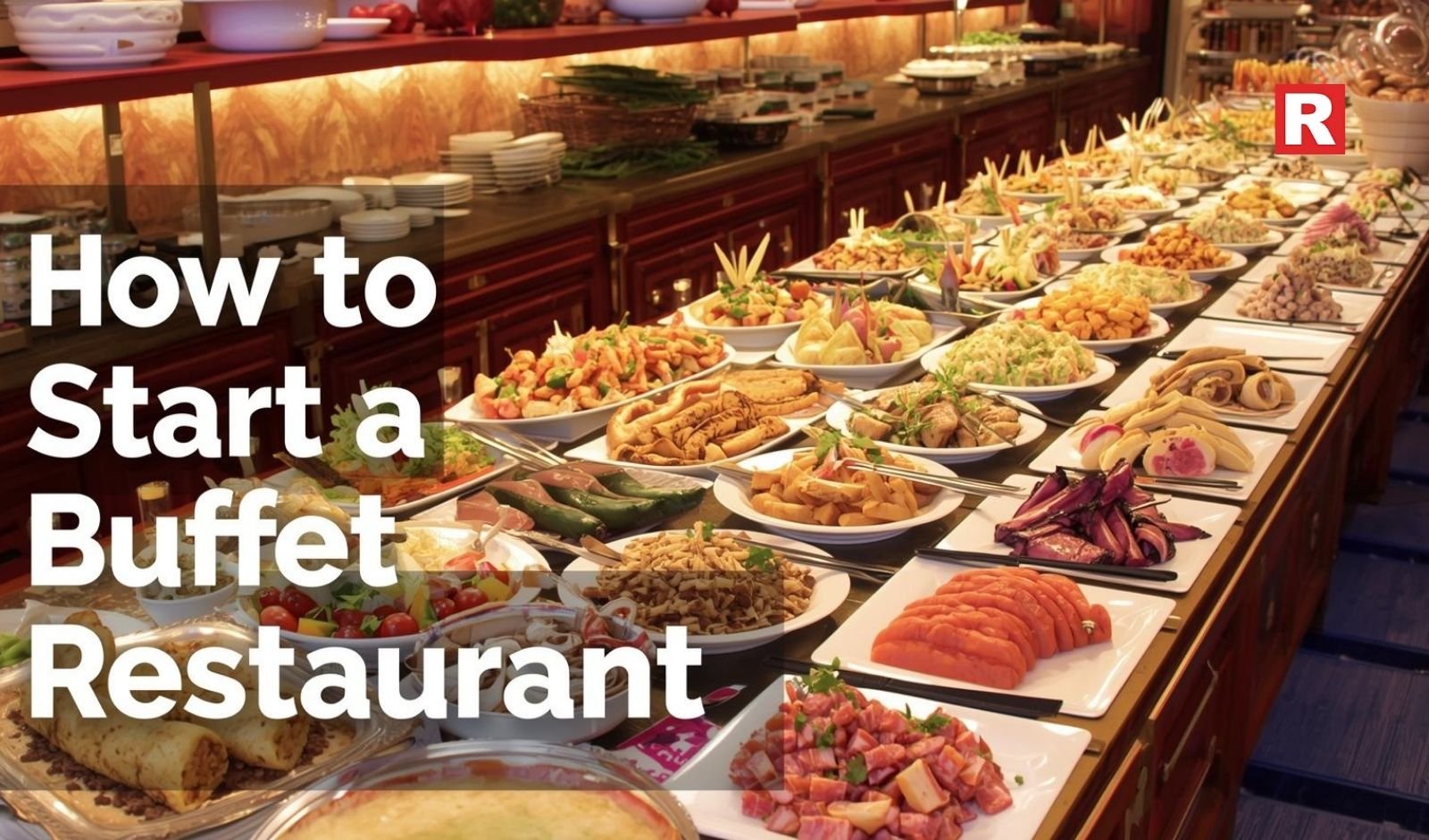
There is no denying the appeal of buffet restaurants in India. For a set fee, customers can try several cuisines, choose from a wide variety of meals, and choose their portion sizes in this food playground. Families, business groups, and individuals seeking variety and value are among the many customers that the buffet concept serves, ranging from luxurious five-star meals to busy, reasonably priced restaurants. The "all-you-can-eat" idea appeals greatly to Indian diners, who frequently appreciate variety and sufficient portions on a single plate.
But opening a successful buffet restaurant in India is a difficult task that calls for careful preparation, a large financial investment, and a deep comprehension of the operational and culinary complexities. It takes more than just setting out a large amount of food; it also requires logistics expertise, hygienic practices, and the creation of a welcoming environment that promotes repeat business.
In order to provide a strong basis for long-term success, this article offers prospective restaurateurs a thorough guide that covers all the necessary procedures and factors to start a buffet restaurant in India, from concept to grand opening, along with afterward.
Why the Buffett Business Might Be Profitable in India
The buffet model has several strong benefits that are ideal for the market dynamics and attitude of Indian consumers:
- Value Perception and Volume: Paisa vasool, or value for money, is highly valued by Indian diners. Large families, parties, and business meetings are directly attracted to a fixed-price model with endless servings, which ensures high volume.
- Operational Efficiency: A buffet enables bulk cooking, in contrast to an independent restaurant, where the kitchen is always processing tiny, diverse orders. This greatly improves your cost of goods sold (COGS) management by cutting down on prep time, labor costs per plate, and enabling bulk ingredient purchases.
- Labor Cost Savings: Because a buffet is self-service, fewer serving workers are needed, which frees up manpower for distribution, floor cleaning, and refilling rather than table service.
- Beverage Upselling: Since the price of meals is set, high-margin items like water bottles, mocktails, and soft drinks are frequently what generate revenues because consumers always buy them.
Read more: Essential Buffet Equipment for a Seamless Service
Location Tips for a Buffet Restaurant

A buffet's enormous volume makes location an unavoidable consideration. Easy access and the capacity to accommodate large numbers of people are essential for a buffet to be effective.
- Proximity to Target Audience: Target locations should be close to major corporate offices (for lunch on weekdays), retail centers, or high-street commercial districts (for foot traffic on weekends).
- Space and Layout: Three crucial elements need to be included in a spacious, open floor plan.
- Buffet Line: Enough room to provide a smooth flow and avoid obstructions.
- Seating Area: Comfortable table-to-table space and plenty of seating.
- Parking: For the family and group customers, there must be enough easily accessible parking.
- Kitchen Dimensions: The back of the house needs to match the volume. Large storage (for buying in bulk), strong exhaust systems, and high-capacity equipment (such as walk-in coolers and enormous bhatis) are all necessary for a buffet kitchen.
The Legal Procedure – Mandatory Licenses and Documentation
In India, starting a food business requires a multi-step regulatory procedure that involves Central, State, and Municipal authorities. Following the rules for a buffet with a large capacity is a must.
What is the Legal Procedure?
The legal process involves obtaining several required permits that address public health, fire safety, commercial operation, and food safety.
Below are the important permits and licenses that are required to open your own buffet business.
FSSAI License
Issuing Authority: Food Safety and Standards Authority of India (FoSCoS Portal)
Purpose: Mandatory certification for food quality and hygiene.
Estimated Annual Govt. Fee (₹): ₹2,000 - ₹5,000 per year
Key Documents Required: ID proof of owner/partners, Proof of Premises (Rent/Lease Agreement), Layout plan, Food Safety Management Plan.
Health Trade License
Issuing Authority: Local Municipal Corporation (e.g., MCD, BMC, GHMC)
Purpose: Certifies the premises meet health and sanitary standards.
Estimated Annual Govt. Fee (₹): ₹10,000 - ₹50,000 (Varies by seating capacity)
Key Documents Required: Site plan, Ownership proof, Water quality report, Medical certificates of staff, Sewer connection proof.
Shop & Establishment Act Registration
Issuing Authority: State's Labour Department
Purpose: Mandatory for commercial operations (regulating working hours, holidays).
Fire Safety NOC
Issuing Authority: Chief Fire Officer/Local Fire Department
Purpose: Certifies that the building and kitchen are compliant with fire safety norms.
Estimated Annual Govt. Fee (₹): ₹0 (New application) to ₹2,500 (Annual renewal)
Key Documents Required: Building structure stability certificate, Floor plan/Layout showing fire safety measures.
Eating House License
Issuing Authority: Commissioner of Police/Local Police Headquarters
Purpose: Required for places where food/drinks are consumed on the premises.
Estimated Annual Govt. Fee (₹): ₹5,000 - ₹25,000 (Varies by state)
Key Documents Required: FSSAI License copy, Trade License copy, CCTV installation affidavit, and Site plan.
GST Registration
Issuing Authority: Central/State Tax Authorities
Purpose: Mandatory for turnover above prescribed thresholds (usually ₹20 lakhs).
Estimated Annual Govt. Fee (₹): ₹0 (Official registration fee)
Key Documents Required: PAN Card, Aadhaar Card, Business registration proof, Bank account details.
Music License (PPL/IPRS)
Issuing Authority: Phonographic Performance Ltd./Indian Performing Rights Society
Purpose: Required for playing background music/live performances.
Know more: 7 Tips to Maximise Sales in Your Restaurant
The Application Process and Timeline
Pre-opening expenditures can be reduced by effectively navigating the application procedure.
Application Process: Focus on FSSAI
The basis for all other licenses is the Food Safety and Standards Authority of India (FSSAI) license.
- Identify the Category: You would most likely require the FSSAI State License (turnover between ₹12 lakh and ₹20 crore) or the FSSAI Central License (turnover over ₹20 crore or operating in several states) for a mid-to-large buffet restaurant.
- Online Registration: The Food Safety Compliance System (FoSCoS) site (foscos.fssai.gov.in) is where all applications are uploaded.
- Submission of Form B: Complete and send in the full application form (Form B) along with all necessary attachments, such as the Food Safety Management System (FSMS) plan, which describes your procedures for temperature control and buffet hygiene.
How to Submit the Application
All submissions must be made online using the FoSCoS portal:
- Sign Up & Login: Register for a FoSCoS portal account.
- Choose Kind of Business (KoB): Depending on your main business, select "Food Services" followed by "Restaurant" or "Catering."
- Complete Form B: Enter the location address, projected turnover, and business/owner data.
- Upload Documents: Provide PDF versions of all required documents, including layout, ID proofs, and proof of premises.
- Fee Payment: Use the gateway to make an online payment for the relevant government fees.
What's new: Why the Buffet is the Perfect Meal for Corporate Events
Time Process for the Application to be Expected
The licensing procedure is frequently unpredictable and long. Therefore, starting early is important.
FSSAI License
Expected Time Process: 30 to 60 days
Key Activity: Officer inspection is mandatory; requires compliance with all hygiene directives.
Municipal Trade/Health License
Expected Time Process: 15 to 45 days
Key Activity: Local inspector visit for verification of sanitation and waste disposal.
Fire Safety NOC
Expected Time Process: 45 to 60 days
Key Activity: Detailed building and equipment check; can be a major source of delay.
Overall Pre-Opening Compliance
Expected Time Process: Minimum 2 to 3 Months
Key Activity: Total time to get all non-liquor licenses. Liquor licenses can take 3 to 6 months.
Important Timeline Note: The licensing authority has a window to raise questions following submission (e.g., 7 days for Basic, 15 days for State/Central). Your application can be denied if you don't provide the necessary information in response to these questions within the time limit specified, which is typically 30 days.
Key Steps to Open Your Buffet Restaurant (After Licensing)
1. Physical Infrastructure and Setup
- Kitchen Installation: Set up all required commercial-grade kitchen appliances, paying particular attention to their capacities for large-scale cooking and preparation.
- Buffet Line Setup: Set up the special buffet counter with chafing dishes for hot food, cold wells for cold food, and sneeze barriers for protection.
- Dining Area Furnishings: Set up tables and chairs to make the most of your floor area and seating capacity while guaranteeing that customers can walk about comfortably.
2. Menu Planning and Sourcing
- Menu Finalization: To control expenses and improve customer satisfaction, design a well-balanced menu that includes a thoughtful combination of high-profit products (carbs, sides) and premium goods (proteins).
- Vendor Contracts: To guarantee constant quality and quantity, negotiate and execute trustworthy supply contracts for all raw materials (fresh produce, meat, and dry items).
- Inventory Control System: To preserve profit margins, put in place a system (software or manual) for keeping track of supplies, keeping an eye on food consumption, and reducing waste.
3. Staffing and Operations
- Recruitment: Employ the whole operational staff, which includes the cooks, dishwashers, and committed floor workers in charge of keeping the buffet line stocked and running smoothly.
- Hygiene & Safety Training: Provide all kitchen and floor staff with the required training on food safety, temperature control, and FSSAI hygiene requirements.
- Service Protocols (SOPs): Clearly define SOPs for table clearance, customer flow, and effectively handling peak hours.
4. Technology and Launch
- POS System: Installing and configuring the Point-of-Sale (POS) system is necessary for integrated inventory tracking and quick billing.
- First Stock Purchase: Place the first sizable purchase for all cleaning supplies, crockery, cutlery, beverages, and meal ingredients.
- Marketing Strategy: To promote the grand opening and draw in the first clients, create and implement a local marketing strategy (both online and offline).
Check out: Top 10 Qualities of A Successful Restaurateur
5 Unique Theme Ideas That Make Your Restaurant Stand Out
Challenges and the Path to Success

High Food Waste: The fundamental danger associated with the buffet model is the inherent food waste, which is frequently estimated to be between 40 and 50 percent in the sector. Customers overindulge, and for safety, food must be thrown out after a certain amount of time (often two to four hours).
Solution: Use "live counters" for fresh, regulated quantities (e.g., pasta, dosas, grills), employ specific waste management techniques, and use reduced batch sizes for expensive goods.
Regulatory Obstacles and Delays: The largest time waster is organizing inspections from several agencies (FSSAI, Health, Fire, and Police). Opening can be postponed by weeks due to a single missing document or a failed inspection.
Solution: Employ a corporate attorney or specialist consultant with extensive knowledge of hospitality licensing in India to oversee the procedure and ensure that all paperwork is submitted accurately the first time.
Maintaining Buffet Quality and Consistency: To maintain buffet quality and consistency, it is always difficult to keep food hot (above 60 °C or 140°F) and cold (below 5 °C or 41°F) for long periods of time. This is essential to preserving quality and preventing foodborne disease.
Solution: The best solution is to make significant investments in long-lasting, high-quality chafing dishes, under-counter refrigeration, and necessary recorded temperature checks every two hours (per FSSAI requirements).
Staffing and Training: Because they frequently handle a large number of customers, buffet employees need to be specialists in food replenishment, hygiene, and subtle customer service.
Solution: Create strict SOPs for the buffet line that emphasize rapid utensil change, jootha prevention (contamination management), and table cleaning in less than 30 seconds.
Read this: The Importance of a High-Quality Knife Set For Restaurants
Mastering the Buffet for Sustainable Growth
Establishing a buffet restaurant in India is a business that combines the skills of supply chain management and legal obligations with the love of cooking. A well-defined, high-volume concept, a well-chosen site, and the perfect execution of legal processes are all necessary for success.
You may overcome the obstacles by giving the FSSAI License and any municipal permissions top priority early on, making operational technology investments to reduce waste, and creating a menu that is best suited for batch production. In the end, the fixed-price buffet model is an effective way to provide outstanding value, volume, and long-term profitability in the vibrant and constantly expanding Indian market.
Mahak Sharma
Content Writer
Mahak Sharma is a passionate content writer with 2 years of experience crafting compelling content across various niches, tailoring her writing to suit different audiences and platforms. She is dedicated to producing engaging content for readers so that they can understand and enjoy the articles. Her strengths lie in crafting SEO-friendly, well-structured articles that drive visibility and engagement.



































































