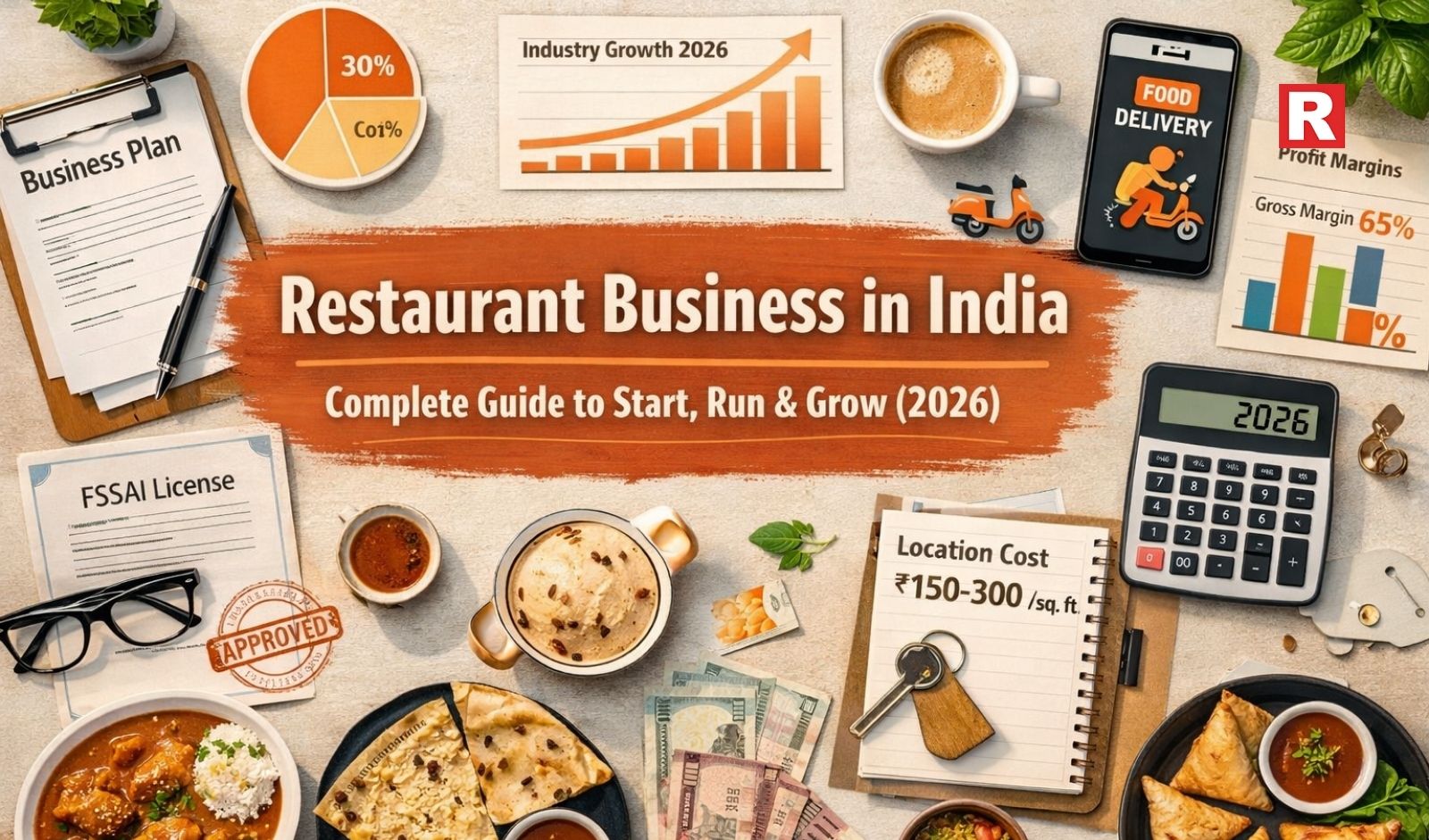
Restaurants in India are expanding at a rapid pace. The strong demand has been brought about by changing lifestyles, increased income, and online delivery. The potential is big, starting with cafes and cloud kitchens, to the fine dining areas. This is also a business that is hard to manage.
A large number of restaurants do not make it during the first years. It is not necessarily a bad idea. It is normally due to poor planning, poor cost control, or the absence of operating systems. Every step has to be planned to be successful. This is a guide on how to develop an efficient yet profitable restaurant.
Restaurant Industry Overview in India
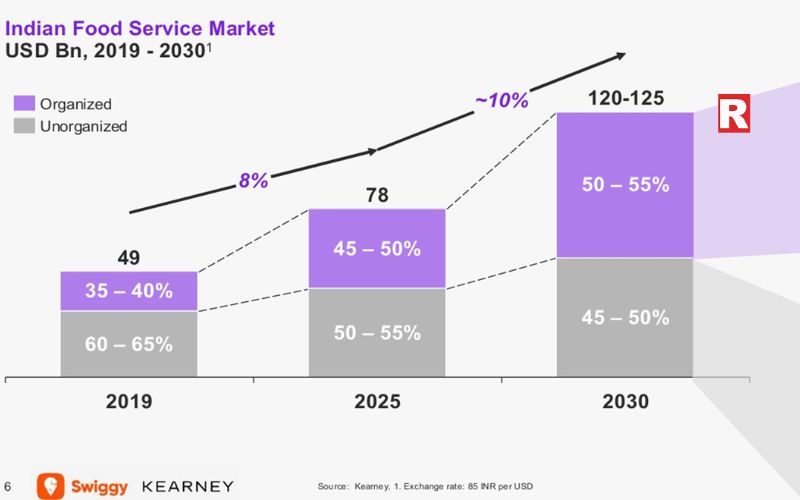
India boasts the biggest and fastest-growing service industry in the restaurant and food industry. The industry has reached a valuation of approximately 5.760 trillion of the service sector, and thus it is a key component in serving the entire services sector in the country. It is growing at a rate of 10-12 a year, with the main growth force being the consumption among the urban population and the change of their lifestyle. The increase in the population of urban people and the middle class is one of the factors that propel this growth. Dining out has ceased to be a special event. Office meals, weekend meals, and late-night orders have become habitual. The market structure remains very fragmented. Approximately 53% of the industry is unorganised, as local restaurants and small outlets make up the industry, whereas the organised portion of the industry has approximately a 47% share and is steadily increasing its share as a result of improved branding and supply chains. The organised segment is dominated by Quick Service Restaurants (QSRs), which form almost 36.8% of the market share and is ever-growing in metro cities as well as in tier-2 metro regions. The QSR market in India alone is projected to be worth up to $38.7 billion by 2027, and this has high potential in the long term.
Food delivery is regarded as a major source of revenue, which brings about almost 30.32 percent of overall restaurant revenues. Applications such as Zomato and Swiggy have changed the customer-restaurant interaction. There is high level of consumer spending also evident in the recent transaction data. In 2025, food-related online payments of over Rs 1.9 lakh crore were processed within six months, which is a dramatic rise in the number of dine-in and online orders. Altogether, the restaurant industry in India is headed in the direction of systematic expansion, digitalisation, and scalable models such as QSRs and cloud kitchens. As competition continues to rise, the demand is also high, and it is one of the most promising sectors in the Indian food business environment.
Types of Restaurant Business Models
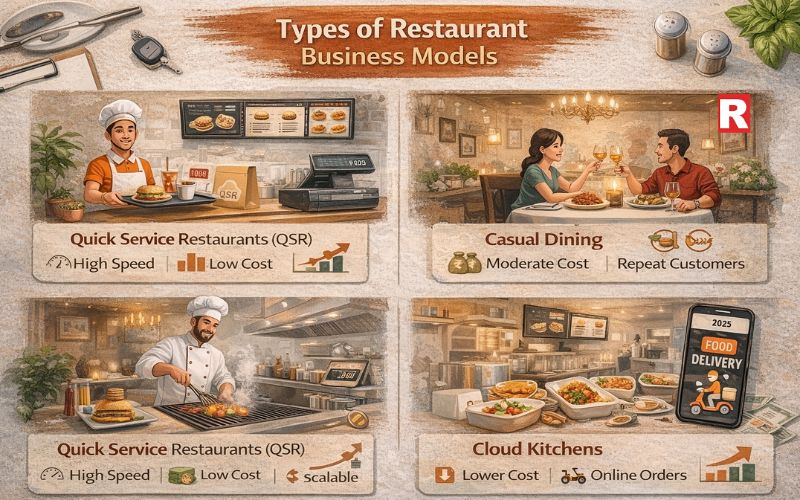
Choosing the right format is the first major decision. Each model has a different cost structure and growth potential.
Quick Service Restaurants (QSR): QSRs focus on speed and volume. The menu is limited. Orders are prepared quickly. These businesses depend on high daily sales. They are easier to scale because operations can be standardised.
Casual Dining Restaurants: Casual dining offers a balanced experience. Pricing is moderate. The menu is wider than QSRs. These restaurants depend on repeat customers and local demand.
Fine Dining Restaurants: Fine dining focuses on premium experience. Food quality, service, and ambience are critical. Investment is high. Skilled chefs and trained staff are required. Margins can be strong, but execution must be perfect.
Cloud Kitchens: Cloud kitchens operate without dine-in space. They serve only online orders. Costs are lower. This model is growing fast in urban markets.
How to Start a Restaurant Business in India
Starting a restaurant requires a structured approach. Skipping steps can lead to losses later.
Market Research: Understand your target customer. Study competitors in your area. Identify gaps in cuisine, pricing, or service.
Define Your Concept: Your concept should be clear. Decide cuisine, price range, and experience. It must be practical, not just creative.
Create a Business Plan: Plan your investment, expected revenue, and operating costs. A strong plan helps in decision-making and funding.
Choose the Right Location: Location affects sales directly. Look for good footfall, easy access, and the right customer base. Rent should ideally be within 8–12% of monthly revenue.
Plan Your Menu: Keep the menu focused. Avoid too many items. A smaller menu improves kitchen efficiency and reduces cost.
Cost of Starting a Restaurant in India
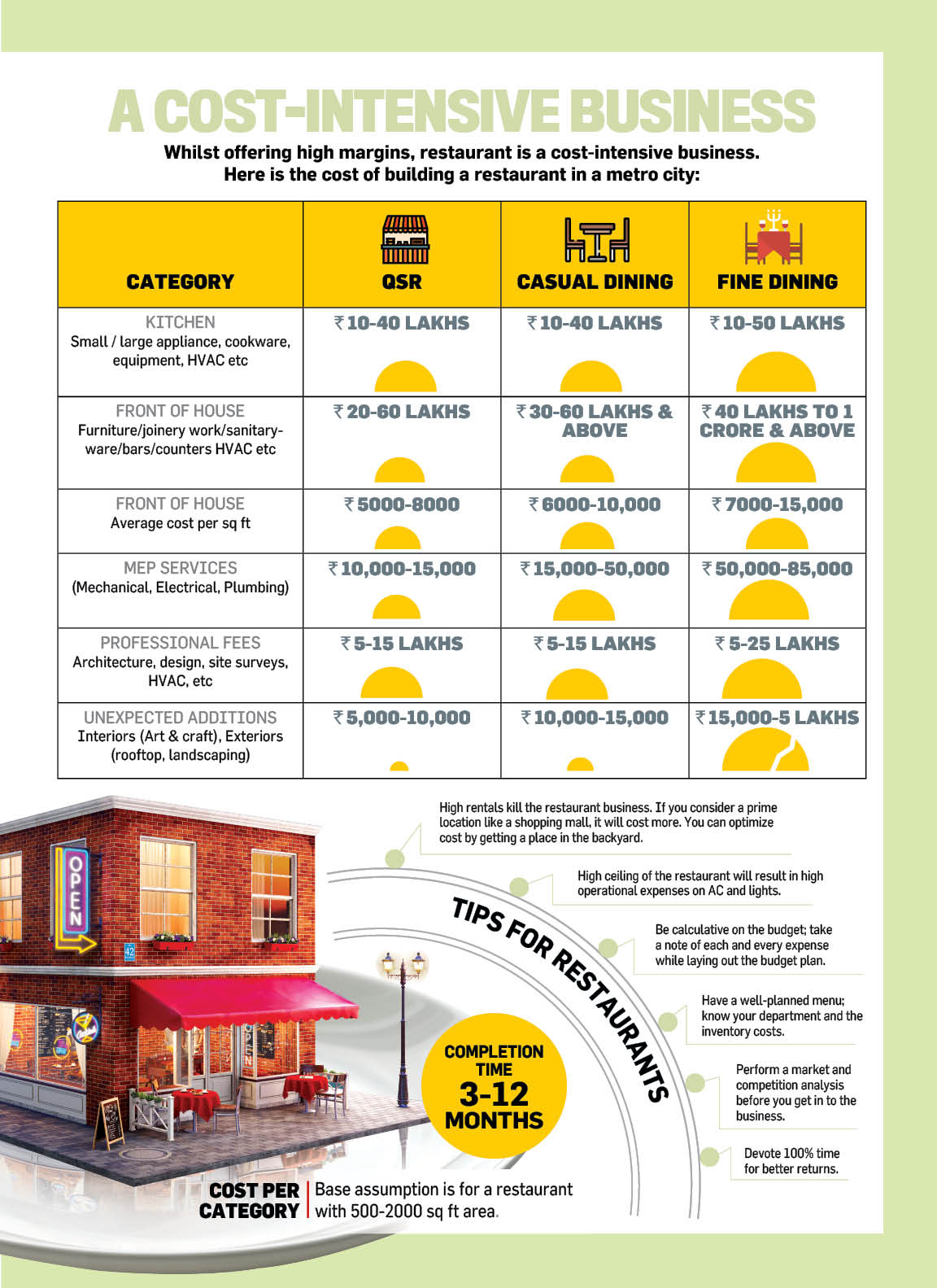
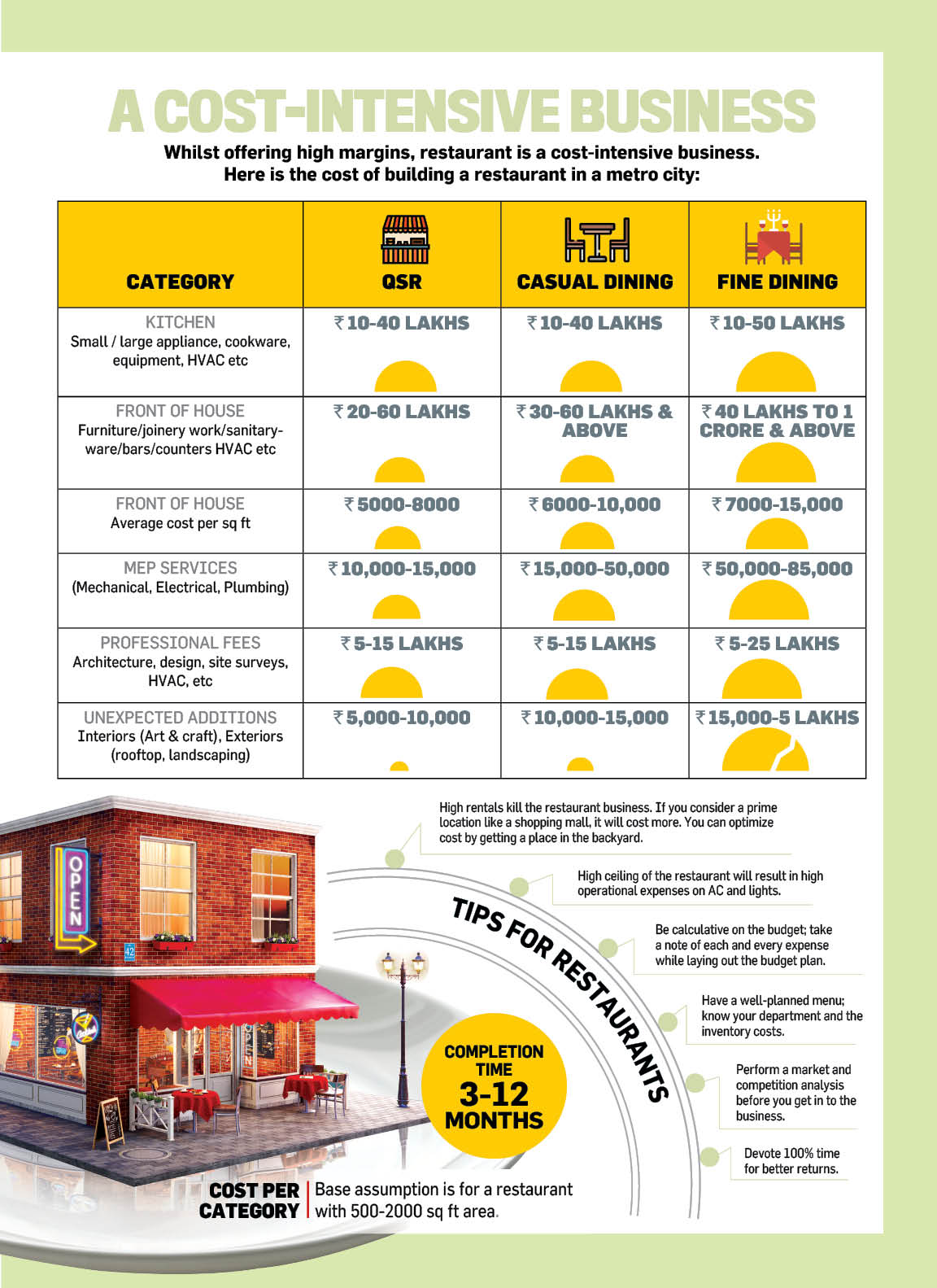
Establishing a restaurant in India will require financial deliberation. The prices may differ greatly based on the format, size, and city. Industry estimates put the opening of small to mid-sized restaurants to be around 15 lakh to 1.5 crore or above, based on the concept and location. The investment is comparatively less in the case of smaller formats. A cafe or QSR will take an average cost of 10-25 lakh, whereas a larger casual dining or fine dining restaurant may require substantially more because of space, design and staffing requirements.
Estimated Investment by Format
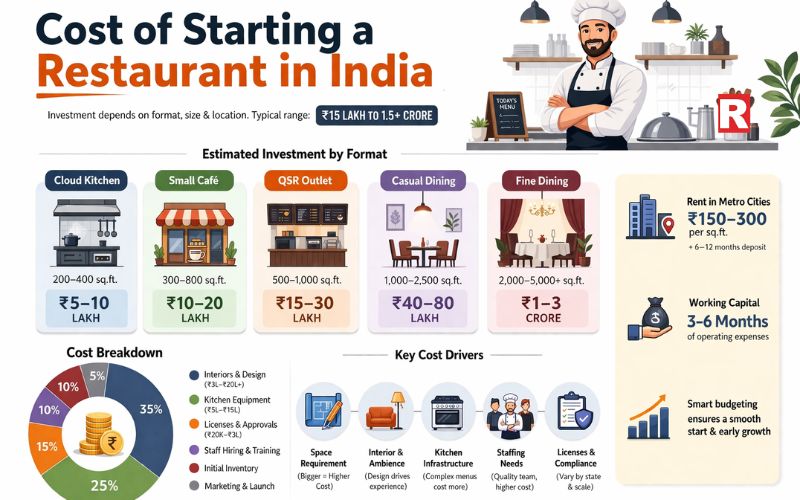
The cost of opening a restaurant in India varies widely because each format requires a different level of space, infrastructure, interiors, and operations. A small café or cloud kitchen can operate with limited setup, while a fine dining restaurant needs a much larger investment due to scale and experience. One of the biggest cost drivers is real estate. In metro cities, commercial rents can range between Rs 150 and Rs 300 per sq. ft., and landlords often ask for 6–12 months’ security deposit upfront. Larger formats like casual and fine dining require more seating space, which increases rent significantly.
Key Factors
Space Requirement: A cloud kitchen may need only 200–400 sq. ft., while a fine dining restaurant can require 2,000–5,000 sq. ft. or more. More space directly increases rent and setup cost.
Interior and Ambience: Cafés and QSRs use simple designs with basic furniture. Fine dining focuses on premium interiors, lighting, décor, and guest experience, which can cost Rs 2,000–Rs 5,000 per sq. ft. or higher.
Kitchen Infrastructure: A QSR or cloud kitchen needs a compact, efficient kitchen. Fine dining requires multiple cooking stations, specialised equipment, and larger storage, increasing costs.
Staffing Needs: Smaller formats need fewer staff. Fine dining requires chefs, service teams, supervisors, and managers, increasing salary expenses.
Licensing and Compliance: Larger restaurants often need more approvals, especially if they serve alcohol, adding to the cost.
Cost Breakdown by Restaurant Format
Format | Space Required | Interior Cost Level | Kitchen Complexity | Total Investment |
|---|
Cloud Kitchen | 200–400 sq. ft. | Low | Basic | Rs 5–10 lakh |
Small Café | 300–800 sq. ft. | Moderate | Simple | Rs 10–20 lakh |
QSR Outlet | 500–1,000 sq. ft. | Moderate | Efficient setup | Rs 15–30 lakh |
Casual Dining | 1,000–2,500 sq. ft. | High | Medium to high | Rs 40–80 lakh |
Fine Dining | 2,000–5,000+ sq. ft. | Premium | Complex | Rs 1–3 crore |
Cost Breakdown
A restaurant budget is usually divided across major setup areas:
- Interiors and design: Rs 3–10 lakh for casual formats, and Rs 20 lakh or more for premium spaces
- Kitchen equipment: Rs 5–15 lakh depending on menu complexity
- Licenses and approvals: Rs 20,000 to Rs 3 lakh based on scale and state requirements
- Staff hiring and training: Initial payroll and onboarding costs
- Initial inventory: Raw materials and supplies for opening weeks
- Marketing and launch: Branding, promotions, and digital presence
Working capital is essential besides set up costs. The majority of specialists suggest having money to sustain operations, which should be at least 3-6 months since the initial income is not very stable. An effective budget will make operations run smoothly and hence less likelihood of financial strains in the early phases leading to one of the major problems in restaurants in their first year.
Read more: How to Get a GST Certificate for Your Restaurant Business in India
The Cost of Opening a Restaurant in Metro Cities in India
Cost Considerations Across Metro Cities
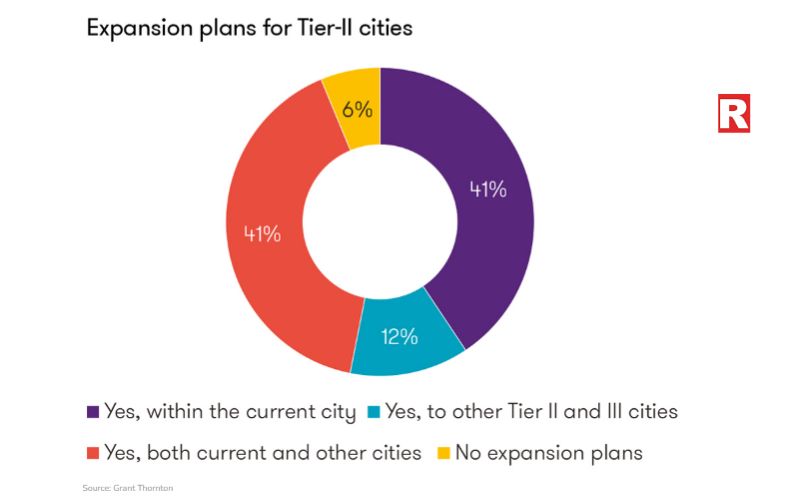
The cost and strategy of opening a restaurant in India also depend heavily on the city tier. Each tier has different customer behaviour, rental trends, and operational challenges. Choosing the right city type is as important as choosing the restaurant format.
Tier 1 Cities (Metro Cities)
Examples include cities like Delhi, Mumbai, and Bengaluru. These cities have the highest demand but also the highest costs.
What to keep in mind:
- High rental costs: Rs 150–Rs 300 per sq. ft. or more in prime areas
- Premium interiors expected: Customers value ambience and experience
- Strong competition: Presence of national and global brands
- High online demand: Delivery platforms contribute a large share of revenue
- Higher operating costs: Staff salaries and compliance costs are higher
Best suited for: QSR chains, fine dining, premium cafés, and scalable brands
Tier 2 Cities (Emerging Urban Markets)
Examples include Jaipur, Lucknow, and Chandigarh. These cities are growing rapidly with rising disposable income.
What to keep in mind:
- Moderate rent: Rs 60–Rs 150 per sq. ft. depending on location
- Value-driven customers: Pricing must be balanced with quality
- Growing dining culture: Increasing demand for cafés and casual dining
- Lower competition than metros: Easier market entry
- Brand awareness matters: Known brands perform well
Best suited for: Casual dining, cafés, family restaurants, and mid-range QSRs
Tier 3 Cities (Small Cities and Towns)
Examples include Gwalior, Jalandhar, and Udaipur. These markets are smaller but have untapped potential.
What to keep in mind:
- Low rental cost: Rs 20–Rs 80 per sq. ft.
- Price-sensitive customers: Affordable menus work better
- Limited exposure to premium dining: Simpler concepts perform well
- Lower competition: Opportunity for first-mover advantage
- Dependence on local taste: Menu must match regional preferences
Best suited for: Budget cafés, local cuisine restaurants, and small QSR outlets
Comparison Table: Tier-Based Business Factors
Factor | Tier 1 Cities | Tier 2 Cities | Tier 3 Cities |
|---|
Rent (per sq. ft.) | Rs 150–Rs 300+ | Rs 60–Rs 150 | Rs 20–Rs 80 |
Customer Spending | High | Moderate | Low to moderate |
Competition | Very high | Moderate | Low |
Setup Cost | High | Medium | Low |
Growth Potential | High but competitive | High and expanding | Untapped potential |
How to Obtain Funding for Your Restaurant Business
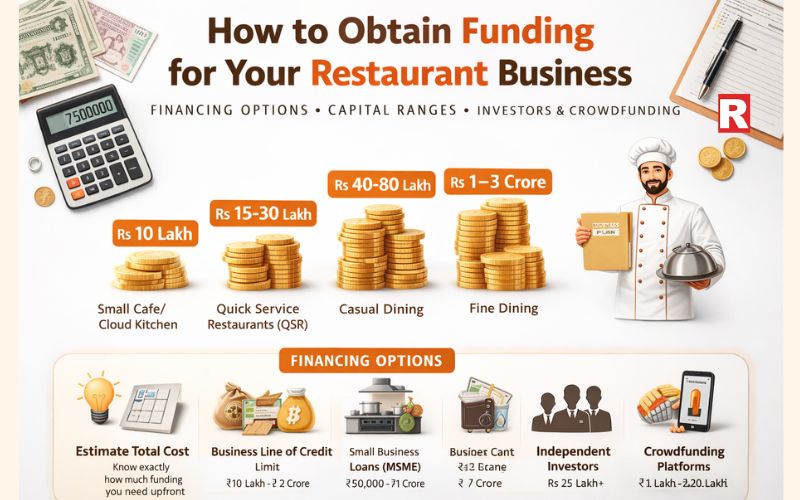
Securing finance is among the greatest processes when opening up a restaurant. Depending on the size of the business, the starting capital invested can be as small as 10 lakh in a small cafe or cloud kitchen, up to 1-3 crore in a full-scale fine dining restaurant. External funding would be needed to make the business plan a reality since most entrepreneurs do not have this capital readily available. It is necessary to estimate the total cost of your startup before approaching any lender or investor. This must encompass the license, kitchen equipment, floors and fittings, staff salaries, and start-up inventory. A proper financial projection can assist in knowing how much funding you need to raise and increase your chances of getting approved.
There are several funding options available:
Commercial loans: These are traditional loans offered by banks. They usually come with interest rates between 8% and 14% annually and allow access to higher capital, often ranging from Rs 10 lakh to Rs 2 crore or more. However, banks require strong credit history and collateral.
Business Line of Credit: This works like a credit card for businesses. Owners get a fixed credit limit, typically between Rs 2 lakh and Rs 50 lakh, and interest is charged only on the amount used. It is useful for managing short-term expenses such as inventory and operational costs.
Small Business Loans (MSME Loans in India): Government-backed schemes under MSME support provide loans with easier eligibility. These can range from Rs 50,000 to Rs 1 crore, depending on the business size. Approval may take time, but interest rates are relatively controlled.
Independent Investors: Angel investors or private partners may invest Rs 25 lakh to several crores in exchange for equity. This is common for scalable concepts like QSR chains or cloud kitchens.
Crowdfunding Platforms: Platforms such as Kickstarter or similar models allow entrepreneurs to raise smaller amounts, usually Rs 1 lakh to Rs 20 lakh, from multiple contributors. This works well for unique or community-driven concepts.
Choosing the right funding mix depends on the scale of the restaurant, risk appetite, and long-term business goals. Proper financial planning ensures smoother operations during the early stages when revenue is still stabilising.
Licenses Required for Restaurant Business in India
The legal approvals are an important component of establishing a restaurant in India. The industry is very controlled, and one can jeopardize his/her life by operating without the relevant licenses and face fines, closure or even prosecution. A restaurant needs to ensure that it obtains approvals of various authorities before it begins its operation at the central, state, and local levels.
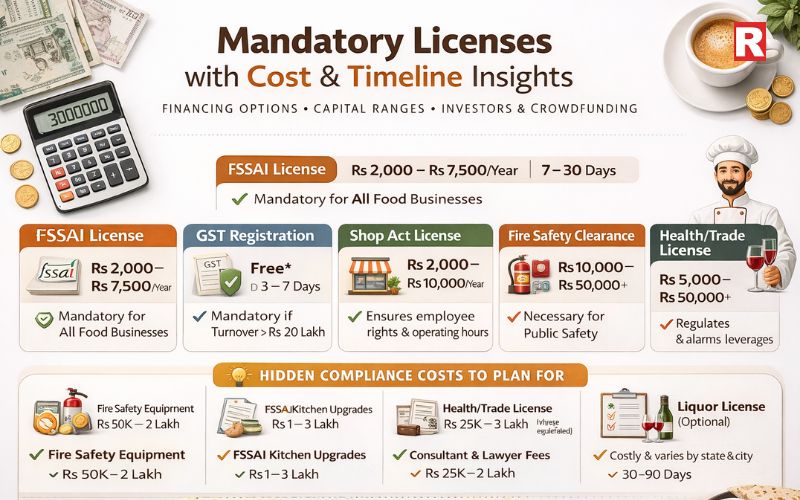
Mandatory Licenses with Cost & Timeline Insights
1. Food Safety and Standards Authority of India (FSSAI License): This is compulsory for all food businesses.
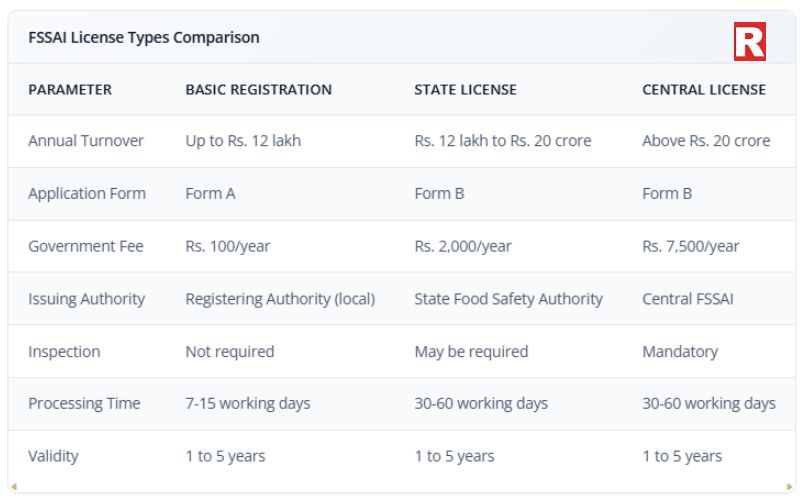
- Cost: Rs 2,000 to Rs 7,500 per year (based on turnover)
- Timeline: 7–30 days
- Required for: Food safety, hygiene, storage compliance
Restaurants with turnover above Rs 20 crore require a central license, while smaller ones need state or basic registration.
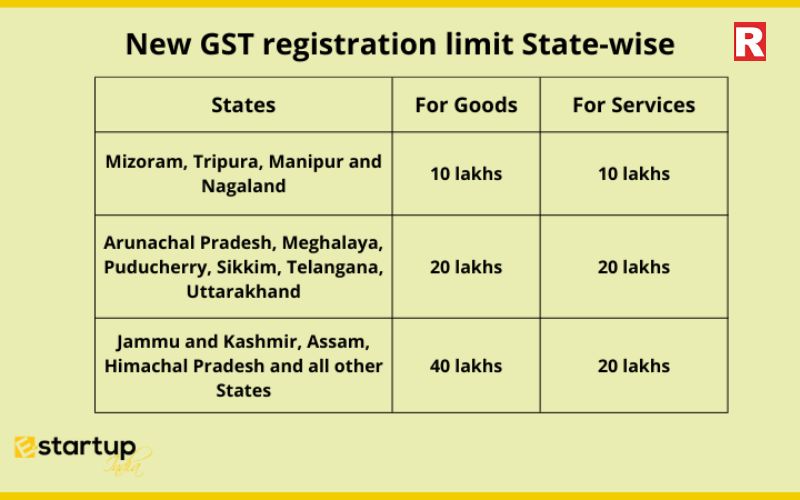
2. GST Registration: Mandatory if turnover exceeds Rs 20 lakh (Rs 10 lakh in special states).
- Cost: Free (if self-registered)
- Timeline: 3–7 days
- GST rate for restaurants: 5% (without input tax credit) for most outlets. 18% for restaurants inside hotels with room tariffs above Rs 7,500
3. Shop and Establishment License: Regulates employee working conditions and business operations.
- Cost: Rs 2,000–Rs 10,000 annually (varies by state)
- Timeline: 5–10 days. Must be obtained within 30 days of starting operations
4. Fire Safety Clearance (Fire NOC): Mandatory for public safety.
- Cost: Rs 10,000–Rs 50,000 (including compliance setup)
- Timeline: 15–30 days. Requires fire exits, extinguishers, alarms, and evacuation plans
5. Health/Trade License (Municipal Authority): Ensures sanitation and public safety standards.
- Cost: Rs 5,000–Rs 50,000 annually
- Timeline: 7–15 days
6. Liquor License (If Applicable): Issued by state excise departments.
- Cost: Rs 5 lakh to Rs 1 crore+ depending on state and location
- Timeline: 30–90 days
This is one of the biggest cost barriers in the restaurant business.
Hidden Compliance Costs Most Founders Miss
Beyond license fees, there are setup compliance costs:
- Fire safety equipment: Rs 50,000–Rs 2 lakh
- Kitchen hygiene upgrades (FSSAI standards): Rs 1–3 lakh
- Legal and consultant fees: Rs 25,000–Rs 2 lakh
These are often not included in initial budgets but are essential for approval.
Practical Compliance Tips (High-Value Insights)
- Apply for licenses in parallel to reduce delays
- Choose location carefully — some areas have stricter zoning rules
- Keep digital and physical copies of all licenses at the outlet
- Renew licenses on time to avoid penalties (FSSAI penalties can go up to Rs 5 lakh)
- Plan licenses before interiors — layout changes may be required for approvals
Ensuring all licenses are in place before launch helps avoid disruptions and allows the restaurant to operate smoothly from day one.
Kitchen Setup and Operations
The kitchen is the backbone of any restaurant. A poorly planned kitchen can slow down service, increase labour costs, and affect food quality. Industry reports highlight that inefficient kitchen layouts are one of the main reasons behind operational delays and order errors in busy restaurants. A well-designed kitchen improves speed, consistency, and staff productivity. Kitchen design should always be aligned with the menu and service style. For example, a QSR requires a fast, assembly-line setup, while a fine dining restaurant needs separate stations for preparation and plating. Experts suggest that workflow planning is critical to avoid cross-movement of staff, which can lead to confusion and hygiene risks.
A good kitchen should have:
Clear workflow between stations: Cooking, preparation, and plating areas should be arranged in a logical sequence. This reduces movement and saves time during peak hours.
Proper storage and refrigeration: Adequate storage space helps maintain ingredient quality and reduces wastage. Refrigeration units must be placed strategically for easy access.
Space for preparation and cooking: Sufficient workspace allows chefs to work efficiently without overcrowding. Lack of space often leads to slower service and mistakes.
Strong hygiene systems: Cleanliness is essential for food safety. Kitchens must follow strict hygiene practices, including proper waste disposal, sanitation zones, and regular cleaning schedules.
According to food safety guidelines, maintaining hygiene and proper kitchen structure is essential to meet regulatory standards and avoid contamination risks. A well-planned kitchen not only improves daily operations but also helps control costs and maintain consistent food quality, which is key to long-term success.
Know more: How Indian Restaurants Can Use Food Science to Create Irresistible Dishes
Five Ways To Boost Your Restaurant's Lunch Rush
Menu Engineering and Cost Control
The menu is a major factor in the operation and income earning of a restaurant. It is not just a list of dishes. It directly influences kitchen labor, inventory control, and profitability. Poor menu planning is usually cited by industry pundits as one of the primary causes of restaurants incurring high expenses and service inconsistency. An organised menu is essential in ensuring that there is balance in demand and prices, as well as operational efficiency. One of the areas in which menu engineering is broadly applicable is in the restaurant industry as a means to enhance profitability. It is oriented towards performance, cost, and popularity analysis of dishes. Hotels and restaurants that revise their menus regularly have a better chance of managing their costs and improving their margins.
Key factors include:
Food cost percentage: This refers to the cost of ingredients compared to the selling price. Most restaurants aim to keep this between 28% and 35%, depending on the concept and cuisine. (lightspeedhq.com)
Preparation time: Dishes that take too long can slow down service, especially during peak hours. Faster preparation improves table turnover and customer satisfaction.
Ingredient usage: Using common ingredients across multiple dishes helps reduce wastage and simplifies inventory management. This also improves purchasing efficiency.
Customer demand: Popular dishes should be easy to prepare and deliver consistent quality. Low-demand items increase inventory costs and should be reviewed regularly.
Maintaining the right food cost is critical for profitability. Even small changes in ingredient pricing or portion size can impact margins significantly. A carefully designed menu ensures smoother operations, better cost control, and a stronger overall business performance.
Also check: How to Train Your Staff to Spot Bad Seafood in Five Easy Steps
How Restaurants Redesign Their Menus for the Summer Season
5 Ways to Optimize Digital Menus for Enhanced Profitability
Hiring and Training Staff
What you need:
- a skilled head chef
- kitchen staff for different roles
- service staff for customer interaction
- a manager to handle daily operations
Profit Margins in Restaurant Business
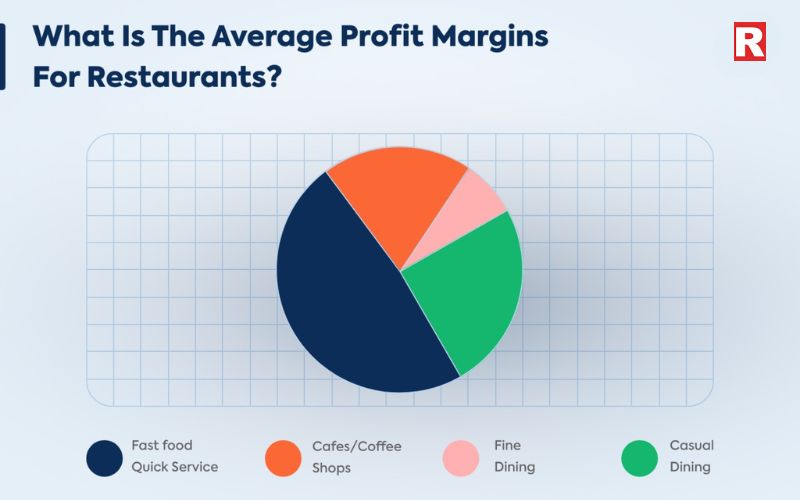
Understanding margins is critical before venturing into a restaurant. Most of the first-time owners simply consider sales only, yet profitability is determined by the management of costs. The statistics used in the industry show that restaurants are generally run at low margins, and any slight increase in costs can drive down the total profits. The restaurant business margins are determined by several factors, such as rent, labor, food costs, and pricing strategy. The cost control has become even more significant in India, where the cost of rent and increasing prices of ingredients have become quite significant in metro cities.
Typical Margin Benchmarks in the Restaurant Business
Typical benchmarks include:
Gross margin: 60–70%. This is derived after deducting direct costs like food and sometimes labour from total sales. Since food and labour together often account for 55–65% of revenue, the remaining portion forms the gross margin.
Food cost: 28–35%. This is one of the most widely accepted industry standards. Multiple reports confirm that restaurants typically spend 28% to 35% of their revenue on ingredients, depending on cuisine and format.
Net profit: 6–12%. Net margins in the restaurant industry are generally low. Most restaurants operate between 3% and 10%, while well-managed businesses may reach 8–12% or slightly higher.
These numbers vary depending on the business model. For example:
Quick service restaurants (QSRs) often achieve higher margins (6–10%) due to faster turnover and lower labour costs.
Casual and fine dining formats usually operate at lower margins (3–6%) because of higher staffing and operational complexity.
The key takeaway is that the restaurant business is high-volume but low-margin. Even small changes in food cost, rent, or labour can significantly impact profits. This is why successful restaurants focus heavily on cost control, menu pricing, and operational efficiency. Maintaining these margins requires strong cost control and consistent sales. Restaurants that regularly track expenses and adjust pricing are more likely to stay profitable in the long run.
Marketing and Customer Growth
Marketing is needed to attract customers, especially during the launch phase.
Effective strategies include:
- social media promotion
- influencer collaborations
- local SEO and Google listings
- partnerships with delivery platforms
However, the most powerful driver is customer experience. Good food and service lead to repeat visits and word-of-mouth growth.
Check more: 10 Restaurant Marketing Ideas That Are Wasting Your Money
How to Make a Failing Restaurant Successful Again
Challenges in the Restaurant Business
Operating a restaurant in India is associated with a number of operational and financial issues. Although the industry is expanding, not all businesses can survive after the initial couple of years. It has been reported that many restaurants fail because of poor cost management, poor planning, and unstable demand by the customers. The business has become more competitive due to the increasing costs as well as the evolving customer behaviour. Owners should watch their costs and adjust to the changes in the market very fast.
Common challenges include:
Key Challenges and Their Impact
Challenge | Impact on Business |
|---|
High rental costs | Reduces overall profit margins |
Staff turnover | Increases hiring and training expenses |
Inconsistent demand | Leads to unstable revenue and cash flow issues |
Rising food prices | Affects food cost and pricing strategy |
Strong competition | Makes customer acquisition and retention harder |
Many restaurants fail not because of lack of demand, but because these issues are not managed early. Strong planning, cost control, and consistent service quality are essential to handle these challenges effectively.
The Future Ahead
The industry is evolving quickly. Key trends include:
- growth of cloud kitchens
- increased online ordering
- focus on healthy and sustainable food
- use of technology in operations
- data-driven decision making
Restaurants in India remain a good growth opportunity due to increasing urban demand, growth in disposable income, and growing food delivery platforms. According to industry estimates, the industry is anticipated to have high growth in the coming few years as a result of changing consumer trends and rising expenditure on dining and convenience. Simultaneously, the management of a restaurant is a matter of planning and strict implementation. The expenses associated with rent, staffing, and raw materials have risen over the past few years, straining the profit margins. It has been reported that the increasing cost of inputs and stiff competition are major issues that restaurant proprietors face in India. The key in this industry is to establish a good foundation. It involves the selection of the correct business model, the selection of the appropriate location, the design of an efficient kitchen, and strict control of the food and operational expenses. Restaurants with a strategy of consistency, quality, and customer experience would tend to have repeat demand and stability in the long run. The industry is also being influenced by technology to a larger extent. Ordering online, electronic payments and decision-making based on data is becoming the norm across formats. The appearance of such websites as Zomato and Swiggy has helped restaurants to attract more people yet has contributed to the rise of competition. The restaurant industry is not based on the food serving process only. This is cost management, the provision of a regular standard of quality, and adjusting to market trends. Competitors in a business environment are in a better position to succeed when the entrepreneurs tackle it with a clear strategy and well-developed operational systems.