
How to Make a Failing Restaurant Successful Again
For a restaurateur, whether in India or anywhere else in the world, seeing the gradual decline of their restaurant business is the most depressing experience they can have. A restaurant is more than simply a business for all the restaurant members and staff. It is a community center, a creative outlet, and a project to show their passion.

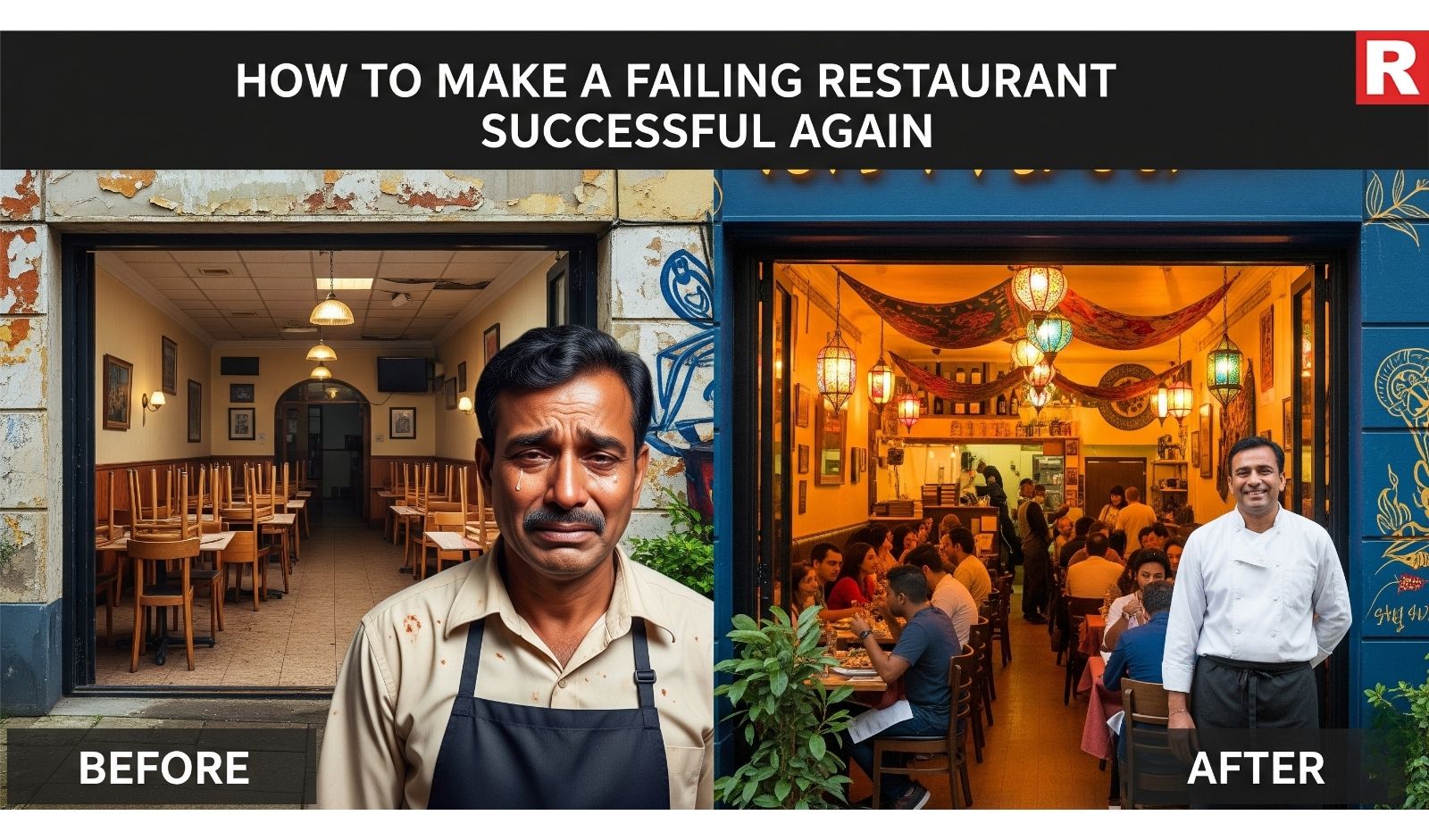
For a restaurateur, whether in India or anywhere else in the world, seeing the gradual decline of their restaurant business is the most depressing experience they can have. A restaurant is more than simply a business for all the restaurant members and staff. It is a community center, a creative outlet, and a project to show their passion. In such a situation, it feels tempting to give up your whole business, as your sales stop, the reviews become negative, and the restaurant seems empty day by day. However, failure is nothing more than an escape rather than a destination. It is possible to turn the tables around with a lot of hard work, a smart approach, and a healthy dose of patience. And, in this article, we are doing nothing but help you with achieving just that.
Therefore, the essential steps of a restaurant revival will be covered in detail in this article, from identifying the underlying cause and setting priorities to financial diagnosis, menu redesign, team rebuilding, and re-engaging with the community. We'll go over practical strategies that have worked well in the Indian market to assist you in turning your failing business into a profitable success.
Read more: The Boom of Quick Dining in Modern Cities
The Financial Autopsy: Finding the Root Cause
Understanding the root cause of any problem is necessary before you can fix it. The financial problems of a failing restaurant frequently show themselves as problems with money, but this is rarely one of the variables at play. It is a sign of more serious problems with the product, marketing, or operations.
- Examine your P&L (profit and loss) statement: Don't just focus on revenue. Is your food cost % excessively high, suggesting inadequate portion control or ineffective inventory management? Is low productivity or overstaffing causing labor costs to eat into your profits? Are you spending too much money on useless marketing? Examining your P&L in detail will show you where the money is going missing.
- Review Your Cash Flow Statement: Examine your cash flow statement to see how money is actually moving. Do you frequently find it difficult to make on-time rent, salary, or supplier payments? In locations where severe weather affects foot traffic, is there a seasonal decline that you're unprepared for? Survival depends on an understanding of the cash flow, not only profitability.
- Conduct a Break-Even Analysis: Do a break-even analysis by figuring out how much money you must make each day or each month to pay for all of your fixed and variable expenses. This will provide you with a specific, non-negotiable goal and assist you in determining the amount of revenue growth or cost reduction that is required to turn a profit.
- In-depth Analysis of Customer Feedback: This kind of data indicates quantitative problems. Examine comment cards, online reviews (Zomato, Swiggy, Google Reviews), and direct conversations with customers. Are there frequent complaints regarding the atmosphere, food quality, service, or cost? When it comes to pinpointing problem locations, these insights are invaluable.
- Analysis of Competitors: What distinguishes successful rivals? Examine their food, prices, atmosphere, advertising, and customer support. This might show you where your restaurant is falling behind or losing out on chances.
Know more: Top Mood-Boosting Foods That Make You Happy
Making a List of Identified Problems
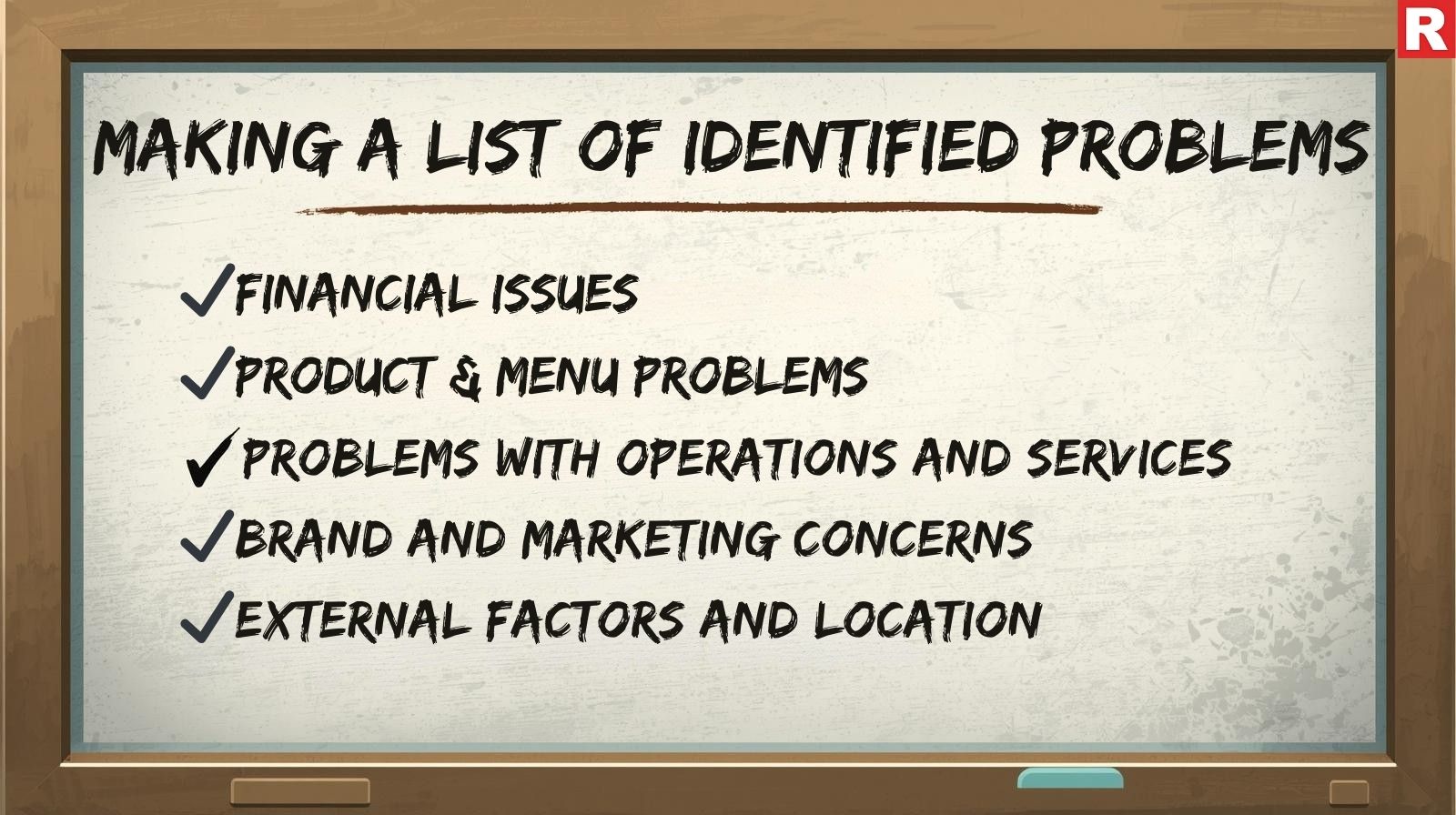
After the evaluation stage is finished, it's time to compile all of the results into a complete list of issues. Be truthful and neutral, even if the facts make you uncomfortable.
Financial Issues:
- High percentage of food costs (e.g., certain foods producing losses).
- Excessive labor expenses (such as having too many employees at off-peak hours).
- Small check size on average.
- Excessive costs for utilities.
- Ineffective cash flow management, such as having too much money invested in inventories.
Product & Menu Problems:
- A menu that is outdated or unattractive.
- Inconsistent taste or quality of the dish.
- Dishes that don't suit the tastes of the current customers.
- High food waste as a result of big servings or unpopular goods.
- Lacking in USP (unique selling proposition).
Problems with Operations and Services:
- Long wait times or slow service.
- Employees who lack motivation or training.
- Inadequate customer service, such as impolite employees who don't pay attention.
- A lack of cleanliness or hygiene.
- Ineffective procedures in the kitchen.
Brand and Marketing Concerns:
- Bad reputation on the internet (bad reviews).
- Inadequate marketing or lack of awareness.
- Outdated décor or brand image.
- Inconsistent communication.
- No customer retention plan or loyalty program.
External factors and location:
- Declining foot traffic in the neighborhood.
- Nearby are new, fiercely competitive competitors.
- Inability to adjust to changes in the local market.
Check out: McDonalds starts all-day breakfast in Australia
Brewed to Perfection: How Automation is Shaping India’s Café Culture
Giving Priority to Urgent Problems: The Triage Approach
It's simple to become overwhelmed when faced with a lengthy list of issues. Like emergency care, a triage approach is essential. Prioritize the most important problems first, those that pose an immediate threat to closure or have a significant negative influence on the customer experience.
- Financial Leaks: Stop the bleeding first if you're losing money. This could indicate:
- Drastically cutting waste: Strict portion control and improved inventory management for extremely perishable foods are two ways to reduce waste drastically.
- Negotiating with suppliers: Asking for more time or longer payment terms for a temporary period is one way to deal with suppliers.
- Tightening labor schedules: Reducing hours during known slowdown periods is one way to tighten work schedules.
- Temporary pricing changes: To increase cash flow right away for a select few high-demand, high-profit dishes.
- Critical Customer Service Failures: If unhygienic conditions, lengthy wait times, or unfriendly staff are driving away consumers, these issues need to be resolved right away.
- Immediate staff retraining: Staff should receive immediate retraining with an emphasis on speed and basic service manners.
- Deep cleaning: A complete renovation of the space.
- Correction and Apologies: Express genuine regret and promise to put things right with recently dissatisfied clients.
- Resolving Legal/Compliance concerns: In order to prevent penalties or closure, any unpaid licenses, health code violations, or tax concerns must be addressed immediately.
Assign tasks, establish strict dates, and draft a clear action plan for these pressing issues.
What's new: Online Food ordering Zomato Launches Zomato Gold In India
Rebuilding Your Staff
A restaurant's staff members are its greatest asset. Your reputation and customer experience will suffer if your staff lacks motivation or is not properly trained.
Invest in Training: You must invest in training. Your front-of-house employees should receive training on the menu, upselling strategies, and service standards (such as greeting, taking orders, and politely addressing complaints). Educate your back-of-house staff on efficiency, food safety, and innovative recipes.
Encourage a Positive Work Environment: A positive workplace culture lowers staff turnover, which is a significant cost for restaurants. Treat your employees with respect, provide performance-based rewards, and acknowledge their little accomplishments. A respected employee will instill a sense of value in your clients.
Lead with Vision: You need to be the main source of inspiration. Tell your team what you see for the restaurant's revival. Give them the impression that they are contributing to the solution rather than only watching. Encourage them and ask for their opinions.
Marketing for the Modern Age
In today's marketplace, a restaurant cannot thrive without a strong online presence, particularly in highly competitive urban areas.
- Learn to Play the Social Media Game: Facebook and Instagram are your new billboards. Make use of excellent images and videos of your food, staff, and atmosphere. To create a community, interact with your followers, hold competitions, and share behind-the-scenes photos. Don't simply talk about your progress; show it.
- Optimize Your Online Listings: Make sure your local listing pages on Swiggy, Zomato, Google My Business, and other platforms are up to date and correct. List your accurate opening hours, use high-quality images, and, most importantly, react professionally and immediately to all feedback, both positive and negative.
- Accept Digital Payments: UPI and other digital wallets are common in India. Make sure your payment mechanisms are easy to use and give them a variety of choices.
Read this: Why SC is concerned over the quality of Maggi noodles again?
Winning Back the Trust and Loyalty of The Customers
Customer loyalty is the foundation of a restaurant's success. You have lost that connection when you're failing.
- Listen to the Feedback & Respond: Pay attention to what customers have to say and act upon it by actively seeking both online and offline feedback from customers. Avoid taking offense. Make a free consulting report out of unfavorable reviews. Show that you're paying attention and acting by giving each review a thoughtful response. This transparency can restore confidence.
- Invest in the Customer Experience: Pay attention to the atmosphere, music, lighting, and cleanliness in addition to the cuisine. A nice lunch can become a wonderful experience in a cozy, well-kept setting.
- Start a Campaign for Relaunch: Don't make adjustments in a quiet way. Make an exciting announcement about them using a fresh brand identity. To highlight your improvements, throw a "relaunch party," invite regional food bloggers and influencers, and run exclusive promotions.
- Create a Loyalty Program: Give loyal consumers rewards. A straightforward loyalty program (such as a free dessert on your fifth visit, 10% off after you spend a specific amount, or point-based systems) promotes repeat business and demonstrates to customers that you appreciate their business.
A New Beginning
It's not easy to turn a failing restaurant around. It necessitates a critical examination of the past, a unique perspective for what lies ahead, and a resolute dedication to change. Rekindling your enthusiasm for hospitality, reestablishing contact with your clientele, and reestablishing an excellence-driven culture are more important than simply modifying your menu or marketing approach. These methods will help you turn a failing business into a successful, profitable, and well-liked part of the community, starting with a brutal financial diagnosis and ending with a full brand redesign. The happiness a restaurant delivers to its customers is ultimately what determines its success, not its furnishings or costs.
Mahak Sharma
Content Writer
Mahak Sharma is a passionate content writer with 2 years of experience crafting compelling content across various niches, tailoring her writing to suit different audiences and platforms. She is dedicated to producing engaging content for readers so that they can understand and enjoy the articles. Her strengths lie in crafting SEO-friendly, well-structured articles that drive visibility and engagement.



































































