How to Keep Track of Daily Restaurant Tasks
The complex routine of food preparation, customer service, inventory control, cleaning, and administrative tasks makes up a restaurant's daily cycle. Even the most enthusiastic and talented culinary crew can fall into chaos in the absence of a strong system for managing these daily duties, which can result in mistakes, inefficiencies, and ultimately a lowered level of customer satisfaction and profitability.

In the dynamic and challenging world of restaurants, the key to success is maintaining constant organization. The complex routine of food preparation, customer service, inventory control, cleaning, and administrative tasks makes up a restaurant's daily cycle. Even the most enthusiastic and talented culinary crew can fall into chaos in the absence of a strong system for managing these daily duties, which can result in mistakes, inefficiencies, and ultimately a lowered level of customer satisfaction and profitability.
This whole article is designed to provide you with a step-by-step guide to help manage daily restaurant tasks efficiently. We will take a look at the requirements and difficulties faced by restaurants, and to address these, we will investigate a range of approaches, from standard checklists to modern digital solutions. In addition to simplifying your everyday operations, putting in place an organized approach to task management will promote accountability, enhance teamwork, and create the groundwork for long-term success.
Read more: Your Guide to Influencer Marketing in Restaurants
The Importance of Tracking Daily Tasks
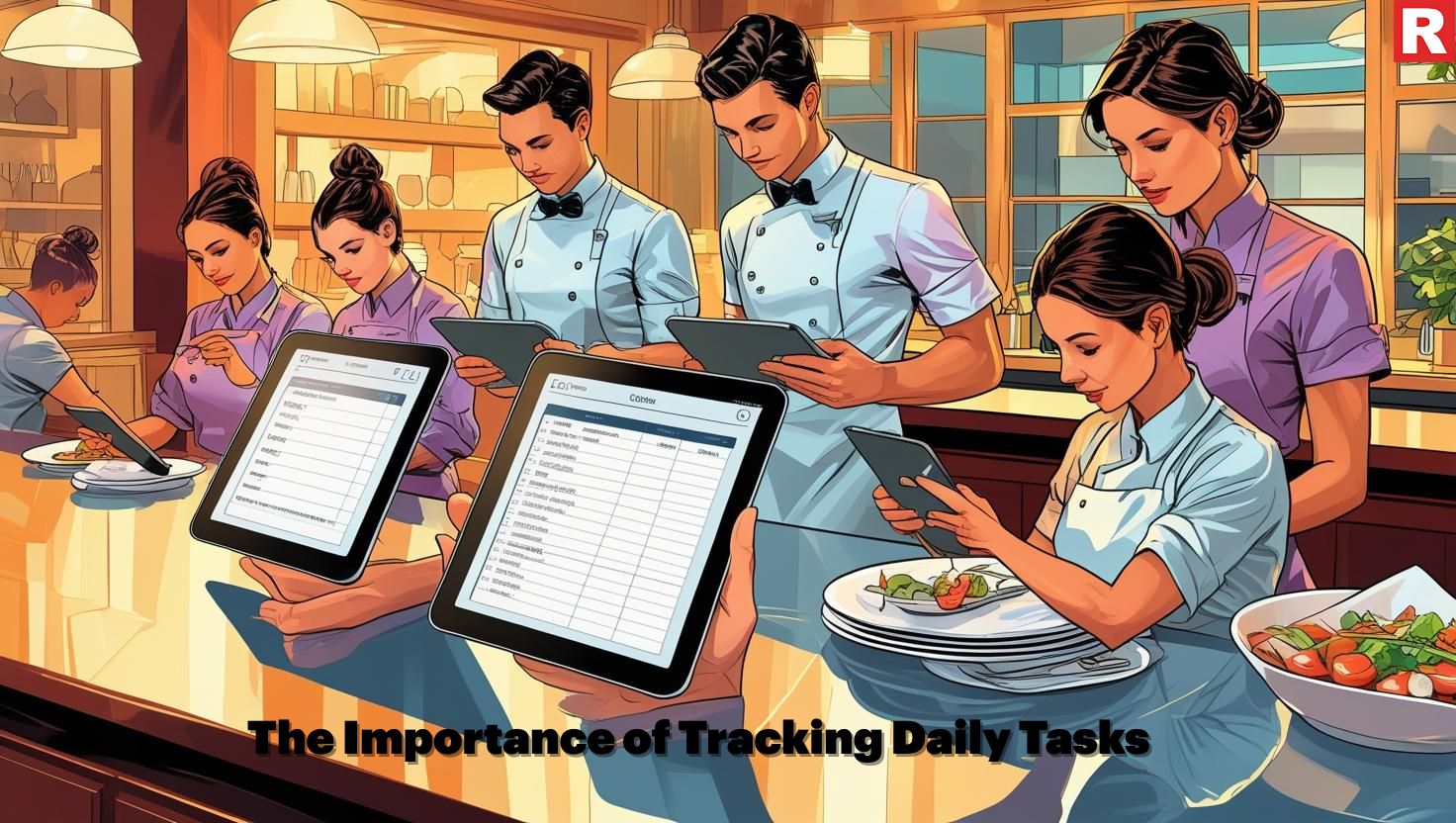
Before focusing on the "how," it is essential to fully understand the "why." Keeping meticulous records of regular restaurant tasks has several advantages:
- Increased Efficiency: Having a clear understanding of what must be done and when guarantees that tasks are finished on schedule and neatly, reducing obstacles and increasing output.
- Increased Consistency: Regular task lists make sure that important tasks are never missed, which results in consistently high standards for food quality, service, and hygiene.
- Enhanced Accountability: Staff members feel more accountable and take responsibility for their work when assignments are clearly assigned and have due dates.
- Better Communication: Tracking systems frequently facilitate communication across multiple teams and shifts, ensuring everyone is on the same page regarding accomplished work and continuing goals.
- Fewer Errors and Waste: You can limit errors, minimize food spoilage, and maximize resource usage by making sure that everyday duties like inventory checks and appropriate food storage are finished.
- Data-Driven Insights: Examining finished job logs on a regular basis can yield insightful information about operational challenges, areas for development, and your team's general effectiveness.
- Peace of Mind: In the cutthroat restaurant industry, a smoothly running business means less stress and the assurance that everyday tasks are being completed efficiently.
Check this: Marketing The Gen Z Way For Your Restaurant
Traditional Methods of Pen and Paper
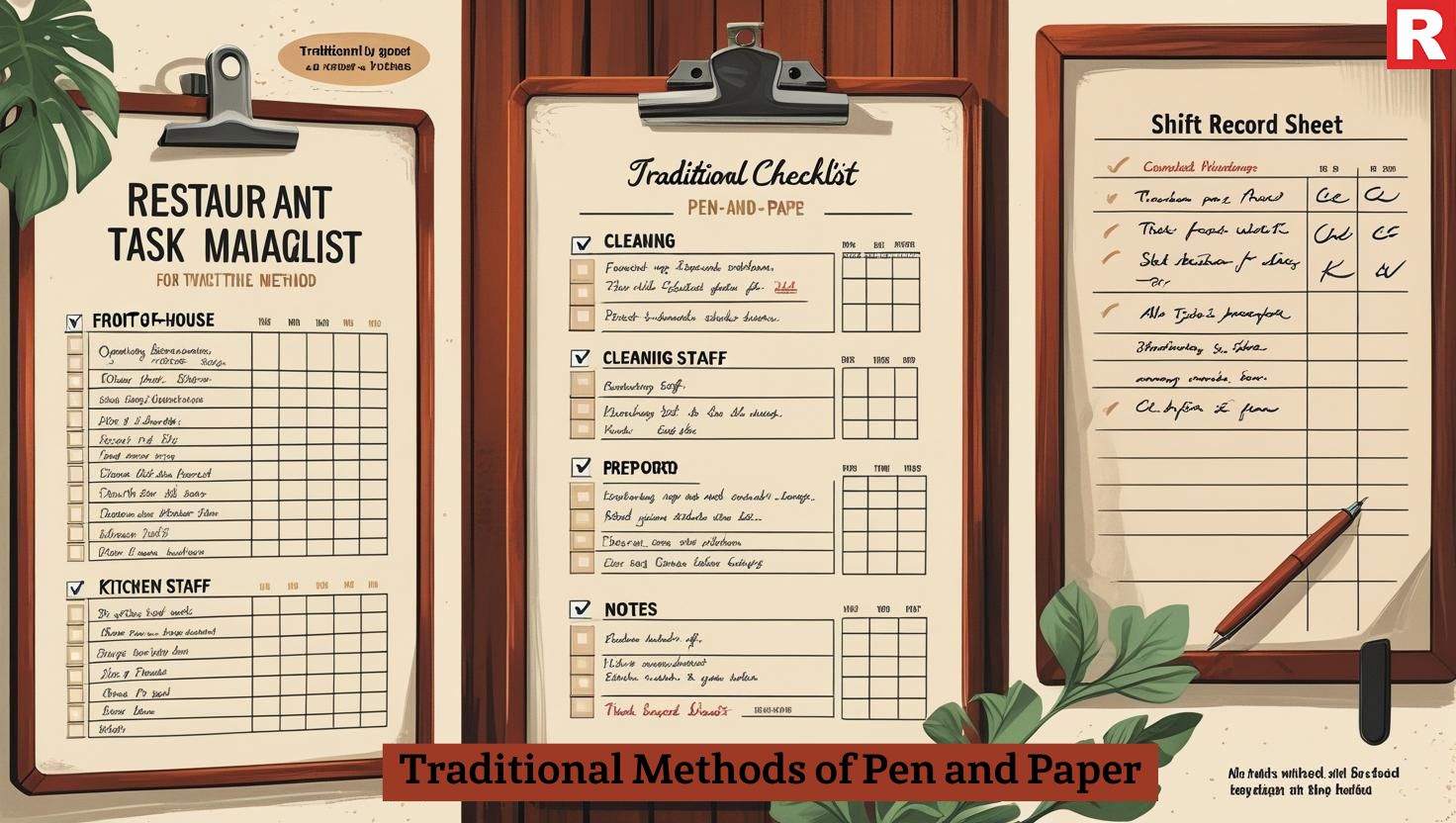
Traditional approaches are still useful for tracking daily restaurant tasks, especially for smaller or lesser-known businesses, even with the rise of digital alternatives.
Checklists: A straightforward, adaptable checklist is a very useful tool for keeping track of daily duties. Make separate checklists for the front of house (opening/closing tasks, table setup), cleaning personnel (floor sweeping, restroom checks), and the kitchen (prep work, cleaning). List every activity in detail, leaving room for a checkmark or initial when it is finished.
Whiteboards and Notice Boards: Visual task management tools can be created by carefully positioning whiteboards or notice boards in the staff areas and the kitchen. At the beginning of the day, team members can write down daily tasks and then mark them as finished or erased. This is a concise and convenient summary of the day's events.
Shift Records: Establish complete shift records in which employees mark finished work, problems they've encountered, and notes for the following shift. This guarantees a seamless transfer of duties and sustains continuous operation.
Best Practices for Traditional Methods:
- Don't Complicate: Create logs and checklists that are simple to use and comprehend. Stay clear of formats that are too complicated.
- Be Particular: Clearly outline every duty to prevent confusion. Use "wipe down all countertops," "sweep and mop the floor," etc., in place of "clean kitchen," for instance.
- Assign Responsibility: Clearly state on the whiteboard or checklist who is in charge of each task.
- Frequent Review: To make sure that activities are being finished completely and on schedule, managers should periodically review completed checklists and records.
Know more: Raising the Bar: How Restaurant Owners are Turning Trends into Triumphs
Digital Solutions for Efficiency
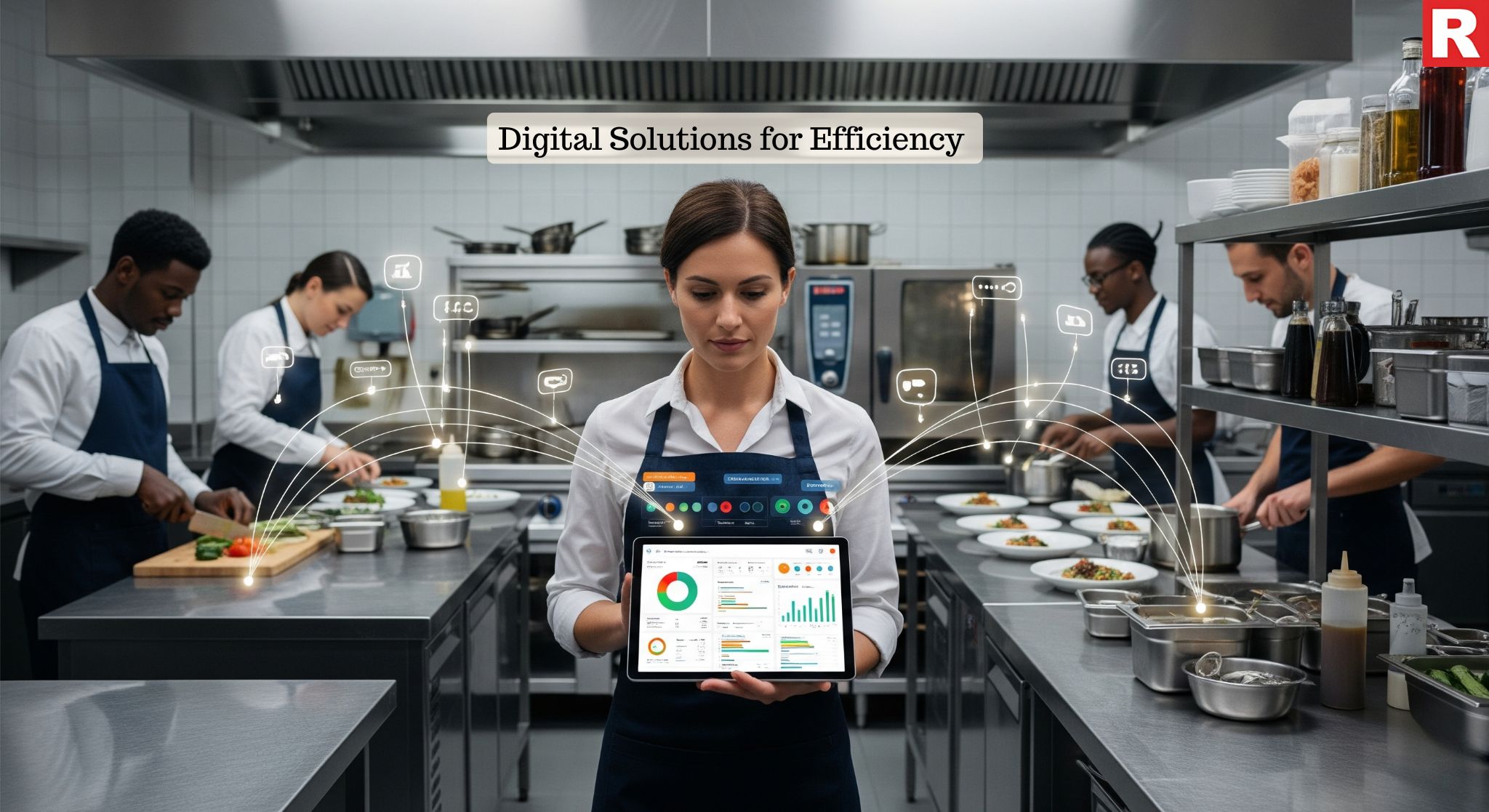
Digital task management systems for restaurants provide an efficient replacement or addition to traditional techniques for those seeking to improve efficiency and obtain more profound insights.
Restaurant Management Software: Task management functions are included in a lot of all-around restaurant management software packages. Creating recurring tasks, assigning them to particular teams or people, setting deadlines, monitoring progress in real time, and producing reports on task accomplishment are all frequently possible with these platforms.
Project Management Tools: Trello, Asana, and Monday.com are examples of general-purpose project management tools that may be tailored to monitor daily work at restaurants. For various sections of the restaurant, you can make boards or projects and assign tasks as cards with due dates and responsible parties.
Dedicated Task Management Apps: A variety of specialized task management applications, such as Google Tasks, Microsoft To Do, and Todoist, provide easy-to-use interfaces for making and keeping track of daily to-do lists. These applications frequently have task classification capabilities, collaboration tools, and reminders.
Digital Checklists and Forms: You may make digital checklists that are accessible on tablets and smartphones by using programs like Google Forms or specialized checklist applications. Checklists that have been completed can be automatically submitted and saved for later review.
Benefits of Digital Solutions:
- Real-time visibility: This allows managers to monitor the status of tasks at any time and from any location.
- Better Collaboration and Communication: Digital platforms frequently help team members communicate with one another about particular duties.
- Automated Notifications and Reminders: Employees can be reminded of impending assignments, which lowers the possibility that they will be neglected.
- Data Analysis and Reporting: Digital systems frequently offer useful information on task completion times, constant issues, and team productivity.
- Convenience and Accessibility: A variety of devices can be used to access and update tasks.
What's new: A Guide to Restaurant Management During Celebrations
Overcoming Common Challenges During Implementation
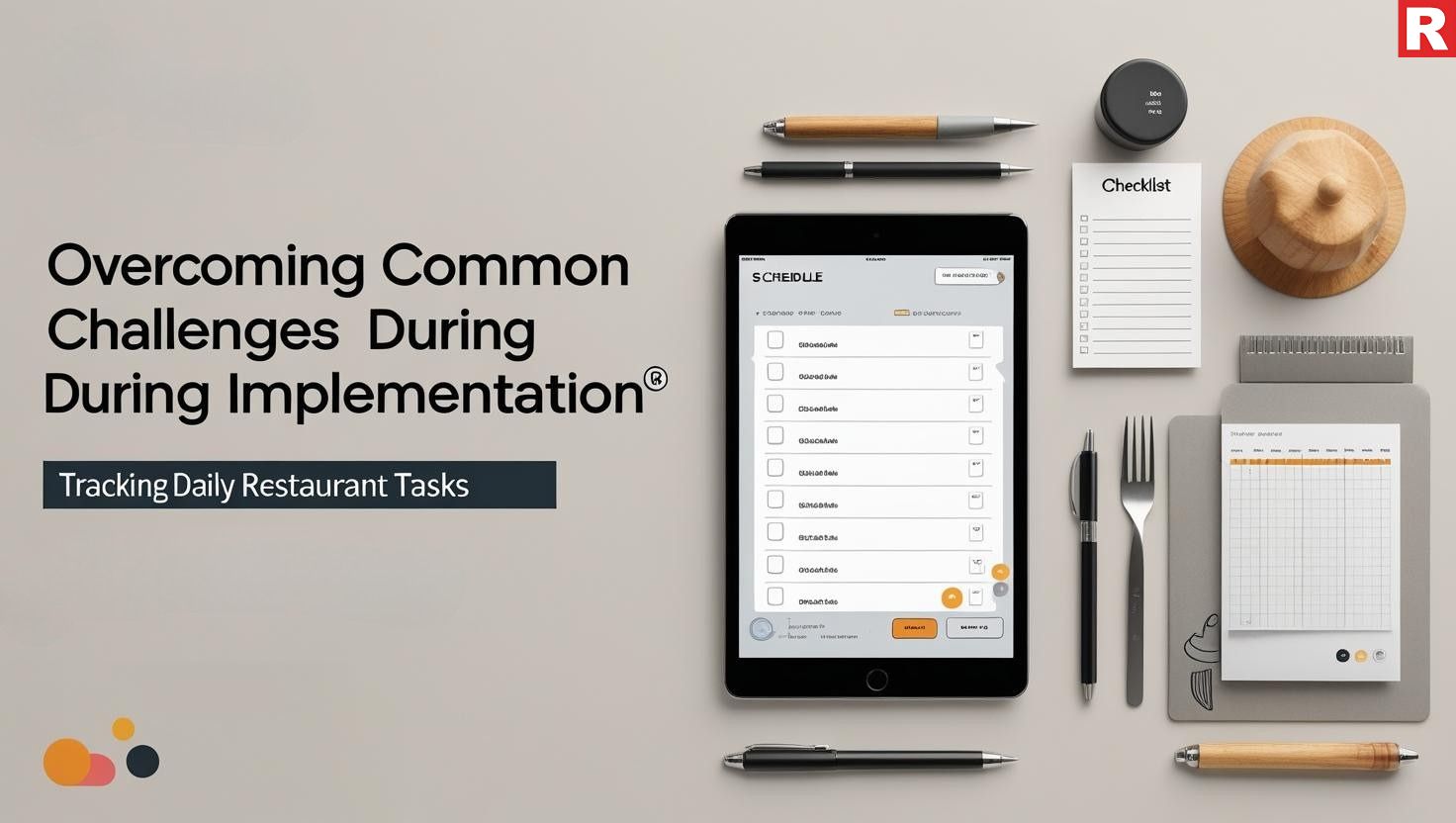
Even while keeping track of daily work has many advantages, putting a new system into place can be difficult at times. A successful shift depends on anticipating and planning for these challenges.
- Opposition to Change: Staff resistance is frequently the biggest obstacle. A new, enhanced tracking approach may be perceived by staff members used to an informal system as an unnecessary burden or an indication of mistrust. Communicate the "why" of the change clearly and consistently to combat this. Stress how the new system will simplify their work, lower stress levels, and increase productivity. To promote a sense of ownership, include your staff in the selection and design of the system.
- Initial Time Investment: During a hectic day, the time and effort required to implement a new system may seem like an extra burden. This covers staff training, template setup, and initial problem-solving. Be patient and set aside a certain time for this process. Reduced chaos and long-term efficiency will be the results of the short-term investment.
- Selecting the Incorrect Tool: Frustration and failure might result from choosing a system that is either too complicated, too simple, or doesn't meet the unique requirements of your restaurant. Investigate your options, consult with other restaurant managers, and think about implementing a new system in a small portion of your company before implementing it across the board.
- Lack of Accountability: The system will malfunction if duties are not given clearly or if no one is in charge of checking the completed records. To guarantee accountability, a clear chain of command and a designated individual to assess daily task accomplishment are essential.
Check out: How to Get A Government Loan for Your Restaurant Business
How to Grow Your Restaurant Into A Franchise
Tailoring Your System to Your Restaurant's Needs
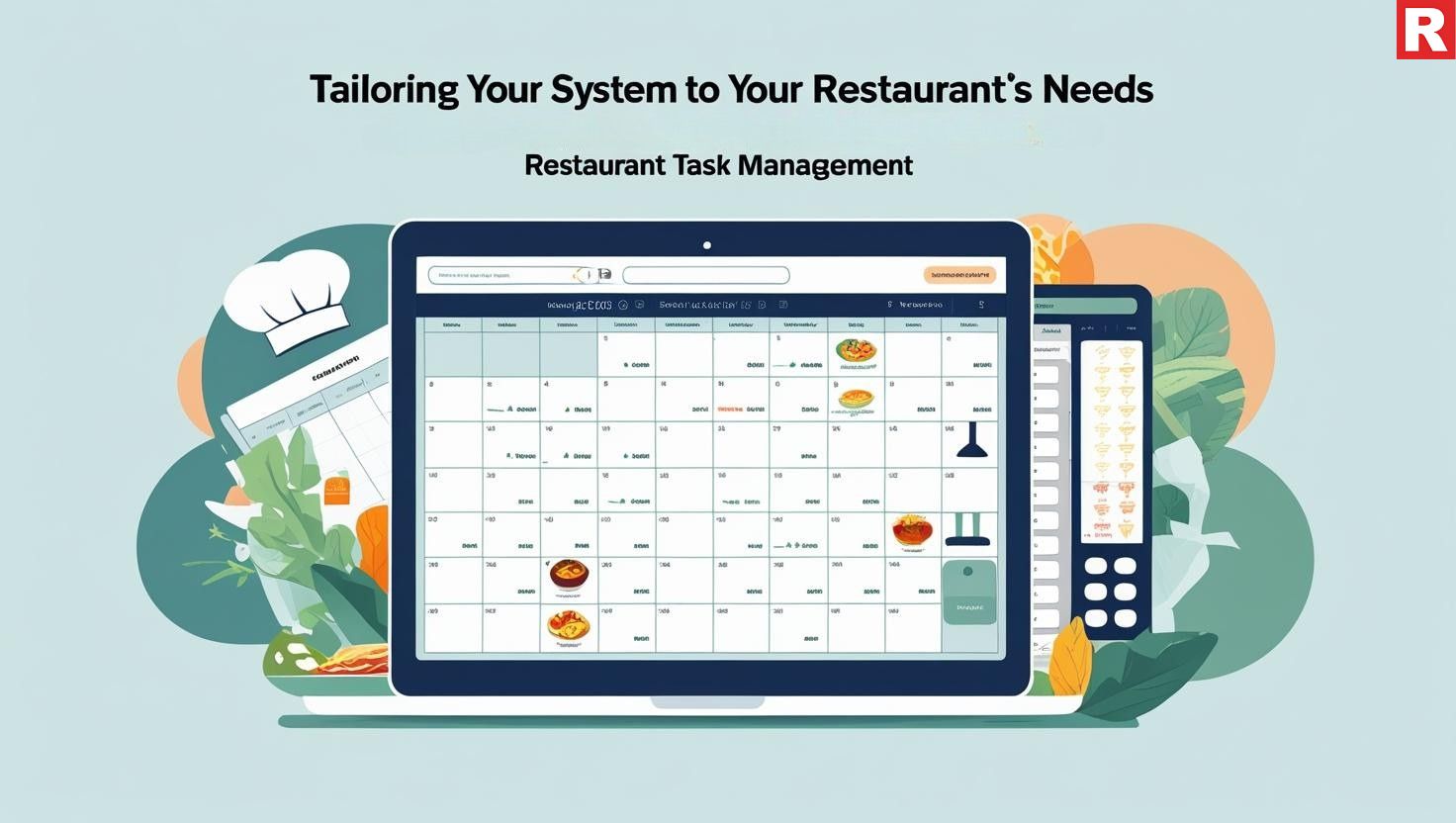
The size, design, and particular requirements of your restaurant will determine the most effective method for monitoring daily tasks.
- Small vs. Large Restaurants: While larger businesses with more intricate operations will probably benefit from the functionality and scalability of digital solutions, smaller restaurants may find that traditional checklists are enough.
- Restaurant Type: Digital checklists and automatic reminders may be given priority in a quick-service restaurant that handles a lot of repeated duties. To guarantee consistency in service and attention to detail, a fine-dining establishment may concentrate on keeping accurate shift logs.
- Team Size and Structure: When selecting a system, take into account the organizational hierarchy and the number of staff members. Digital tools are very useful for managing various departments and larger teams.
- Budget: While digital solutions may need upfront software purchases or subscription costs, traditional approaches are typically free. Assess your financial situation and select a method that best suits your requirements.
- Tech Skills of Your Team: When implementing digital solutions, take into account how comfortable your employees are with technology. To guarantee a seamless adoption, offer sufficient training and assistance.
Conclusion
Establishing a culture of teamwork, responsibility, and continual development in your restaurant is just as important as controlling processes when it comes to putting in place an efficient system for tracking daily tasks. You may improve client satisfaction, simplify processes, and eventually clear the path for long-term success in the cutthroat culinary industry by selecting the best strategies, outlining roles precisely, and regularly assessing results. The most important thing is to create a routine, empower your team, and incorporate task tracking into your everyday restaurant management procedures, regardless of whether you choose the ease of checklists or the strength of digital platforms.
Mahak Sharma
Content Writer
Mahak Sharma is a passionate content writer with 2 years of experience crafting compelling content across various niches, tailoring her writing to suit different audiences and platforms. She is dedicated to producing engaging content for readers so that they can understand and enjoy the articles. Her strengths lie in crafting SEO-friendly, well-structured articles that drive visibility and engagement.