
How to Grow Your Restaurant Into A Franchise
Franchising is more than just creating a new branch; it's about duplicating your brand's DNA and allowing others to carry it on. It's a path that demands careful planning, a strong legal structure, and a dedication to building a network of partners.


No matter if it is a small street business or a big restaurant, everyone is looking to develop and expand their business. And what is a better way of doing that than turning your restaurant into a franchise? After all, no restaurateur will want to miss the opportunity to expand their business all over India. However, it is no easy feat to franchise your business in the food business of India.
Franchising is more than just creating a new branch; it's about duplicating your brand's DNA and allowing others to carry it on. It's a path that demands careful planning, a strong legal structure, and a dedication to building a network of partners. This detailed article will help you by providing you with the necessary steps for transforming your successful restaurant into a profitable restaurant franchise in India.
Read more: Top 10 Essential Technology Systems for any Restaurant
Which Restaurants Can Franchise Their Business?

Before you look into the necessary steps required to franchise your business, you need to make sure that your restaurant is ready for the expansion.
Proven and Profitable Business Model: Only restaurants with a history of consistent profitability and success are suitable candidates. The business model must be long-lasting and proven over time.
Replicable Operations: The restaurant's operations, from recipes and food preparation to customer service, must be easily understood and copied by others. A complete operating handbook is required.
Strong, Protectable Brand: The brand identity, which includes the name, logo, and general concept, must be recognizable and legally protected by trademarks. This brand must be powerful enough to attract and keep clients across multiple locations.
Established processes: The restaurant should have well-defined processes for inventory management, employee training, and marketing. These procedures must be documented and prepared to be taught to franchisees.
Financial Stability: The parent firm (franchisor) must be financially secure and have the capacity to establish a franchise system and provide continuing assistance and training to franchisees.
Why You Should Franchise Your Business
- Rapid Expansion and Brand Growth: Unlike creating company-owned facilities, franchising allows you to rapidly expand your business and brand exposure. Franchisees provide funding and local management, allowing you to enter new areas throughout India without incurring huge debt.
- Increased Revenue Sources: Franchising provides various sources of revenue, including the initial franchise fee, continuous royalty payments (a percentage of the franchisee's sales), and sometimes a marketing fund charge. This results in a sustainable and expandable income model.
- Leverage Local Expertise: Because franchisees are typically from the local community, they have a greater awareness of the local market, customer preferences, and labor dynamics. This local knowledge is crucial for success and provides a major advantage over the competition.
- Lower Risk and Operational Burden: Franchising transfers financial and operational risk to the franchisee. They are in charge of day-to-day management, staffing, and local marketing, leaving you to concentrate on growing the overall brand and expanding your network.
- Motivated Partners: Franchisees have a direct interest in the success of their business. This personal commitment inspires people to work hard, uphold brand standards, and increase profitability, ultimately benefiting the entire franchise network.
Know more: Small Spaces, Big Impact: The Rise of Intimate Dining
The Process of Franchising Your Business
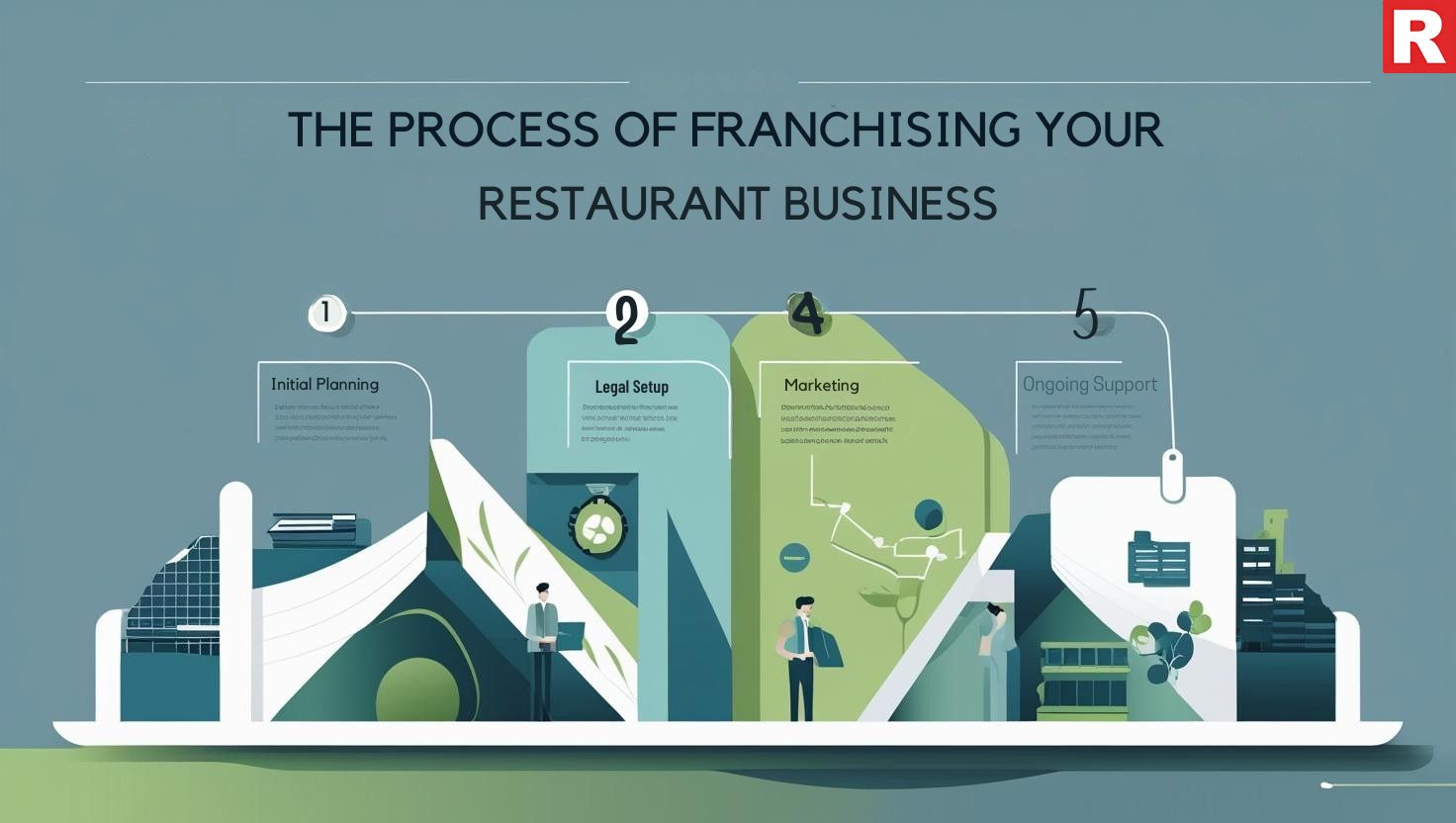
Step 1: Establish a Solid Foundation
Before you contemplate legal documentation or possible franchisees, be sure your business is stable and ready for duplication. Restaurant franchising is not for everyone; it is a business model based on stability, profitability, and brand strength.
1. Prove Your Business Model
The most critical factor is a successful, profitable, and sustainable business model. Your restaurant should have a track record of steady profitability, a high level of customer happiness, and an operational model that others can readily understand and implement. You must be able to show that your idea is not a fluke but rather a sustainable business.
2. Document Everything—The Operations Manual
This is the center of your franchise system. The operations handbook provides a detailed, step-by-step guide for running your restaurant. It should be an in-depth report that covers all areas of the firm, from A to Z. Consider it a roadmap for success that a new franchisee can follow. Your operations manual should contain:
- Standard Operating Processes (SOPs): They include detailed instructions for all tasks, including opening and closing processes, cleaning schedules, and customer service protocols.
- Recipe Books: They provide a detailed reference to each dish, including specific ingredient amounts, cooking processes, and presentation requirements.
- Supplier Information: A list of certified vendors for all ingredients and equipment to assure consistency.
- Marketing and HR Guidelines: Standards for advertising materials, social media policies, and hiring and training procedures.
3. Establish a Support Infrastructure
As the franchisor, your responsibilities evolve from restaurant operator to business instructor. You'll need a team and processes in place to help your franchisees. This includes:
- Franchise Team: A small group of people who work together to build, train, and maintain franchises.
- Centralized Systems: Technology solutions for POS, online ordering, and inventory management that can be implemented across all franchise sites.
Step 2: The Legal and Financial Blueprint
After you've established your business model and documented your brand and operations, the next stage is to formalize the franchise and establish a legal and financial framework.
1. Hire legal and financial experts
This is not a do-it-yourself project. You will need to appoint a legal counsel with experience in franchising in India, as well as a financial consultant or chartered accountant.
- Legal Counsel: Your lawyer will prepare the essential legal documents, including the franchise agreement, and ensure that you comply with all applicable Indian laws.
- Financial Consultant: Your accountant will assist you in developing a complete financial model for your franchise, including franchisee startup expenses, royalty fee structures, and expenditures associated with franchise network support.
2. The Franchise Agreement
The franchise agreement is a legally binding agreement between you, as the franchisor, and the franchisee. It is a crucial document describing both parties' rights and responsibilities. It should be thorough, including:
- Franchise fees: They include both the one-time initial franchise price and ongoing royalty payments (a proportion of the franchisee's sales).
Term of the Agreement: The duration of the franchise agreement and renewal options. - Territory: The geographic area in which the franchisee is licensed to operate.
- Training and Support: Details on the training program and the ongoing assistance you will provide.
- Compliance and Termination: The rules that the franchisee must follow and the circumstances under which the agreement may be terminated.
What's new: Using Gaming to Boost Your Restaurant Business: How does it work?
3. The Franchise Disclosure Document (FDD)
While there is no particular federal regulation requiring an FDD in India, establishing a full disclosure document is a best practice and ethical requirement. It offers potential franchisees all of the information they require to make an informed investment decision. Your FDD should include the following:
- Franchisor History: Learn about your company's leadership and history.
- Initial Investment: A complete breakdown of all charges that the franchisee should expect to incur.
- Earnings Claims: If you decide to make earnings claims (which requires care and legal advice), you must give a basis for those claims and be able to back them up.
4. Financial Modeling and Fee Structure
Carefully consider your fee structure to ensure that it is both appealing to franchisees and profitable for you as the franchisor.
- Initial Franchise Fee: The initial franchise fee covers training, support, and a share of the franchise development expenditures.
- Royalty Fees: This is the franchisor's regular revenue stream, which is usually a proportion of the franchisee's gross sales. It provides finances for continuous support, marketing, and system development.
- Marketing Fund: An optional but typical charge used to establish a central fund for national or regional marketing efforts.
Step 3: The Franchisee and System Development
The success of a franchise is strongly dependent on finding and supporting the right partners. First, you must identify your ideal franchisee profile, including the skills, expertise, and financial resources they require. Next, a thorough verification and application process is required. This process involves an application form, many interviews, and a financial analysis to ensure they are a good fit for your business and can afford the investment.
You must then create a detailed training plan. This should include intense initial training at a specific location, as well as on-site support during the new franchise's launch. This guarantees that the new partner has the knowledge and practical abilities to run the firm effectively from the start.
Finally, support does not end with the grand opening. You must build a robust ongoing support system for your franchisees. This includes regular field visits by a consultant, marketing materials and assistance, and operational support via a dedicated helpline. This ongoing support is essential for preserving brand consistency and guaranteeing the long-term success of your entire franchise network.
Check out: The Pros and Cons of Franchising Your Restaurant in India
How to Source Local Ingredients for Your Indian Restaurant Menu
Step 4: Launching and Growing Your Franchise Network
Creating and expanding a franchise network needs an effective approach to attracting and supporting new partners. First, market your franchise opportunity by building a dedicated area on your website, running targeted digital ads on social media, and attending franchise expos to locate eligible people. Treat your first few franchisees as pioneers; collaborate closely with them to improve your systems, and leverage their success stories as strong testimonials in future marketing efforts. As your network expands, be prepared to manage that growth by increasing your support crew and upgrading technologies such as CRM and franchise management software. Finally, maintain excellent communication with your franchisees by holding frequent meetings to develop a sense of community and keep the brand consistent.
Difficulties Faced When Franchising a Business

- Maintaining Consistency: The biggest difficulty is ensuring that all franchisees stick to the same quality, service, and brand standards. One awful location might have a negative impact on the brand's overall reputation.
- Finding the Right Partners: It is challenging to identify and evaluate franchisees that are not only financially sound but also devoted to your system and share your brand's values.
- Legal and financial costs: Franchising costs large upfront expenditures for legal agreements, financial modeling, and trademarks. Expert assistance is required to navigate this complexity and ensure regulatory compliance.
- Relationship Management: Disputes over royalty fees and marketing can strain the connection between the franchisor and franchisee. Managing these conflicts and providing consistent, high-quality help is a constant issue.
- Adapting to New Markets: A successful business strategy in one area may require adaptations in other markets with varied tastes, suppliers, and competitors, which can be a difficult obstacle to overcome.
Read this: How to open a pet-friendly restaurant in India
Conclusion
Franchising a restaurant is a challenging but rewarding journey. It is a method to not only expand your business but also leave a legacy of flavor and businesses. By meticulously laying a solid foundation, developing a sound legal and financial framework, identifying the right partners, and providing unwavering support, your successful restaurant can grow from a local favorite to a thriving restaurant franchise that leaves its mark on India's culinary map. The journey is difficult, but the outcome is a vast network of profitable, brand-loyal businesses, which is a testament to your goals and hard work.
Mahak Sharma
Content Writer
Mahak Sharma is a passionate content writer with 2 years of experience crafting compelling content across various niches, tailoring her writing to suit different audiences and platforms. She is dedicated to producing engaging content for readers so that they can understand and enjoy the articles. Her strengths lie in crafting SEO-friendly, well-structured articles that drive visibility and engagement.



































































