
How to Get a GST Certificate for Your Restaurant Business in India
Many restaurant owners see this as an important starting point. It sets the base for better growth and expansion. A proper structure also makes it easier to manage finances and taxes. In the long run, it supports a more organised and scalable business.


India’s food and beverage industry is growing at a strong pace. New cafés, fine-dining spaces, cloud kitchens, and food trucks are opening across cities and towns. This growth is supported by rising demand, online delivery, and changing eating habits. However, before starting operations, there are key legal steps that every restaurant owner must follow. One of the most important is getting a GST certificate. Under the Goods and Services Tax system, businesses crossing the prescribed turnover limit must register. Registration is also required for those working with online delivery platforms.
A GST certificate allows a restaurant to collect tax, issue proper bills, and stay compliant with government rules. It also improves credibility. Many platforms and vendors prefer working with registered businesses. Customers also trust places that follow proper billing practices. In addition, GST creates a uniform tax system across India, making it easier to manage operations in different locations. For anyone planning to enter the food business, understanding GST is essential. It supports smoother operations and helps build a stable and organised business from the beginning.
What is a GST Certificate?
A GST certificate is a document given after a business completes its registration under the Goods and Services Tax system. It acts as proof that the business is legally registered. The certificate includes a GSTIN, which is a unique number assigned to each business. This number helps in identifying the business for tax purposes. It is required for collecting GST from customers and filing returns. For restaurant owners, it also helps in running the business smoothly and dealing with vendors or platforms. Having a GST certificate shows that the business follows tax rules and operates in a proper and organised way.
For a restaurant, this certificate allows you to:
- Collect GST from customers
- Operate legally
- Work with platforms like food delivery apps
- Expand your business across locations
Without it, running a professional restaurant becomes difficult.
Is GST Mandatory for Restaurants?
Not every small food business needs GST immediately, but most restaurants do. You must register for GST if:
- Your annual turnover exceeds ₹20 lakh (₹10 lakh in special states)
- You sell through online platforms like delivery apps
- You supply food across state borders
Even if your turnover is below the limit, many restaurant owners choose to register voluntarily. It helps in building credibility and avoids future compliance issues.
Read more: The Ultimate Guide to Getting Your Cloud Kitchen on Zomato
How to Choose the Best Location for Your Cloud Kitchen in India
GST Rates for Restaurants in India
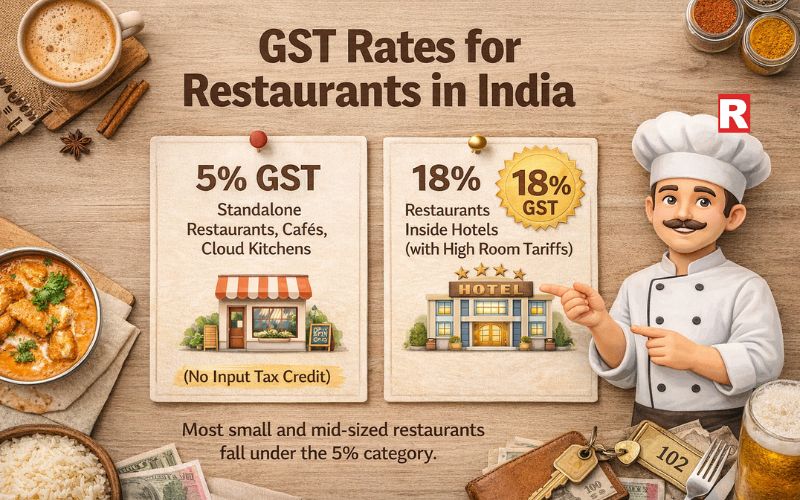
GST rates depend on the type of restaurant you run.
- 5% GST: Applicable to most standalone restaurants, cafés, and cloud kitchens (without input tax credit)
- 18% GST: Applicable to restaurants located inside hotels with high room tariffs
Most small and mid-sized restaurants fall under the 5% category. This makes pricing simpler but does not allow input tax credit.
Documents Required for GST Registration
Before starting the process, keep your documents ready. This makes registration smooth and avoids delays.
You will need:
- PAN card of the owner or business
- Aadhaar card
- Business registration proof (partnership deed or company incorporation certificate)
- Address proof (rent agreement or electricity bill)
- Bank account details (cancelled cheque or bank statement)
- Digital signature (for companies and LLPs)
Make sure all documents are clear and match your business details.
Know more: How to Start a Cloud Kitchen on Swiggy for Your Restaurant (2025 Guide)
Step-by-Step Process to Get a GST Certificate
The registration process is online and managed through the Goods and Services Tax Network portal. Here is how it works:
- Visit the GST portal via the Goods and Services Tax Network and click “Register Now”
- Enter basic details (business name, PAN, email, mobile) and complete OTP verification
- Receive Temporary Reference Number (TRN) to proceed
- Fill detailed application with business, address, bank, and promoter details
- Upload required documents in the correct format
- Review and submit the application
- Get Application Reference Number (ARN) to track status
- Respond to any queries raised by the GST officer (if applicable)
- Download GST certificate once approved
Timeline: Typically 3–7 working days if all details are correct
GST Registration for Different Restaurant Types
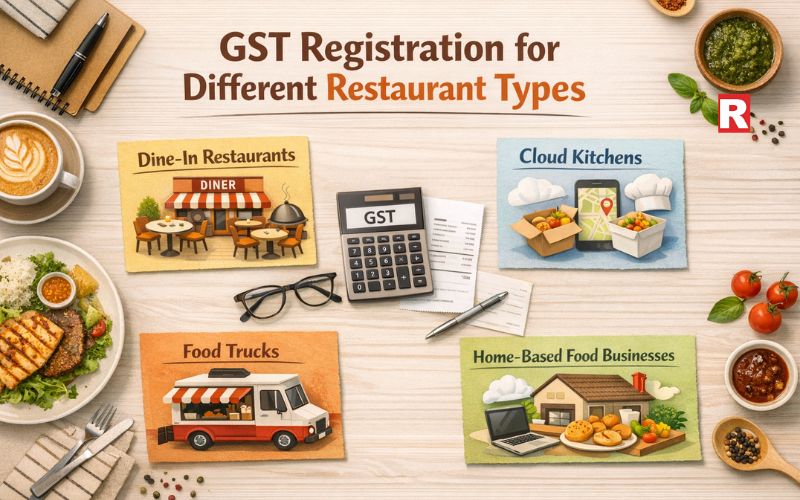
Different food businesses have slightly different requirements. Understanding your category helps you register correctly.
- Dine-In Restaurants: These are traditional restaurants with seating. Most fall under the 5% GST category.
- Cloud Kitchens: Even without a physical dining space, GST is mandatory if you operate through delivery platforms. These platforms often require a GSTIN to list your business.
- Food Trucks: Mobile food businesses must register if they cross the turnover limit or operate in multiple locations.
- Home-Based Food Businesses: If you are running a home kitchen and selling online, GST may apply, especially if you partner with aggregators.
Common Mistakes to Avoid
Many restaurant owners face delays due to simple errors. Avoid these common mistakes:
- Selecting the wrong business type
- Entering incorrect PAN or Aadhaar details
- Uploading unclear or mismatched documents
- Choosing the wrong GST scheme
- Ignoring follow-up queries from GST officers
Taking time to review your application can save days of delay.
Compliance After Getting GST Certificate
Getting your GST certificate is just the beginning. You must stay compliant to avoid penalties.
Here are key responsibilities:
File GST Returns: Every registered restaurant must regularly file GST returns to stay compliant. This includes GSTR-1, which captures all your sales details, and GSTR-3B, which is a summary return of your tax liability. Depending on your annual turnover, these returns need to be filed either monthly or quarterly. Timely filing is important to avoid penalties and ensure smooth business operations.
Issue Proper Invoices: A restaurant must issue proper GST-compliant invoices for every transaction. Each bill should clearly mention your GSTIN, a unique invoice number, and a detailed tax breakdown showing the applicable GST rate and amount. Proper invoicing not only ensures compliance but also builds transparency and trust with customers.
Maintain Records: Maintaining accurate records is a key part of GST compliance. You should keep detailed records of all sales, purchases, and tax payments. These records are essential during audits and help in tracking your business performance. Proper documentation also makes it easier to manage finances and plan future expansion.
Benefits of GST for Restaurant Owners
Many people see GST as a burden, but it also brings real advantages.
- Legal Recognition: Your business becomes officially registered and trusted.
- Easy Expansion: GST allows smooth operations across different cities and states.
- Platform Integration: Most delivery apps require GST registration for onboarding.
- Transparent Pricing: Customers see clear tax breakdowns, which builds trust.
Why Early Registration Matters
Delaying GST registration can lead to several issues for a restaurant business. It may seem manageable in the beginning, but problems often appear as the business grows. Penalties can be charged for late registration. In some cases, taxes may be applied from an earlier date, increasing the financial burden. Missing GST also limits business opportunities. Many food delivery platforms and partners prefer working only with registered businesses. Without GST, expansion plans can slow down.
Key risks of delaying GST registration include:
- Extra penalties and fines
- Backdated tax payments
- Difficulty in onboarding on delivery apps
- Limited business credibility
For restaurant owners planning to scale, early registration is important. Whether it is opening new outlets or entering new markets, GST helps create a strong base. It supports smoother operations and better compliance. Taking this step at the right time can make future growth more stable and organized.
Also check: How Restaurants Redesign Their Menus for the Summer Season
How Cloud Kitchens Are Expanding the Food & Beverage Ecosystem
Top Innovative Menu Ideas Restaurants Are Launching to Attract Modern Diners
Final Thoughts
Running a restaurant in India is not just about good food and service. There are legal steps that every owner must follow. Compliance is an important part of building a stable business. One of the key requirements is getting a GST certificate. It allows a restaurant to operate legally and avoid penalties. It also helps in working with food delivery platforms and other partners. A registered business often looks more reliable to customers. This builds trust over time. The process of getting a GST certificate is not very complex. With the right documents and correct details, it can be completed smoothly. Careful attention at each step can prevent delays. Many restaurant owners see this as an important starting point. It sets the base for better growth and expansion. A proper structure also makes it easier to manage finances and taxes. In the long run, it supports a more organised and scalable business.
Saptopriya Ghosal
Feature Writer
I am a dedicated media professional with a bachelor's degree in mass communication from the State University of Calcutta and a postgraduate degree from Amity University. My academic journey has equipped me with a profound understanding of storytelling and communication. Passionate about the dynamic world of media, I continually strive to explore new ways to engage and inform through compelling narratives.



































































