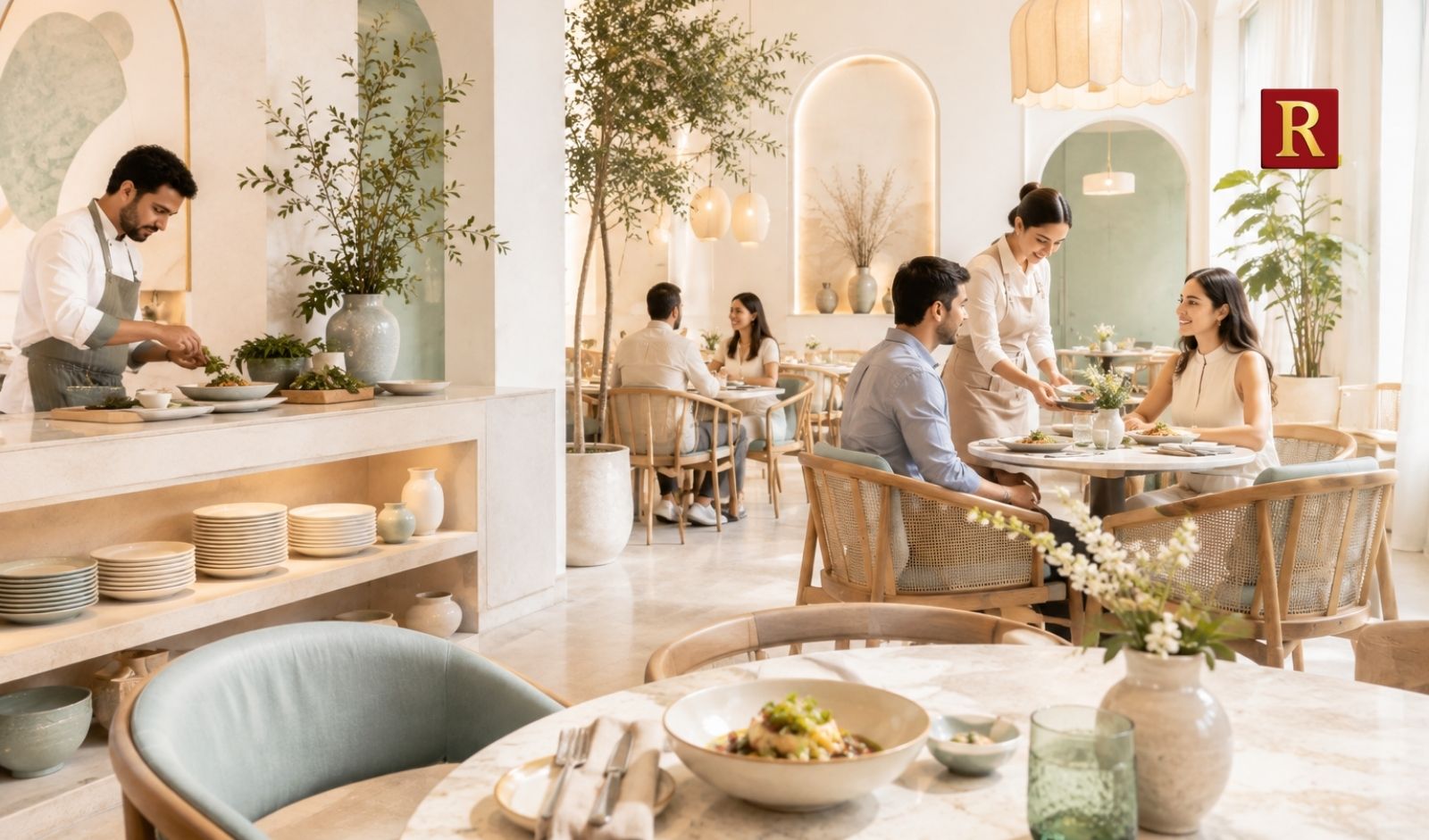
How Restaurant Brands Are Building Businesses Beyond Restaurants
The restaurant may still be where the relationship begins. But increasingly, it is not where the business ends.


For years, the restaurant business was built around one simple transaction. A customer walked in, ordered food, ate, paid and left. That model is changing.
Today, a restaurant's relationship with its customer does not have to end when the plate is cleared. A signature sauce can go home in a bottle. A restaurant's coffee can be sold as beans. A popular momo can enter the frozen-food aisle. A chef's knowledge can become a masterclass. Even a restaurant's customer base can help launch a completely new consumer product. This is creating a new opportunity for food businesses in India. Restaurants are beginning to treat their recipes, products, kitchens, customers and brand identity as separate business assets.
The Restaurant Is Becoming a Starting Point
The traditional restaurant model depends heavily on seats, footfall and table turnover. A brand has a fixed number of outlets and can serve only a certain number of customers at a time. Products remove some of these physical limits. A restaurant can sell its signature sauce to someone who has never visited its outlet. A packaged snack can reach another city. A coffee subscription can bring the brand into a customer's home every month.
- This creates a wider business chain: Restaurant → Product → Retail → Home → Repeat Purchase
The shift is already visible in India. Restaurant brands are experimenting with packaged foods, frozen products, coffee, beverages and other consumer categories. Wow! Momo is one example of this transition. Its packaged-food business has expanded beyond its restaurant network and has become a significant growth vertical for the company. A 2026 report by Mint noted that its packaged-food business had reached around Rs 100 crore in annual recurring revenue and about 6,000 retail points. The bigger story, however, is not about one brand. It is about the business model.
When a Signature Dish Becomes a Retail Product
Not every restaurant dish can become a packaged product. A freshly assembled burger depends on temperature, texture and presentation. The same product may not work after travelling through a supply chain. A sauce is different. It can be bottled, stored and used at home. The same applies to spice mixes, marinades, coffee, pickles, frozen snacks and ready-to-cook products.
This makes the restaurant's most scalable product different from its most popular menu item. The winning product may be the one that captures the restaurant's flavour without requiring the restaurant's kitchen. That distinction is important for founders looking beyond traditional restaurant revenue.
The Rise of the Restaurant Pantry
One of the more interesting possibilities is the creation of a restaurant's own pantry. Instead of launching one product, a brand can gradually build a small portfolio around its food identity.
For example, a regional restaurant could begin with a signature masala. It could then add a cooking sauce, pickle, chutney, ready-to-cook dish and gift box. The restaurant is no longer selling only meals. It is selling the ingredients and products that allow customers to bring part of the restaurant experience home. This creates another layer of consumption between restaurant visits.
Frozen Food Can Take the Restaurant Home
Frozen food offers another route for restaurants to expand beyond their outlets. India's frozen-food market grew from around Rs 9,200 crore in FY2020 to Rs 18,400 crore in FY2025, according to Business of Food. The market has grown at a reported CAGR of 15 percent over those five years and is projected to reach around Rs 40,500 crore by FY2030. Restaurants already understand products such as momos, kebabs, snacks, parathas and desserts. But converting a restaurant recipe into a frozen product requires more than putting it into a freezer.
The brand must consider:
- shelf life
- freezing conditions
- moisture and texture
- packaging
- food safety
- batch consistency
- cooking instructions
- cold-chain logistics
This is where food technology becomes important. The chef may create the flavour, but food technology determines whether that flavour can be produced consistently at scale.
Quick Commerce Is Creating a New Shelf
For packaged restaurant products, distribution is becoming more flexible. A brand no longer has to depend entirely on traditional supermarkets. Quick-commerce platforms are creating another route between product and consumer. India's quick-commerce market is expanding rapidly. Reuters reported in September 2026 that the sector was projected to grow from about $19 billion to $41 billion by 2030. For restaurant brands, this creates an interesting opportunity. A product can potentially be tested in selected neighbourhoods before a wider retail expansion.
- The process could look like this: Restaurant customers → small product launch → quick-commerce test → repeat purchases → wider distribution
This also gives brands a way to learn what customers actually want before investing heavily in manufacturing and distribution.
The Restaurant Kitchen Can Become an R&D Lab
A restaurant has one advantage that many new FMCG brands have to spend heavily to build: direct consumer feedback. Customers can taste a new sauce. They can compare two flavours. They can tell the restaurant whether a product is too spicy, too sweet or too expensive. A restaurant can therefore test products in real conditions before taking them to retail.
For example, a new chilli oil could first appear as a table condiment. If customers repeatedly ask to buy it, the brand has an early signal for a packaged product. This changes the role of the restaurant kitchen. It is no longer only a place for food production. It can also become a product development laboratory.
The Business Can Go Beyond Food
The next opportunity is not always another packet. Restaurant brands also have knowledge and experiences that can be monetised.
- A bakery can conduct workshops.
- A specialty coffee brand can sell brewing classes.
- A cocktail bar can organise tasting sessions.
- A chef can conduct private dining experiences.
- A regional restaurant can build culinary tours or masterclasses.
The product is then no longer just food. It is knowledge, access and experience. This can be particularly useful for brands that have built strong identities around a chef, cuisine or specialised technique.
Subscriptions Can Change the Revenue Model
Restaurants traditionally depend on individual transactions. Subscriptions introduce a different structure. A coffee brand can offer monthly beans. A bakery can create a weekly dessert box. A healthy-food brand can offer recurring meal plans. A restaurant can even create a members-only dining or chef experience.
- The important shift is from: One customer → one transaction
- To: One customer → repeated transactions
That can make customer relationships more valuable over time. However, recurring revenue only works when the product has a genuine reason for repeat consumption. A subscription cannot fix a product that customers do not want regularly.
Turning a Restaurant Recipe Into a Retail Product Is Complicated
There is also a major technical gap between restaurant food and packaged food. A restaurant dish is generally produced for immediate consumption. A packaged product must survive manufacturing, storage, transportation and retail. FSSAI's Labelling and Display Regulations cover requirements for pre-packaged foods, including mandatory information on labels and rules against misleading presentation.
Food businesses also need to consider licensing, packaging, product standards, shelf-life validation, manufacturing controls and quality testing. This becomes even more important as India's packaged-food regulations evolve. FSSAI's current regulatory framework includes amendments to labelling and display rules in 2026. So, moving beyond restaurants is not simply a branding exercise. It requires food science, operations, compliance, supply-chain planning and unit economics.
The New Restaurant Business Has Five Layers
The opportunity can be understood through five layers.
- Food: The restaurant's core menu.
- Products: Sauces, coffee, frozen foods, spice mixes and beverages.
- Commerce: Retail, D2C, quick commerce and subscriptions.
- Experiences: Classes, tastings, events and private dining.
- Brand and IP: Merchandise, collaborations, licensing and other brand extensions.
The strongest restaurant brands may eventually operate across several of these layers at once.
The Challenge Is Not Creating More Revenue
Expanding beyond restaurants can create new revenue streams, but revenue alone does not make a new business successful. A packaged product has manufacturing, packaging, logistics, warehousing, distribution and marketing costs. There can also be retailer margins, inventory risk and product wastage.
- A restaurant therefore needs to ask a more important question: Can this product make money outside the restaurant?
The answer depends on repeat purchases, contribution margins, production costs, shelf life and distribution efficiency. The future will not belong simply to restaurants that launch the most products. It will belong to brands that understand which part of their restaurant identity customers are willing to buy again and again.
From Tables to a Larger Consumer Brand
The restaurant is no longer necessarily the final destination for a food brand.
- It can be the testing ground.
- It can introduce the flavour, build trust and create the first customer.
The product can then travel into homes, supermarkets, quick-commerce platforms and subscription boxes. The same brand can eventually sell food, products, experiences and knowledge. That is what makes this shift significant. The next generation of restaurant businesses may not be measured only by the number of tables they operate. They may also be measured by how many ways customers can take the brand home, use it, experience it and return to it. The restaurant may still be where the relationship begins. But increasingly, it is not where the business ends.
Saptopriya Ghosal
Feature Writer
I am a dedicated media professional with a bachelor's degree in mass communication from the State University of Calcutta and a postgraduate degree from Amity University. My academic journey has equipped me with a profound understanding of storytelling and communication. Passionate about the dynamic world of media, I continually strive to explore new ways to engage and inform through compelling narratives.