
How Quick Commerce Is Changing Restaurant Ordering Habits
The rise of quick commerce represents more than a logistics trend. It reflects a broader transformation in how people consume food, make decisions, and experience dining in a digital-first world.

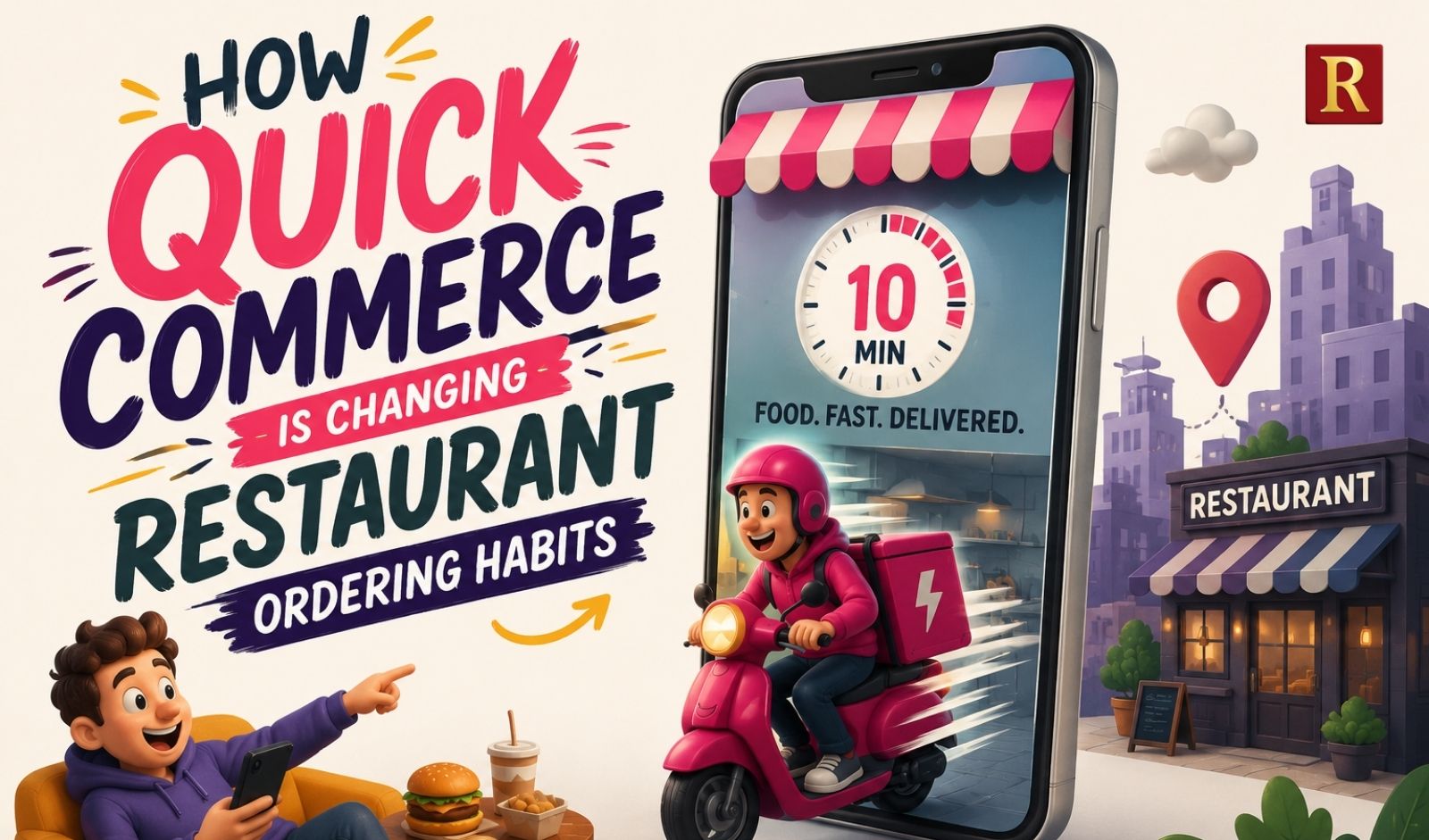
The way people order food has changed dramatically over the past few years. Not long ago, ordering from a restaurant was usually planned. Families chose a restaurant for dinner, friends gathered over meals, and food delivery was often reserved for weekends or special occasions.
Today, things look very different. Consumers can order groceries, snacks, beverages, desserts, and even ready-to-eat meals within minutes. This shift has been driven by the rapid growth of quick commerce, a model focused on delivering products in as little as 10 to 30 minutes. As quick commerce platforms continue to expand across India, they are influencing not only what people buy but also how they think about food. Restaurants are now facing a new reality where convenience, speed, and accessibility often matter as much as taste and quality.
The Rise of Instant Consumption
Modern consumers live busy lives. Long working hours, hybrid work models, and digital lifestyles have increased the demand for convenience. People no longer wait for traditional meal times. Instead, they order whenever a craving strikes. A coffee during a work meeting, a dessert after dinner, or a quick snack late at night can all be delivered within minutes. This shift has created what many industry experts call an "instant consumption culture." Consumers increasingly expect products and services to be available immediately. Food is no exception. For restaurants, this means understanding that today's customer is not just looking for a meal. They are looking for speed, ease, and convenience.
Leading Quick Commerce Platforms in India
Blinkit – Delivers groceries, snacks, beverages, personal care products, and increasingly ready-to-eat food items within minutes.
Zepto – Popular for its 10-minute delivery model and expanding assortment of food and beverage products.
Swiggy Instamart – Offers groceries, essentials, beverages, and instant food products through a hyperlocal network.
BigBasket Now – Focuses on rapid grocery and food product deliveries in major cities.
Flipkart Minutes – Expanding into fast delivery of daily essentials and packaged food items.
Speed Has Become a Major Competitive Advantage
One of the biggest changes brought by quick commerce is the importance of delivery speed.
- Consumers now compare delivery times before making purchase decisions. If two restaurants offer similar food, the one that promises faster delivery often wins.
- As a result, many restaurants are redesigning their operations. They are simplifying menus, reducing preparation times, and creating delivery-focused kitchens.
- Quick-service restaurants have particularly benefited from this trend because their operational models already support fast preparation and fulfillment.
The ability to deliver food quickly is no longer an added benefit. It has become an expectation.
Smaller Orders Are Becoming More Common
Traditionally, restaurant deliveries often involved family meals or group orders. Quick commerce has changed this behavior. Consumers are increasingly placing smaller orders throughout the day. Instead of ordering one large meal, they may order coffee in the morning, snacks in the afternoon, and dessert in the evening. This trend is particularly visible among younger consumers living in urban areas. Many prefer ordering according to their immediate needs rather than planning meals in advance. For restaurants, this creates opportunities to introduce smaller portion sizes, snack-focused menus, and single-serving products that appeal to frequent ordering behavior.
Impulse Ordering Is Growing
Quick commerce has made food ordering almost effortless. With a few taps on a smartphone, consumers can satisfy cravings instantly. This convenience has encouraged impulse purchases. Many customers order because they suddenly feel like eating something rather than because they need a full meal. Desserts, beverages, bakery products, and comfort foods often benefit from this behavior. Restaurants are responding by creating visually appealing menu listings, limited-time offers, and personalized recommendations that encourage spontaneous purchases. The psychology behind food ordering is changing. Convenience is now influencing decisions as much as hunger.
Convenience Is More Important Than Discounts
For many years, discounts were one of the biggest drivers of online food ordering. Today, convenience is becoming equally important. Consumers are willing to pay slightly more if it saves them time and effort. Fast delivery, simple ordering processes, reliable service, and easy payment options have become major decision-making factors. This change is particularly noticeable among professionals, young families, and urban consumers who value time as much as money. Restaurants that focus on creating a smooth customer experience are often able to build stronger loyalty than those relying only on promotional discounts.
Restaurant Menus Are Evolving
Quick commerce has also influenced the way restaurants design their menus.
Food items that travel well are receiving greater attention. Restaurants are choosing dishes that maintain quality during transportation and can be prepared quickly.
Many brands are reducing menu complexity and focusing on products with high demand and consistent preparation times.
Packaging has become another critical consideration. Food must arrive fresh, visually appealing, and easy to consume.
As delivery becomes a larger part of restaurant revenue, menu engineering is becoming a strategic business function rather than simply a culinary decision.
Technology Is Powering the Transformation
Behind every quick commerce order is a sophisticated technology ecosystem. Artificial intelligence helps predict demand patterns. Real-time inventory systems ensure product availability. Route optimization software identifies the fastest delivery paths. Data analytics provide insights into customer preferences and purchasing behavior. Restaurants are increasingly investing in these technologies to improve efficiency and reduce operational costs. Cloud-based point-of-sale systems, customer relationship management tools, and predictive analytics platforms are helping restaurants make smarter decisions. In many cases, technology is becoming just as important as food quality in delivering a successful customer experience.
Cloud Kitchens Are Benefiting from the Trend
The growth of quick commerce has created favorable conditions for cloud kitchens. Unlike traditional restaurants, cloud kitchens operate without dine-in spaces. Their primary focus is delivery. This model allows businesses to reduce rental costs, optimize kitchen operations, and expand into multiple locations more efficiently. Because cloud kitchens are designed specifically for delivery, they can adapt quickly to changing consumer preferences and demand patterns. Many food entrepreneurs are now launching delivery-first brands that cater directly to quick commerce users.
New Challenges for Restaurants
While quick commerce creates opportunities, it also introduces challenges.
Faster delivery expectations can increase operational pressure. Restaurants must balance speed with food quality and customer satisfaction.
Packaging costs are rising. Delivery commissions continue to impact margins. Competition is growing as more food brands enter the market.
Restaurants must also ensure that rapid fulfillment does not compromise consistency.
Success in this environment requires careful planning, efficient operations, and a deep understanding of customer behavior.
The Future!
The influence of quick commerce on restaurant ordering habits is likely to grow further. Consumers will continue to demand faster service, personalized recommendations, and seamless digital experiences. Artificial intelligence may soon help restaurants create dynamic menus based on weather, location, time of day, and customer preferences. Hyperlocal food brands could become more common as neighborhoods develop unique delivery ecosystems. At the same time, dine-in restaurants may increasingly focus on experiences, social interactions, and premium offerings that cannot be replicated through delivery. Quick commerce is not replacing restaurants. Instead, it is changing how consumers interact with them. The modern customer expects food to be available quickly, conveniently, and with minimal effort. This shift is encouraging restaurants to rethink menus, operations, technology investments, and customer engagement strategies. Brands that embrace speed without compromising quality will be better positioned for long-term success. As convenience becomes a defining factor in consumer behavior, the future of restaurant ordering will be shaped by those who can combine great food with exceptional delivery experiences. The rise of quick commerce represents more than a logistics trend. It reflects a broader transformation in how people consume food, make decisions, and experience dining in a digital-first world.
Saptopriya Ghosal
Feature Writer
I am a dedicated media professional with a bachelor's degree in mass communication from the State University of Calcutta and a postgraduate degree from Amity University. My academic journey has equipped me with a profound understanding of storytelling and communication. Passionate about the dynamic world of media, I continually strive to explore new ways to engage and inform through compelling narratives.



































































