
How Newly Launched Food Delivery Platforms Are Different from Giants Like Swiggy and Zomato
For India's food delivery industry, this shift represents more than just new competition. It signals the beginning of a more diverse, technology-driven, and restaurant-friendly marketplace.

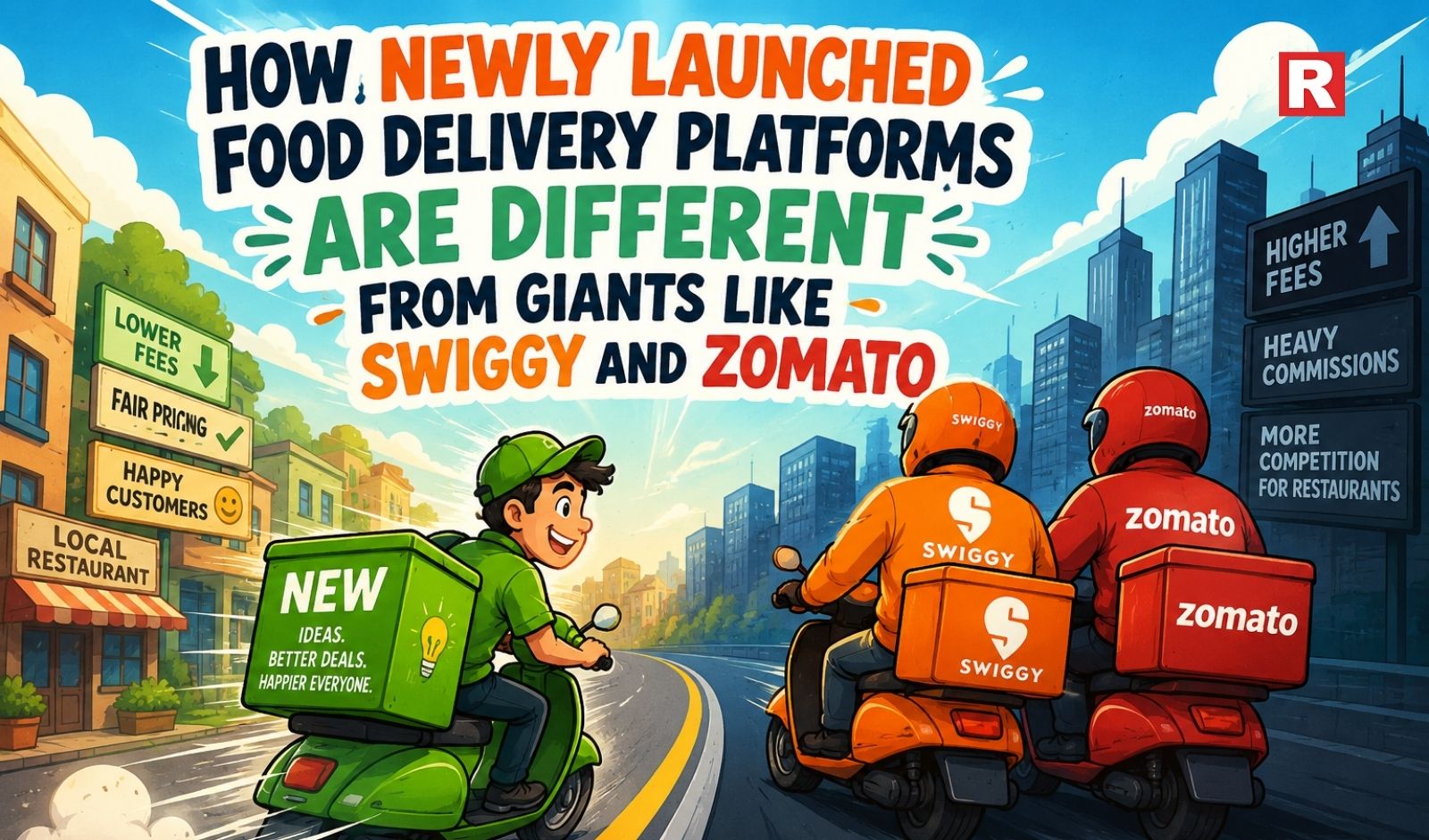
India's food delivery industry is going through a major transformation. For years, Swiggy and Zomato have dominated the market, becoming the go-to platforms for ordering food online. They built massive delivery networks, partnered with millions of customers, and changed how people enjoy restaurant meals at home.
However, the market is no longer a two-player game. New food delivery platforms are entering the space with fresh ideas, lower fees, and restaurant-friendly business models. Platforms backed by ONDC, along with emerging players such as Rapido and other startups, are creating a new wave of competition. These companies are not simply copying what existing food delivery giants have done. Instead, they are trying to solve some of the biggest challenges faced by restaurants, delivery partners, and customers.
Why Restaurants Are Exploring New Food Delivery Platforms
Restaurants have benefited from online ordering, but many business owners have also expressed concerns about rising costs. Apart from commission charges, restaurants often spend on advertisements, sponsored listings, discounts, and promotional campaigns to stay visible on large platforms. For small restaurants and cloud kitchens, these expenses can significantly reduce profits. Many restaurant owners feel that while online orders have increased, their margins have become thinner. This is one reason why newer food delivery platforms are attracting attention. The promise of lower commissions and more transparent pricing is encouraging many restaurants to test alternative platforms.
Lower Commission Models Are Becoming a Key Differentiator
One of the biggest differences between new food delivery platforms and established giants is the commission structure. Traditional food delivery platforms typically charge restaurants a percentage of each order. Depending on various factors, these costs can become substantial for restaurant operators.
New entrants are introducing lower commission rates or fixed-fee structures. This helps restaurants retain a larger share of their revenue.
For example, some emerging platforms are positioning themselves as restaurant-first businesses. Their goal is not only to attract customers but also to create a sustainable ecosystem where food businesses can earn more from every order.
Lower commissions can also benefit customers. When restaurants save money on platform fees, they may be less likely to increase menu prices to offset operational costs. This creates a win-win situation for both restaurants and consumers.
ONDC Is Introducing a Different Approach
One of the most significant developments in India's food delivery landscape is the growth of the Open Network for Digital Commerce (ONDC). Unlike traditional food delivery apps that operate as closed marketplaces, ONDC functions as an open network. This allows multiple buyer applications and seller applications to connect through a common digital infrastructure. For customers, this means more choice. For restaurants, it means they are not dependent on a single platform for visibility and orders. The open-network model encourages competition and creates opportunities for smaller restaurants that may struggle to gain visibility on larger platforms. It also promotes innovation because multiple companies can build services on top of the same network.
More Affordable Pricing for Customers
Food delivery users have become increasingly aware of additional charges that appear during checkout. Delivery fees, surge pricing, platform charges, handling fees, and packaging costs can sometimes make an order significantly more expensive than dining at a restaurant. New food delivery platforms are trying to address this issue. Many are focusing on affordability by reducing operational costs and simplifying fee structures. Some platforms are promoting budget-friendly meal options, while others are working to lower delivery costs through improved logistics. Customers today compare prices across multiple apps before placing an order. As a result, affordability has become a major competitive advantage. The platforms that can offer better value without compromising service quality are likely to attract more users in the coming years.
Technology Is Driving the Next Phase of Growth
While discounts and promotions can attract customers temporarily, technology is becoming the real battleground. New food delivery companies are investing heavily in advanced technology systems that improve efficiency at every stage of the ordering process.
AI-Powered Demand Forecasting: Artificial intelligence can analyze customer behavior, historical orders, weather patterns, and local events to predict demand. This helps platforms prepare for peak ordering periods and reduce delays.
Smart Delivery Allocation: Modern dispatch systems automatically assign delivery partners based on distance, traffic conditions, and order volume. This improves delivery speed and increases operational efficiency.
Real-Time Analytics: Restaurants can access valuable insights about customer preferences, order trends, and peak sales periods. These analytics help businesses make better decisions about menu planning, pricing, and inventory management.
Route Optimization: Advanced routing algorithms help delivery partners find the fastest routes. Shorter delivery times improve customer satisfaction while reducing fuel and operational costs.
Existing Delivery Networks Give New Players
Building a delivery network from scratch is expensive and time-consuming. Some new entrants already operate large mobility or logistics networks. This gives them a significant advantage when entering the food delivery market. Companies with existing rider fleets can quickly expand into food delivery without investing heavily in new infrastructure. This approach improves rider utilization and allows platforms to operate more efficiently. It also creates additional earning opportunities for delivery partners by offering multiple types of jobs within the same ecosystem.
Challenges That New Platforms Must Overcome
Although new food delivery platforms have generated excitement, success is not guaranteed. Customers expect reliable service, accurate order tracking, fast deliveries, and responsive customer support.
Building trust takes time.
Established players have spent years developing relationships with restaurants and customers. They also have strong brand recognition and extensive delivery networks. New entrants must prove that they can consistently deliver a high-quality experience. Restaurant onboarding, technology integration, customer acquisition, and operational scalability remain major challenges. The platforms that can balance innovation with reliability will have the best chance of long-term success.
What Modern Consumers Want
Today's food delivery customers are more informed than ever. They are not just looking for discounts. They want convenience, transparency, and value.
Most users now expect:
- Affordable delivery fees
- Faster deliveries
- Transparent pricing
- Wider restaurant choices
- Better customer service
- Reliable order tracking
- Healthier food options
The growing popularity of subscription meal plans, healthy food delivery, and hyperlocal dining options shows that customer preferences are evolving rapidly. New food delivery companies are designing their services around these changing expectations.
Who Benefits From the New Food Delivery Ecosystem?
The emergence of alternative food delivery platforms creates opportunities for multiple stakeholders.
Restaurants: New food delivery platforms help restaurants reduce commission expenses, improve overall profitability, maintain better control over menu pricing, and increase visibility across multiple ordering channels without relying on a single platform.
Customers: Customers benefit from more affordable food options, increased competition among delivery platforms, improved service quality, transparent pricing structures, and access to a wider selection of restaurants and cuisines.
Delivery Partners: Delivery partners gain additional earning opportunities through multiple platforms, receive more order requests, experience better utilization of their time, and enjoy greater flexibility in managing their work schedules.
Cloud Kitchens: Cloud kitchens benefit from lower customer acquisition costs, improved profit margins, increased order volumes, and enhanced scalability through access to diverse delivery networks and broader customer reach.
The Future
India's food delivery industry is entering a new chapter. While Swiggy and Zomato continue to lead the market, newer platforms are introducing business models that challenge traditional approaches. Lower commissions, open-network commerce, AI-driven logistics, and customer-focused pricing strategies are reshaping the competitive landscape. The future may not belong solely to the platform with the largest customer base. Instead, success will likely depend on creating value for every participant in the ecosystem. As competition grows, restaurants could gain better profitability, customers may enjoy lower costs, and delivery partners could access more opportunities. For India's food delivery industry, this shift represents more than just new competition. It signals the beginning of a more diverse, technology-driven, and restaurant-friendly marketplace.
Saptopriya Ghosal
Feature Writer
I am a dedicated media professional with a bachelor's degree in mass communication from the State University of Calcutta and a postgraduate degree from Amity University. My academic journey has equipped me with a profound understanding of storytelling and communication. Passionate about the dynamic world of media, I continually strive to explore new ways to engage and inform through compelling narratives.



































































