
How AI Is Helping Restaurants Reduce Food Waste
Some restaurant groups using AI-driven forecasting have reported reductions of more than 35% in ingredient waste and substantial improvements in kitchen efficiency after adopting predictive preparation systems.

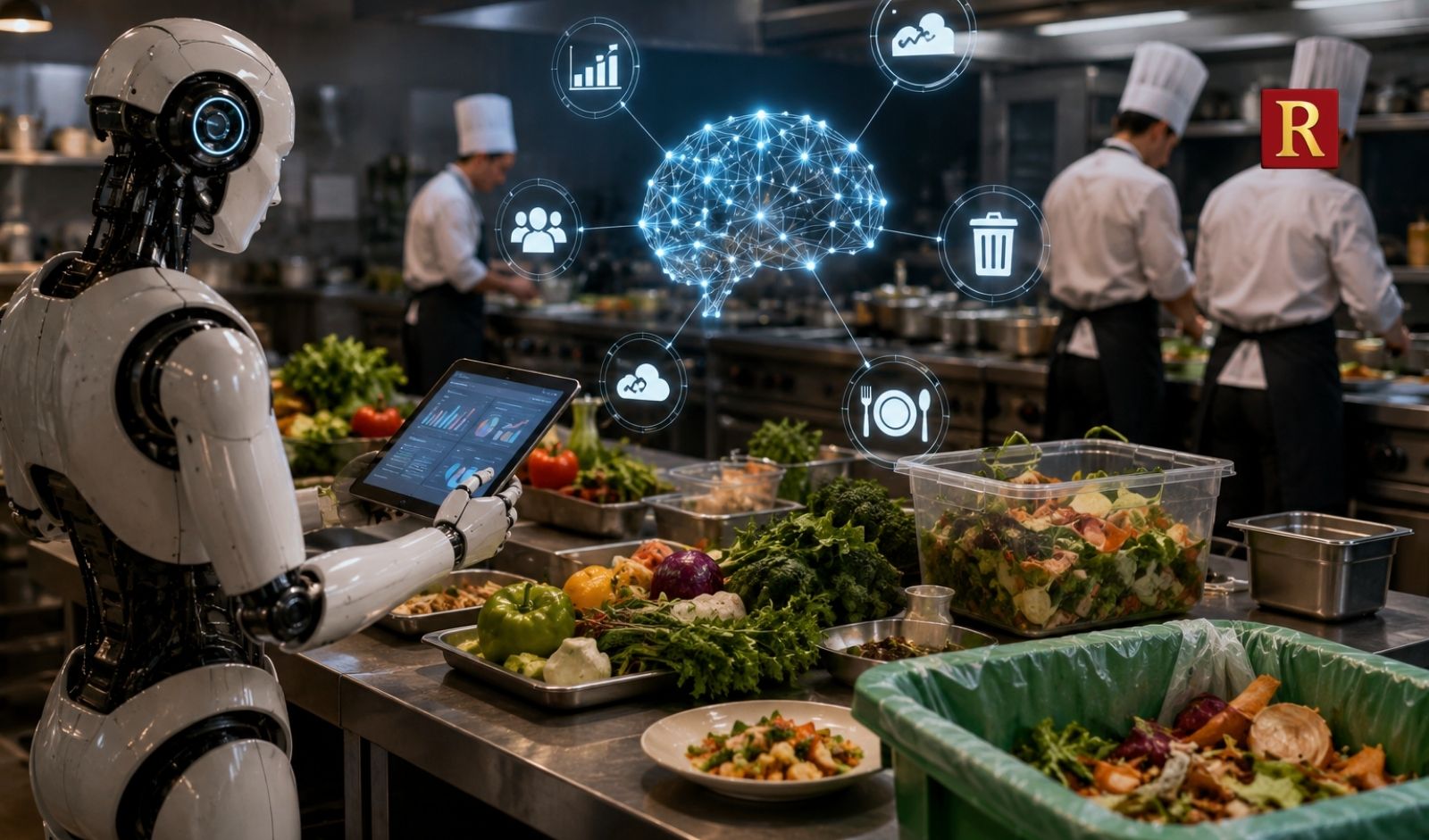
Every restaurant wants to serve fresh food while keeping customers happy. But this often leads to one major challenge—food waste. Kitchens may prepare more meals than needed, order extra ingredients to avoid shortages, or struggle to predict customer demand during holidays, weekends, or bad weather. All of these factors can result in perfectly edible food being thrown away.
Artificial intelligence (AI) is helping restaurants tackle this problem with better planning and smarter decisions. By analysing sales patterns, reservations, weather forecasts, inventory levels, and customer behaviour, AI helps restaurants prepare the right amount of food, reduce unnecessary purchases, and identify where waste happens. The result is lower operating costs, improved efficiency, and a more sustainable way of running food businesses.
Why food waste is a costly problem for restaurants
Food waste affects much more than the environment. It directly impacts a restaurant's profits. Restaurants lose money when ingredients expire before they are used or when prepared meals remain unsold. At the same time, rising food prices make every kilogram of wasted produce more expensive than ever.
According to ReFED, the United States generated around 60 million tons of unsold or uneaten food in 2024, representing nearly 29% of the country's food supply. The estimated financial loss was around $230 billion. While these figures are from the U.S., the challenge is equally relevant for restaurants worldwide, including India, where food costs continue to rise. Restaurants also face hidden costs such as labour, electricity, storage, transportation, and waste disposal. Reducing food waste helps businesses improve profitability without increasing menu prices.
AI predicts demand before customers place their orders
One of AI's biggest strengths is demand forecasting. Traditional forecasting often relies on last week's sales or the manager's experience. AI goes much further by analysing thousands of data points at once.
These include:
- Previous sales records
- Reservations
- Online orders
- Local events
- Festivals
- Weather forecasts
- School holidays
- Day of the week
- Seasonal buying patterns
For example, if previous data shows that heavy rainfall increases home delivery orders but reduces dine-in traffic, AI can recommend preparing fewer dine-in portions while ensuring enough ingredients for delivery orders. Instead of relying on guesswork, restaurants receive data-backed recommendations that improve purchasing and food preparation decisions.
Smarter inventory management means fewer ingredients go to waste
Inventory management is another area where AI is making a noticeable difference. Modern AI platforms connect directly with a restaurant's point-of-sale (POS) system, inventory software, and supplier databases. Every sale automatically updates ingredient usage. The system can calculate how much stock remains and estimate how long each ingredient will last based on current sales trends.
Rather than simply alerting managers when supplies run low, AI can recommend:
- What ingredients need reordering
- The ideal quantity to purchase
- The best time to place orders
- Which ingredients are moving slowly
This helps restaurants avoid buying more than they actually need. For businesses handling fresh vegetables, seafood, dairy products, or bakery items, accurate purchasing can significantly reduce spoilage.
AI-powered cameras show exactly where food is being wasted
Many restaurants know they have food waste but do not know exactly what is being discarded. Computer vision technology is changing that. AI-powered cameras installed near preparation stations or waste bins can recognise different types of food being thrown away. The software identifies ingredients such as rice, vegetables, meat, sauces, or bread and records the quantity discarded.
Instead of general estimates, kitchen managers receive detailed reports showing:
- The ingredients wasted most often
- The shifts producing the highest waste
- Frequently discarded menu items
- Preparation mistakes
- Plate leftovers returned by customers
These insights help chefs adjust recipes, portion sizes, and preparation methods. Over time, small operational improvements can lead to significant reductions in food waste.
Better preparation planning reduces overproduction
Preparing too much food is one of the most common reasons restaurants experience waste.
AI helps solve this by recommending preparation quantities based on expected customer demand.
Imagine a restaurant usually prepares 100 portions of a popular curry every Friday evening. After analysing reservations, delivery orders, weather conditions, and local events, AI may suggest preparing only 72 portions because demand is expected to be lower.
This simple adjustment reduces leftover food while ensuring customers are still served without delays. Some restaurant groups using AI-driven forecasting have reported reductions of more than 35% in ingredient waste and substantial improvements in kitchen efficiency after adopting predictive preparation systems.
AI helps restaurants improve their menus
Food waste often begins with menu design. Some dishes require expensive ingredients that are ordered infrequently or spoil quickly. Others may sell poorly despite taking time and resources to prepare.
AI analyses menu performance by studying:
- Sales volume
- Ingredient usage
- Food costs
- Profit margins
- Customer preferences
- Seasonal demand
For example, if two menu items require the same fresh herbs but one rarely sells, AI may recommend replacing it with another dish that uses ingredients already available in the kitchen. Some restaurants also use AI to suggest limited-time specials featuring ingredients that need to be used before they expire. This improves inventory turnover while giving customers fresh menu options.
Dynamic pricing helps sell food before it expires
Restaurants are increasingly exploring AI-powered pricing strategies for highly perishable foods. Instead of allowing prepared meals or bakery products to go unsold at the end of the day, AI can recommend temporary discounts based on inventory levels and expected demand.
Examples include:
- Lunch specials
- Evening meal bundles
- Happy-hour discounts
- End-of-day offers
- Limited-time promotions
These pricing decisions are based on real-time data rather than fixed schedules. The approach helps reduce waste while generating additional revenue from products that might otherwise be discarded.
AI supports sustainability and business growth
Reducing food waste is becoming an important sustainability goal across the hospitality industry. When restaurants waste less food, they also reduce the resources used to produce it, including water, energy, packaging, and transportation. Many restaurant groups now include food waste reduction as part of their environmental, social, and governance (ESG) initiatives. For customers, sustainability is increasingly becoming part of the dining experience. Restaurants that manage resources responsibly can strengthen their reputation while operating more efficiently. At the same time, reducing waste supports healthier profit margins, especially during periods of rising ingredient costs.
AI works best when combined with human expertise
AI is a powerful decision-support tool, but it is not a replacement for experienced chefs or restaurant managers. Its recommendations depend on accurate data. Incorrect inventory records, missing sales information, or inconsistent menu entries can reduce forecasting accuracy. Staff training is equally important. Employees need to understand how to interpret AI insights and apply them in day-to-day operations. Restaurants that combine technology with experienced kitchen teams often achieve the best results because data supports decisions rather than replacing professional judgement.
The future of AI in restaurant kitchens
AI is expected to become even more advanced over the coming years. Emerging technologies include real-time shelf-life prediction, smart kitchen sensors, automated inventory tracking, digital kitchen twins, and voice-assisted inventory management. Some systems are already exploring reinforcement learning models that continuously improve purchasing decisions based on changing customer behaviour.
As these technologies become more affordable, they are likely to be adopted not only by large restaurant chains but also by independent restaurants, cafés, and cloud kitchens.
The Future!
Food waste has long been one of the restaurant industry's biggest operational challenges, affecting both profitability and sustainability. Artificial intelligence is providing practical solutions by helping restaurants forecast demand more accurately, manage inventory efficiently, monitor waste in real time, optimise menus, and prepare the right amount of food. While AI cannot eliminate food waste entirely, it gives restaurant teams the information they need to make smarter decisions every day. For businesses looking to control costs, improve efficiency, and operate more sustainably, AI is becoming an essential part of the modern kitchen rather than simply another technology trend.
Saptopriya Ghosal
Feature Writer
I am a dedicated media professional with a bachelor's degree in mass communication from the State University of Calcutta and a postgraduate degree from Amity University. My academic journey has equipped me with a profound understanding of storytelling and communication. Passionate about the dynamic world of media, I continually strive to explore new ways to engage and inform through compelling narratives.



































































