GST Registration for A Restaurant Business: How It Works
One of the key areas related to the success of your restaurant is managing tax, and mainly GST. Goods and Services Tax (GST). The GST, a destination-based, multi-stage tax, has completely changed the indirect tax system in India. In addition to being required by law, obtaining GST registration for a restaurant opens the door for building a reputation, guaranteeing a smooth supply chain, and conducting business openly in the marketplace.

There are several areas a restaurateur needs to look out for while managing their restaurant business. One of the key areas related to the success of your restaurant is managing tax, and mainly GST. Goods and Services Tax (GST). The GST, a destination-based, multi-stage tax, has completely changed the indirect tax system in India. In addition to being required by law, obtaining GST registration for a restaurant opens the door for building a reputation, guaranteeing a smooth supply chain, and conducting business openly in the marketplace.
If your restaurant is still new and not registered for GST, then you should apply for it as soon as possible. In this article, everything you need to know about GST registration for a restaurant business will be covered. Including the basic tax rates, mandatory registration limits, the detailed procedure, legal requirements, and the often confusing idea of Input Tax Credit (ITC).
Read more: Chutney: Taste of the Land
Understanding the GST Landscape for Restaurants
You must understand the two main GST rates for restaurants and the conditions in which they apply before beginning the registration process:
- 5% GST without Input Tax Credit (ITC): The most common tax rate for the majority of restaurants, including cafés and food trucks, is 5% GST without Input Tax Credit (ITC). A restaurant selling food and drinks is subject to a flat 5% GST charge under this composition scheme. It cannot, however, claim Input Tax Credit, which means that it cannot get a refund for the GST spent on purchases such as equipment, rent, or raw materials. Because of its straightforward design and ease of implementation, this scheme is a desirable choice for the majority of small and medium-sized restaurants.
- 18% GST with Input Tax Credit (ITC): Restaurants located within hotels with room rates exceeding Rs. 7,500 are subject to the higher 18% GST rate with Input Tax Credit (ITC). Restaurants and bars that chose to use the standard GST plan are also affected by this. The possibility to claim Input Tax Credit, which can lessen the tax burden on business expenses and possibly boost profitability, is the main benefit here.
The 5% plan is the most sensible and uncomplicated option for the great majority of independent restaurants, yet the decision between these two plans will rely on your turnover and business strategy.
When Is GST Registration Mandatory For Your Restaurant?
The first important step is knowing when to register for GST. The law specifies certain requirements for restaurants to register for GST:
- Standard Turnover Threshold: Any business, including restaurants, with an annual turnover of more than Rs. 40 lakh is required to register for GST. The barrier is Rs. 20 lakh for companies that operate in a Special Category State, which includes states like Arunachal Pradesh, Assam, Jammu & Kashmir, etc.
- Inter-State Supply: GST registration is required if you sell products or services from one state to another, even if your revenues fall below the threshold. For instance, you have to register if your restaurant provides catering for an event in a nearby state.
- E-commerce Operators: Regardless of your turnover, you must register for GST if your restaurant sells food via an e-commerce platform such as Swiggy or Zomato.
Obtaining a Permanent Account Number (PAN) and a GSTIN (Goods and Services Tax Identification Number) is legally required if your restaurant fits into any of these categories. There may be serious consequences and legal issues if this isn't done.
Know more: Marketing The Gen Z Way For Your Restaurant
The Step-by-Step Guide to GST Registration
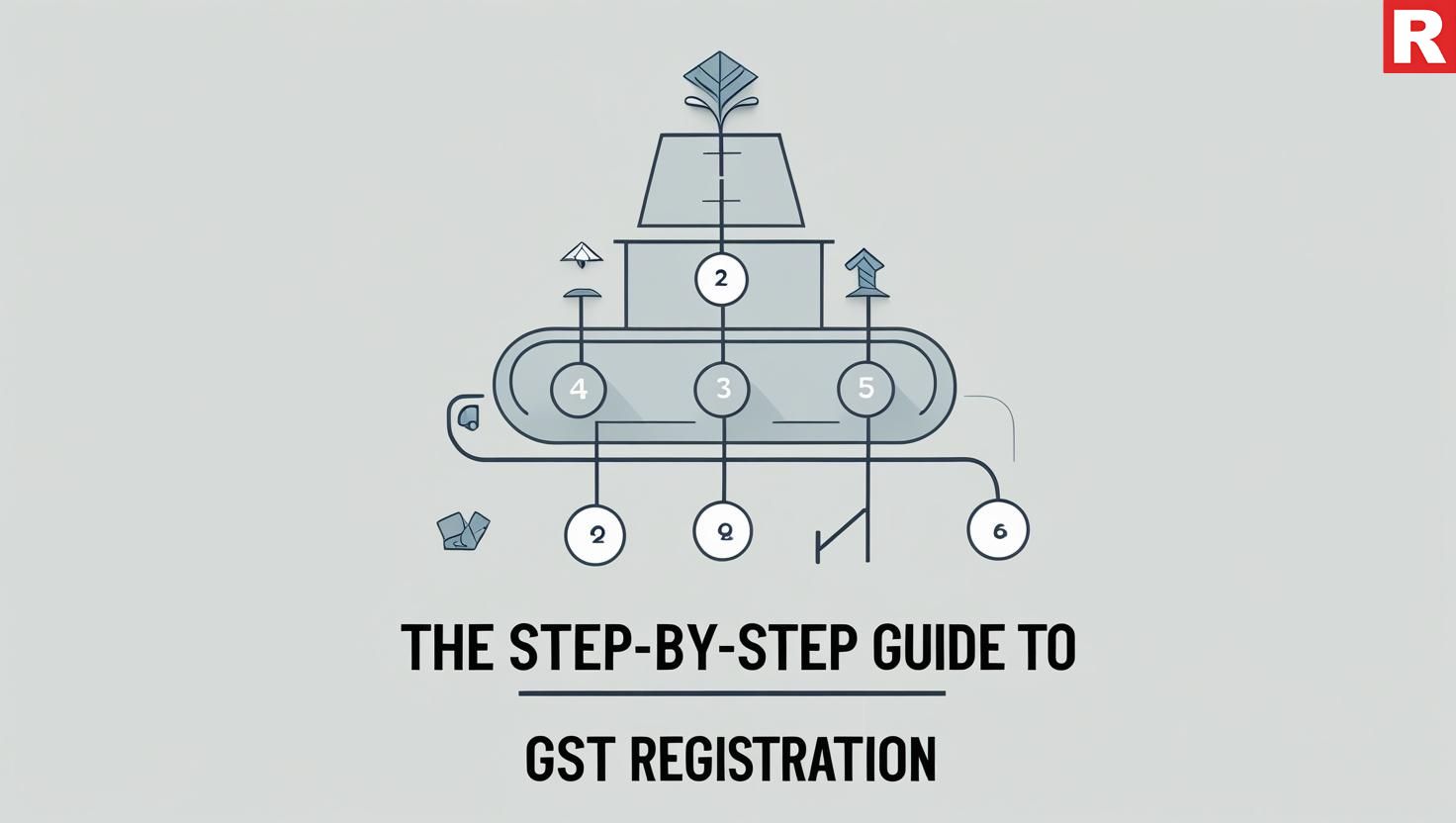
The GST registration process is entirely online and can be completed through the official GST portal. Here’s a detailed, step-by-step guide to get you started:
Step 1: Get Your Documents Ready
To prevent any delays, collect all required paperwork before you start. These include:
- The authorized signatory and the business's PAN card.
- The authorized signatory's Aadhaar card.
- Partnership deed or document of business incorporation.
- Evidence of business address, such as a utility bill or rental agreement.
- Details of a bank account (a bank statement or canceled check).
- A passport-sized photo of the directors or partners.
Step 2: Access the GST Portal
Go to the official site of GST registration (www.gst.gov.in) and click on the "Services" tab, then "Registration," and finally "New Registration."
Step 3: Fill Out the Application Form
A multi-part form (Parts A and B) will be sent to you to fill out your business details.
Part A: Enter your mobile number, email address, business name, and PAN. For verification, the system will issue an OTP to your email address and mobile number.
Part B: A Temporary Reference Number (TRN) will be issued to you following a successful verification process. Log in using this TRN, then complete Part B's comprehensive application form. All of your documents will be uploaded here, along with details about your company and its approved signatories.
Step 4: Submission and Verification
You will apply after completing all the fields and attaching the necessary files. The TRN allows you to monitor the progress of your application.
What's new: How to Create a Restaurant Business Card
Step 5: Receiving Your GSTIN
Your application will be examined by the tax officer. Within a few working days, your GSTIN will be generated if all the information is accurate. For GST purposes, your company is uniquely identified by its 15-digit GSTIN.
Advantages of GST for Restaurant Owners
Even though managing GST compliance can appear difficult, restaurant operators can benefit from a number of important features that make their operations more efficient and legal.
- Simplified Tax Structure: The main advantage is that a single, unified tax will replace several other taxes, including the Value Added Tax (VAT), Service Tax, and other state and federal taxes. In addition to lowering the administrative load and saving time and money that would have been required to file separate returns for various taxes, this significantly simplifies the taxing procedure.
- Enhanced Credibility and Transparency: For clients and suppliers, having a GST registration instantly conveys credibility. Business partners can confirm your adherence to regulations, and customers can rest easy knowing they are paying a standardized, government-regulated tax. This openness builds confidence and might raise your market position.
- Development of an Orderly Supply Chain: The Goods and Services Tax (GST) promotes an orderly and structured supply chain. Dependence on the unorganized sector is decreased when you buy goods and services from other GST-registered suppliers because the entire transaction is recorded. This gives your business operations greater structure and gives you a complete record of all your expenses.
- Expands the Taxpayer Base: Many small and medium-sized restaurants have entered the formal economy as a result of the need for businesses with annual sales above a particular limit to register, which has led to a better-structured industry and a larger tax base.
- Simple Online Procedure: Compared to the previous tax system, the GST registration, filing, and payment procedures are all completed online, which increases efficiency and reduces time.
Check out: Top 20 Trendy Whiskeys You Must Try Once
Your Guide to Influencer Marketing in Restaurants
Understanding Input Tax Credit (ITC) for Restaurants
One of the main areas that remains unclear for the majority of restaurants on the 5% GST program is the Input Tax Credit. Let's explain how it operates:
- No ITC on Goods and Services Used: You are not eligible to receive a credit for the GST you pay on your purchases under the 5% program. This implies that the GST paid on kitchenware, rent, other company services, and raw ingredients (such as flour, vegetables, and meat) cannot be written off.
- Why the Government Did This: In order to avoid tax evasion and simplify the tax system for the restaurant industry, the government implemented this rule. Small businesses find it easier to keep up with the 5% rate, which is a final tax on the food's worth, because they don't have to deal with the ITC.
- The Bottom Line: You shouldn't worry about claiming ITC if your restaurant is covered by the 5% GST plan. Your purchases' entire GST cost is a business expense.
Billing and Compliance: Creating a GST-Compliant Invoice
A GST-compliant invoice is required for each transaction in a restaurant that is registered for GST. This is a legal document, not merely a bill, and it needs to contain:
- The GSTIN of your restaurant and, if applicable, that of your customers.
- The date and invoice number.
- The recipient's and supplier's names and addresses (your restaurant).
- A thorough explanation of the meals and drinks offered.
- The entire amount of GST and the tax rate (e.g., 5%).
- The transaction's entire value.
- The authorized signatory's signature, either digital or real.
Accuracy and a smooth process can be achieved by using billing software that is GST-compliant.
Read this: The Ultimate Guide to Food Photography for Indian Restaurants
Conclusion
An essential component of managing a profitable restaurant business in India is navigating the GST environment. Understanding the fundamentals of GST registration for a restaurant business, the distinction between the 5% and 18% tax rates, and the need for timely compliance can help you run your business efficiently and lawfully, even though it may seem complicated. More than just a number, your GSTIN is an indication of a legitimate, professional, and legal business that is prepared to succeed in the modern Indian market.
Mahak Sharma
Content Writer
Mahak Sharma is a passionate content writer with 2 years of experience crafting compelling content across various niches, tailoring her writing to suit different audiences and platforms. She is dedicated to producing engaging content for readers so that they can understand and enjoy the articles. Her strengths lie in crafting SEO-friendly, well-structured articles that drive visibility and engagement.