
Fine Dining Restaurant: Business Model, Investment, and Profitability Explained
Fine dining is not simply about serving exceptional food. It is about creating experiences that guests are willing to pay a premium for while building a business model capable of sustaining long-term growth.

Fine dining restaurants are often associated with luxury, celebrity chefs, and beautifully plated dishes. Guests walk into elegant spaces, enjoy personalized service, and leave with memorable experiences. However, behind the polished dining rooms lies one of the hospitality industry's most challenging business models.
Unlike quick-service or casual dining formats that depend on high customer volumes, fine dining restaurants focus on exclusivity, exceptional quality, and attention to detail. Every element, from sourcing premium ingredients to training staff in service etiquette, requires careful planning and significant investment. For entrepreneurs and investors, understanding the economics behind fine dining is essential before entering this competitive segment. Success depends not only on culinary creativity but also on strong financial management and operational efficiency.
Understanding the Fine Dining Restaurant Business Model
A fine dining restaurant delivers a premium experience that extends far beyond food. Guests pay for ambience, service standards, presentation, and exclusivity.
Several factors distinguish fine dining establishments from other restaurant formats:
- Sophisticated interiors and thoughtfully designed spaces
- High-quality ingredients, often imported or locally sourced from specialty producers
- Well-trained chefs and front-of-house staff
- Curated menus with innovative presentations
- Personalized guest experiences
- Extensive beverage and wine programs
At its core, the fine dining business model revolves around offering exceptional experiences to a smaller number of guests while maintaining premium pricing. However, charging higher prices does not automatically translate into higher profits. Fine dining restaurants also carry significantly higher operating expenses.
How Fine Dining Restaurants Generate Revenue
Most people assume that restaurants earn money solely through food sales. In reality, successful fine dining establishments diversify their revenue streams.
Food Sales: Food remains the primary source of revenue. Signature dishes, seasonal offerings, and tasting menus often command premium prices.
Beverage Programs: Wine pairings, premium spirits, handcrafted cocktails, and non-alcoholic beverage experiences contribute significantly to profitability. Beverage margins are often stronger than food margins.
Chef's Tasting Menus: Many fine dining restaurants offer fixed-price tasting experiences. These menus allow chefs to showcase creativity while improving inventory planning and reducing waste.
Private Dining Events: Corporate gatherings, celebrations, and intimate events provide additional income opportunities. Dedicated private dining spaces have become valuable revenue drivers.
Culinary Experiences: Cooking masterclasses, chef interactions, and exclusive dining events help restaurants strengthen customer relationships while creating new sources of income.
The modern fine dining business is increasingly shifting toward experience-led hospitality rather than traditional meal service alone.
Investment Required to Open a Fine Dining Restaurant

Launching a fine dining restaurant requires significant capital investment. The overall cost depends on factors such as city, restaurant size, location, concept, interior design, and menu offerings. In India, establishing a premium standalone fine dining restaurant typically requires an investment ranging from Rs 2 crore to Rs 10 crore, while luxury destination restaurants in metropolitan markets can exceed Rs 15 crore.
Real Estate and Deposits
Location is often the single largest investment decision for a fine dining business. Premium restaurants are generally located in high-footfall commercial districts, luxury hotels, upscale residential areas, or lifestyle destinations. In cities such as Mumbai, Delhi, Bengaluru, and Hyderabad, commercial rentals can range from Rs 250 to Rs 1,500 per square foot per month, depending on the locality. Most landlords also require a security deposit equivalent to 6 to 12 months' rent, which significantly increases the upfront capital requirement. Industry experts estimate that real estate expenses, including deposits and leasehold improvements, account for approximately 20 to 30 percent of the total project cost.
Interior Design and Ambience
Ambience plays a critical role in shaping the guest experience and justifying premium pricing. Fine dining customers expect elegant interiors, carefully planned lighting, superior acoustics, luxury furnishings, custom décor elements, and premium tableware. According to hospitality consultants, interior fit-outs for premium restaurants in India typically cost between Rs 3,000 and Rs 10,000 per square foot. Luxury concepts featuring imported materials, bespoke furniture, and designer lighting can exceed this range. As a result, interior design and ambience often consume 20 to 25 percent of the total startup budget.
Kitchen Infrastructure
A professional fine dining kitchen requires advanced equipment capable of maintaining consistency and efficiency during service. Investments often include combi ovens, blast chillers, walk-in cold storage units, sous-vide systems, induction ranges, dishwashing systems, and specialized preparation stations. For a 100-seat fine dining restaurant, kitchen equipment costs generally range between Rs 30 lakh and Rs 1.5 crore depending on the cuisine and level of sophistication. Kitchen infrastructure typically represents 15 to 20 percent of the overall capital expenditure. Many operators also allocate additional budgets for annual equipment maintenance and replacement.
Licenses and Compliance
Restaurant operations in India require multiple licenses and regulatory approvals before opening. These may include FSSAI registration, GST registration, Shop and Establishment License, Fire NOC, Pollution Control approvals, Health Trade Licenses, music licenses, and liquor licenses where applicable. The cost of obtaining a liquor license alone can vary dramatically across states, ranging from a few lakh rupees to several crores in certain jurisdictions. Overall compliance and licensing expenses generally account for 3 to 5 percent of the initial investment but can have a substantial impact on project timelines and operational readiness.
Recruitment and Training
Unlike casual dining formats, fine dining restaurants rely heavily on highly skilled personnel. Executive chefs, sous chefs, pastry chefs, sommeliers, restaurant managers, captains, and service associates must work together to deliver a seamless guest experience. Industry benchmarks indicate that labour costs in fine dining often account for 35 to 45 percent of monthly operating expenses. Before launch, restaurants spend significantly on recruitment, onboarding, uniforms, service workshops, menu tastings, and hospitality training. Initial recruitment and training costs typically represent 3 to 5 percent of startup investment, but the long-term value of a well-trained team often outweighs the expense.
Working Capital
Working capital is one of the most overlooked aspects of restaurant planning. Even after opening, restaurants need sufficient cash reserves to cover recurring expenses such as salaries, rent, utility bills, inventory purchases, marketing campaigns, maintenance, and vendor payments. Most hospitality consultants recommend maintaining a working capital reserve equivalent to at least six to twelve months of operating expenses. For a premium restaurant, this reserve can range from Rs 50 lakh to over Rs 2 crore depending on the scale of operations. Industry data suggests that inadequate working capital remains one of the leading reasons why new restaurants struggle during their first two years of operation.
Technology and Digital Infrastructure
Modern fine dining restaurants increasingly invest in technology to improve efficiency and guest satisfaction. This includes cloud-based POS systems, reservation management software, inventory tracking platforms, customer relationship management tools, digital payment systems, and business analytics dashboards. Technology investments generally account for 2 to 4 percent of total startup costs. While this may seem modest, effective technology adoption can significantly reduce food wastage, improve table management, and enhance customer retention over the long term.
Marketing and Pre-Launch Activities
Building awareness before opening is crucial in the competitive hospitality sector. Restaurants often allocate budgets for branding, public relations, social media campaigns, influencer collaborations, launch events, professional photography, website development, and online listings. Industry experts recommend setting aside 3 to 5 percent of the total project budget for pre-launch and launch marketing activities. A strong launch strategy can accelerate customer acquisition and help establish the restaurant's position within the market from day one.
Understanding Restaurant Economics
Fine dining restaurants operate within a delicate financial balance. Several cost categories significantly influence profitability.
Food Costs: Food costs typically account for 30–38 percent of total revenue in a fine dining restaurant. For example, a restaurant generating Rs 20 lakh in monthly sales may spend Rs 6–7.5 lakh on ingredients alone. Imported cheeses, premium seafood, truffles, Wagyu beef, and artisanal products significantly increase procurement costs, making inventory management crucial.
Labour Costs: Labour expenses generally represent 35–45 percent of operating costs. A 100-seat fine dining restaurant may spend Rs 7–12 lakh per month on salaries for chefs, sous chefs, pastry specialists, managers, bartenders, servers, and support staff. Maintaining high service standards requires a larger workforce than most restaurant formats.
Occupancy Costs: Occupancy costs, including rent, maintenance charges, and property taxes, usually account for 10–15 percent of revenue. In prime locations across Mumbai, Delhi, or Bengaluru, a fine dining restaurant may pay Rs 3–8 lakh per month in rent, depending on size, location, and lease agreements.
Utilities and Maintenance: Utilities and maintenance typically consume 3–6 percent of monthly revenue. A premium restaurant can spend Rs 60,000–Rs 2 lakh per month on electricity, water, air conditioning, refrigeration, kitchen equipment servicing, pest control, and routine maintenance needed to maintain operational efficiency and guest comfort.
Maintaining luxury standards requires consistent investment.
Key Metrics That Matter
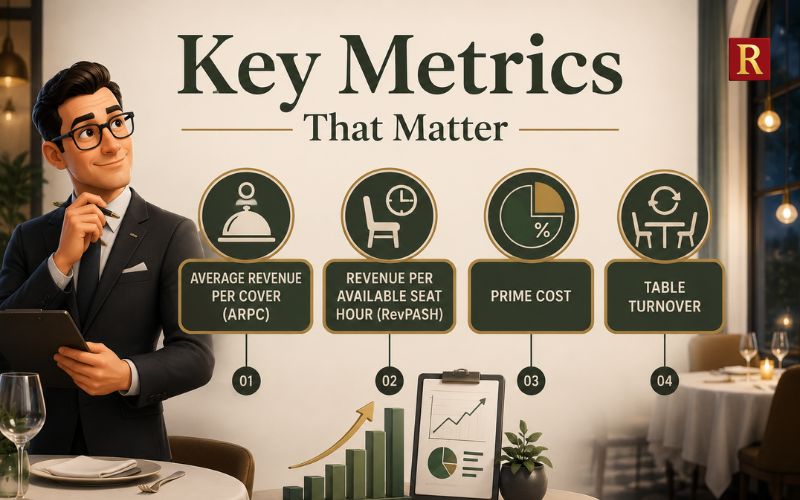
Fine dining operators rely on several performance indicators to monitor business health.
Average Revenue Per Cover (ARPC): In India's premium dining segment, ARPC typically ranges between Rs 2,000 and Rs 8,000 per guest, depending on cuisine, location, and beverage sales. Luxury fine dining concepts can exceed Rs 10,000 per cover.
Revenue Per Available Seat Hour (RevPASH): Well-performing fine dining restaurants generally achieve a RevPASH of Rs 500–Rs 2,000 per seat per hour, depending on occupancy levels, average spend, and service duration.
Prime Cost: Prime cost, which combines food and labour expenses, should ideally remain between 60–70 percent of total revenue. Exceeding this range often signals operational inefficiencies or pricing challenges.
Table Turnover: Fine dining restaurants typically record 1.5–2.5 table turns per service period, compared to 3–5 turns in casual dining. Longer dining durations are common due to multi-course meals and personalized service.
Is Fine Dining Profitable?
The answer is yes, but profitability depends on execution.
Fine dining restaurants benefit from premium pricing and strong brand positioning. Loyal customers often return for celebrations, business meetings, and special occasions. Successful establishments also enjoy media attention, partnerships, and opportunities for expansion.
However, challenges remain. Demand may fluctuate during economic downturns. Ingredient costs can rise unexpectedly. Staff shortages may impact service consistency. Many restaurants operate with relatively modest net profit margins despite generating impressive revenues. Long-term success depends on disciplined financial management rather than popularity alone.
What Drives Success in Fine Dining?
- A Distinct Culinary Identity: Restaurants that stand out often possess a clear point of differentiation.
- Strategic Location Selection: Accessibility, demographics, competition, and visibility influence performance.
- Exceptional Service: Guests remember how they were treated.
- Technology Integration: Modern fine dining restaurants increasingly rely on technology.
- Continuous Innovation: Menus evolve. Consumer preferences shift.
Emerging Trends Shaping Fine Dining
The definition of luxury dining continues to evolve. Experiential dining concepts are gaining popularity as consumers seek memorable interactions rather than traditional formality. Sustainability has become another important consideration. Restaurants increasingly embrace seasonal ingredients, local sourcing, and waste reduction initiatives. Personalization is also influencing guest expectations. Remembering dietary preferences, celebrating milestones, and tailoring experiences help build stronger emotional connections. Interestingly, many successful establishments are moving toward a more approachable form of luxury. Guests still expect excellence, but they increasingly value authenticity and comfort alongside sophistication.
Looking Ahead!
Opening a fine dining restaurant requires passion, vision, and substantial financial commitment. Yet passion alone is rarely enough. The businesses that thrive combine culinary excellence with sound commercial decision-making. They understand costs, monitor performance indicators, invest in people, and continuously adapt to market trends. Fine dining is not simply about serving exceptional food. It is about creating experiences that guests are willing to pay a premium for while building a business model capable of sustaining long-term growth. For entrepreneurs willing to embrace both creativity and discipline, fine dining continues to offer an opportunity to build brands that leave lasting impressions on the industry and on every guest who walks through their doors.
Saptopriya Ghosal
Feature Writer
I am a dedicated media professional with a bachelor's degree in mass communication from the State University of Calcutta and a postgraduate degree from Amity University. My academic journey has equipped me with a profound understanding of storytelling and communication. Passionate about the dynamic world of media, I continually strive to explore new ways to engage and inform through compelling narratives.



































































