
Comparing Fast Food vs. Fine Dining: Which Is Right for Your Restaurant
There are so many ways that a restaurant can stand out from the others. Whether it be their location or their price, even if the restaurant is selling the same product but in different types of restaurants, then different variables like price and quality will make the food item different for the customer. Such a thing is prone to happen in a fast-food restaurant or a fine-dining restaurant.

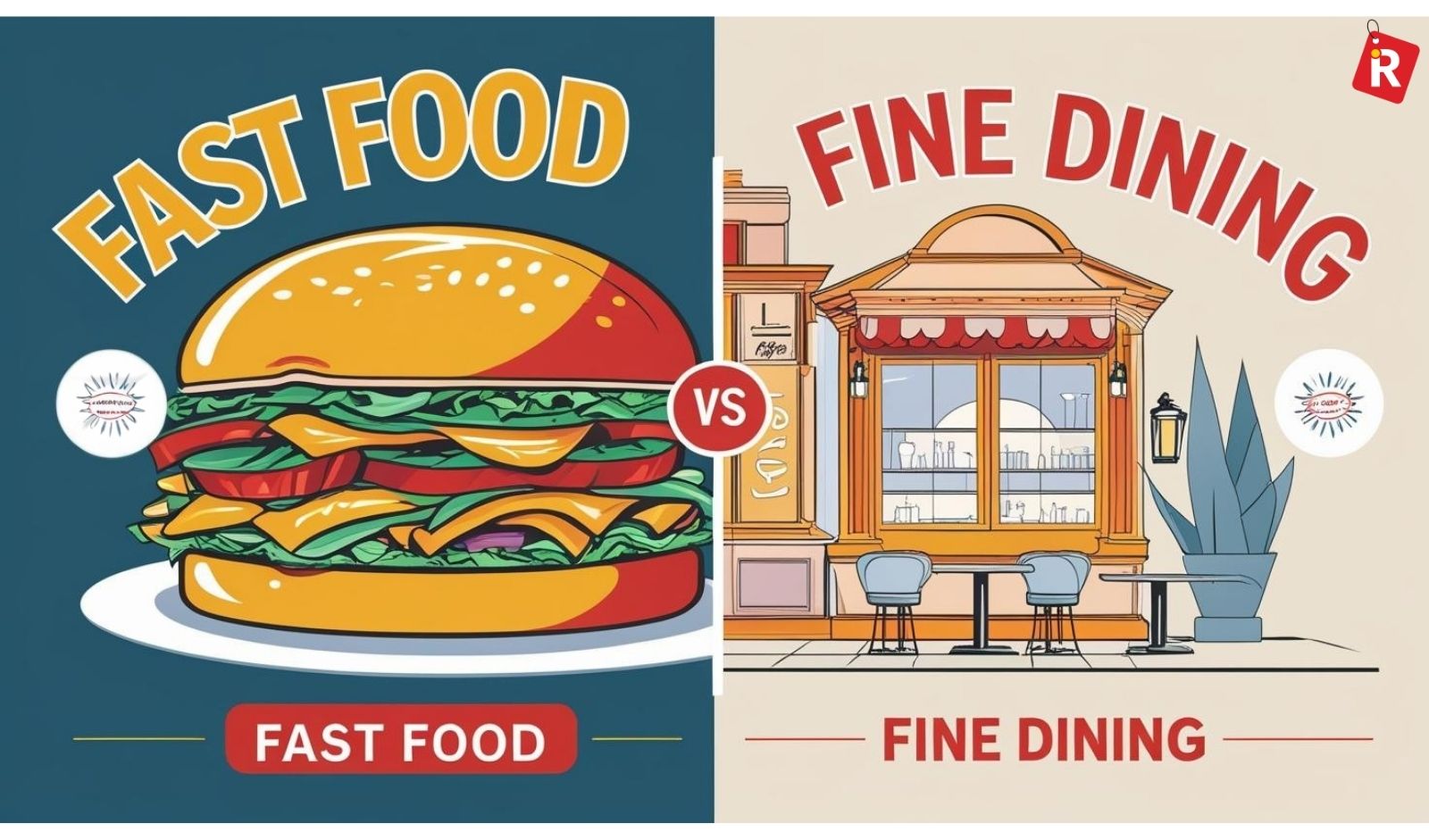
There are so many ways that a restaurant can stand out from the others. Whether it be their location or their price, even if the restaurant is selling the same product but in different types of restaurants, then different variables like price and quality will make the food item different for the customer. Such a thing is prone to happen in a fast-food restaurant or a fine-dining restaurant.
These two unique restaurant types, each with its own set of benefits, difficulties, and specifications, reflect completely distinct approaches to hospitality. So if you are confused about which restaurant to open between these two, there is no one "right" answer. The best option relies totally on your vision, available resources, market conditions, and operational style. Understanding these differences is essential for aspiring restaurateurs looking to carve out a niche and establish a long-term business in busy urban areas.
This article will dive deep into the characteristics of fast food and fine dining, compare them across critical business aspects, and provide a framework to help you decide which path aligns best with you as an entrepreneur.
Read more: How to Set a Goan-Themed Restaurant
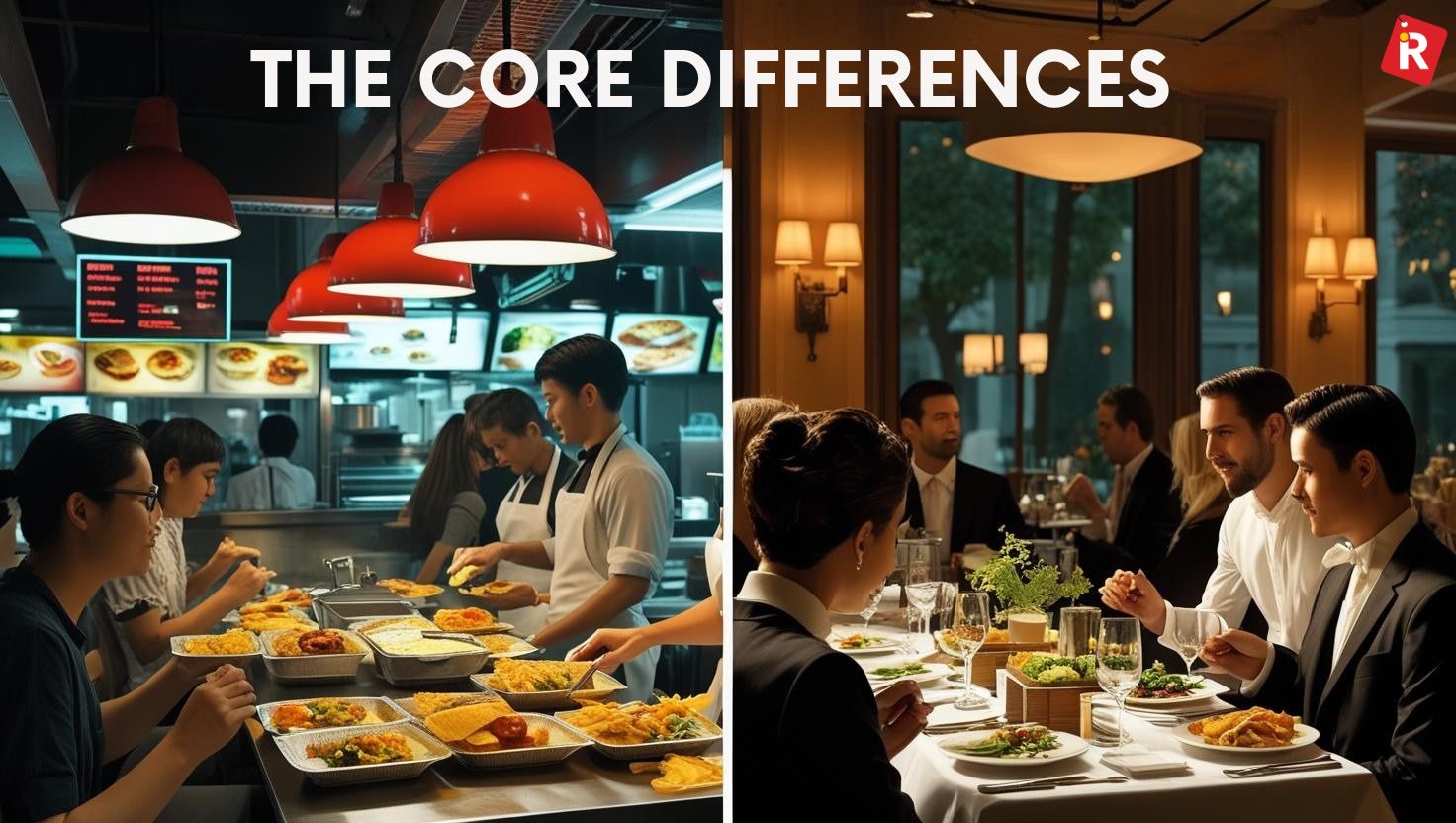
A Side-by-Side Comparison of the Core Differences
1. Target Audience & Market Demand:
Fast food: It serves a wide range of customers, including budget-conscious customers, students, working professionals, and families on the go. The main appeal of a fast food restaurant is its convenience and affordability, which leads to its high daily sales. Usually, the customers who want their food readily available or just want a quick snack are the main buyers. Fast food restaurants are mainly located in metropolitan cities, and QSRs flourish close to residential neighborhoods, transit hubs, and office buildings.
Fine Dining: The main customers of a fine dining restaurant are wealthy people, sophisticated food lovers, and customers who are holding business parties or celebrating significant milestones. There are not many people who visit a fine dining restaurant every day, but due to the high cost of such restaurants, the average amount spent on each visit is much higher.
2. Menu:
Fast Food: The menu of a fast food restaurant is small and standardized, so it can be prepared quickly. The ingredients are usually bought in bulk, which lowers the cost per unit and the food cost percentage. The main priorities of the menu are portion control and consistency.
Fine Dining: It offers a large, frequently changing, and sophisticated menu made with high-quality, occasionally unusual ingredients. As it is fine dining, the way to present the food matters the most. Artisanal plating and complex processes are emphasized in the preparation. Naturally, this results in a higher percentage of food expenses, which is offset by higher pricing.
What's new: Top 10 Kitchen Must-Haves for New Restaurant Owners
3. Ambiance & Design:
Fast Food: A fast food restaurant is like a second home to customers. Its whole point is to serve food easily and efficiently to them. So the appearance does not matter the most. Its design is practical, so customers can get their food quickly, and it is easy to clean after a full day of business. The look of a fast food restaurant is colorful and vibrant and consistent across locations, reflecting the brand's identity. For example, McDonald’s food chain restaurants have a theme color of red and yellow, no matter the location.
Fine Dining: The main purpose of a fine dining restaurant is to provide the customer with a new experience according to its theme. So, the ambiance and decor of the restaurant are of utmost importance. Therefore, the design should strive for a luxurious, intimate, and sophisticated ambiance. This includes tailored decor according to the theme, handmade furniture, mood lighting, high-quality finishes, and attention to every sensory element, from dinnerware to acoustics.
4. Pricing & Profit Margins:
Fast Food: Checking the average individual check rate is difficult because they are very small. So it is dependent on the large sales volume to turn into a profit. As the restaurant is visited by many customers during the day, each item's price is lower than that of the fine dining restaurants. The profit margins per item can be healthy due to efficient purchasing and simplified labor.
Fine Dining: The fine dining restaurants have a much higher average individual check value. Substantially greater expenses, such as more rent for prime sites, pricey décor, higher-paid specialized staff, and more complex marketing, can offset the higher gross margin per dish. However, things like reputation, reliable quality, and effective control of high fixed expenses are also necessary for profitability.
5. Staffing & Labor Costs:
Fast Food: The fast food restaurants need more entry-level employees who are frequently cross-trained for a variety of jobs. The staff does not need to be well-trained, but they should be quick learners and able to work fast. Even though the individual salary per worker might be cheaper, the sheer amount of workers required for high-volume processes might result in substantial labor costs overall.
Fine Dining: The fine dining restaurants require a smaller, more specialized workforce of experts, which includes executive chefs, sous chefs, sommeliers, and seasoned front-of-house employees. Because of their experience and the personal attention they deliver, individual salaries are significantly greater for each employee. Training of each employee places a strong emphasis on wine expertise, culinary skill, and sophisticated service manners.
6. Marketing & Branding:
Fast Food: It involves mass-market advertising, value promotions, and convenience messaging. Digital presence emphasizes loyalty programs, location finders, and online ordering. The branding focuses on price, quickness, and consistency.
Fine Dining: The fine dining restaurants highlight chef biographies, delectable dishes, and distinctive dining events through public relations, food critic evaluations, niche marketing, and smart social media campaigns. The core branding elements are the uniqueness of their dishes or their ambiance, culinary talent, and the unmatched experience.
Read this: How to Handle Customer Complaints with Confidence and Care
7. Startup Costs & Investment:
Fast Food: The initial setup costs of a fast food restaurant may be lower for a simple standalone QSR. However, starting a franchise can demand a large upfront expenditure due to build-out requirements, franchise fees, and strict brand rules.
Fine Dining: These types of dining businesses usually necessitate a somewhat larger upfront cost. This includes purchasing a prime location, outfitting it with upscale kitchenware and lavish furnishings, and luring elite chefs and service employees.
Deciding What's Right for YOU

Choosing a type of restaurant based on its pros and cons is not a good idea. You need to check your resources before that. You should check all the elements that are good for you and decide what kind of restaurant suits your business the best. Also, do thorough market research before making a decision. Here are some of the factors that can help you make a decision:
Your Vision & Passion: What really thrills you? What is your vision and passion? Do you have a strong desire to provide the general public with reliable, easy meals, or do you have aspirations of developing creative, artistic cuisine and offering a luxurious, unique experience? Your dedication will be strengthened by your passion as you face inevitable challenges.
Your Expertise & Resources:
- Culinary Skill: Are you a skilled chef who wants to experiment with different cuisines, or are you better at running huge teams and running operations efficiently?
- Capital: What is the amount of money you can and are willing to invest? Fine dining requires a much larger initial investment of funds.
- Network: Are you more skilled at managing supply chains and expanding operations for volume, or do you have ties with high-profile chefs and suppliers?
Check out: What’s Pushing the Growth of Chef-Driven Restaurants
Market Analysis & Location:
- Local Demand: Does your selected concept have an empty spot in the market? Is the market overcrowded with desire for quick, inexpensive options, or is there a cultural preference for frequent fine dining and sufficient disposable income?
- Competition: Examine current participants in both markets. What are their advantages and disadvantages? How are you going to set your restaurant apart?
- Accessibility: Is the place you have in mind a destination for luxurious dining or relaxing dining, or is it easily accessible for drive-through traffic and rapid pickups (for QSR)? It will be crucial to be close to commercial areas, popular tourist destinations, or luxurious areas.
Operational Style & Management Preference:
- Do you work best in a fast-paced, large-quantity setting where efficiency and consistency are crucial? Or would you rather work at a slower, more methodical pace that emphasizes fine detail and individualized attention?
- Do you enjoy building a smaller, more specialized team, or are you more at ease overseeing a huge staff with high turnover?
Risk Tolerance & Long-Term Goals:
- Fast food: If properly managed, it can provide faster expansion and possibly a faster return on investment. Risks include dependence on volume and fierce competition.
- Fine Dining: Building reputation, heritage, and a steady customer base are the main goals of fine dining, which is frequently a longer-term effort. High expenses, sensitivity to economic slumps, and close monitoring from diners and critics are among the risks.
Know more: How ‘Food Near Me’ Searches Are Changing Restaurant Marketing in 2025
Bringing Your Vision To Success
The restaurant business concepts of fine dining and fast food are both possible and have the potential to be very successful. The "right" model is hardly one that is objectively better; rather, it is the one that best fits your operational skills, market conditions, available resources, and personal vision.
Conduct in-depth market research, write a comprehensive business strategy, and openly analyze your goals and capabilities before making a move. By making a sound decision, you can build a strong foundation for your restaurant and make sure that its core is properly suited to its function and ready for long-term success, whether it beats with the swift rhythm of convenience or the graceful melody of luxury.
Mahak Sharma
Content Writer
Mahak Sharma is a passionate content writer with 2 years of experience crafting compelling content across various niches, tailoring her writing to suit different audiences and platforms. She is dedicated to producing engaging content for readers so that they can understand and enjoy the articles. Her strengths lie in crafting SEO-friendly, well-structured articles that drive visibility and engagement.



































































