
Cloud Kitchen Without Zomato & Swiggy: Is It Possible in India?
For new entrants, aggregators offer speed and visibility, but long-term success depends on building a loyal customer base that returns directly.

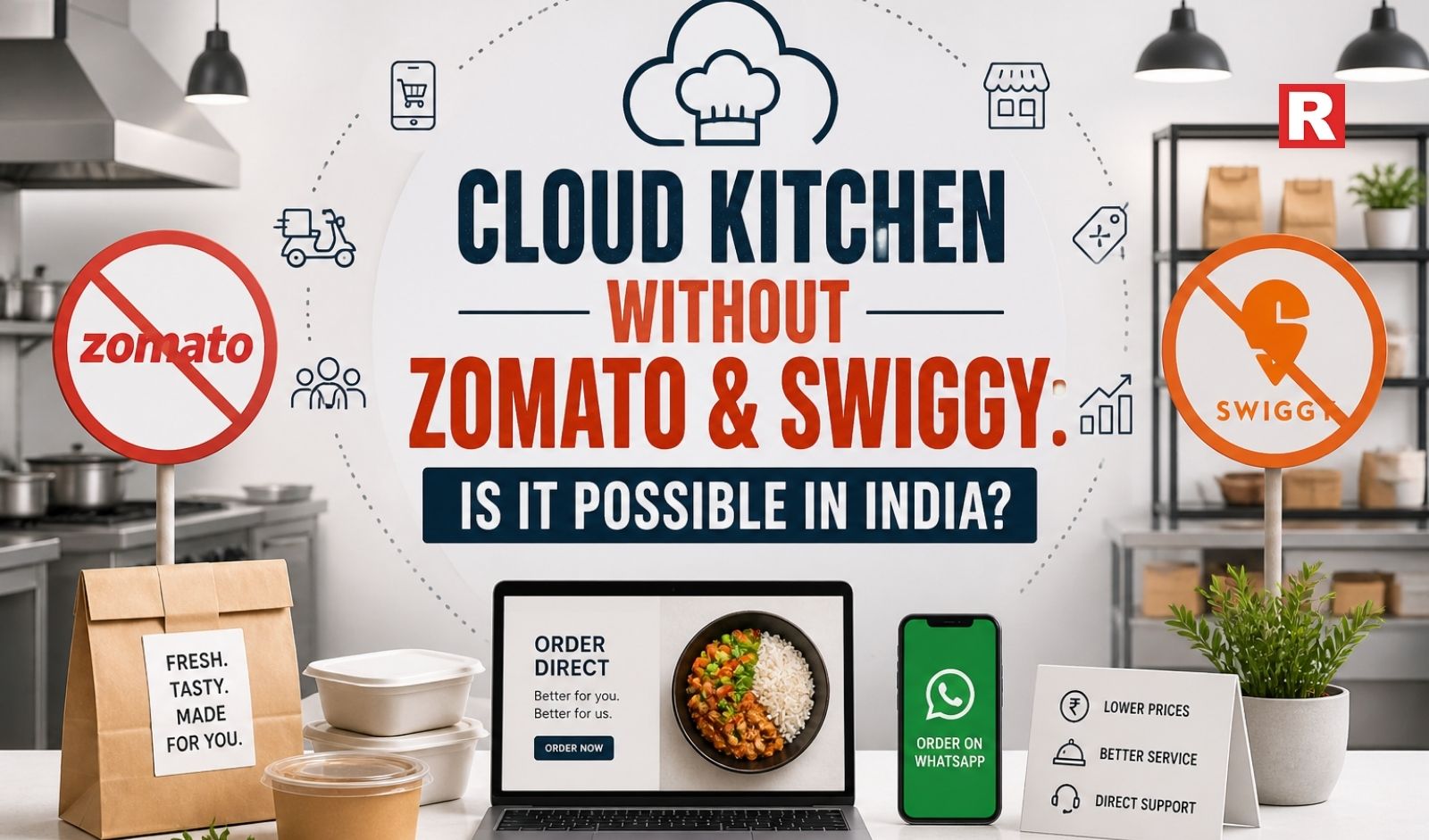
The Indian cloud kitchen boom has been largely driven by platforms like Zomato and Swiggy, which solved some of the biggest early challenges for food entrepreneurs. They offered instant customer discovery, built-in logistics, digital payments, and a layer of trust that new brands often struggle to establish on their own. For many first-time operators, this meant they could focus only on food quality and operations while the platforms handled everything else. However, this convenience comes at a cost. High commissions, rising advertising spends, and limited access to customer data have made many cloud kitchen owners question their long-term sustainability on these apps. As the market matures in 2026, more brands are exploring direct-to-consumer models to improve margins and build stronger customer relationships.
So, can a cloud kitchen survive without these platforms? Yes, it can—but it requires a very different approach, stronger brand-building, and investment in marketing and logistics. The opportunity exists, but it demands patience, strategy, and a clear understanding of unit economics.
The Aggregator Trap: Why Everyone Starts Here
Most cloud kitchens begin with aggregators because they solve three major problems instantly:
- Customer discovery
- Delivery logistics
- Payment infrastructure
Without these, starting from scratch is difficult. But this convenience comes at a cost. Commissions typically range between 18% to 30% per order, depending on city and visibility programs . Add GST, ads, and discounts, and the effective cost can go much higher. For a business with already tight margins, this becomes a structural dependency.
The Big Question: Can You Survive Without Them?
Yes, but not in the early stage. Running a cloud kitchen without aggregators means shifting from:
Borrowed demand (Zomato/Swiggy) to Owned demand (your own customers)
This is not just a channel change. It is a mindset shift. You are no longer a listing on an app. You are building a brand.
The Real Cost of Zomato & Swiggy
On paper, orders look strong. But profitability often tells a different story.
A typical cost structure includes:
- Commission: 18–30%
- Delivery & platform cuts: 5–8%
- Ads for visibility: ₹400–₹500 per day minimum
- Packaging & discounts
This is why many cloud kitchens report strong revenue but weak profits. In fact, profitability depends heavily on controlling these costs. Even a small increase in commissions or fees can impact margins significantly .
How Brands Are Growing Without Aggregators
A new generation of food brands in India is quietly moving away from platform dependency. They are not rejecting aggregators entirely. They are reducing reliance. Here is how they are doing it.
1. Instagram-First Food Brands
Food discovery in India has moved beyond search-based platforms to visual-first platforms like Instagram, where reels and short videos influence buying decisions instantly. Today, a well-shot food video can generate immediate demand, especially in metro cities where users actively explore new food trends through content. Many home chefs and niche cloud kitchens are launching directly on Instagram without relying on aggregators. They collaborate with micro-creators, run targeted ads, and use storytelling to build a brand identity. Orders are often taken through direct messages or redirected to WhatsApp. Over time, this model helps reduce customer acquisition cost because repeat customers return through the same channel. It also builds strong brand recall, as users associate the food with a visual experience rather than just a listing on an app.
Key actions include:
- Launching directly on Instagram
- Collaborating with food creators and influencers
- Taking orders through DMs or linked channels
2. WhatsApp as an Ordering Engine
WhatsApp has quietly become one of the most powerful tools for direct food ordering in India. Its familiarity and ease of use make it ideal for repeat customers. Unlike aggregators, WhatsApp allows cloud kitchens to build a direct relationship with their audience. Customers can browse menus, place orders, and receive updates all in one chat thread. Features like broadcast lists and automated responses enable brands to share daily menus, offers, and new launches efficiently. This direct interaction increases trust and improves retention, as customers feel more connected to the brand. Over time, many kitchens report higher repeat order rates because there is no platform interference or competing listings.
Why it works:
- Direct and personalised communication
- Faster and simpler repeat ordering
- Broadcast lists for promotions and updates
3. Own Website or App
As cloud kitchens scale, many invest in their own ordering ecosystem to gain full control over operations and customer data. Platforms like Shopify and WooCommerce make it easier to build functional websites without heavy technical expertise. Payment gateways such as Razorpay handle secure transactions, while backend tools manage orders and inventory. This setup eliminates aggregator commissions, leaving only a small transaction fee. More importantly, it allows brands to own customer data, track behaviour, and run targeted marketing campaigns. While the initial setup requires investment in design, tech, and marketing, it creates a sustainable direct-to-consumer (D2C) model in the long run.
Basic stack includes:
Website built on Shopify or WooCommerce
Payment gateways like Razorpay
Order and inventory management systems
4. Hyperlocal Delivery Model
Delivery is one of the biggest challenges when operating without aggregators. To solve this, many cloud kitchens adopt a hyperlocal model, focusing on a limited delivery radius to maintain efficiency and quality. Some hire their own delivery staff, which gives better control over service and customer experience. Others rely on third-party logistics providers like Dunzo and Porter to manage deliveries without long-term commitments. By limiting the service area, kitchens can reduce delivery time, lower costs, and ensure food reaches customers in optimal condition. This approach also helps in building a loyal local customer base.
Common solutions include:
Hiring in-house delivery staff
Using services like Dunzo or Porter
Limiting delivery radius for efficiency
5. Community-Led Growth
One of the most cost-effective growth strategies for independent cloud kitchens is leveraging local communities. Instead of spending heavily on ads, many brands tap into existing networks such as residential societies, corporate offices, gyms, and co-working spaces. These environments offer access to a concentrated group of potential repeat customers. Word-of-mouth plays a major role here, as satisfied customers recommend the brand within their community. Some kitchens also partner with offices for bulk orders or weekly meal plans, creating consistent demand. This approach reduces marketing costs while improving customer loyalty and retention.
Key channels include:
Resident welfare groups and housing societies
Corporate offices and bulk meal partnerships
Gyms and co-working spaces
Tech Stack Needed to Replace Aggregators
Running independently requires strong technical capability.
Here is the minimum stack:
- Ordering System: A website or app to take orders and manage menus
- CRM (Customer Relationship Management): To track repeat customers and preferences
- Payment Gateway: Secure and fast checkout
- Delivery Integration: APIs or manual logistics coordination
- Marketing Stack: Meta Ads, Google Ads, influencer marketing
This is where many founders struggle. Aggregators simplify this. Going independent means building it yourself.
Unit Economics: Does It Actually Make More Money?
At first glance, removing a 25% commission looks like a clear win. But reality is different.
With Aggregators
Lower marketing cost
High commission
Faster order volume
Without Aggregators
Zero commission
Higher marketing spend
Slower initial growth
The key metric is not revenue. It is:
Customer Acquisition Cost (CAC)
Lifetime Value (LTV)
If customers repeat orders, direct channels become more profitable over time.
Challenges You Can’t Ignore
Running without aggregators is not easy.
Major challenges include:
1. No Built-in Discovery: You must generate your own traffic
2. Logistics Complexity: Delivery operations become your responsibility
3. Higher Upfront Costs: Marketing and tech investments increase
4. Trust Building Takes Time: Customers trust platforms more than new brands
Many founders underestimate these challenges and struggle in the first few months.
The Smart Middle Path
The most practical approach today is not extreme.
It is hybrid.
Use Zomato and Swiggy for discovery
Convert customers to direct channels
Offer discounts on direct orders
This strategy combines:
Visibility of aggregators
Profitability of D2C
Many successful cloud kitchens follow this model quietly.
Future of Cloud Kitchens
The cloud kitchen industry in India is evolving rapidly as consumer behaviour and business models shift. A major trend is the rise of direct-to-consumer (D2C) food brands that prioritise owning customer relationships rather than relying entirely on aggregators like Zomato and Swiggy. Founders are increasingly focusing on building their own customer databases through channels like websites, WhatsApp, and social media, which improves retention and long-term profitability. At the same time, new low-commission and logistics-first platforms are entering the market, offering more flexible alternatives with lower fees, making the ecosystem more competitive. There is also a clear shift towards hyperlocal and niche brands that cater to specific cuisines, dietary needs, or communities, rather than mass-market menus. Despite these changes, aggregators will continue to play a key role in discovery and scale, especially for new businesses. However, they are no longer the only growth path. Running a cloud kitchen without them is possible, but it requires strong branding, consistent quality, and investment in marketing and operations. For new entrants, aggregators offer speed and visibility, but long-term success depends on building a loyal customer base that returns directly.
Saptopriya Ghosal
Feature Writer
I am a dedicated media professional with a bachelor's degree in mass communication from the State University of Calcutta and a postgraduate degree from Amity University. My academic journey has equipped me with a profound understanding of storytelling and communication. Passionate about the dynamic world of media, I continually strive to explore new ways to engage and inform through compelling narratives.



































































