
Cloud Kitchen License & Registration in India: FSSAI, GST & Fire NOC Guide
Strong compliance not only minimizes legal risks but also strengthens customer trust, platform partnerships, and future growth opportunities.

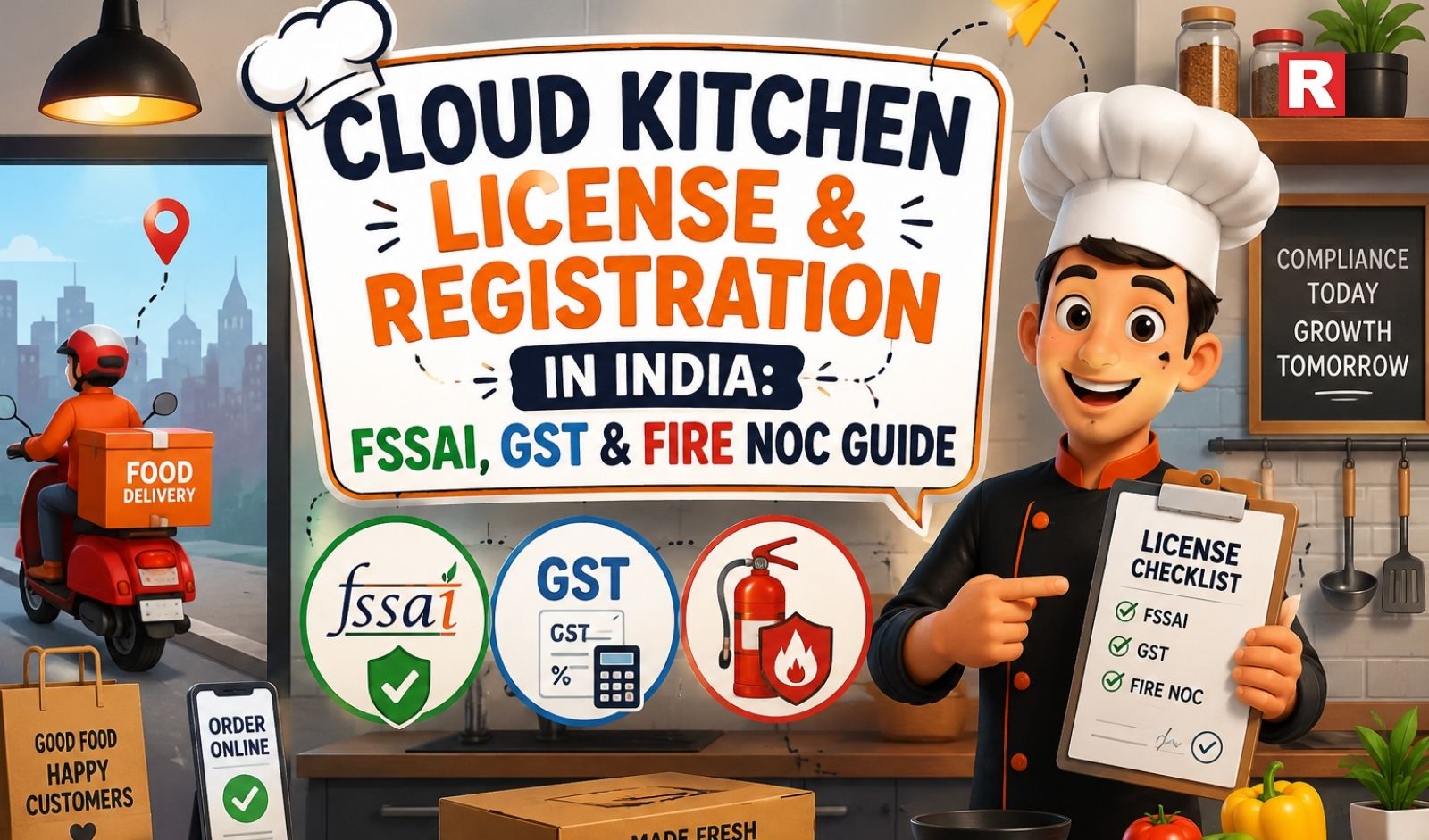
The cloud kitchen business in India is growing faster than ever. Food delivery apps have changed the way people order meals. Today, many entrepreneurs are starting delivery-only food brands without opening a full restaurant. A cloud kitchen needs less investment compared to a traditional restaurant. But many new business owners ignore one important part — legal registration and licenses.
Even if you run a small kitchen from home, food compliance is necessary. Platforms like Swiggy and Zomato ask for valid documents before onboarding a brand. Proper registration also helps build customer trust and keeps the business safe from penalties. If you are planning to start a cloud kitchen in India, here is a complete guide to the licenses and registrations you need.
What is a Cloud Kitchen?
A cloud kitchen is a food business that prepares meals exclusively for online delivery and takeaway orders, without offering any dine-in seating for customers. Orders are typically received through food delivery platforms such as Swiggy and Zomato, as well as through the brand’s own website or mobile app. Also known as ghost kitchens, dark kitchens, or virtual restaurants, these businesses have become increasingly popular due to their lower setup and operational costs compared to traditional restaurants. Since there is no need for expensive dining areas, décor, or front-of-house staff, entrepreneurs can focus more on food quality, packaging, and delivery efficiency. Many cloud kitchen operators run multiple food brands from a single kitchen facility. For example, one kitchen may simultaneously serve biryani, pizza, Chinese food, and desserts under different brand names, helping maximize kitchen utilization, reach a wider customer base, and improve overall profitability.
Why Licenses Matter for Cloud Kitchens
Many people think small food businesses can operate without approvals. That is not true. Food businesses in India fall under food safety laws.
Proper licensing helps in:
- Legal business operations
- Customer safety
- Smooth delivery platform onboarding
- Avoiding heavy fines
- Business expansion
- Investor confidence
A licensed business also looks more professional. Food delivery customers today care about hygiene and safety. A visible FSSAI number on packaging improves credibility.
FSSAI License for Cloud Kitchens
The FSSAI license is the most important registration for any food business in India. The Food Safety and Standards Authority of India regulates food safety standards across the country. Every food operator, including cloud kitchens and home kitchens, must register under FSSAI.
Types of FSSAI Licenses
1. Basic FSSAI Registration
- For businesses earning up to Rs 12 lakh yearly
- Suitable for home kitchens and small startups
2. State FSSAI License
- For turnover between Rs 12 lakh and Rs 20 crore
- Ideal for most cloud kitchens
3. Central FSSAI License
- For large businesses operating in multiple states
- Required for turnover above Rs 20 crore
Choosing the correct category is important. Wrong license selection may create legal issues later.
Documents Required for FSSAI Registration
You usually need:
- Aadhaar card
- PAN card
- Kitchen address proof
- Passport-size photograph
- Rental agreement or ownership proof
- NOC from property owner
- Food category details
Larger kitchens may also require:
- Water testing report
- Kitchen layout
- Equipment details
How to Apply for FSSAI License
The application process is online through the FoSCoS portal.
Step-by-step process:
- Visit the FoSCoS website
- Select your business category
- Fill application details
- Upload required documents
- Pay government fees
- Wait for approval or inspection
Small registrations usually take a few days. Larger kitchens may require physical inspection before approval.
Important FSSAI Rules for Cloud Kitchens
Food businesses must follow hygiene and safety standards.
Some important rules include:
- Displaying the FSSAI number on packaging
- Using food-grade packaging material
- Maintaining kitchen cleanliness
- Proper storage of raw ingredients
- Separate handling of veg and non-veg food
Professional cloud kitchens also maintain:
- Temperature logs
- Cleaning schedules
- Pest control records
- Staff hygiene checks
These practices improve food quality and reduce customer complaints.
GST Registration for Cloud Kitchens
GST registration is another important requirement for cloud kitchens. Many food businesses initially avoid GST registration. But most delivery platforms require it for smooth payment processing. Cloud kitchens generally charge 5% GST without input tax credit.
When GST Registration Becomes Necessary
GST registration becomes important when:
- You sell through Swiggy or Zomato
- Business turnover crosses the legal limit
- You supply food across states
- You work with corporate clients
A GST number also improves business credibility.
Documents Needed for GST Registration
You usually need:
- PAN card
- Aadhaar card
- Business address proof
- Bank account details
- Business registration documents
The GST registration process is fully online.
Fire NOC for Cloud Kitchens
Fire safety is a critical compliance requirement for cloud kitchens because cooking operations involve potential fire hazards such as LPG cylinders, deep fryers, ovens, grills, and high-powered electrical equipment. A small spark, gas leak, or faulty wiring can quickly lead to serious accidents, putting employees, customers, and property at risk. Depending on the kitchen's size, location, and local regulations, businesses may need a Fire No Objection Certificate (NOC) from the local fire department. Authorities often assess factors such as fire extinguishers, emergency exits, ventilation systems, LPG storage, and electrical safety measures before granting approval. Following proper fire safety standards not only helps meet legal requirements but also reduces operational risks and ensures a safer working environment.
When Fire NOC is Required
Requirements vary by city and building type.
Fire approval is commonly needed for:
- Commercial kitchen spaces
- Shared kitchen facilities
- Mall-based kitchens
- Large cooking operations
- Multi-floor properties
Even small kitchens should follow fire safety measures.
Important Fire Safety Requirements
Professional cloud kitchens usually install:
- Fire extinguishers
- LPG leak detectors
- Exhaust systems
- Emergency exit signs
- Fire-resistant electrical wiring
Advanced kitchens may also use:
- Wet chemical suppression systems
- Automatic gas shutoff valves
- Smoke detection systems
Regular exhaust cleaning is also important because oil deposits can become a fire hazard.
Shop and Establishment License
Many states require cloud kitchens to register under the Shop and Establishment Act.
This license regulates:
- Employee working conditions
- Business timings
- Wage records
The rules differ from state to state. Some municipal authorities may also ask for a local trade license.
Can You Run a Cloud Kitchen from Home?
Yes, home-based cloud kitchens are legal in many Indian cities.
But you still need proper registration. Many Instagram food sellers and home chefs wrongly assume they can operate without FSSAI approval.
Even a small home kitchen should maintain:
- Clean cooking conditions
- Safe storage
- Proper packaging
- Basic fire safety
Some housing societies may also ask for permission before commercial cooking activities.
Swiggy and Zomato Registration Documents
Food delivery apps verify businesses before activation.
Common documents required include:
- FSSAI license
- GST certificate
- PAN card
- Bank details
- Cancelled cheque
- Menu details
Incomplete documentation may delay onboarding.
Penalties for Non-Compliance
Failure to obtain and maintain the required licenses can lead to significant legal, financial, and operational consequences for cloud kitchen businesses. Compliance is essential to ensure smooth operations and long-term sustainability.
Monetary Penalties: Regulatory authorities can impose fines for operating without mandatory registrations such as FSSAI licenses, GST registration, or local trade permits.
Business Suspension: Authorities may temporarily shut down kitchen operations until all compliance issues are resolved and valid approvals are obtained.
Food Product Seizure: Food products that do not meet safety standards or are produced by unlicensed businesses may be confiscated during inspections.
License Cancellation: Repeated violations, misleading information, or failure to meet food safety standards can result in the cancellation of existing licenses.
Delisting from Delivery Platforms: Swiggy, Zomato, and other food delivery platforms may suspend or remove non-compliant brands, reducing visibility and sales opportunities.
Loss of Customer Trust: Compliance violations can damage brand reputation, making it difficult to attract and retain customers in a competitive market.
Estimated Cost of Cloud Kitchen Licenses
The cost depends on business size and location.
Approximate costs:
- Basic FSSAI Registration: Rs 100 yearly
- State FSSAI License: Rs 2,000–Rs 5,000 yearly
- GST Registration: Usually free
- Fire NOC: Depends on city and setup
- Trade License: Varies by municipality
Additional consultancy charges may apply if professionals handle the process.
Road Ahead!
The future of cloud kitchen compliance in India is becoming increasingly technology-driven as businesses focus on improving food safety, operational efficiency, and transparency. Modern cloud kitchens are adopting digital hygiene monitoring systems to track cleaning schedules and staff practices, while QR-based traceability helps customers access information about ingredients and food preparation. Smart temperature sensors are being used to monitor storage conditions and prevent food spoilage, ensuring compliance with food safety standards. Many operators are also implementing AI-powered inventory management systems to reduce waste and maintain stock accuracy, along with automated audit tools that simplify compliance checks and record-keeping. As consumers become more conscious about food quality, hygiene, and sustainable packaging, businesses that invest in proper licensing, safety protocols, and technology-backed compliance will gain a competitive advantage. Strong compliance not only minimizes legal risks but also strengthens customer trust, platform partnerships, and future growth opportunities.
Saptopriya Ghosal
Feature Writer
I am a dedicated media professional with a bachelor's degree in mass communication from the State University of Calcutta and a postgraduate degree from Amity University. My academic journey has equipped me with a profound understanding of storytelling and communication. Passionate about the dynamic world of media, I continually strive to explore new ways to engage and inform through compelling narratives.



































































