Chutney: Taste of the Land
From Kashmir to Kanyakumari, chutneys change their ingredients, textures, and stories. But one thing remains constant: their ability to bring people together.

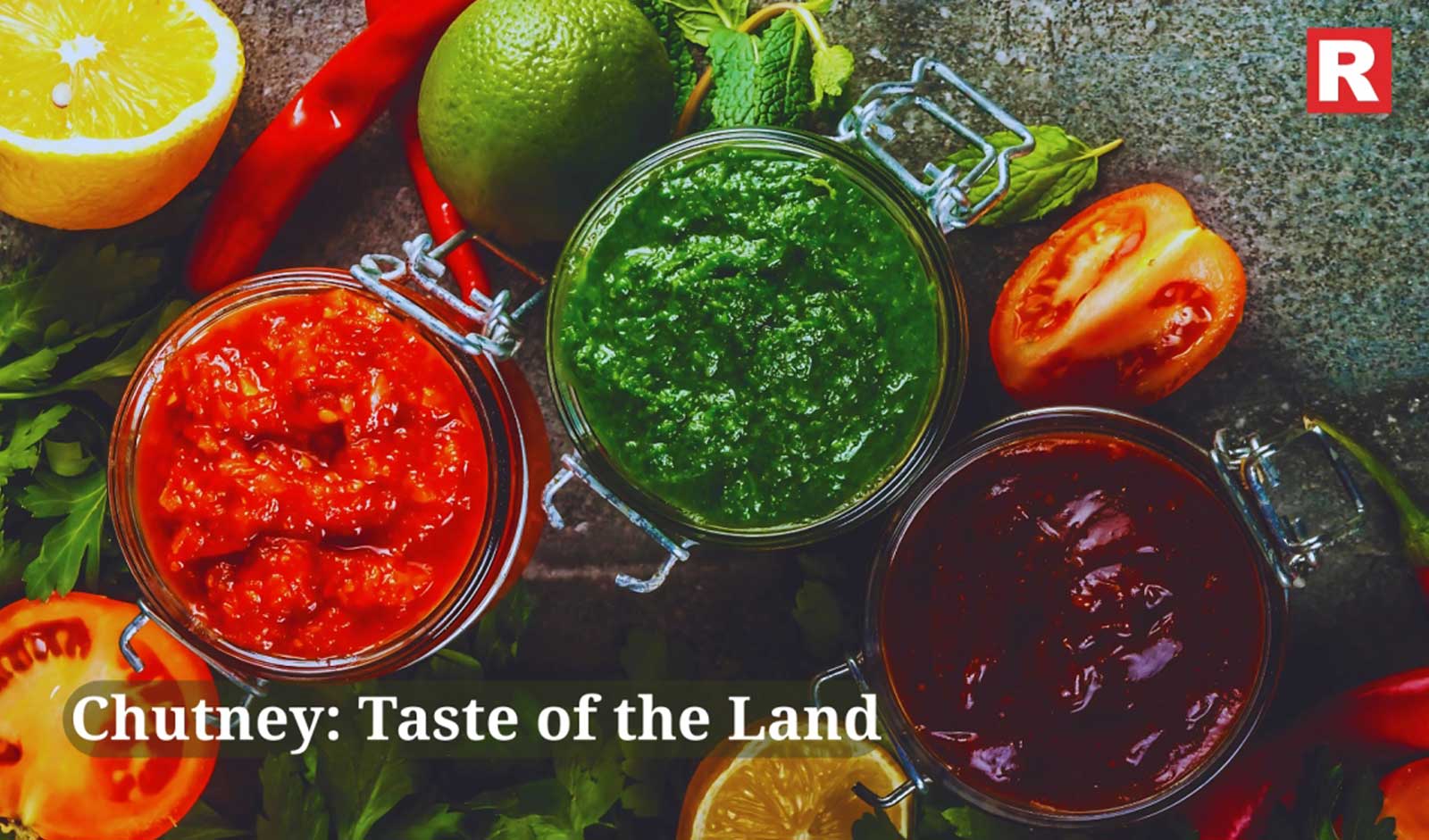
“Ch…Ta…Ni.”
Even the sound of it tingles something on your tongue. The word itself feels like a whisper of spice, something you want to lick, slowly and savour without rush. Chutney. It’s not just a condiment. It’s a feeling. A little thing that carries big memories.
In homes where nutrition is sometimes a luxury, a small spoon of chutney turns a dry roti into comfort food. Whether it’s the sharp tang of raw mango or coconut chutney served beside steaming idlis, chutney doesn’t just add taste, it adds heart.
From Kashmir to Kanyakumari, chutneys change their ingredients, textures, and stories. But one thing remains constant: their ability to bring people together. In some corners, it’s garlic crushed with red chilies. In others, it’s mint leaves with a squeeze of lemon. Different tongues, same joy. Chutney is what binds us—not just to our food, but to each other. Isn’t it?
The word “chutney” derives from the Hindi word chatni (from chatna, meaning “to lick” or “to eat with relish”), reflecting its role as a flavorful accompaniment meant to enhance meals. Chutneys likely emerged in India over 2,000 years ago, with roots in ancient culinary practices that emphasized balancing flavors with Ayurvedic principles.
The growing market
According to industry reports, the global sauces and condiments market was valued at $125.3 billion in 2024 and is projected to grow to $214.5 billion by 2034, registering a CAGR of 5.6 per cent. This growth is largely driven by consumers’ increasing preference for convenience and flavor enhancement. In today’s fast-paced world, where culinary tastes are becoming more global, there’s a rising demand for ready-to-use sauces and condiments that bring depth and richness to meals with minimal effort.
The Asia–Pacific region holds the largest share of the global sauces and condiments market, accounting for approximately 35 per cent of the total market. It is also the fastest-growing region, with a CAGR of 6–7.5 per cent, and is valued at around US $40–50 billion.
North America follows with about 30 per cent of the global market share, estimated at US $45–50 billion in 2023, and is expected to grow at a CAGR of around 4–4.5 per cent. Europe holds roughly 25 per cent of the market, valued at US $35–40 billion, with a projected CAGR of 3.8–4.2 per cent.
A long journey
Chutney has come a long way. From a humble kitchen essential to a bottled, gourmet spread found on supermarket shelves, its journey reflects both survival and sophistication. But despite its reinvention, chutney’s true essence still lies in the stories of the past.
There was a time when chutney wasn’t served with samosas or cheese platters. It was paired with boiled rice, watery dal and quiet resilience. It didn’t live in refrigerators but in the memories of homes.
Originally from the Indian subcontinent, chutney is one of the oldest condiments known to the world. Over time, it has travelled across borders and adapted to new ingredients, tastes, and styles: shaped by trade, globalisation and cultural exchange.
Ancient origins
Chutney originated in ancient India as a simple, fresh preparation. It was typically made by grinding herbs, fruits, vegetables, and spices using tools like a mortar and pestle or the traditional sil batta (stone grinder). Common ingredients included tamarind, mango, mint, coriander, coconut, and green chilies. These were often mixed with yogurt, vinegar or fermented bases to help preserve them. Early chutneys were uncooked and meant to be eaten fresh, quite different from the bottled versions we know today.
Regional Variations
India’s diverse geography and food habits led to the development of many types of chutneys. In North India, tangy tamarind and mint chutneys are popular, often served with snacks like samosas and pakoras. South India is known for its coconut-based chutneys, typically paired with dosas and idlis and flavored with curry leaves and dried red chilies. In West India, sweet-sour mango chutneys are common, especially in Gujarat and Maharashtra. Eastern India, particularly Bengal, developed kasundi—a mustard-based chutney known for its strong and pungent flavor. Each region made use of its local produce and spices, creating distinct chutney traditions.
History
References to chutney-like condiments appear in ancient Indian literature. The Charaka Samhita (circa 300 BCE), a key Ayurvedic text, describes mixtures of fruits, herbs and spices used for both medicinal and culinary purposes. By the 1st century CE, as India’s spice trade expanded to Rome, Persia and Southeast Asia. These chutneys were used to flavor bland staples like rice or bread during long journeys.
Mughal kitchens were known for their sophistication, and chutneys found a firm place on the dastarkhwan. They were no longer just simple relishes made from herbs and salt but elevated condiments made with exotic ingredients like dry fruits, saffron, rosewater and nuts. Chutneys were often paired with kebabs, pulao and breads, serving both as palate cleansers and as bursts of flavor between rich courses.
Through the Silk Road
The Silk Road helped spread ingredients like tamarind and mango, now key elements in chutneys, which in turn inspired similar preparations such as torshi in Persia and tamarind-based sauces in Southeast Asia.
Preservation techniques
By the medieval period, Indian cooks began preserving chutneys using methods such as adding vinegar or sugar, using oil-based pickling and cooking the mixture to extend its shelf life. These techniques were likely influenced by Arab and Persian merchants, who introduced new preservation methods. This shift marked the transformation of chutneys from fresh, short-lived relishes to long-lasting condiments.
Colonial encounters
Chutney’s global journey gained momentum during the colonial era, especially under British rule in India from the 17th to 19th centuries. British colonizers discovered chutneys as vibrant accompaniments to Indian meals and began adapting them to suit their own palates.
By the 17th century, British traders and East India Company officials had grown fond of chutneys, initially referring to them as “Indian pickles.” To transport them on long sea voyages back to Britain, they preserved the mixtures using vinegar and sugar, resulting in thicker, jam-like versions. Mango chutney, known for its sweet-sour flavor, became especially popular.
During the 18th and 19th centuries, chutney entered the commercial market. British companies began bottling and exporting these condiments. Brands like Crosse & Blackwell and Sharwood’s introduced “Major Grey’s Chutney,” a sweet, mango-based preserve named after a fictional British officer. This version, milder and sweeter than traditional Indian chutneys, was designed to appeal to Western tastes.
Chutney recipes also spread to other British colonies such as the Caribbean, South Africa, and Australia. There, they were adapted using local ingredients like pineapple, pawpaw or tomatoes.
A dish of scarcity
“During the 1965 drought in Andhra Pradesh, we had no vegetables for weeks,” recalls a grandmother in Anantapur. “My mother made garlic chutney with tamarind and red chillies. We ate it with rice and drank water. It filled the stomach, and the soul.”
During times of famine, drought and poverty, chutney wasn’t just a side dish, it was the dish. It answered a vital question: how do you make one grain of rice feel like a meal? When vegetables vanished from markets and oil was rationed to a memory, people turned to the land and their wits.
Farmers became foragers, and even scavengers found themselves turning into resourceful chefs. Chutney became the bridge between desperation and creativity. Families searched dry fields and forest edges for ingredients others might ignore: gongura (sorrel leaves), known for its tartness and iron content; curry leaves, rich in antioxidants; wild amaranth, tender and full of nutrients; tender tamarind leaves, both tangy and fibrous, and even mango seed kernels, which were ground and tempered into chutneys.
Red ants and resilience
Perhaps the most striking symbol of chutney’s adaptability is found in the tribal belts of Odisha, Chhattisgarh, and Jharkhand: red ant chutney. Made from red weaver ants and their eggs, pounded with chilies, garlic, and salt, this fiery delicacy is now protected with a Geographical Indication (GI) tag.
Entomophagy, the practice of eating insects, isn’t new. Ants provide protein, iron, and essential minerals. But in these regions, red ant chutney isn’t just survival food, it’s heritage.
Chutney began as a whisper of flavor in a world of scarcity. It grew into a shout of defiance. And today, it sings with diversity.
To understand chutney is to understand resilience. It is to remember the women at the stone slab, hands stained with spice, grinding not just ingredients but history, hardship and hope.
So, the next time you dip your spoon into a jar of mango chutney or smear coconut chutney onto a dosa, remember: you are tasting survival. You are tasting a culture that refused to go bland, even in its bleakest hours.
Here’s a fun fact you might not know: there’s something called Chutney Music. And Chutney music is a vibrant fusion of Indian folk music, primarily Bhojpuri, with the infectious rhythms of Caribbean calypso and soca. Born in Trinidad and Tobago, this genre has spread its popularity across the Caribbean, reaching as far as Fiji, Mauritius, and South Africa. Emerging in the mid-20th century, chutney music experienced its golden age in the 1980s, giving rise to numerous sub-genres. Chutney with some Chutney music? Not a bad idea.
Priyanka Singh
Assistant Editor, Entrepreneur India