
A Comprehensive Guide to In-house Restaurants in the Indian Market
An in-house restaurant refers to a culinary business that is operating within another main business, such as a hotel, resort, club, mall, hospital, corporate office, or even a retail store. In a market where real estate is highly valued, and consumers seek convenience and personalised experiences, the in-house models work perfectly by offering a compelling route to profitability and brand building.

The culture of restaurants in India has increased over the past years a lot. That’s why, with new models of establishments appearing over the years, the traditional models of restaurants are also expanding. While standalone restaurants are doing well continuously, a significant and incredibly profitable market is emerging, which is the in-house restaurant. An in-house restaurant refers to a culinary business that is operating within another main business, such as a hotel, resort, club, mall, hospital, corporate office, or even a retail store. In a market where real estate is highly valued, and consumers seek convenience and personalised experiences, the in-house models work perfectly by offering a compelling route to profitability and brand building.
So, in this article, we will be dissecting the world of in-house restaurants in the Indian market. We will discuss the special benefits and difficulties of this model, describe the different kinds of in-house setups, provide a step-by-step guide for starting and running one, and point out important factors for prospective restaurateurs hoping to succeed in this specialized market, from a corporate cafeteria to a hotel's signature dining room.
Read more: Best Food Delivery Apps & Quick Commerce Platforms in India
What Exactly is an In-house Restaurant? Defining the Model
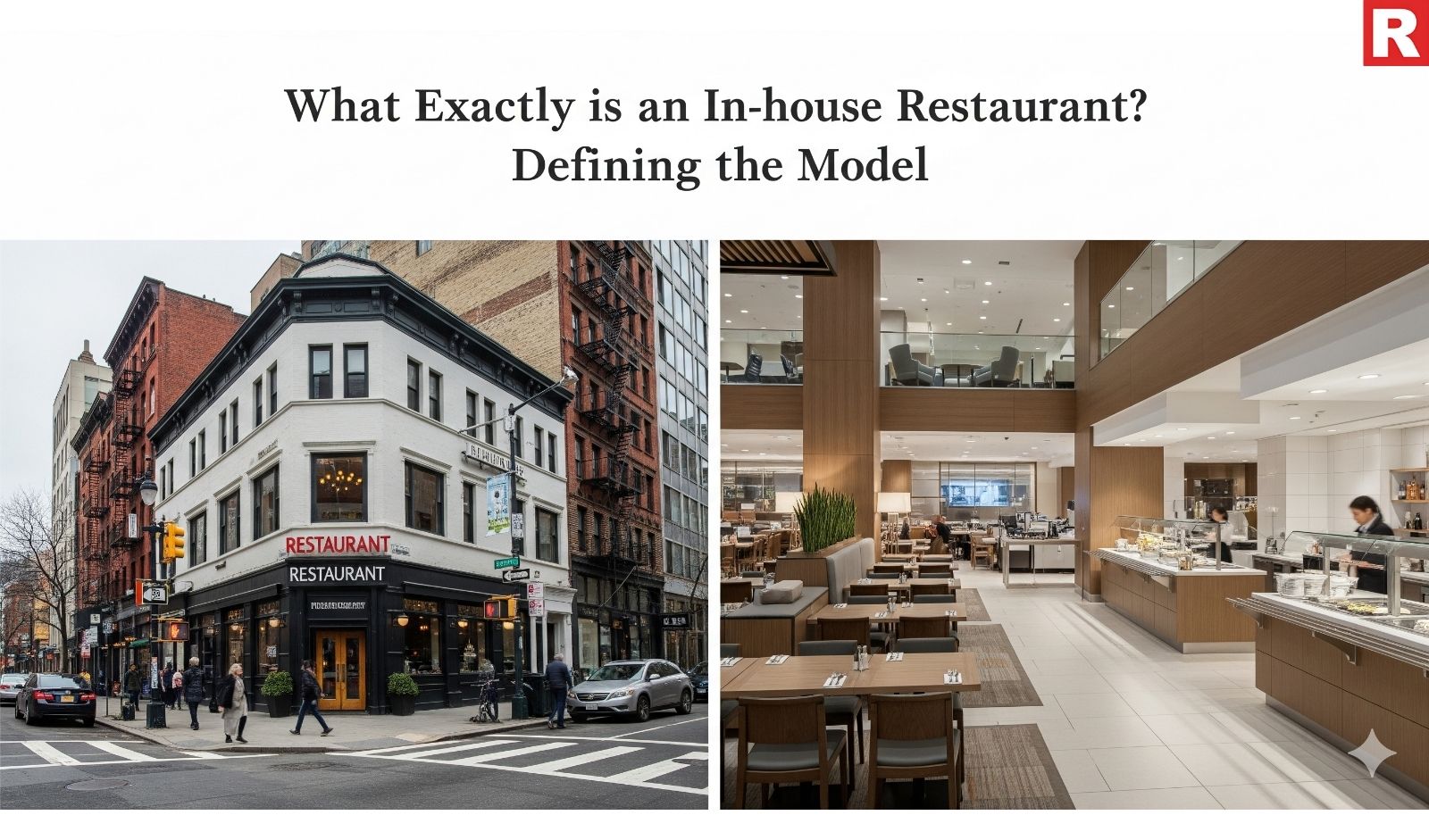
An integrated dining facility is referred to as an in-house restaurant. This is another type of food and beverage (F&B) activity that plays a crucial role in another company or business. Compared to standalone restaurants, which operate independently, an in-house restaurant's primary function is bigger and frequently goes beyond simply providing customers with food. The in-house restaurant business's primary goals are:
- Enhance the Core Business: The in-house business provides a key service that helps to enhance the guest experience in the hotel. In a corporate office, they provide convenience that helps boost employee morale and productivity in their work.
- Generate Additional Revenue: While it serves the core business, it is also an additional profit center for the business.
- Support Brand Image: The style and quality of the restaurants contribute significantly to the overall opinion of the brand of the host company.
Its symbiotic relationship with the parent company is its primary feature; the success of the whole business is frequently linked to its own.
Types of In-house Restaurants in India
The in-house model is quite flexible and quickly adaptable. So it can be tailored to meet the demands of various primary businesses.
- Hotel Restaurants: The most prevalent and frequently varied are hotel restaurants, which include:
- All-Day Dining: Breakfast, lunch, and dinner are served separately and at buffet-style stations.
- Specialty Restaurants: These are fine-dining establishments that specialize in a single cuisine. Like an authentic Italian restaurant or a regional Indian specialty restaurant within a hotel.
- Cafes/Lounges: These are casual spaces for light snacks and drinks.
- Pubs and bars: Serving customers seeking drinks and pub fare.
- Resort & Club Restaurants: Like hotels, but frequently with more of a focus on casual meals, cafes by the pool, and event catering. Numerous F&B establishments are frequently found in member-only clubs.
- Corporate Cafeterias/Canteens: Large offices, IT parks, and industrial complexes all need corporate cafeterias or canteens to provide their staff with inexpensive or subsidized meals.
- Hospital Cafeterias: Providing meals to patients, employees, and guests, frequently emphasizing diet-specific and healthful selections.
- Food Courts at Multiplexes: In addition to popcorn and drinks, several modern multiplexes now have authentic mini-restaurants serving a variety of cuisines.
- Retail Store Cafes: Often found in huge bookshops, fashion boutiques, or lifestyle stores, these places provide a cozy setting for customers to unwind and refresh.
- Educational Institution Canteens: Faculty and students can eat at schools, colleges, and universities.
- Airport restaurants and lounges: serving passengers, frequently with quick service.
Know more: Five Ways To Boost Your Restaurant's Lunch Rush
Opening an In-house Restaurant in India: A Step-by-Step Blueprint
Step 1: Identify the Opportunity & Host Business
- Research on the Market: Examine the demand. Is a F&B partner required for a new hotel that is opening soon? Does an important corporate campus want to contract out its cafeteria?
- Host Business Analysis: Comprehend the target market, brand values, current F&B gaps, and overall operational philosophy of the host company.
- Building Relationships: Make connections with executives in the corporate, retail, and hospitality industries.
Step 2: Develop a Concept & Business Plan
- Concept Alignment: Develop a restaurant concept that precisely fits the target market and brand of the host company. A fast-casual, healthful cafe would be appropriate for a business workplace, whereas a fine-dining specialty restaurant might be appropriate for a luxury hotel.
- Menu Engineering: Create a menu that meets the needs that have been identified (e.g., varied alternatives for hotel visitors, quickness for corporate lunches). Pay attention to operational viability and profitability.
- Detailed Financial Projections: Taking into account the distinct internal cost structure, create reasonable estimates for sales, expenses, and profitability.
Step 3: Secure the Agreement & Legalities
- Negotiate the Contract: Contract negotiation is essential. Provide clarification on the terms of the agreement, including the duration, marketing responsibilities, operational control, rent/revenue split, shared resource costs, and departure conditions.
- Licencing and Compliance: Obtain the required fire safety certifications, health permits, local municipal licenses, GST registration, and food licenses (FSSAI). The F&B division frequently needs its own set of licenses, even in a bigger company. In India, this might be a difficult procedure.
- Insurance: Make sure your F&B operations are fully covered by insurance.
What's new: The Pros and Cons: Comparing Franchise vs. Independent Specialty Restaurants
Step 4: Design & Setup
- Kitchen layout and design: Create a kitchen that complements your cuisine and improves operational effectiveness. The design of the dining room must blend nicely with the aesthetics of the host property.
- Equipment Sourcing: Invest in or rent top-notch dining and kitchenware.
- Technology Implementation: Set up a reliable inventory management program, Point-of-Sale (POS) system, and possibly link with the host's property management system (PMS) for lodging establishments.
Step 5: Recruitment & Training
- Talent Acquisition: Employ F&B managers, seasoned chefs, and wait staff who are aware of the complexities of in-house dining. Seek out people who can positively represent the host brand and your business.
- Thorough Training: Educate employees on the host property's policies, safety procedures, and brand standards in addition to the menu and service. This covers banqueting processes and room service for hotels.
Step 6: Soft Launch & Grand Opening
- Trial Runs: To find and fix operational issues, do trial runs with a smaller menu and fewer employees.
- Soft Launch: To get input, hold a soft launch for management, internal employees, and a small sample of clients.
- Grand Opening: To get the most impact, work with the marketing team of the host company to plan the grand opening.
Check out: How to Find Your Niche in the Restaurant World
How to Choose the Healthiest Cooking Oil for Your Kitchen
Unique Advantages of the In-house Model
- Built-in Customer Base: The most important benefit is the built-in customer base. A corporate office supplies its staff, a hotel its visitors, and a multiplex its moviegoers. Compared to a stand-alone project, this drastically lowers the costs associated with acquiring new customers and initial marketing efforts.
- Reduced Initial Marketing Spend: The interconnected facilities, such as the F&B outlets, are frequently promoted by the host company's marketing campaigns. This lessens the restaurant's need to start from scratch while developing brand awareness.
- Shared Infrastructure & Resources: Depending on the agreement, you may be able to take advantage of shared resources such as cleaning personnel, utilities, security, and even HR assistance from the parent firm, which might reduce operating costs.
- Enhanced Credibility: The restaurant instantly gains credibility and trust when it is linked to a well-known brand, such as a reputable hotel chain or a well-known business house.
- Premium Pricing Potential: Because of the targeted audience and the perceived quality of the host brand, in-house restaurants, particularly in hotels or exclusive clubs, can frequently fetch higher rates.
- Diversified Revenue Streams: In addition to serving meals, in-house restaurants frequently handle banqueting, room service (in hotels), and event catering, which opens up a number of different sources of income.
Navigating the Challenges: The Flip Side of In-house Dining
- Dependency on Host Business: The parent company holds the key to the restaurant's success. Restaurant revenue is immediately impacted by a drop in hotel occupancy, business downsizing, or a drop in moviegoers.
- Brand Alignment & Control: You need to match the host brand's identity with the idea, menu, and service standards of your restaurant. Compared to a restaurant that operates independently, there can be less room for creativity. The host management must frequently approve all operational decisions.
- Operational Stability: Because hotels, for example, are open around-the-clock, there are demands for room service, banqueting needs, and different meal times. This requires an extremely adaptable and staff-oriented business.
- Complex Cost Structures: Unbundling expenses (rent equivalent, shared personnel, utilities) can be challenging, and profit-sharing arrangements require careful negotiation.
- Talent Recruitment & Management: It can be difficult to find qualified employees who can adjust to the unique requirements of an internal setting (e.g., multitasking in a hotel, discreet service in a corporate context).
- Limited External Foot Traffic: Despite having a captive audience, it may be more difficult to draw in outside customers (non-guests or non-employees) because of opinions, distinct entrances, or parking concerns.
Read this: How to Make a Failing Restaurant Successful Again
Critical Considerations for Success in the Indian Market
- Thorough Knowledge of the Host's Clientele: Customize your offers to the exact needs, whether it is a value-driven family, the picky business executive, or the budget-conscious visitor.
- Flexibility & Adaptability: Be ready to modify your menu in response to seasonal demands, special events, and dietary requirements (such as vegan or Jain food).
- Relationship Management: Keep up a great working relationship with the management of the host company. To resolve disputes and take advantage of collaborations, open communication is essential.
- Make Use of the Host's Marketing Channels: Promote the hotel on its website, in-room guides, social media accounts, and its personal assistants. Use internal communication channels for corporates.
- Cost Control & Profit Sharing: Keep a careful eye on all expenses and make sure the profit-sharing arrangement is just and clear. Seek chances to increase your share through operational optimization.
- Technology Interface: For operations to run smoothly, there must be a fluid interface with the host's current technological infrastructure (such as payment and reservation systems).
Conclusion
In the Indian F&B industry, the in-house restaurant model is now a major force rather than a supporting actor. It offers unmatched benefits, including an existing clientele, pooled resources, and increased brand recognition to restaurateurs who are prepared to handle its own unique complications. In the vibrant Indian market, from the busy center to the most remote corners of the hospitality industry, you can achieve substantial growth and establish a genuinely successful culinary enterprise by comprehending the various kinds of in-house establishments, carefully organizing your concept, and cultivating strong relationships with your host company.
Mahak Sharma
Content Writer
Mahak Sharma is a passionate content writer with 2 years of experience crafting compelling content across various niches, tailoring her writing to suit different audiences and platforms. She is dedicated to producing engaging content for readers so that they can understand and enjoy the articles. Her strengths lie in crafting SEO-friendly, well-structured articles that drive visibility and engagement.



































































