
5 Ways to Reduce Commercial Buffet Food Waste
Buffets are a mainstay of Indian hospitality and are a symbol of abundance at event spaces, upscale hotels, and sizable corporate canteens. But this same abundance frequently results in astounding waste, which is a triple burden: economically, environmentally, and ethically.

India's rich and diverse culinary scene is well-known across the world, but it faces a serious and sometimes disregarded problem: commercial food waste, especially in the large and well-liked buffet style. Buffets are a mainstay of Indian hospitality and are a symbol of abundance at event spaces, upscale hotels, and sizable corporate canteens. But this same abundance frequently results in astounding waste, which is a triple burden: economically, environmentally, and ethically.
Globally, food waste plays a major role in resource depletion and greenhouse gas emissions. The moral responsibility is much more pressing in India, a nation that struggles with food shortages. Additionally, wasted food means wasted money for a business, including wasted labor, raw materials, preparation energy, and disposal expenses. According to a Food and Agriculture Organization (FAO) research, almost one-third of the world's food production is wasted or lost. Although it is difficult to pinpoint exact numbers for the Indian commercial buffet business, expert studies indicate the waste proportion is at an unacceptably high level. In addition to being a question of corporate social responsibility (CSR), addressing this is a crucial tactic for improving brand reputation in a market that is becoming more and more concerned with sustainability, as well as for operational efficiency and F&B cost reduction.
The following article explores five practical, culturally aware, and effective strategies that Indian businesses can use to drastically cut down on buffet food waste, transforming an expensive issue into a chance for both profit and the environment.
Read more: How to Start a Buffet Restaurant
1. Smart Sizing and Stepped Replenishment
The standard buffet concept promotes excessive production and presentation in order to provide an eye-catching "wow" factor—a visual feast that frequently exceeds capacity and causes needless spoiling. Changing the way food is prepared and handled on the service line is the most direct and quickest strategy to reduce waste.
Implementation Strategy:
- Smaller Serving Dishes: Switch to shallower, smaller containers rather than big, deep chafing dishes that need a lot of food to appear filled. A smaller dish that is completely loaded appears full and appealing, whereas a huge dish that is only partially filled appears empty. By making this small adjustment, the amount of food exposed to heat, air, and customer interaction greatly decreases. As a result, less food is wasted when dishes are replaced for hygienic or temperature-related reasons.
- Just-in-Time, Phased Resupply: Get rid of the practice of cooking all of the food in advance of serving. Use a "Cook to Demand" strategy. The first setting should include enough yet controllable amounts. In order to practice "active waste management," kitchen employees (or designated line stewards) should keep a close eye on the buffet line and only put out newly made food in tiny quantities when a dish is obviously running low. By doing this, the food on the line is always guaranteed to be tempting and fresh, and more significantly, it spends less time outside of safe holding temperatures, making it safer for possible donation if protocols permit.
- Buffer Stock Management: Keep cooked food at the ideal safety temperatures in a small, heated holding space in the back-of-house, close to the service line. This prevents the visible line from being overstocked and enables replenishment to happen very instantly.
Impact: This strategy immediately lowers exposure to waste, or food that is thrown out after being left out for too long, and excessive portions. And because food is always being replaced, it also enhances the quality of the meal.
2. Deep-Dive Data Analytics

The 'gut instinct' of an experienced chef is no longer a sufficient method of forecasting buffet consumption in the twenty-first century. Planning for inventory and production is where effective waste reduction begins, not on the buffet line. Consistent data collection combined with modern technologies provides strong prediction insights.
Implementation Strategy:
- Digital Waste Tracking: Implement a necessary and user-friendly system for tracking digital trash. For each item thrown out, kitchen workers should record its kind, weight, and reason (e.g., 'Pre-consumer trimming,' 'Buffet leftover - pasta,' 'Spoilage - improper storage'). Operational faults, high-waste goods, and peak waste times are identified using this data.
- Predictive Demand Modeling: Utilize past waste data along with important operational variables, such as daily foot traffic, special events, weather predictions, and menu rotations, to create predictive demand modeling. For example, a Sunday brunch will be very different from Monday's eating patterns. Reduce the raw quantity requested for high-waste goods, such as certain desserts or less popular side dishes, by using this analysis to improve the Production Planning Sheet.
- A/B Menu Testing: Variations are tested using the waste data. Should the 'Continental Vegetable Gratin' continuously produce 20% more waste than the 'Dal Makhani,' think about cutting back on its serving size, arranging it later in the buffet flow, or switching it out completely for a less wasteful option.
Impact: Waste management is now viewed as a strategic science rather than a reactive behavior. Pre-consumer waste (trimming, spoiling) is addressed, and post-consumer waste (uneaten food off the line) is greatly decreased, by ensuring that the amounts of raw material purchases and early preparation are closely matched with actual consumption.
Know more: Why the Buffet is the Perfect Meal for Corporate Events
3. Rethinking Plate Size and Layout
Human psychology has a significant impact on how much food is consumed. Regardless of hunger, customers often stuff their plates, and the huge plate sizes found at contemporary buffets promote overserving, which results in significant plate waste—the food that guests take but do not consume.
Implementation Strategy:
- Downsize Plates (Strategic): Bring back dinner plates that are a little bit smaller. Typically, this means going from a 12-inch to a 10-inch diameter. Even if customers return for a second serving, studies repeatedly demonstrate that smaller dishes result in them consuming less food. To avoid taking away from the premium experience, the decrease must be discreet.
- Buffet Flow & Layout: Arrange the buffet so that high-value, low-waste goods (like proteins) are placed strategically ahead of high-volume, perhaps higher-waste items (like bread or rice). Since salad and fruit are often lighter and easier to digest, place them at the beginning. The most popular dishes should be positioned halfway through the flow, not at the beginning, to encourage customers to thoroughly examine their options as they go.
- Visible Educational Signs: Use well-crafted, casual signs that convey a relatable message. Without coming across as dictatorial, phrases like "Take All You Like, Eat All You Take" or "Help Us Reduce Waste: Start with a Small Serving" might gently encourage behavior.
Impact: Since plate waste frequently makes up the greatest portion of post-consumer garbage, this technique is essential to reducing it. Without compromising the variety that characterizes the buffet experience, it gives customers the ability to make more responsible choices.
What's new: How to Train Your Staff on Buffet Etiquette
4. Creative Recycling and Advanced Kitchen Utility
This includes making use of safe, pre-consumer leftovers (such as unused, unopened amounts of prepared sauces or stocks) and inevitable pre-consumer garbage (trimmings, peels, and bones).
Implementation Strategy:
- Bone and Vegetable Trimming Stock Method: Put in place a strict procedure for making flavorful, premium stocks and broths out of bones, vegetable peels, and trimmings. This improves both quality and cost by reducing the need to buy commercial goods and saving waste.
- Repurposing Leftover Components: If procedures permit and the food is of pre-consumer quality, leftover roasted veggies, for instance, can be processed into a soup base the following day. Like croutons, upma base, and bread pudding can all be made with day-old bread.
- Employee Meals Program: Put in place a structure that allows the daily employee canteen menu to include safe, high-quality leftovers that might be too tiny to donate but ideal for a staff lunch. This guarantees that food is consumed within the business and gives staff members healthy meals.
- Composting/Bio-Gas: Invest in or collaborate with nearby organizations for commercial composting or bio-gas conversion for totally unavoidable, hazardous, or post-consumer food waste (plate scrapings). This completes the circular economic cycle by keeping garbage out of landfills and occasionally producing byproducts like fertilizer or renewable energy.
Check out: Personalizing the Buffet: Why A La Carte Add-ons are Your Next Big Opportunity
Essential Buffet Equipment for a Seamless Service
5. Food Recovery and Donation Partnerships
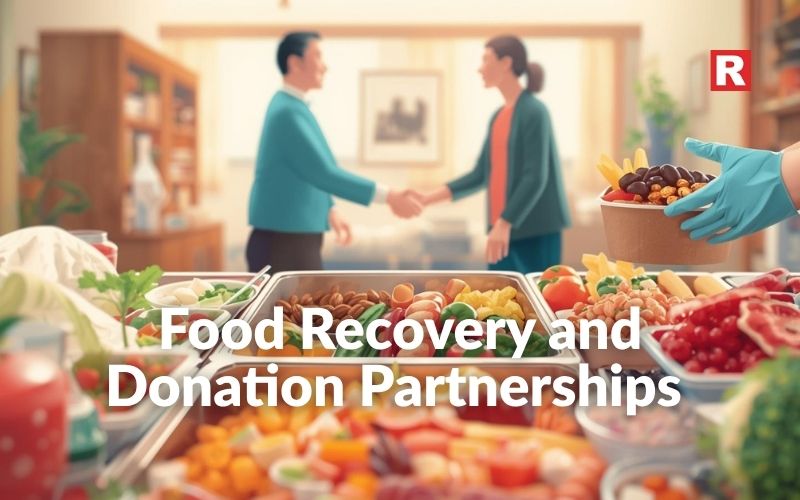
This point discusses the moral and practical measures to lessen the societal and ethical burden of waste by donating safe, extra food.
Implementation Strategy:
- Safety Procedures and Legal Compliance: Discuss the need to follow the Food Safety and Standards Authority of India's (FSSAI) rules when donating food. Draw attention to the difference between "plate waste" and "buffet line excess," which is food that has been kept at an acceptable temperature but has not been served.
- Partnering with NGOs: Formal and continuous agreements should be established with local non-profits, food banks, or charity organizations that specialize in food retrieval and distribution, such as Feeding India and Robin Hood Army. For NGOs to plan their logistics, consistency is essential.
- Logistical Framework: Put in place a simple "recovery window" procedure. As soon as the service window closes, enthusiastic, skilled staff must safely pack, refrigerate, and label extra, safe food so that it may be picked up by NGOs.
- Tax Incentives and PR: If relevant, discuss the possible tax advantages of food donations as well as the tremendously helpful publicity and goodwill that an open, active food donation program may create.
Learn more: Why Zero Waste Cooking is the Next Big Trend in Indian F&B Scene
From Waste to Wealth and Well-being
In India, the problem of commercial buffet food waste is complicated, but it also offers a clear route to increased sustainability and substantial financial benefit. By changing the focus from the "display of abundance" to the "efficiency of service," businesses can more effectively balance their moral obligations with their financial goals. Instead of involving different actions, the five strategies—Smart Sizing, Data Analytics, Strategic Layout, Creative Repurposing, and Food Recovery—form a unified, circular approach. Although there is an initial training and technological investment required to implement these changes, there are significant benefits in the form of lower operating expenses, a smaller carbon footprint, and improved brand recognition. Reducing food waste is the new benchmark for the Indian hospitality industry, turning abundance from an expense into a long-term benefit for society and business.
Mahak Sharma
Content Writer
Mahak Sharma is a passionate content writer with 2 years of experience crafting compelling content across various niches, tailoring her writing to suit different audiences and platforms. She is dedicated to producing engaging content for readers so that they can understand and enjoy the articles. Her strengths lie in crafting SEO-friendly, well-structured articles that drive visibility and engagement.



































































