5 Food Products That Started in Restaurant Kitchens
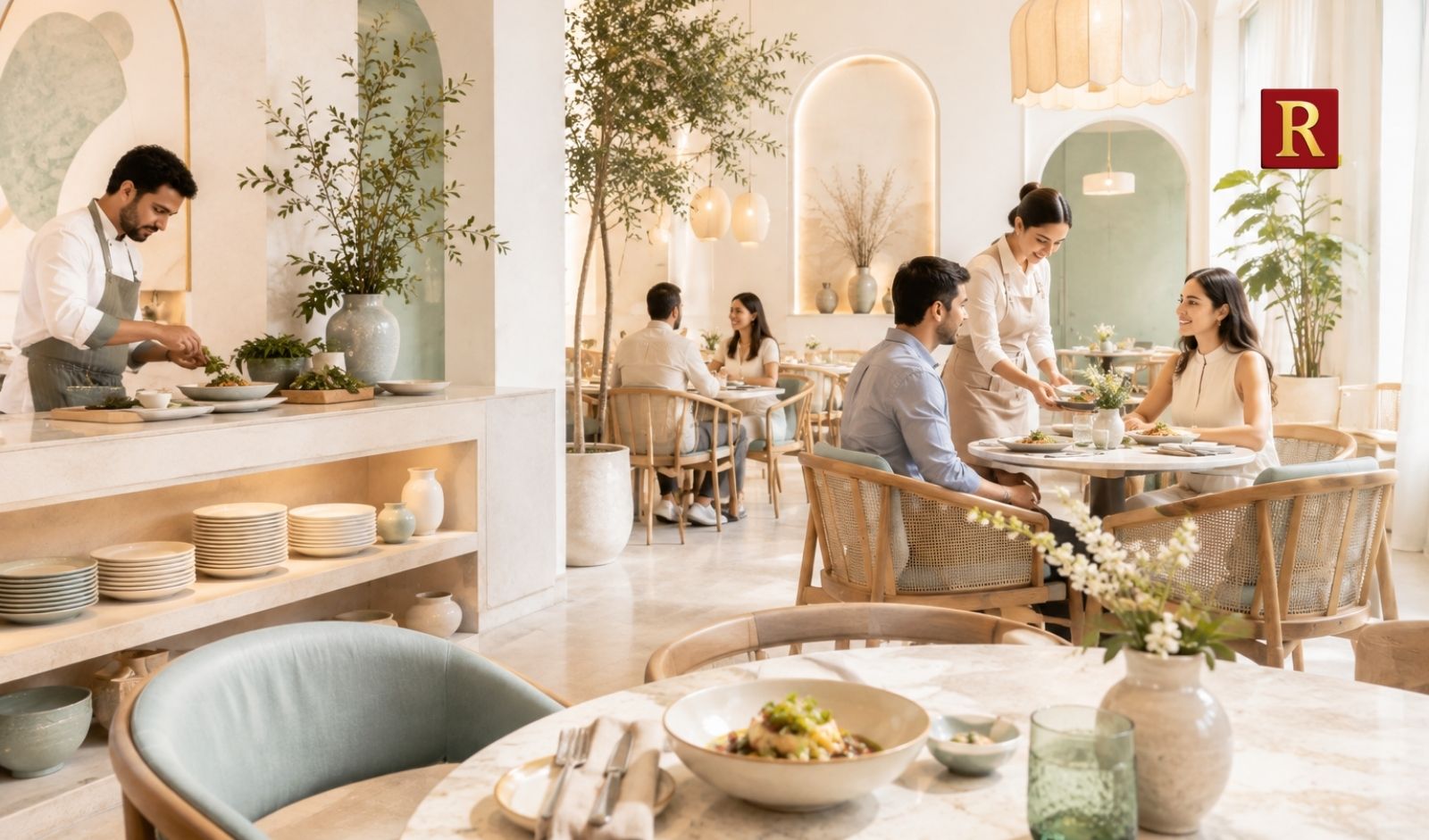
The next successful restaurant product may therefore not begin on a supermarket shelf. It could begin with a chef testing a new recipe during a busy service.


Some of the food products people now buy from supermarkets began as small restaurant experiments. The first version was often made for a few customers, not millions. A chef had excess ingredients, a busy service, a special guest or a new idea. The kitchen found a way to make it work. Customers liked it. Then someone realised the recipe could go much further.
That is how restaurant food can move from a plate to a packaged product. Doritos started with surplus tortillas at a Disneyland restaurant. The chocolate chip cookie came from the kitchen of an American inn. Green Goddess dressing was created for a hotel banquet. Caesar dressing eventually moved from a Tijuana restaurant into commercial bottles. Buffalo wings turned an inexpensive chicken cut into one of the world's most recognisable bar foods. These five stories show that food innovation is not always about inventing a completely new ingredient. Sometimes it is about finding a better use for something already available.
1. Doritos

The origin of Doritos begins at Casa de Fritos, a Mexican restaurant at Disneyland in California, during the early 1960s. The restaurant received tortillas from Alex Foods. Instead of discarding leftover or misshapen tortillas, the kitchen began cutting them into pieces, frying them and seasoning them. The snack became popular with Disneyland visitors. The important moment came when Frito-Lay executive Arch West noticed the chips.
The company saw something different from the restaurant. It did not see leftover tortillas. It saw a possible packaged snack. Frito-Lay worked with Alex Foods to produce the chips commercially. Doritos were launched nationally in the United States in 1966. That transition completely changed the production challenge. A restaurant can fry a batch of tortilla pieces and serve them within minutes. A packaged snack has to remain crisp after manufacturing, transportation and storage.
That requires control over several variables:
- Tortilla thickness
- Frying temperature
- Moisture content
- Oil absorption
- Seasoning distribution
- Packaging
- Shelf stability
The early commercial demand was also much larger than the restaurant could handle. One account says Alex Foods was producing Doritos around the clock before Frito-Lay moved production to its own facilities.
The restaurant lesson
This is a classic example of waste becoming product innovation. For restaurants, the interesting question is not whether every leftover ingredient can become a packaged snack. It is whether a restaurant is identifying ingredients that customers already enjoy in a different form. A leftover tortilla became a snack because the kitchen changed its format. That same thinking can apply to today's restaurants through products such as crisped rice, bread-end snacks, spice mixes, sauces or dehydrated garnishes.
2. Chocolate Chip Cookies

Ruth Wakefield was running the Toll House restaurant in Whitman, Massachusetts, when the chocolate chip cookie became associated with her kitchen. According to Nestlé's historical account, Wakefield broke a semi-sweet chocolate bar into pieces and added it to cookie dough. Instead of disappearing completely into the dough, the chocolate pieces softened while retaining their shape. Her Toll House Crunch Cookie recipe became widely known. But the really interesting part came after the cookie was created. Nestlé realised that people needed a more convenient way to reproduce the recipe. In 1939, the company scored its semi-sweet chocolate bars into 160 pieces designed for use in Toll House cookies. Soon after, it introduced the familiar ready-to-use chocolate morsels.
That means the restaurant did not simply inspire a packaged cookie. It helped create a new packaged baking ingredient. This is an important distinction for today's food businesses. A restaurant may have a popular dessert, but selling the same dessert in a supermarket can create major problems. Texture changes during storage. Freshness becomes difficult. Packaging costs increase. An ingredient can be much easier to commercialise.
Chocolate morsels offered consistency in:
- Size
- Weight
- Distribution through dough
- Baking performance
- Portioning
The idea also made the recipe easier for consumers to reproduce at home.
The restaurant lesson
A restaurant's most valuable product may not always be the finished dish. It could be the sauce, seasoning, filling, topping or ingredient that makes the dish recognisable. For Indian restaurants, this opens possibilities around signature masalas, chutneys, curry bases and dessert components.
3. Green Goddess Dressing

In 1923, Executive Chef Phillip Roemer of San Francisco's Palace Hotel created Green Goddess dressing for a banquet honouring actor George Arliss. The name came from The Green Goddess, the play in which Arliss was appearing. After the banquet, the dressing became a permanent part of the hotel's menu. The story is interesting because the product was created for a specific occasion.
It was not originally designed as a supermarket product. It was a restaurant solution: create something distinctive for an important dinner. The dressing later developed into a broader food style. Early versions of the Palace's Green Goddess salad were served with shredded iceberg lettuce, canned vegetables and a choice of chicken, shrimp or crab, reflecting the ingredients and storage limitations of the period. This is where restaurant food becomes technically interesting. A chef can make a dressing fresh for one dinner service. A commercial producer needs the dressing to remain stable.
That brings in:
- Emulsion stability: keeping oil and water-based ingredients from separating.
- Acidity: controlling pH for both flavour and food safety.
- Preservation: slowing microbial growth.
- Packaging: protecting the product from contamination and quality loss.
- Shelf life: maintaining flavour, texture and appearance over time.
The restaurant therefore solves the flavour problem first. Manufacturing has to solve the stability problem.
The restaurant lesson
A signature sauce can be one of the easiest restaurant products to imagine outside the dining room. The same principle is visible today as restaurants develop bottled hot sauces, marinades, dressings, chutneys and cooking bases. The menu can become the testing ground.
4. Caesar Dressing

The Caesar salad was created in Tijuana, Mexico, in the 1920s by restaurateur Caesar Cardini, although several people have claimed roles in its creation and the exact origin story has competing versions. That uncertainty is actually part of the history. What is less ambiguous is what happened later. Cardini did not leave the dressing as a restaurant recipe. After moving to Los Angeles, he became involved in producing and marketing the dressing commercially. His family later operated Caesar Cardini Foods. The brand eventually became part of the commercial salad-dressing business and continues to sell Caesar dressing today.
The modern packaged version illustrates how different a commercial formulation can be from a restaurant preparation. Cardini's current bottled dressing contains ingredients including soybean oil, water, white wine vinegar, Parmesan cheese, egg yolk, lemon juice, mustard, anchovies and preservatives. It also uses xanthan gum and calcium disodium EDTA for functions related to texture and flavour stability. That ingredient list tells a larger story.
Restaurant chefs think about:
- Does it taste good?
- Packaged-food manufacturers must also think about: Will it remain safe, stable and consistent?
That requires formulation work, controlled processing, packaging and storage instructions.
The restaurant lesson
Caesar dressing demonstrates one of the clearest restaurant-to-retail pathways: Restaurant dish → signature dressing → commercial formulation → bottled product → retail distribution
For modern Indian restaurants, this is particularly relevant. A restaurant with a highly recognisable chutney or dressing could potentially develop it into a standalone SKU, provided the recipe can be reformulated and validated for commercial production.
5. Buffalo Wings

Buffalo wings have one of the most debated restaurant origin stories. The Anchor Bar in Buffalo, New York, is widely credited with creating the Buffalo-style wing in 1964. Accounts from the Bellissimo family describe Teressa Bellissimo deep-frying chicken wings, tossing them in hot sauce and serving them with celery and blue cheese dressing.
But another Buffalo restaurateur, John Young, also claimed an important role in developing wing dishes and sauce during the same period. The competing accounts mean it is safer to describe the Anchor Bar as the restaurant most closely associated with the modern Buffalo-style wing rather than treating the invention as an uncontested fact. What happened afterward is easier to establish. The format spread from Buffalo restaurants to chains and eventually across the US. Smithsonian notes that Domino's spent $32 million advertising its national wing rollout in 1994. Pizza Hut followed with wings of its own. That shows how quickly a restaurant preparation can become a chain-friendly product. The format was highly adaptable.
A standard wing could be:
- Fried
- Sauced
- Portion controlled
- Sold as an appetiser
- Paired with dips
- Given different flavour profiles
The basic ingredient remained inexpensive, but preparation created additional value. That is one of the most important restaurant-business lessons in the entire list.
The restaurant lesson
Restaurants do not always need expensive ingredients to create a high-demand product.
- They can create value through: portioning + cooking technique + sauce + presentation + branding
That principle is especially relevant to QSRs and casual-dining businesses where food cost and repeatability are critical.
What These Five Restaurant Creations Have in Common
The five stories follow different paths, but the pattern is surprisingly similar.
| Restaurant idea | Original opportunity | What happened next |
|---|---|---|
| Doritos | Surplus tortillas | Became a packaged snack |
| Chocolate chip cookie | New use for chocolate in dough | Created a standard baking ingredient |
| Green Goddess | Special hotel-banquet dressing | Became a recognised dressing style |
| Caesar dressing | Signature restaurant preparation | Became a bottled commercial product |
| Buffalo wings | A new way to serve chicken wings | Became a major restaurant category |
The biggest difference between a restaurant dish and a packaged product is repeatability. A chef can adjust a recipe during service. A factory cannot rely on instinct. It needs specifications for ingredients, weight, temperature, cooking time, acidity, moisture, packaging and storage. That is why the restaurant kitchen can be the beginning of food innovation, but not necessarily the end of it.
From Menu Item to Market Product
For today's restaurant industry, this history offers a practical idea. A restaurant's strongest product may not always be its most expensive dish. It could be the component customers keep asking for.
- A signature sauce could become a bottle.
- A spice blend could become a retail pack.
- A dessert filling could become a frozen product.
- A popular snack could become a packaged SKU.
The first test is already happening every day in restaurants: customers are eating the product. The next question is whether that product can deliver the same taste, quality and experience outside the restaurant. That is where culinary creativity meets food technology. And that is how a recipe created for a handful of diners can eventually become something sold to millions.
Final Take!
The journey from a restaurant kitchen to a commercial food product rarely happens in one step. It starts with an idea that works for diners, but scaling that idea requires consistency, food safety, shelf-life control, packaging and manufacturing. Doritos showed how an unused ingredient could become a snack. The chocolate chip cookie demonstrated how a restaurant recipe could create a new packaged ingredient format. Green Goddess and Caesar dressing showed how signature sauces could move beyond restaurant service, while Buffalo wings demonstrated how preparation and flavour could create value around an inexpensive ingredient.
For today's restaurant businesses, these stories offer a practical opportunity. A popular sauce, seasoning, dessert or snack can be more than a menu item. With the right formulation and production process, it can become a product that customers take home and potentially buy again. The next successful restaurant product may therefore not begin on a supermarket shelf. It could begin with a chef testing a new recipe during a busy service.
Saptopriya Ghosal
Feature Writer
I am a dedicated media professional with a bachelor's degree in mass communication from the State University of Calcutta and a postgraduate degree from Amity University. My academic journey has equipped me with a profound understanding of storytelling and communication. Passionate about the dynamic world of media, I continually strive to explore new ways to engage and inform through compelling narratives.