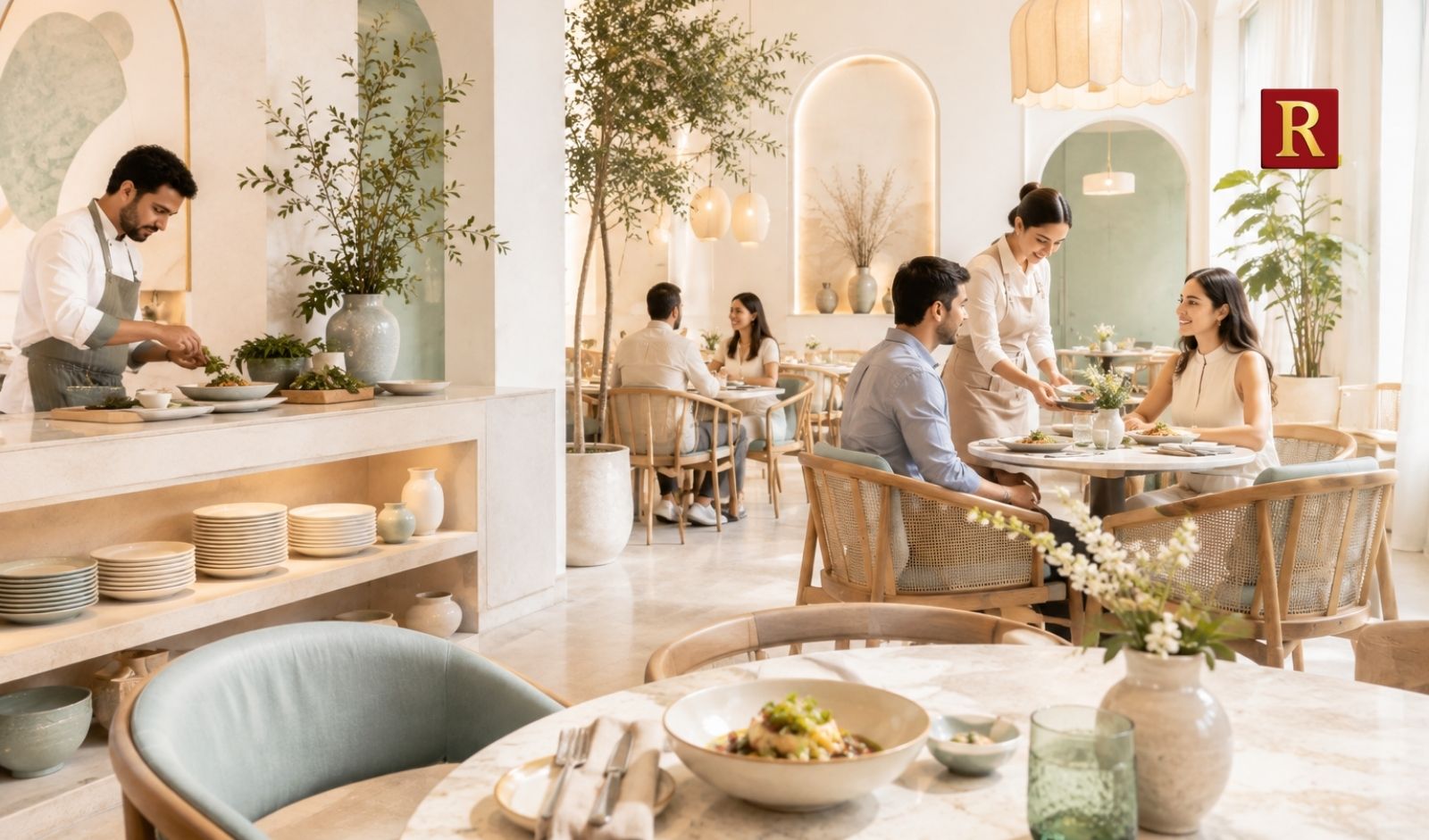
10 Restaurant Design Ideas That Turn First-Time Diners Into Regulars
The strongest restaurant design does not simply make people notice the space. It makes them comfortable enough to choose it again.


A restaurant can have excellent food and still lose customers if the space is uncomfortable. A cramped table, harsh lighting, poor acoustics or confusing layout can affect the dining experience before the meal is over. Restaurant design is therefore more than an interior-design exercise. It is part of the customer experience. Research on first-time and repeat restaurant customers has found that elements such as facility aesthetics, lighting, layout and service can influence satisfaction and loyalty. The study also found that some design factors affect first-time and repeat diners differently. For restaurant owners, the bigger question is not simply, “Does the restaurant look good?” It is: “Does the space make people want to experience it again?”
The First 30 Seconds: Make the Restaurant Easy to Read
Before customers see a menu, they see the restaurant. They notice the entrance, frontage, signage, lighting and what is visible from outside. This first impression should make the concept easy to understand.
1. Give the Entrance a Clear Identity
A restaurant entrance should answer a few basic questions immediately.
- Where should I enter?
- Where should I wait?
- What kind of restaurant is this?
- Does the space look welcoming?
A premium restaurant may use restrained materials, controlled lighting and minimal signage. A casual café may benefit from a more open frontage. The important point is consistency. The exterior should feel like a natural introduction to the dining room rather than a completely different brand. A strong entrance does not need to be expensive. It needs to reduce uncertainty.
The First 10 Minutes: Make Customers Feel Comfortable
Once customers enter, the design has a different job. It needs to make them comfortable enough to settle in.
2. Give Every Seat a Reason to Exist
Not every customer visits a restaurant for the same reason. A couple may want a quiet two-seater. A family needs more flexible space. A group may prefer a larger table. A customer stopping for coffee may not want a large dining setup. This is where restaurant ergonomics becomes important. Designers should consider seat height, back support, table height, legroom and the space between tables. The objective is not to fill every available square metre with furniture. It is to make the available space work. A 2026 rd+d reader survey found that 23% of respondents identified comfort elements such as seating, acoustics and lighting as factors driving repeat visits. Overall atmosphere and vibe ranked first at 37%, while consistency of experience followed at 32%. The lesson is simple: a beautiful chair is not useful if customers do not want to sit in it for an hour.
3. Let Lighting Follow the Customer's Day
Lighting should change with the restaurant's purpose and operating hours. A breakfast café needs to work with daylight. A dinner restaurant may need a softer atmosphere. A family restaurant needs enough visibility for comfortable dining without making the space feel clinical.
A layered lighting system can combine:
- Ambient lighting for overall illumination
- Task lighting for functional areas
- Accent lighting for architectural or decorative features
Glare is another important consideration. A beautiful pendant light can become a problem if it shines directly into a customer's eyes. Research has found that lighting is among the physical-environment factors that influence restaurant customers' perceptions and satisfaction. The best lighting often goes unnoticed because it simply makes the space feel right.
4. Design the Room So People Can Actually Talk
Restaurants are social spaces. Poor acoustics can undermine that purpose. Hard materials such as glass, concrete, metal and bare walls can reflect sound. When several reflective surfaces are combined, background noise can become more noticeable.
Restaurants can manage this with:
- Acoustic ceiling treatments
- Upholstered seating
- Sound-absorbing wall elements
- Curtains and soft furnishings
- Strategic furniture placement
- Appropriate speaker positioning
Research on restaurant noise has found that noise levels can influence overall customer satisfaction, alongside other physical and service attributes. This is especially important for restaurants built around conversations and long meals. A space should not force customers to raise their voices just to speak across the table.
When the Restaurant Gets Busy: Does the Design Still Work?
A restaurant may feel spacious at 4 p.m. and completely different at 8 p.m. This is why design needs to be tested under operating conditions.
5. Separate Customer Movement From Staff Movement
Restaurant design is also an operations problem.
- Think about the movement of a typical order: Kitchen → service area → dining table → clearing → kitchen
Now add customers entering, waiting, visiting the washroom and leaving. If these routes constantly overlap, the dining room can feel chaotic.
Good circulation planning can reduce:
- Staff collisions
- Blocked aisles
- Interrupted conversations
- Congestion near entrances
- Difficult table access
- Unnecessary service delays
Research on restaurant atmospherics has identified spatial layout as one of the dimensions that can influence dining satisfaction and behavioural intentions. The strongest restaurant layouts allow staff to work efficiently without making the operation feel disruptive to guests.
6. Design the Waiting Experience Too
The customer experience begins before the customer reaches the table. If a restaurant regularly has a queue, the waiting area needs to be designed as carefully as the dining room.
Consider:
- Where the queue begins
- Whether it blocks the entrance
- Where customers can stand or sit
- Whether the host counter is easy to find
- Whether delivery pickups interfere with diners
- Whether older customers have somewhere to rest
This is particularly relevant for busy cafés, QSRs and popular casual-dining restaurants. A beautiful dining room cannot compensate for a chaotic first five minutes.
What Makes the Restaurant Memorable?
Comfort may encourage customers to stay, but restaurants also need a clear identity.
7. Build One Signature Instead of Ten Instagram Corners
A restaurant does not need a different photo opportunity on every wall. One strong design feature can create a more recognisable identity.
It could be:
- A distinctive light installation
- An open kitchen
- A sculptural bar
- A signature material
- A regional artwork
- A dramatic ceiling
- A carefully designed façade
Research on restaurant atmospherics has found that facility aesthetics, ambience and spatial layout can influence satisfaction and behavioural intentions such as returning and recommending the restaurant. The goal is not to make every corner compete for attention. It is to give customers something they can remember.
8. Let the Food Influence the Interior
The interior should make sense with what is being served. A restaurant built around coastal cuisine could use natural textures and materials that subtly reference its regional identity. A contemporary Indian restaurant could incorporate local craft without turning the space into a historical replica. Cane, terracotta, brass, stone, wood and handwoven textiles can all be useful when applied with restraint.
- The principle should be: Interpret the cuisine rather than decorate around a stereotype.
That makes the interior more distinctive while keeping the brand relevant as trends change.
The Details Customers May Not Talk About — But Notice
Some of the most important design decisions are not made for photographs.
9. Make Cleanliness Part of the Design
Customers may not know a restaurant's food-safety procedures, but they can see the condition of the space. Flooring, walls, washrooms, ventilation, drainage and maintenance all contribute to how cared-for a restaurant feels. FSSAI requires food businesses to implement an appropriate Food Safety Management System and comply with Schedule 4 hygiene requirements. Its catering hygiene requirements also address the design and facilities of food establishments, including surroundings, drainage and sanitary conditions. This has a direct design implication. Materials should not be selected only because they look attractive. They should also be practical to clean, maintain and replace. A finish that looks impressive on opening day but becomes difficult to maintain is a poor long-term design decision.
10. Design for the Customer Who Is Not in the Room Yet
Accessibility should be part of the original design rather than something added after construction. India's IS specifies that at least 25% of tables in restaurants should be usable by wheelchair users. It also calls for sufficient manoeuvring space between tables and routes to accessible toilet facilities. Self-service restaurants have additional provisions, including accessible counter heights and minimum aisle space. This changes how restaurant owners should think about space. Accessibility is not simply about adding a ramp. It includes entrances, circulation, table selection, counter heights, toilets, signage and the ability to move comfortably through the restaurant. A more accessible restaurant can also work better for older diners, families with children and customers with different mobility needs.
The Final Test: Would You Come Back?
The best way to judge restaurant design is to stop looking at it like a designer. Walk through the restaurant like a customer.
- At the entrance: Can I immediately understand where to go?
- At the table: Can I sit comfortably?
- During conversation: Can I hear the person across from me?
- During service: Can staff move without repeatedly interrupting diners?
- Before leaving: Is there something about this space I will remember?
- Six months later: Does the restaurant still look clean, comfortable and well maintained?
These questions bring together aesthetics, ergonomics, acoustics, circulation, accessibility, hygiene and brand identity. They also highlight an important distinction between designing for a launch and designing for a business.
The Bottom Line!
The most effective restaurant interiors do not have to be the most expensive or dramatic. They have to work. A clear entrance reduces uncertainty. Comfortable seating makes longer visits easier. Good lighting establishes the right mood. Acoustic planning supports conversation. Efficient circulation helps staff and customers move smoothly. A strong design signature creates memory. Accessible planning makes the space more usable. Practical materials support hygiene and long-term maintenance. Research has repeatedly connected restaurant atmospherics with satisfaction and behavioural intentions, including intentions to return and recommend a restaurant. The first visit may be driven by curiosity. The second visit is more likely to depend on whether the customer remembers the experience positively. The strongest restaurant design does not simply make people notice the space. It makes them comfortable enough to choose it again.
Saptopriya Ghosal
Feature Writer
I am a dedicated media professional with a bachelor's degree in mass communication from the State University of Calcutta and a postgraduate degree from Amity University. My academic journey has equipped me with a profound understanding of storytelling and communication. Passionate about the dynamic world of media, I continually strive to explore new ways to engage and inform through compelling narratives.