
From Biryani to Bars: Why Everyone is Hungry for Hyderabad’s ₹26,000-Crore Nightlife Explosion
Hyderabad has emerged as one of India’s fastest-growing hotel markets, with RevPAR rising over 23% and thousands of new branded rooms entering the pipeline.

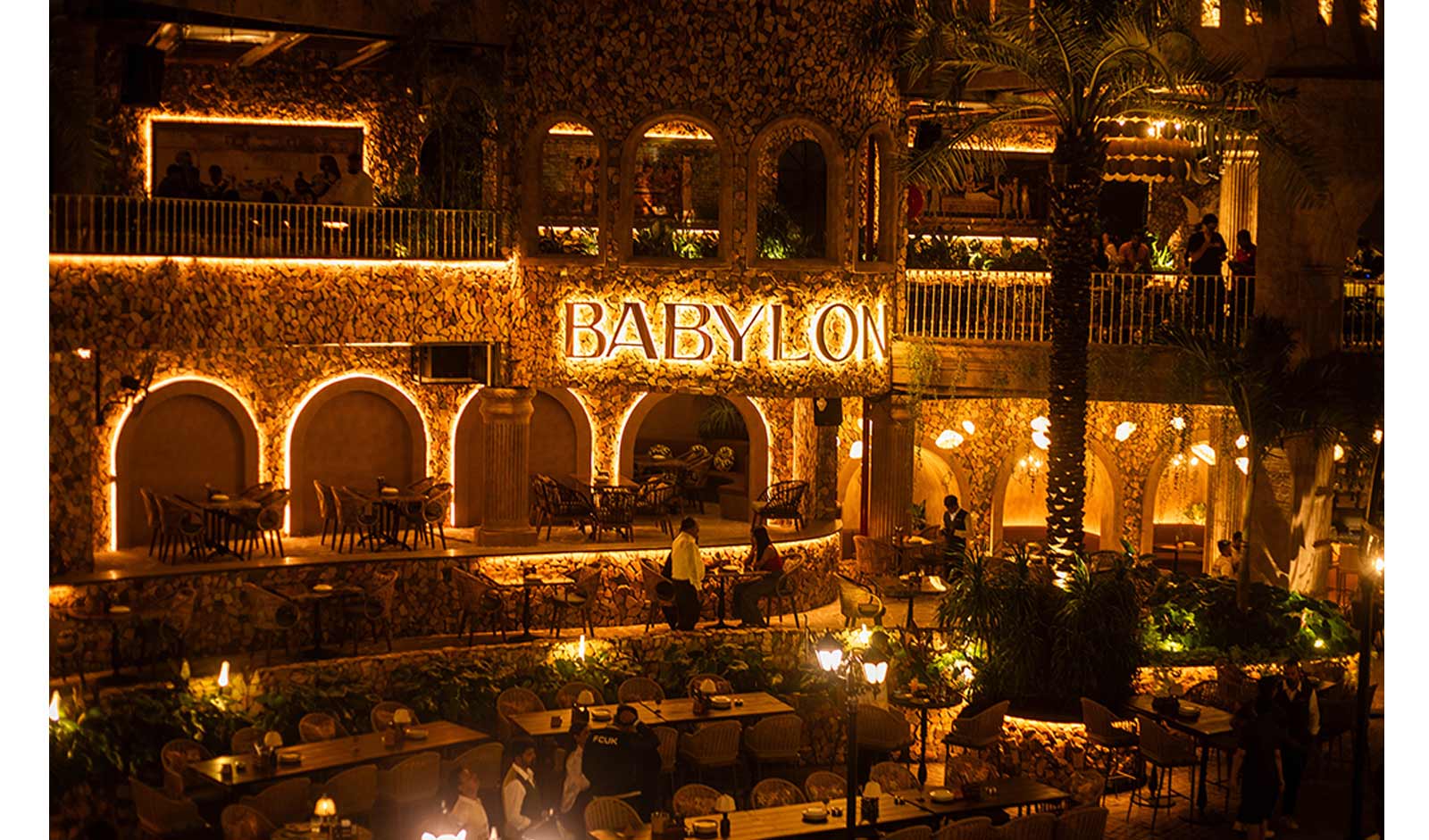
The pace at which Hyderabad’s nightlife, hospitality and F&B sectors are evolving is nothing short of extraordinary. The city’s nightlife economy currently valued at nearly ₹8,500 crore is projected to touch over ₹26,000 crore by 2031, clocking a CAGR of more than 20% and generating an estimated 2.1–2.4 lakh jobs across hospitality, entertainment, transport and allied industries.
Parallelly, Hyderabad has emerged as one of India’s fastest-growing hotel markets, with RevPAR rising over 23% and thousands of new branded rooms entering the pipeline. With several thousand more keys expected by 2030, and a steady expansion of restaurants, bars and nightlife venues, the next two to three years could mark an unprecedented boom — an era ripe for bold ambition.
From Five Clubs to Two Hundred
Reflecting on the transformation, Rehan Guha, Founder, Oxymoron that’s a cosy cocktail-bar in Hyderabad summed up the scale of change in a single comparison.
“In 2015 or 2016, Hyderabad had barely four or five nightclubs, and each of them was half the size of this hall,” he said pointing fingers at the conference hall. “Today, there are more than 200 nightclubs in Hyderabad alone, across different sizes, scales and entirely different concepts.”
What makes Hyderabad unique, he explained, is not just growth but adaptation. “We’re not like Mumbai or Delhi. We shut down early by 12:30 am or 1 am at the latest. So most of us focus heavily on concerts and curated experiences. People book tables a month in advance or at least a week before. Very few walk in at the last minute and we charge the same price.”
The result? A shift from impulsive partying to planned, experience-led nightlife.
Guha credits pioneers like Hemender, founder of Moonshine Projects, for shaping that cultural direction. “He really built the regional live music culture in Hyderabad. After that, almost every club including Quake started hosting regional nights. That’s a culture he initiated, and the industry followed.”
The Evolution of Taste
For Hemender Reddy, Founder, Sribhog Hospitality, the city’s growth mirrors his own journey. “I started in 2009 with a small café in Filmnagar,” he recalled. “Back then, coffee culture barely existed beyond Café Coffee Day or Barista. People didn’t understand specialty coffee.”
From café culture to club culture, he witnessed a generational shift. “Many of my early coffee customers later became my club customers. In 2009, there were hardly two or three clubs. Bars were mostly family bars, nightlife as we see it today didn’t exist.” Post-2014, however, the shift became visible.
“People began moving towards larger venues where music was the core concept. The city graduated from family bar setups to full-fledged clubs,” he added as today Hyderabad is in its refinement phase. “Now it’s about experiential formats- 30 or 40-seater spaces with curated menus. Cocktails are designed to complement food. It’s far more sophisticated.”
He also pointed to the culinary transformation. “Hyderabad was once dominated by biryani. Around 2013–16, an Egyptian restaurant opened and barely survived six months as there were no takers. Today, Turkish, Lebanese and global cuisines are opening and thriving. People are experimenting and more importantly, accepting,” he smiled as he see the opportunity showering the city’s F&B ventures.
The Stadium That Changed the Game
If evolution defined the first decade, scale defines the present. Rehan candidly admitted the industry’s initial doubts when Srikar launched Quake.
“When Srikar opened Quake last year, most of us including me were sceptical. I told him, this isn’t a restaurant or a nightclub, you’re building a stadium. At 50,000 square feet, it didn’t seem fair,” he said. “But he proved everyone wrong.”
Quake’s success triggered a new wave of mega-venues. “After Quake, three or four massive properties followed. He showed India that even in a time when people say clubbing is dead, you can build one of Asia’s biggest clubs and run it to packed houses.”
Raja Srikar, Founder, Quake Arena & Amnesia Lounge Bar, however, sees it as simple arithmetic. “The music scene was always there. Hyderabad has hosted concerts since 2008. A.R. Rahman comes almost every year. Arijit Singh performs here regularly. People were already stepping out for large-scale shows."
“What I wanted was a plug-and-play venue. Instead of spending heavily every time on outdoor infrastructure, why not invest once and bring the same scale in-house? If the artist is strong, the audience will come.” Before launching Quake, he ran three smaller clubs. “Each Saturday, we’d see 300–350 people per club. I calculated how many people go out across the city on a Saturday. If even 10% chose Quake, the numbers worked. That was the thought process.”
It wasn’t about creating demand, it was about consolidating it.
Hence, There’s no denying that today’s consumers are more demanding than ever. As Rehan put it: “You can’t get away with what worked a few years ago, not in cuisine, not in cocktails, not in experiences, not even in the artists you bring in.”
And that may be the real story of Hyderabad- not just scale, but ambition. If the past decade was about building confidence, the next five years may well be about domination.
Nusra
Consultant Associate Editor
A seasoned journalist with more than a decade experience in restaurant and retail business. I eat, drink, breathe and sense food as a source of my living and lifestyle. A foodie by birth and a journalist by choice. I started my career with Hindustan Times doing hard news, moving into features and finally landing myself in a food coma. Love to talk, hear and publish all food stories that makes anyone happy and hearty for more than a decade now. Apart from food, I love reading fiction, helping others and finding joy in little things...









































