Unlocking the Real Potential: Growth Capital and India’s Culinary Entrepreneurs
In the restaurant world, growth capital is no longer just fuel for expansion—it’s a catalyst for transforming good concepts into enduring brands.

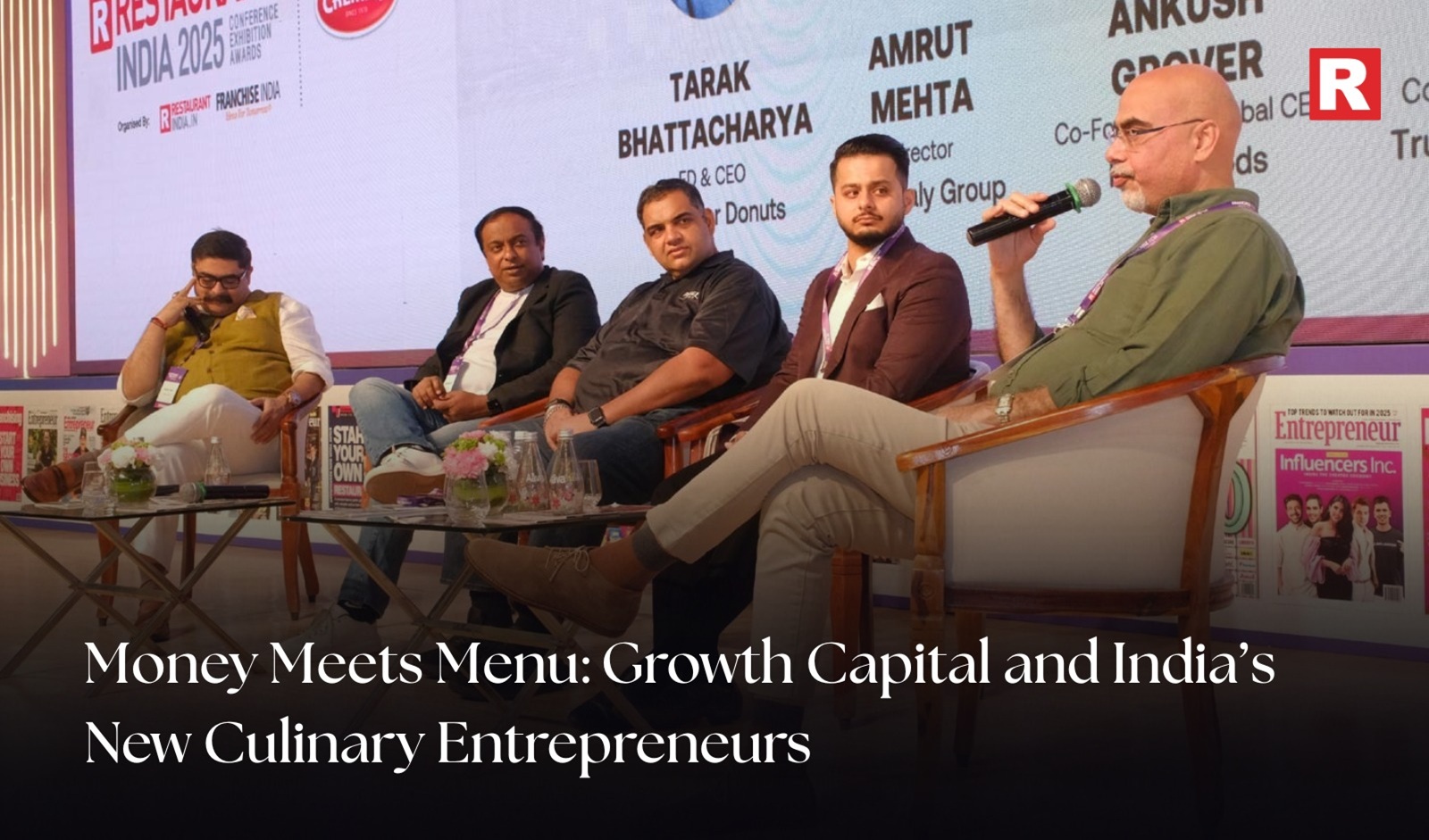
For decades, the Indian restaurant business ran on a single principle: profit is king. As Anurag Katriar of Indigo Hospitality recalled, “When I began my journey more than 30 years ago, the only thing we truly understood was that a restaurant must make money. Concepts like valuation, shareholder value, or unlocking enterprise value didn’t exist. If you were running the counter, the only measure of success was that the cash kept coming in.”
It was a different era—one where fine dining outside hotels was still a radical idea. Indigo itself was among the first to challenge that norm. But over the years, the industry has transformed dramatically. Today, a 24-year-old founder speaks casually of launching an IPO in three years.
“Back then, we hadn’t even heard the word IPO,” he laughed. The shift from profit-driven operations to valuation-driven growth is one of the industry’s biggest paradigm changes.
Technology: The New Backbone for Restaurateurs
Few companies embody this transformation as powerfully as Rebel Foods. “We were engineers and MBAs trying to bring science into Indian cooking,” shared Ankush Grover, Co-Founder & Global CEO, Rebel Foods. “Pizza or burgers follow a simple four-step process. But Indian food? It’s complex. That was the challenge.” Rebel’s early years were about constant pivoting, searching for new answers and new models. But one realisation changed everything: technology would redefine food. The restaurant experience, once restricted to four walls, had moved into packaging, delivery, consistency, and digital engagement. With Swiggy, Zomato, and cloud kitchens reshaping consumption, the product not the ambience became the star.
Rebel built two core philosophies: UMD — Unique, Memorable, Delightful experiences every single time; and QCVH — Quality, Convenience, Value, and Hygiene, the four permanent pillars of food.
This tech-first thinking created a system where Rebel kitchens today handle 1,000 SKUs—something most companies won’t even attempt to build technology for.
The New Blueprint for Growth
Neeraj Seth's story is that of an accidental entrepreneur. A management graduate with no food background, he built Cellfrost from scratch, scaled it globally, and ultimately exited to Middleby Corp, one of the world’s largest food-service players.
After monetising that success, he returned—not for money, but for purpose. “We came back to solve problems that the industry was ignoring,” he shared for whom in the last seven years the questions remain the same: Which problems truly matter? How do we solve them with precision? And, What should our brand mean to the people we serve?
The result is a company built not for valuation, but for legacy. A future IPO may happen, but the focus remains on solving hard, structural problems—especially consistency and quality across restaurants, cafés, and bakeries. “That can only happen through technology and AI,” he added. “And that’s where we’re going, very meticulously.”
Through all of these paths, one idea remains constant the Indian food industry is no longer built on instinct alone. It is built on innovation, technology, and purposeful capital.
According to Seth, success teaches you two things: what to do—and what not to do. And for this new generation of food entrepreneurs, one thing is clear: They are not building for valuation. They are building for the future. “What they earn goes back into the company. What they build becomes infrastructure for the next decade. What they envision is an ecosystem where Indian food businesses scale faster, smarter, and stronger than ever before,” he added.
Persistence, Pain, and Breakthrough
Tarak Bhattacharya, ED & CEO at Mad Over Dounts, recounts a journey that began as a hobby and a rejection. "The founder wanted a Krispy Kreme franchise and didn’t get it. Maybe it was frustration, maybe inspiration,” he shared. But that’s how MOD was born.
For him, the early years were a struggle. Malls rejected them outright. “They told us no doughnut shop could survive. Five to seven doughnuts a day would never make a business,” he pointed as the first store failed, second struggled and yet they opened a third.
For them, the outlet at Breach Candy changed everything. “Fifteen years ago, MOD hit ₹2.5 million a month—a breakthrough that made doughnuts a part of India’s every day and festive culture. MOD today is profitable at the store level and corporate level,” he proudly explained by adding that it took losses and learnings, but people embraced us. And, we became their celebration partner.
A Legacy Reinvented
For Amrut Mehta, the 2nd-Gen at The Little Italy Group, the journey began in 1989, in a tiny Pune basement, founded by his father—a hotelier who teamed up with an Italian chef. With Osho’s followers seeking Sattvic and vegetarian food, Italian cuisine found a home in India, especially among Gujaratis and Marwaris.
“We realised over time that vegetarian Italian food wasn’t just our product—it was our identity,” Amrut commented. Little Italy grew from 28 outlets to 45, staying rooted in its USP while expanding through new brands.
And, today, Amrut has also launched Piazza – Roman-style sourdough pizza (non-veg QSR), Señorita’s Mexican Kitchen and Tutto Bene – a Gen-Z lifestyle café. But the flagship remains the much-loved Little Italy.
The Cost of Innovation and the Return
“When I joined, we had ₹1 crore in sales and ₹1 crore in losses,” Ankush added. “But we weren’t burning cash. We were investing.”
Years of building this infrastructure. AI-driven processes, scalable cloud kitchens, SKU tech, and multi-brand systems have begun paying back. Profitability didn’t grow in a straight line. It grew in jumps. And, at the time when global QSRs like McDonald’s took a decade to open 100 stores, Rebel enabled Wendy’s to open 200 locations in just four years.
“Any new brand can now be rolled out across 400 cloud kitchens in three months—something that typically requires 10 years,” he smiled by adding that the brand invested in infrastructure that saves time and multiplies scale. “My 20% of business today comes from brands launched just last year. That’s the muscle we’ve built,” he concluded.
Hence, we can surely say that businesses today are not built on numbers alone, but on the ability to read evolving consumer behavior, craft meaningful dining experiences, and scale with intention. In the restaurant world, growth capital is no longer just fuel for expansion—it’s a catalyst for transforming good concepts into enduring brands.
Nusra
Consultant Associate Editor
A seasoned journalist with more than a decade experience in restaurant and retail business. I eat, drink, breathe and sense food as a source of my living and lifestyle. A foodie by birth and a journalist by choice. I started my career with Hindustan Times doing hard news, moving into features and finally landing myself in a food coma. Love to talk, hear and publish all food stories that makes anyone happy and hearty for more than a decade now. Apart from food, I love reading fiction, helping others and finding joy in little things...