
Why South Indian Cuisine’s Global Rise Begins in the Middle East
With the growing number of popular South Indian restaurant chains expanding overseas, from Saravanaa Bhavan and Anjappar to Paragon, A2B, and Sangeetha, international audiences are now discovering and appreciating the varied flavors and comfort foods of the South.

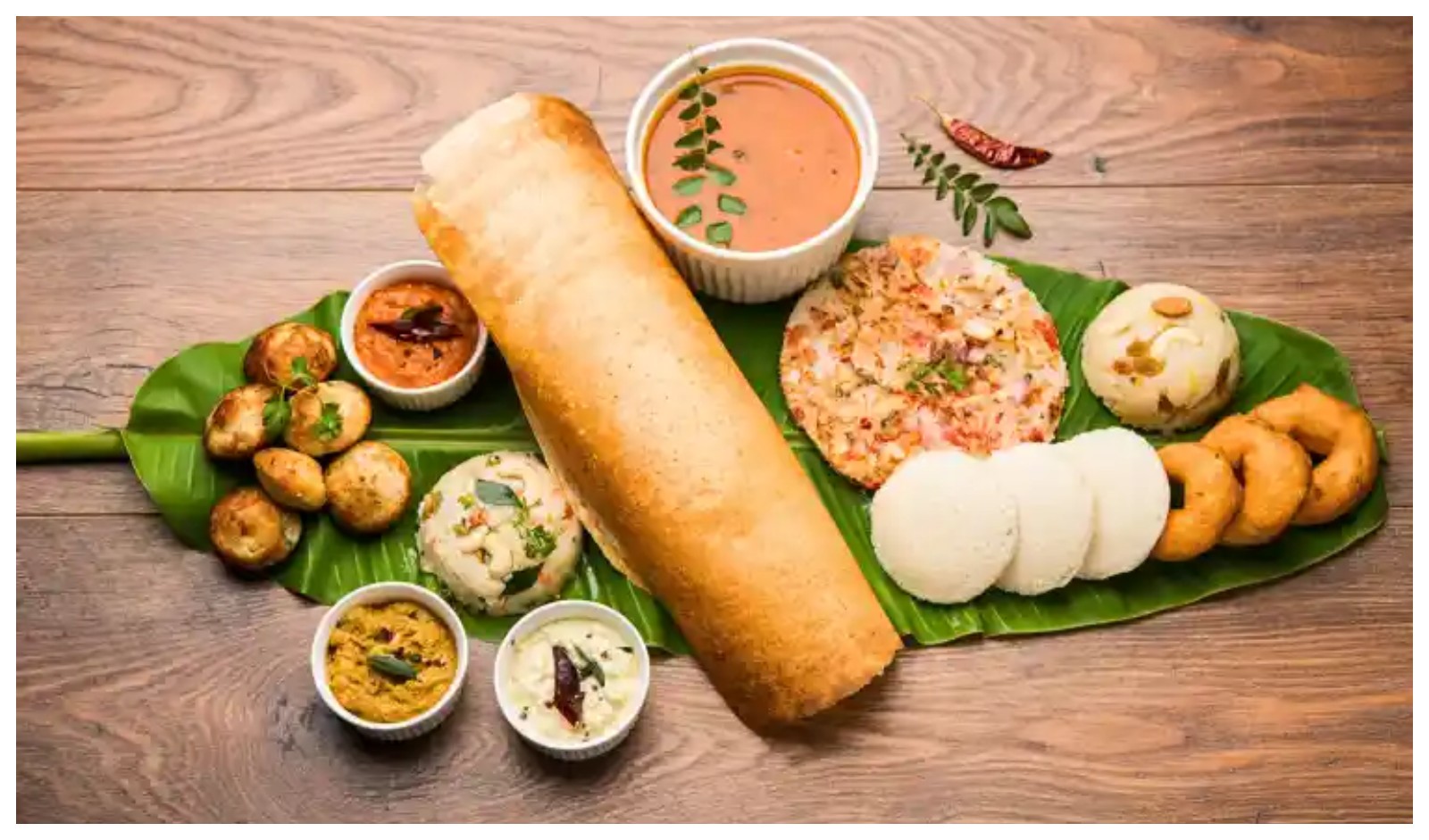
As South Indian flavors capture international attention, two homegrown favorites, Bengaluru’s Rameshwaram Cafe and Chennai’s Namma Veedu Vasanta Bhavan, are among the latest to choose Dubai and the GCC as their launchpads for global expansion.
Indian restaurants and cuisines have long been popular abroad, but for decades, the attention was centered mostly, if not entirely, on North Indian staples like butter chicken, samosa, and naan. These dishes shaped the world’s outlook of “Indian food”, but that landscape is now evolving.
With the growing number of popular South Indian restaurant chains expanding overseas, from Saravanaa Bhavan and Anjappar to Paragon, A2B, and Sangeetha, international audiences are now discovering and appreciating the varied flavors and comfort foods of the South. And if there is one region emerging as the preferred gateway for these brands, it is unmistakably the Middle East, particularly Dubai.
If we look at the numbers, Saravanaa Bhavan alone runs 104 outlets across 21 countries, including 13 in the UAE. Anjappar Chettinad claims more than 150 outlets in 25 countries. A2B has expanded across the US, UK, Singapore, Malaysia, Canada and Australia, while Paragon continues to anchor the Malabar dining scene in the Gulf. Together, these chains run an estimated 300-350 outlets outside India.
India on Globe
In the past few years, countries like US, UK, Singapore, Dubai and other Middle Eastern cities have become a magnet for Indian F&B expansion, and South Indian brands have been leading the charge.
The trend is clearly visible in expansion plans announced by two of popular south-Indian chains: Bengaluru’s Rameshwaram Cafe and Chennai’s Namma Veedu Vasanta Bhavan revealed their international expansion plans, choosing Dubai and the GCC as their launchpads.
“I started in a very small way, from a small town near Coimbatore, with nothing more than a vision and a desire to do something different. Innovation has been my constant companion, and it is this spirit that has carried Indian food to 16 countries across the world,” mentioned M Mahadevan, Chairman, Advantage Foods Pvt Ltd who has took brands like Saravana Bhavan, Sangeetha, Hot Breads amongst other to over 16 countries, globally, all celebrating Indian cuisine.
Their timing reflects a larger pattern. The Gulf, home to over 8.5 million Indians, a significant portion from Tamil Nadu, Kerala, Karnataka, and Andhra Pradesh, offers unmatched familiarity, demand, and scalability. Indian cuisine accounts for nearly 21 per cent of the UAE’s dining landscape, and Dubai alone hosts more than 13,000 restaurants and cafés. With shorter supply chains, easier access to ingredients, flexible franchising, and a multicultural audience, the region has become the ideal first step for South Indian brands testing global waters.
Global dining preferences have also shifted dramatically. There is growing interest in regional Indian cuisines, fuelled by food shows, YouTube Street food videos, and diaspora content creators.
What Dubai as Next Location
Few restaurant chains have grown as explosively within India as The Rameshwaram Cafe, with its high-volume service model, distinct chutneys, and immense social media presence. Its announcement of a Dubai outlet marked one of the most anticipated global moves in the South Indian F&B space this year.
For the brand, Dubai was an obvious choice. “Dubai emerged as the natural choice for our first international outlet because it’s a vibrant, multicultural city with a large Indian community that deeply connects with our cuisine,” said Divya Raghavendra Rao, Managing Director and Co-Founder.
For Rao, Dubai was not simply an international market, but a gateway to the world, the first step in a larger plan. “This expansion marks the first step in our long-term vision of making The Rameshwaram Cafe a globally recognized name. We are currently exploring opportunities in Singapore, London, and the United States regions with a strong Indian presence and a growing appreciation for authentic, vegetarian Indian food,” she said.
The brand’s strategy maintains a clear balance: the authenticity of dosa, idli, pongal, and filter coffee will remain untouched, while certain formats, such as grab-and-go tiffin boxes, lighter wraps, and portion-size variations, may be introduced to suit lifestyle needs abroad.
“Our international outlets will largely retain the core menu and signature flavors that define The Rameshwaram Cafe experience. That said, we do plan a few subtle regional adaptations to suit local preferences and dining habits. We believe classics like our crispy dosas, kempu chutney, and authentic filter coffee will become our strongest ambassadors globally. They represent everything we stand for: tradition, warmth, and the unmistakable taste of home,” she added.
Chennai’s NammaVeeduVasanta Bhavan, meanwhile, approaches global expansion from a place deeply rooted in memory and emotional connection. With established presences in Singapore, Dubai, and Doha, and new outlets planned in London and Canada, the brand’s journey has been shaped by what its customers abroad missed most.
“Over the years, many of our loyal customers who moved abroad told us how much they missed the comforting flavors… that nostalgia inspired us to take our cuisine beyond borders,” reflected Managing Director Swarnalatha Ravi.
Authenticity, she said, is non-negotiable. Their international kitchens replicate traditional recipes, spice mixes, and cooking techniques exactly as in India. At the same time, the brand recognizes the need for sensitive adaptation.
“Our international menus are designed to bring the true essence of South Indian cuisine to global audiences. They largely mirror our offerings in India. But we also recognize the importance of connecting with local audiences. In every international outlet, we thoughtfully curate selective adaptations, for instance, introducing Jain-friendly options or subtle fusion variations, to cater to diverse dietary needs and regional palates,” she added.
The lesson is simple: find your market, position yourself smartly, and price right.
Saumyangi Yadav
Senior Correspondent
Saumyangi is a Senior Reporter with over three years of experience in journalism and a strong passion for writing and storytelling. She covers D2C and consumer brands for Entrepreneur India and contributes to Restaurant India, where she writes about restaurants, cafés, and whatever is new and exciting in the F&B world. She has previously covered education, social, and civic issues, and continues to enjoy exploring new stories in Bengaluru and beyond.









































