
Why London Remains the Ultimate Test for Indian Restaurant Brands
The city's demanding environment often serves as a proving ground where the strongest hospitality brands demonstrate their resilience, adaptability, and long-term vision.

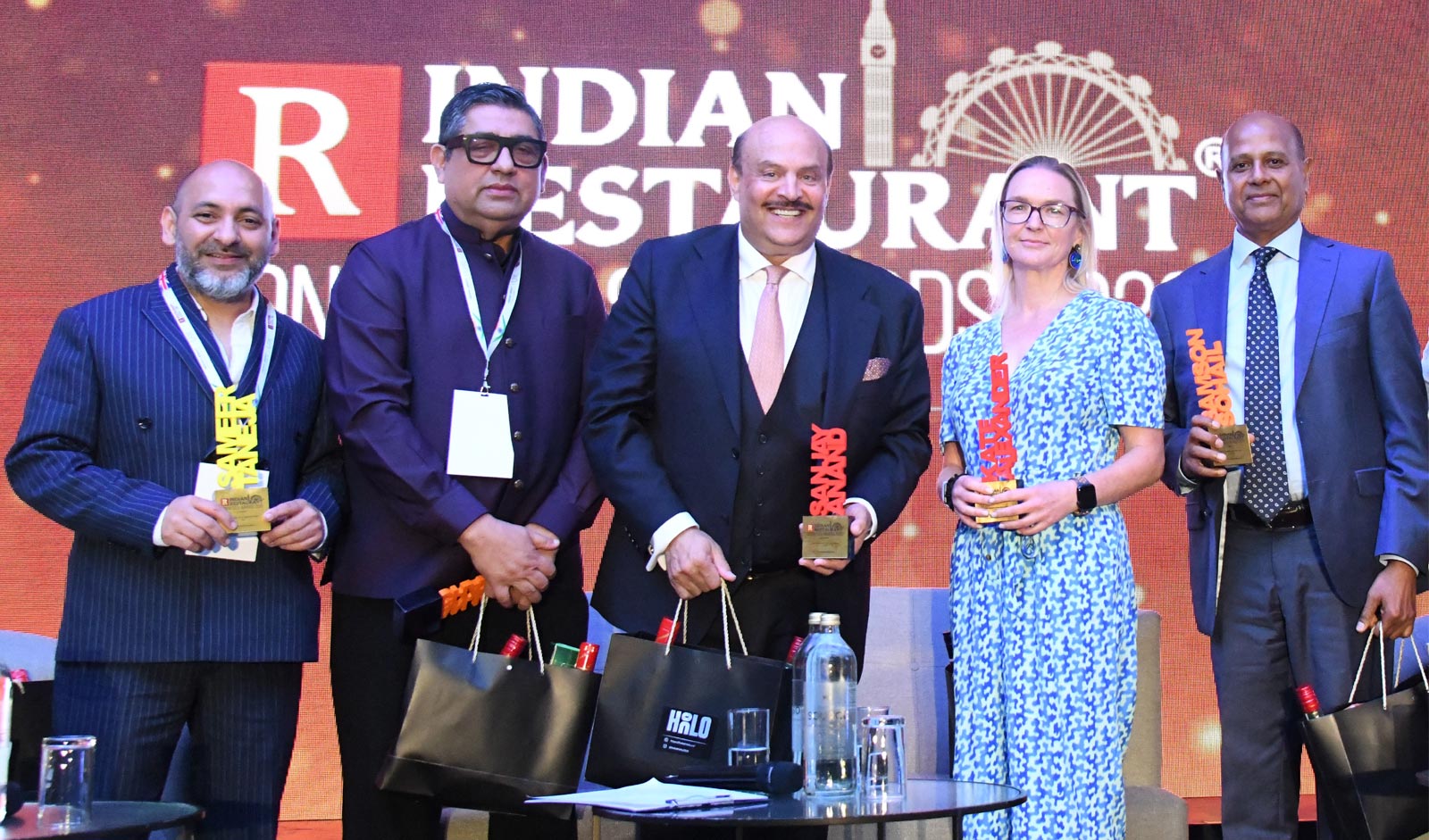
As Indian restaurant brands continue their global expansion, success is increasingly being defined not by how many outlets a company opens, but by its ability to maintain quality, authenticity, and relevance across markets.
That sentiment emerged strongly during a recent industry discussion at the first ever Global Edition of Restaurant India Conference in London on 28th May, featuring restaurateur Sanjay Anand of Madhu’s fame, global-Indian restaurateur Anjan Chatterjee, Michelin-starred Chef Sameer Taneja, Samson Sohail of Cobra Beer, and hospitality leaders from Nestlé Professional, who explored the opportunities and challenges shaping the future of Indian hospitality in the UK and beyond.
The Challenge of Scaling Success
"Many years ago, the idea of an Indian restaurant earning a Michelin star seemed almost unimaginable. Yet Indian cuisine is among the most complex and technically demanding in the world, with its depth of flavours, regional diversity, and intricate cooking methods. There is no reason why it shouldn't be recognised at the highest level,” shared Sanjay Anand, Chairman, Madhu’s who has been running the brand for almost four decades in London.
“What we're seeing today is a growing global appreciation of just how extraordinary Indian food truly is. Alongside that, chefs and restaurateurs are bringing greater refinement, presentation, and professionalism to the dining experience without compromising authenticity,” he shared.
However, for Anjan Chatterjee, Founder, Speciality Restaurants, opening a successful restaurant was never the difficult part. The real challenge has always been replicating that success consistently across multiple locations. Today, the Speciality Restaurants portfolio spans nearly 150 outlets across India, the Gulf, and the United Kingdom. Yet, according to Chatterjee, expansion is far more complex than simply opening new doors.
"Scalability is all about consistency. Running one restaurant is difficult; running nearly 150 with the same standards is a completely different challenge," he said.
Over the years, the group has expanded into diverse markets, each bringing unique operational realities. Differences in sourcing, supply chains, consumer preferences, and execution standards have required constant adaptation and learning. Technology, for him has become a critical enabler, helping the organization create structure, monitor standards, and maintain consistency across a large and geographically dispersed network.
London: The Dream Market
For many hospitality entrepreneurs, London represents the ultimate global stage, and for Chatterjee, establishing a presence there was always a long-term ambition.
"London is the Mecca of hospitality, and I always knew we would come here one day," he added.
Rather than introducing Mainland China, one of India's most successful restaurant brands, Speciality Restaurants chose to bring an evolved version of Oh! Calcutta to the UK market, showcasing the richness and diversity of Bengali cuisine to an international audience.
The restaurant has steadily built its reputation since launching after the pandemic. Yet while customer demand remains encouraging, a different challenge has emerged, talent.
According to Chatterjee, increasingly restrictive work permit regulations have made it difficult to bring experienced chefs from India to the UK. The inability to transfer culinary expertise and organizational culture across borders has already affected expansion plans.
"To deliver authentic cuisine, you need people who understand the food, the ingredients, and the culture of the organisation. Today, replacing that talent has become our biggest challenge."
The impact has been tangible. Plans for a second London restaurant have been postponed—not due to lack of opportunity, but because finding and retaining the right talent has become increasingly difficult.
A Market That Tests the Best
Moderated by hospitality veteran Sanjay Anand, the discussion highlighted London's unique position as one of the world's most competitive restaurant markets. The city has become a global culinary crossroads where cuisines from every corner of the world compete side by side. From Japanese and Chinese concepts to Sri Lankan and Indian restaurants, London attracts some of the industry's most ambitious operators.
"If you want to put your brand on the world stage, you have to be in London," Anand observed.
However, the rewards come with considerable pressure. Rising labour costs, higher National Insurance contributions, repeated minimum wage increases, and escalating operating expenses continue to squeeze restaurant margins. Despite these challenges, the panel agreed that London's appeal remains unmatched.
The city's demanding environment often serves as a proving ground where the strongest hospitality brands demonstrate their resilience, adaptability, and long-term vision.
"The challenges are real, but the best restaurateurs always find a way to adapt, survive, and emerge stronger,” he added.
The Growing Appetite for Authentic Global Flavours
Consumer tastes are evolving rapidly, creating fresh opportunities for foodservice operators. Kate Alexander, Head of Food & Commercial Channels, Nestlé Professional UK & Ireland highlighted how increasing cultural diversity and exposure to international cuisines are reshaping dining habits across the UK.
“While Indian food continues to enjoy widespread popularity, demand for broader Asian flavours is accelerating, driven by consumers seeking greater authenticity and regional specificity,” she shared as consumers are increasingly seeking authentic global flavours, and that's where a global network becomes a real advantage.
To meet this demand, Nestlé Professional is leveraging its international manufacturing network to source products directly from their country of origin, including India.
The company believes ingredients produced within source markets provide a level of authenticity that is difficult to replicate elsewhere.
"When ingredients come from the source, the authenticity is difficult to replicate,” she explained.
This growing emphasis on authenticity mirrors a broader trend across hospitality, where consumers increasingly value provenance, cultural integrity, and genuine culinary storytelling.
Finding Identity Through Evolution
For Michelin-starred Chef Sameer Taneja, Executive Chef at Benares, authenticity begins with embracing one's own roots. Reflecting on his career, Taneja explained that while his early training focused heavily on European cuisine, a pivotal moment came when he chose to dedicate himself fully to Indian food.
"Everything changed the day I decided to cook my mother cuisine, Indian food." That decision helped define his culinary identity and strengthened his belief that Indian cuisine possesses extraordinary global potential.
Today, as Executive Chef at Benares, one of London's most celebrated Indian restaurants, Taneja continues to champion a philosophy built on evolution rather than perfection.
"My cuisine is nothing short of evolution. Every year we learn, adapt, make mistakes, and come back stronger." For Taneja, recognition such as a Michelin star is never an individual achievement.
"A Michelin star is not an individual's identity. It belongs to the team that earns it together."
This team-first approach has become increasingly important at a time when hospitality businesses face severe labour shortages and recruitment challenges.
Rather than relying exclusively on external inspiration, Taneja encourages chefs within his team to contribute ideas drawn from their own homes, families, and culinary traditions. Those concepts are then refined and transformed into dishes that appear on the restaurant's menu.
"When one of my chefs sees a dish inspired by their home cooking on the menu, there is no bigger accolade than that."
The result is a culture where innovation is driven not only by leadership but by collective creativity and shared ownership.
Why Fewer Restaurants Doesn't Mean a Weaker Industry
One of the most striking discussions centred on the changing landscape of South Asian restaurants in the UK. According to industry figures, the number of South Asian restaurants has declined from approximately 12,000 in 2016 to just over 8,000 today. Yet Samson Sohail of Cobra Beer believed these numbers tell only part of the story.
"The story today is about quality, not quantity." He argued that the industry's evolution reflects rising consumer expectations rather than declining demand. During the early expansion years, many restaurants focused primarily on serving familiar curry-house offerings. Today's diners, however, are significantly more informed, adventurous, and discerning.
"Customers today understand Indian food far better. They know what quality looks like, and they expect much more than they did 20 years ago,” he added with pride as today operators are investing more heavily in food quality, service standards, interiors, branding, and overall guest experience.
While weaker businesses have struggled to survive, professionally managed restaurant groups have continued to expand and strengthen their market position. The same principle has guided Cobra Beer's own growth strategy. Recognizing changes in the restaurant landscape nearly a decade ago, the brand expanded beyond its traditional association with Indian restaurants and built a presence across multiple Asian cuisines, including Thai, Chinese, and broader South Asian dining concepts.
Across every conversation, a common theme emerged; adaptability.
Whether it is managing consistency across 150 restaurants, overcoming labour shortages, responding to evolving consumer tastes, embracing culinary heritage, or diversifying business models, success increasingly depends on an organization's ability to evolve without losing its identity. For Indian hospitality brands looking to expand globally, the path forward will require more than ambitious growth plans. It will demand strong teams, authentic storytelling, operational excellence, and an unwavering commitment to quality.
As London's competitive restaurant scene continues to challenge and inspire operators from around the world, the message from industry leaders was clear: the future belongs not to the biggest brands, but to those capable of adapting, innovating, and staying true to what makes them distinctive.
Nusra
Consultant Associate Editor
A seasoned journalist with more than a decade experience in restaurant and retail business. I eat, drink, breathe and sense food as a source of my living and lifestyle. A foodie by birth and a journalist by choice. I started my career with Hindustan Times doing hard news, moving into features and finally landing myself in a food coma. Love to talk, hear and publish all food stories that makes anyone happy and hearty for more than a decade now. Apart from food, I love reading fiction, helping others and finding joy in little things...









































